
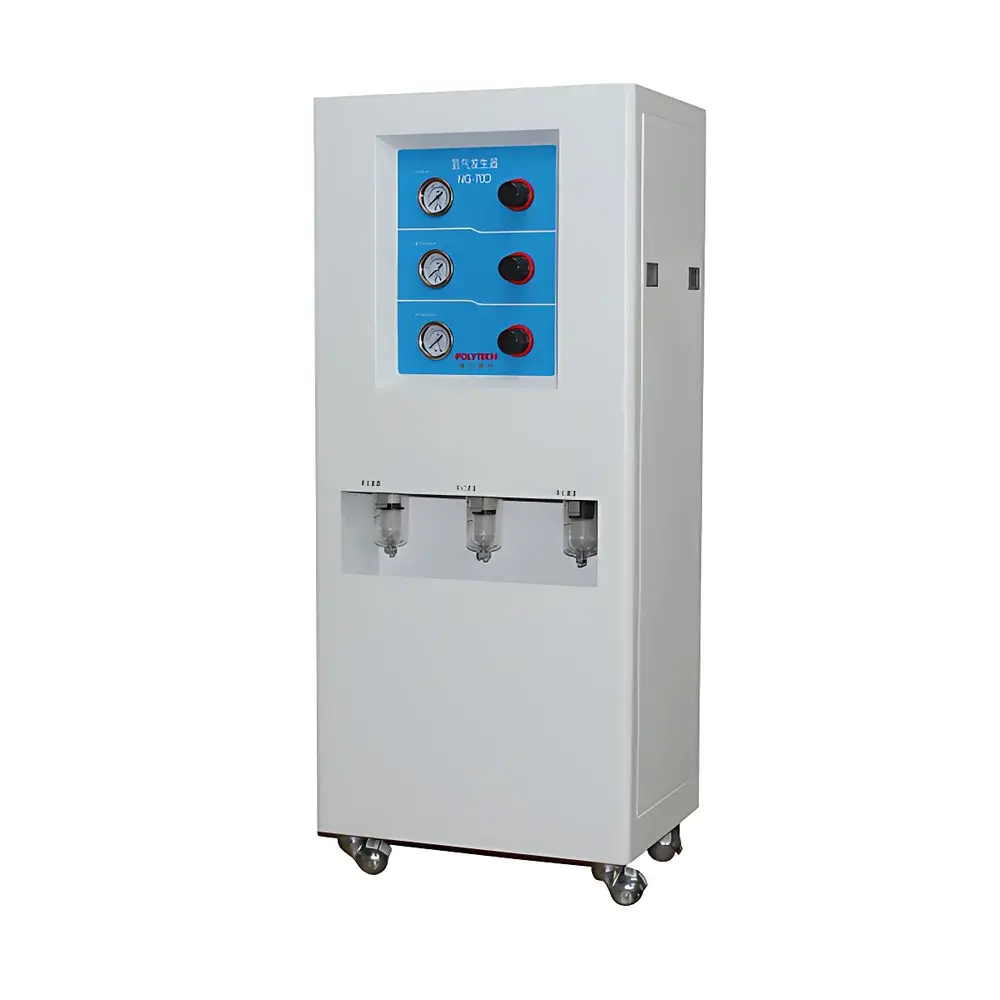
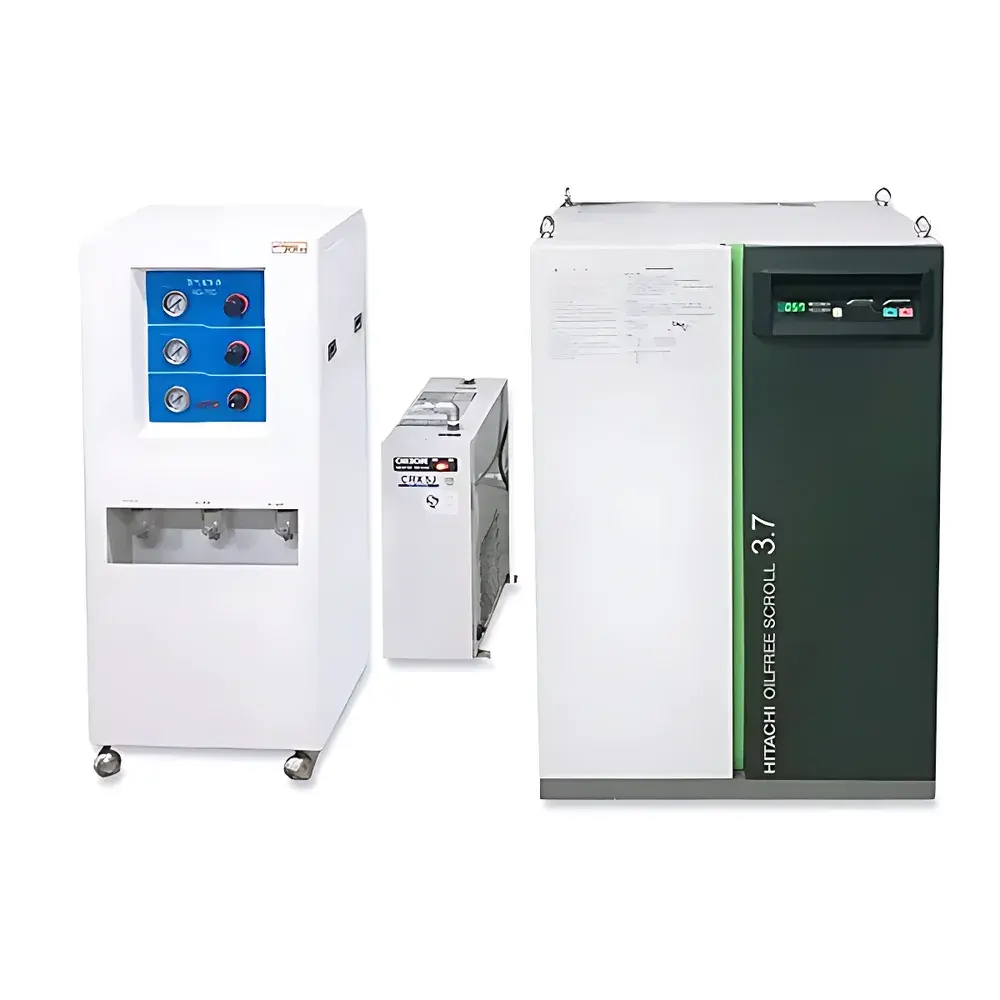
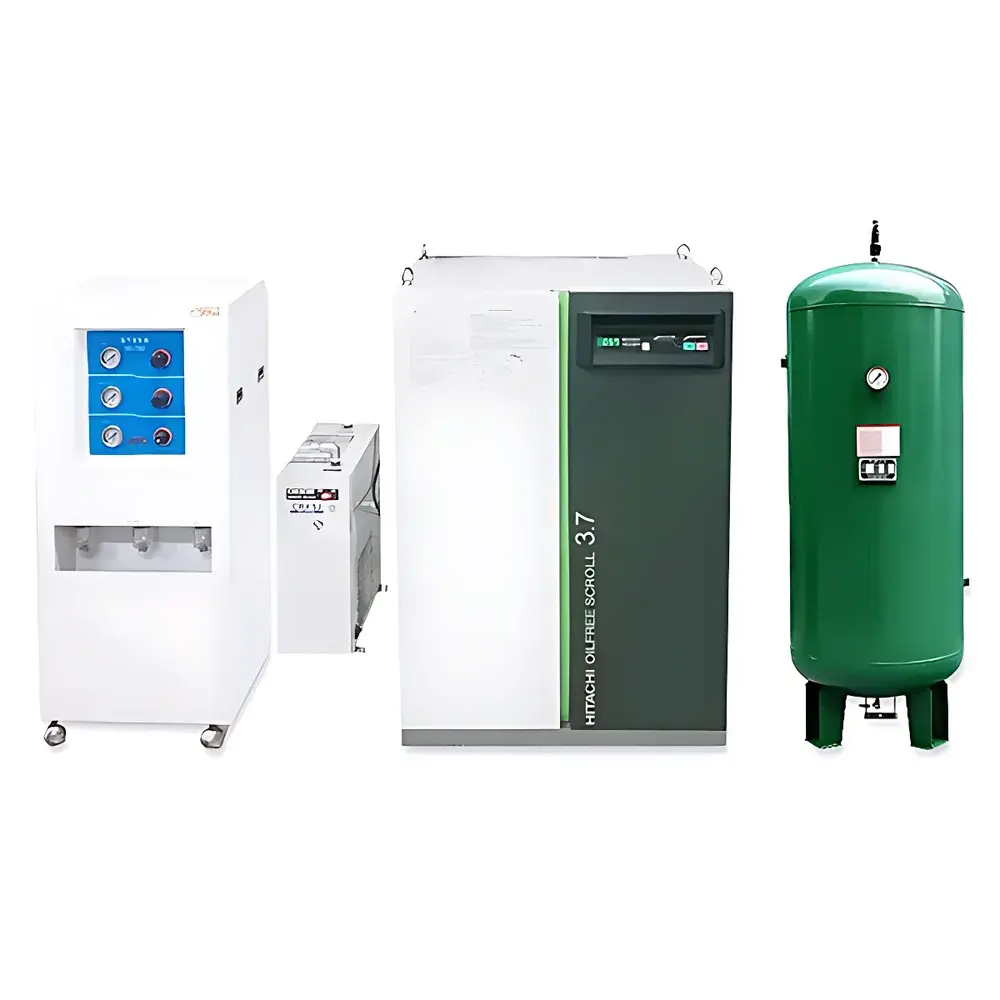
Polytech NG-70D High-Flow Nitrogen Generator
| Brand | Polytech |
|---|---|
| Origin | Beijing, China |
| Manufacturer Type | Direct Manufacturer |
| Model | NG-70D |
| Air Inlet Requirement | 0.85 MPa clean compressed air |
| Compressor Power Supply | 380 V, 3.7 kW |
| Dehumidifier Power Supply | 220 V, 2 A |
| Output Gas | Dry nitrogen (O₂ < 5 ppm, H₂O < −40 °C dew point) |
| Annual Maintenance | ~30 min filter module replacement |
Overview
The Polytech NG-70D High-Flow Nitrogen Generator is an engineered solution for laboratories requiring a reliable, on-demand source of high-purity nitrogen gas—specifically optimized for liquid chromatography–mass spectrometry (LC-MS) applications. It employs hollow-fiber membrane separation technology, a pressure-driven physical process that selectively permeates oxygen, water vapor, and other trace gases through semi-permeable polymeric membranes while retaining nitrogen molecules. This principle enables continuous generation of nitrogen with typical purity exceeding 99.9995% (O₂ < 5 ppm, dew point ≤ −40 °C), meeting the stringent gas specifications required by modern electrospray ionization (ESI) and atmospheric pressure chemical ionization (APCI) sources. Unlike cryogenic or PSA-based systems, the NG-70D operates without moving parts in the gas separation stage, eliminating cyclic valve switching, adsorbent bed regeneration, or high-pressure storage—resulting in inherently stable output pressure, minimal pulsation, and long-term operational consistency ideal for sensitive mass spectrometric detection.
Key Features
- Membrane-based nitrogen generation ensures continuous, pulse-free gas flow with no pressure cycling or downtime for regeneration cycles
- Integrated air preparation system: includes industrial-grade 3.7 kW oil-free compressor and refrigerated dryer (220 V, 2 A), delivering clean, dry feed air at 0.85 MPa
- Modular membrane stack design allows scalable nitrogen output—additional membrane modules can be added without system redesign to accommodate future instrument expansion
- Compact, all-in-one footprint with integrated structural chassis—designed for benchtop or under-bench installation in space-constrained analytical labs
- Full automation: one-button start/stop operation; microprocessor-controlled monitoring of inlet pressure, temperature, and membrane performance parameters
- Low-maintenance architecture: only one scheduled annual service event—replacement of pre-filtration and coalescing elements (~30 minutes total labor)
- High-pressure tolerance: membrane modules rated for sustained operation up to 1.0 MPa outlet pressure, supporting LC-MS interfaces requiring elevated nebulizer or drying gas pressures
Sample Compatibility & Compliance
The NG-70D delivers nitrogen gas compliant with the operational requirements of major analytical platforms, including but not limited to Waters, Thermo Fisher, Agilent, Shimadzu, and Bruker LC-MS systems. Its consistent purity and stability support method transfer across instruments without requalification of gas-dependent parameters. The generator meets general laboratory safety standards for enclosed gas generation equipment (IEC 61010-1) and is compatible with GLP and GMP environments when deployed with documented maintenance logs and periodic verification of O₂ and moisture content (e.g., using calibrated electrochemical O₂ sensors and chilled-mirror hygrometers). While not certified to ISO 8573-1 Class 1 for compressed air, its internal air treatment chain satisfies ISO 8573-1 Class 2:2:2 (solid particles ≤ 0.1 µm, dew point −40 °C, oil content ≤ 0.01 mg/m³) prior to membrane separation—ensuring robust protection of downstream membranes and consistent nitrogen quality.
Software & Data Management
The NG-70D incorporates embedded firmware with real-time status monitoring via LED indicators and a local control panel. For integration into networked lab infrastructure, optional RS-485 or Ethernet communication modules enable remote status polling (inlet pressure, runtime hours, fault codes) and basic alarm triggering (e.g., low inlet pressure, high temperature). All operational events—including power-on cycles, fault resets, and service alerts—are timestamped and stored in non-volatile memory for audit trail purposes. When used in regulated environments, the system supports 21 CFR Part 11–compliant data integrity practices when paired with validated third-party laboratory information management systems (LIMS) or electronic lab notebooks (ELN) that log generator status alongside analytical run metadata.
Applications
- LC-MS mobile phase nebulization and desolvation gas supply (ESI, APCI, APPI)
- FT-IR purge gas for optical bench stabilization and moisture exclusion
- NMR lock gas and sample probe purging to minimize field drift
- ELSD (evaporative light scattering detection) carrier and nebulizer gas
- DSC inert atmosphere control during thermal analysis of oxidation-sensitive polymers or pharmaceuticals
- GC-MS auxiliary make-up gas and detector quenching (where nitrogen-compatible configurations apply)
FAQ
What is the typical nitrogen purity output of the NG-70D?
Nitrogen purity is ≥99.9995% (O₂ ≤ 5 ppm, H₂O dew point ≤ −40 °C) under nominal operating conditions with specified inlet air quality.
Can the NG-70D replace liquid nitrogen or high-pressure cylinders in LC-MS labs?
Yes—when sized appropriately for total facility demand, it eliminates cylinder logistics, rental fees, and safety hazards associated with high-pressure gas storage and handling.
Is external cooling or ventilation required?
The unit is designed for ambient lab operation (15–30 °C); no dedicated HVAC ducting is needed, though minimum 10 cm rear clearance is recommended for compressor heat dissipation.
How often must consumables be replaced?
Pre-filters and coalescing elements require annual replacement; membrane modules have a typical service life of 5–7 years under continuous operation with properly conditioned inlet air.
Does the NG-70D support integration with building management systems (BMS)?
Via optional analog (4–20 mA) or Modbus RTU outputs, enabling status relay signals and basic parameter telemetry to central facility monitoring platforms.



