
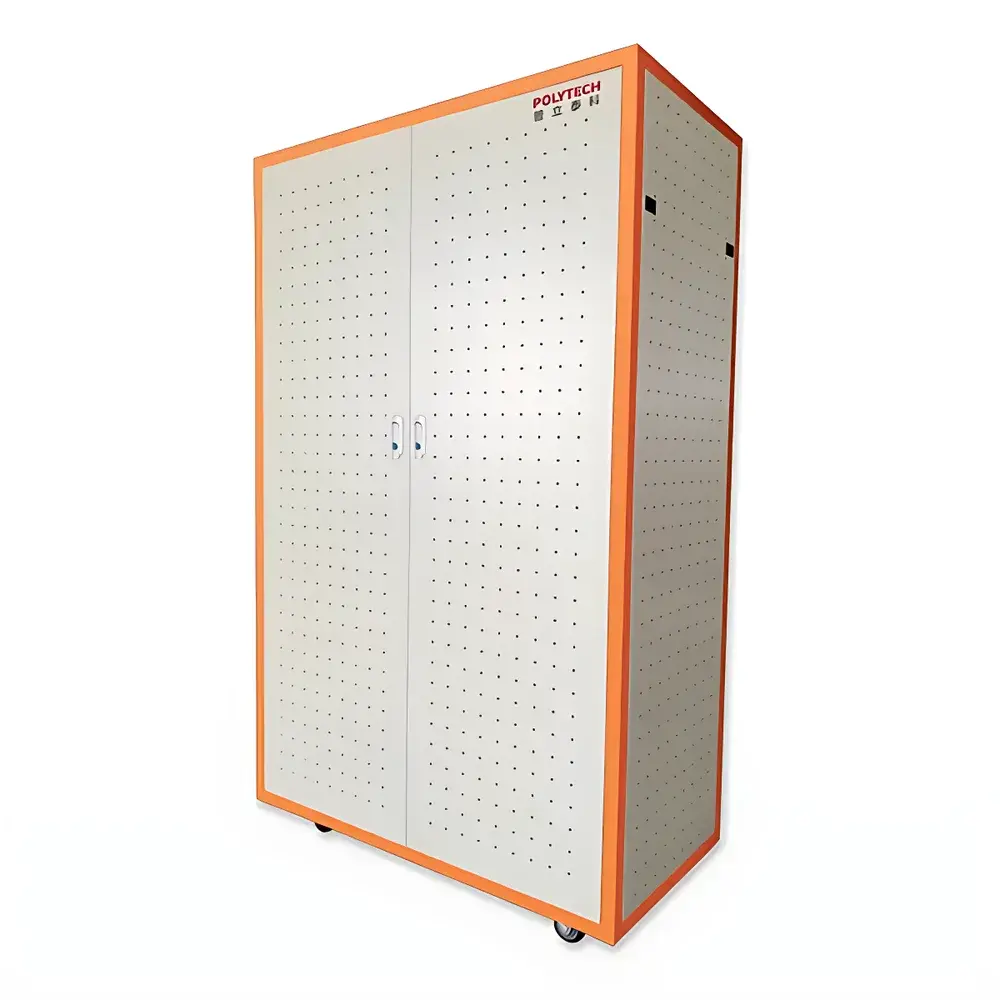
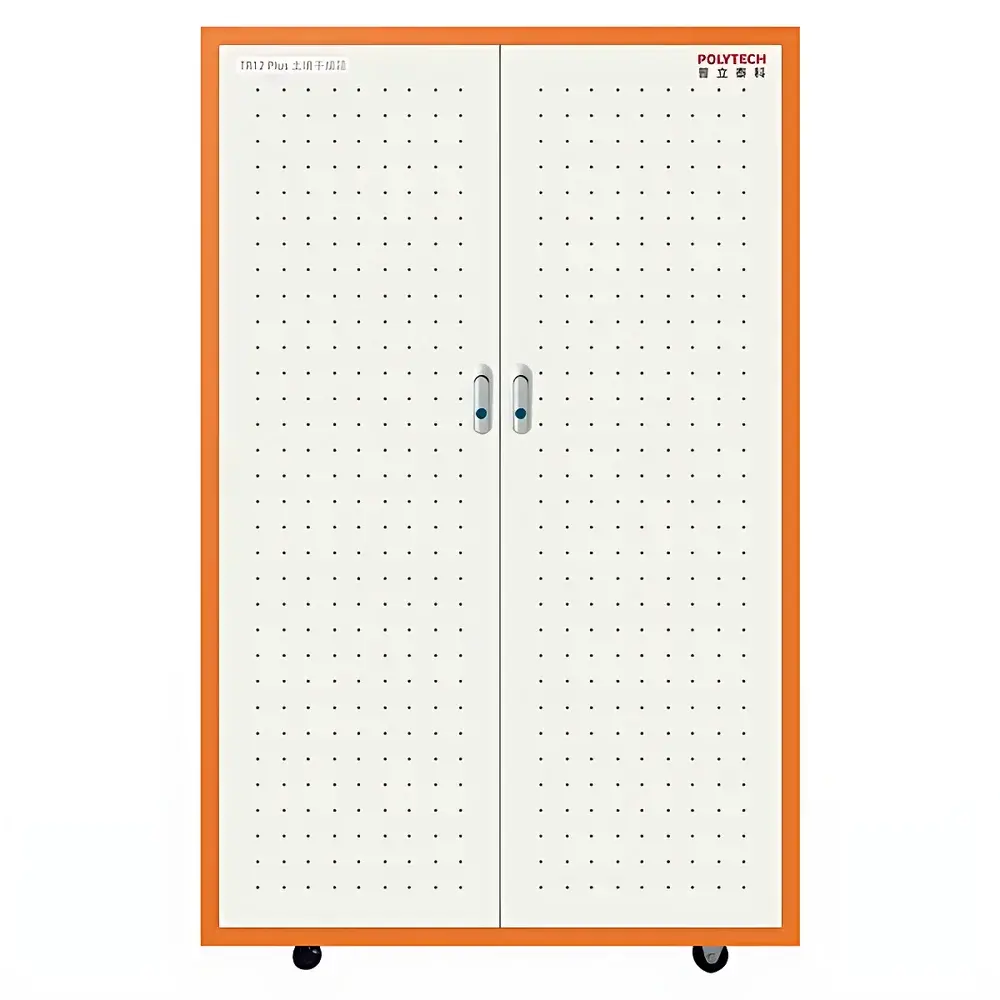
Polytech TR12 Plus Soil Drying Oven
| Brand | Polytech |
|---|---|
| Origin | Anhui, China |
| Manufacturer Type | Direct Manufacturer |
| Country of Origin | China |
| Model | TR12 Plus |
| Power Consumption | 100 W |
| Input Voltage | 220 V, 50 Hz |
| Operating Ambient Temperature | 0–40 °C |
| Operating Ambient Humidity | ≤60 % RH |
| Maximum Sample Capacity | 72 samples (1 kg per sampling point) |
| Tray Configurations | Adjustable for 1–8 kg total sample load per chamber |
| Airflow System | Multi-layer silent axial fans with independent three-tier fan control |
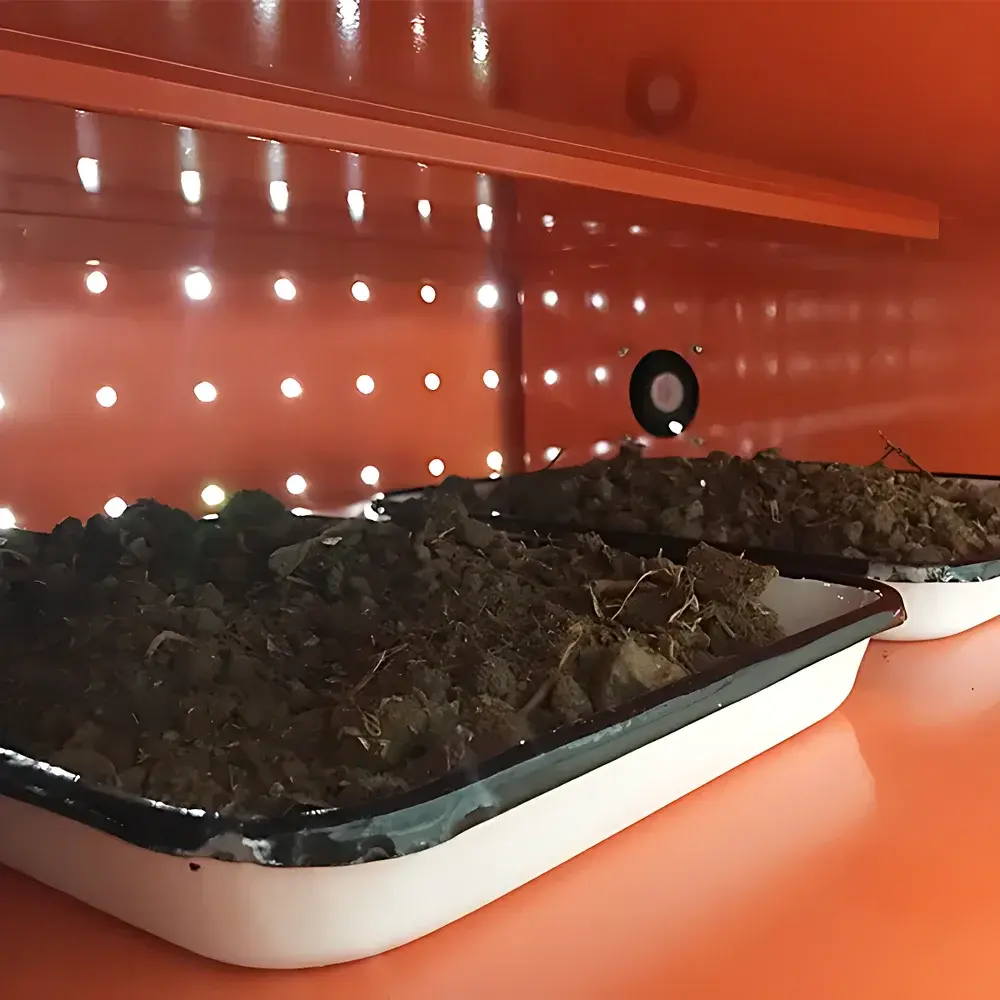
| Chamber Design | Perforated wall architecture for enhanced natural convection |
| Mobility | Integrated swivel casters |
| Compliance | HJ/T 166–2004 Technical Specification for Soil Environmental Monitoring |
Overview
The Polytech TR12 Plus Soil Drying Oven is an engineered solution designed specifically for the controlled, low-energy air-drying of soil and sediment samples in environmental laboratories. Unlike conventional forced-convection ovens, the TR12 Plus operates without thermal heating elements—relying instead on passive ambient air exchange enhanced by precisely calibrated airflow dynamics. Its core principle is based on regulated convective drying: quiet, low-torque axial fans draw ambient laboratory air into a multi-compartment drying chamber, where perforated internal walls and staggered tray positioning maximize surface exposure and laminar flow distribution. This approach preserves sample integrity by avoiding thermal degradation, oxidation, or volatile loss—critical for trace metal analysis, organic contaminant profiling, and regulatory-compliant soil characterization per HJ/T 166–2004.
Key Features
- Multi-tier silent fan system with independent on/off control per three layers—enabling granular airflow optimization across varying sample loads and moisture profiles.
- Perforated chamber architecture promoting uniform air penetration and minimizing stagnant zones—validated through empirical airflow mapping under standard lab conditions (25 °C, 45 % RH).
- Modular tray configuration supporting both small-batch (1–2 kg) and high-throughput (up to 8 kg per shelf) drying protocols; compatible with standard 10 × 10 cm and 20 × 20 cm sample pans.
- Low-power operation (100 W nominal) achieved via energy-efficient DC brushless fan motors—reducing cumulative energy demand over extended drying cycles (typically 24–72 h).
- Integrated mobility system featuring dual-locking swivel casters rated for 150 kg static load—facilitating repositioning within ISO 17025-accredited lab workflows without structural anchoring.
- No external exhaust ducting required; fully recirculating design meets Class II biosafety cabinet ventilation compatibility standards for shared lab environments.
Sample Compatibility & Compliance
The TR12 Plus accommodates heterogeneous soil matrices including clay-rich subsoils, gravel-laden construction fill, organic-rich river sediments, and hydrocarbon-impacted industrial soils. Its non-thermal methodology ensures retention of semi-volatile organics (e.g., PAHs, PCBs), labile nutrients (NH₄⁺, NO₃⁻), and redox-sensitive species (Fe²⁺/Fe³⁺, Mn²⁺) that degrade under heated drying. The unit complies with the mandatory air-drying procedures defined in HJ/T 166–2004 Section 6.2.1, which specifies ambient-temperature desiccation for pre-analysis stabilization. While not certified to ISO/IEC 17025 calibration requirements, its mechanical design supports GLP documentation of drying duration, ambient conditions, and sample placement—enabling full audit trail generation for regulatory submissions to MEE (Ministry of Ecology and Environment) or third-party accreditation bodies.
Software & Data Management
The TR12 Plus is a standalone electromechanical instrument with no embedded microprocessor or digital interface. All operational parameters—including fan activation sequence, runtime logging, and environmental monitoring—are recorded manually or integrated into existing LIMS via external USB-connected temperature/humidity data loggers (e.g., HOBO UX100 series). Optional add-ons include a DIN-rail mounted RS-485 I/O module for centralized HVAC coordination in multi-unit installations. No proprietary software is required, eliminating validation overhead associated with FDA 21 CFR Part 11 compliance—making it suitable for labs operating under simplified QA frameworks or resource-constrained field laboratories.
Applications
- Preparation of soil samples prior to pH, EC, CEC, and particle size distribution analysis (ASTM D422, ISO 11277).
- Drying of riverbed and estuarine sediments for heavy metal speciation (EPA Method 6010D, ISO 11466) without artifact formation.
- Stabilization of biologically active soils prior to microbial DNA extraction and metagenomic sequencing.
- Conditioning of reference materials (RM) and certified reference soils (CRS) during inter-laboratory comparison studies.
- Long-term batch processing in regional environmental monitoring networks where energy resilience and acoustic constraints govern equipment selection.
FAQ
Does the TR12 Plus include temperature or humidity control?
No. It relies solely on ambient laboratory conditions and does not incorporate thermostats, humidistats, or active dehumidification. Users must maintain facility-level climate control per HJ/T 166–2004 specifications (20–25 °C, 30–60 % RH).
Can it be used for drying plant tissue or sludge samples?
It is validated only for mineral soils and sediments. Organic-rich sludges may generate condensate or bioaerosols; such matrices require dedicated lyophilization or vacuum drying systems.
Is calibration documentation provided with the unit?
As a non-measuring device, the TR12 Plus ships with a Factory Conformance Statement verifying structural integrity, electrical safety (GB 4793.1–2019), and fan performance at rated voltage—not metrological calibration.
What maintenance is required?
Biannual inspection of fan grilles for dust accumulation and lubrication-free motor operation verification. No scheduled replacement parts are specified under normal use conditions.
How is cross-contamination prevented between samples?
Through physical compartmentalization: each of the 12 independent drying bays features sealed side walls and non-porous stainless-steel trays—eliminating airborne particulate transfer during concurrent multi-sample runs.



