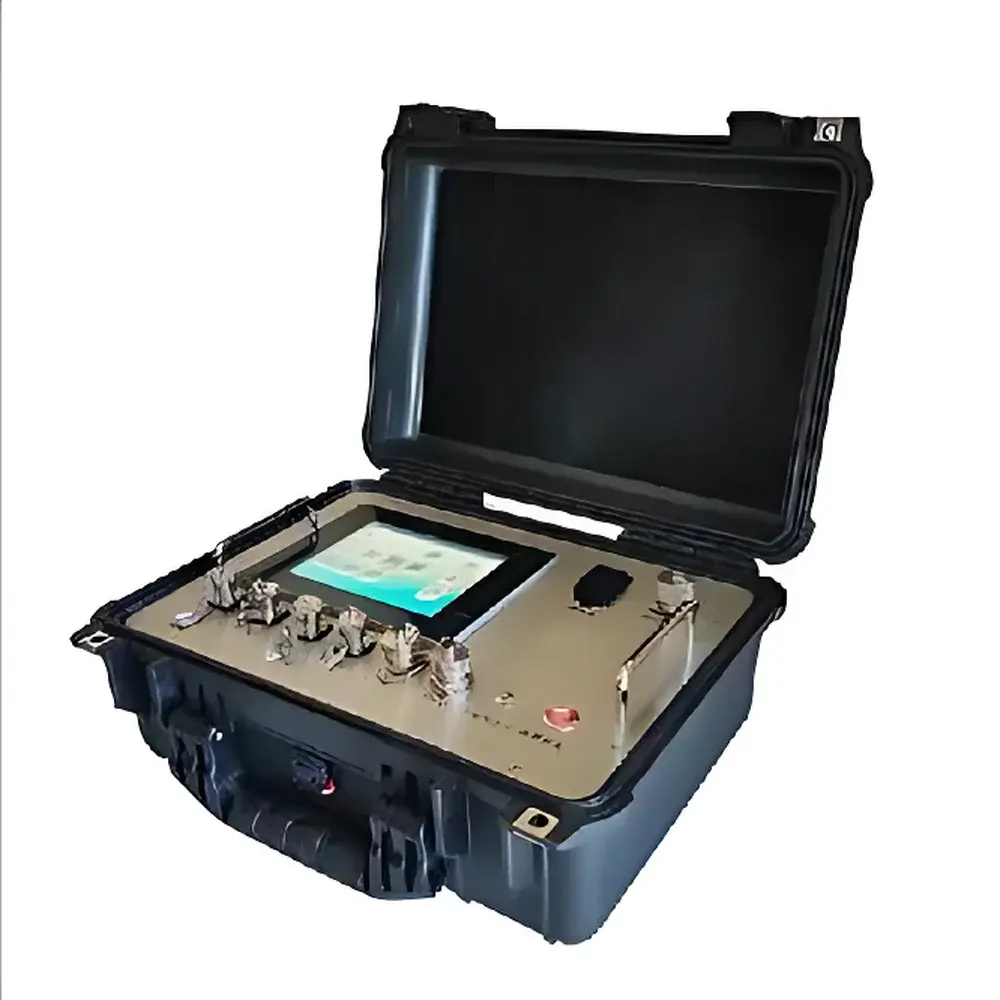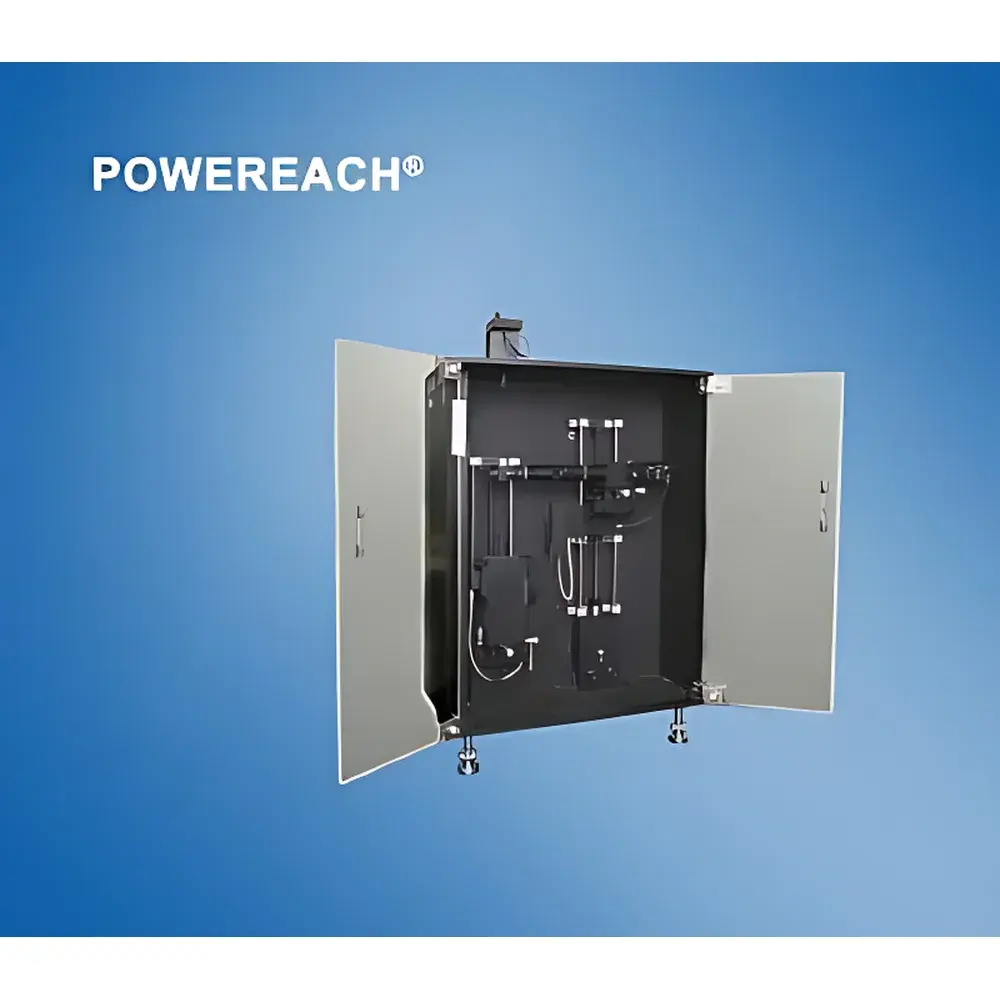
POWEREACH JQL04 Single-Fiber Profilometer and Tensile Analyzer
| Brand | POWEREACH (Shanghai Zhongchen) |
|---|---|
| Origin | Shanghai, China |
| Model | JQL04 |
| Max. Measurable Fiber Length | 120 mm |
| Min. Detectable Fiber Diameter | 1 µm |
| Scanning Resolution | 8 pixels/µm |
| High-Speed Imaging | 100 fps |
| Tensile Speed Control | Adjustable |
| Fiber Cross-Sectional & Diameter Variability Analysis | Yes |
| Compliance | ASTM D3822, ISO 5079, GB/T 14337 |
Overview
The POWEREACH JQL04 Single-Fiber Profilometer and Tensile Analyzer is an integrated metrology platform engineered for concurrent morphological profiling and mechanical characterization of individual textile fibers. It operates on the principle of synchronized axial translation and controlled 360° rotational scanning, enabling full circumferential reconstruction of fiber surface topography at sub-micron spatial resolution (8 pixels/µm). Unlike conventional tensile testers that report only force–displacement curves, the JQL04 captures dynamic structural evolution—such as diameter variation along length, cross-sectional asymmetry, twist-induced surface modulation, and real-time fracture morphology—while simultaneously acquiring load, elongation, and energy data under programmable strain rates. This dual-mode capability supports structure–property correlation studies essential for R&D in high-performance fibers (e.g., aramid, PBO, carbon, cellulose derivatives), quality control in filament production, and forensic textile analysis. The system is designed to meet fundamental requirements of ISO 5079 (determination of single-fiber tensile properties) and ASTM D3822 (tensile properties of single textile fibers), with hardware architecture compatible with GLP-compliant documentation workflows.
Key Features
- Integrated profilometry and tensile testing in a single instrument: eliminates sample repositioning errors and enables direct mapping of mechanical failure sites onto 3D surface geometry.
- Motorized dual-axis stage with coaxial rotation and axial translation: ensures torsion-free fiber alignment prior to scanning and enables multi-angle contour acquisition for accurate diameter distribution analysis.
- High-resolution optical scanning system: achieves 8 pixels per micrometer lateral resolution across the full 120 mm measurable fiber length; supports detection of fibers down to 1 µm nominal diameter.
- Synchronized high-speed imaging (100 fps): captures microstructural evolution during deformation—necking, fibrillation, kink band formation, and fracture initiation—with temporal registration to force–elongation data.
- Programmable tensile protocol: adjustable crosshead speed, pre-tension control, and displacement limits; compliant with standardized test sequences defined in ISO 5079 Annex B and ASTM D3822 Section 7.
- Modular夹持 system: accommodates pneumatic, v-groove, and custom micro-gripping fixtures for natural fibers (cotton, wool), synthetic filaments (PET, nylon), and brittle or low-diameter fibers (lyocell, electrospun nanofibers).
Sample Compatibility & Compliance
The JQL04 is validated for use with staple and continuous filament fibers ranging from 1 µm to >100 µm in diameter and up to 120 mm in length. It supports both dry-state and conditioned (standard atmosphere per ISO 139) testing. Sample preparation follows ISO 5079 guidelines: fibers are manually selected, mounted between precision-aligned grips without slack or twist, and preconditioned for ≥4 hours. The instrument’s measurement traceability aligns with national metrological standards maintained by CNAS-accredited calibration laboratories in China. Data output formats comply with ASTM E1447 (digital data exchange for materials testing) and support import into third-party statistical packages (e.g., JMP, Minitab) for Weibull modulus analysis, coefficient of variation (CV%) calculation of diameter, and stress–strain curve fitting per USP . Full audit trail functionality—including operator ID, timestamp, environmental log (optional hygrothermal sensor integration), and raw image/timestamped video export—is available when paired with POWEREACH’s optional FDA 21 CFR Part 11–compliant software module.
Software & Data Management
The proprietary POWEREACH FiberScan™ software (v4.2+) provides a unified interface for instrument control, real-time visualization, and post-processing. Key modules include: (1) Profile Reconstruction Engine—generates cross-sectional slices at user-defined intervals (0.1–100 µm step), computes minimum/maximum/mean diameter, circularity, and surface roughness (Ra, Rz); (2) Tensile Analytics Suite—calculates tenacity, initial modulus, breaking elongation, work-to-break, and toughness index per ISO 5079 Annex C; (3) Correlative Mapping Tool—overlays force peaks onto corresponding axial positions in the 3D profile mesh to identify defect-localized failure origins; (4) Batch Reporting Engine—exports PDF/CSV reports with embedded metadata (test standard, operator, calibration certificate ID, environmental conditions). All raw data—including TIFF stacks, CSV force–displacement logs, and MP4 video clips—are stored in a vendor-neutral hierarchical folder structure, facilitating long-term archival and regulatory review.
Applications
- Research on structure–property relationships in regenerated cellulose fibers (e.g., Tencel®, Viscose) under wet/dry conditions.
- Quality assurance of industrial monofilaments used in filtration membranes and geotextiles.
- Evaluation of thermal degradation effects on polypropylene and polyester fibers after accelerated aging (ISO 18064).
- Comparative analysis of surface modification efficacy (e.g., plasma treatment, enzymatic etching) via pre-/post-treatment diameter variability and surface texture metrics.
- Forensic fiber evidence analysis: discrimination of manufacturer-specific surface striations and cross-sectional geometry anomalies.
- Development of bio-based fibers (alginate, chitosan, silk) where mechanical integrity correlates strongly with hydration-dependent surface topology.
FAQ
What standards does the JQL04 support for tensile testing?
The JQL04 implements core procedures from ISO 5079 and ASTM D3822, including specimen mounting, gauge length definition, strain rate selection, and data reporting formats. Optional firmware updates extend compliance to GB/T 14337 (Chinese national standard) and ISO 1973 (wool fiber testing).
Can the system measure twisted or crimped fibers?
Yes—the coaxial rotation stage allows controlled untwisting or incremental angular stepping to resolve helical pitch and crimp periodicity while maintaining axial tension. Surface contour data can be unwrapped into 2D parametric maps for Fourier-based crimp analysis.
Is third-party calibration certification included?
Each unit ships with a factory calibration certificate traceable to NIM (National Institute of Metrology, China). ISO/IEC 17025–accredited calibration services are available upon request, covering force transducer (±0.5% FS), displacement encoder (±0.1 µm), and optical scale verification.
What computing hardware is required?
A Windows PC (64-bit recommended) with USB 2.0, RS-232 serial port, 8 GB RAM, and dedicated GPU is required. POWEREACH offers certified OEM configurations with 3-year onsite warranty; legacy systems running Windows 7/10 (32-bit) remain supported for backward compatibility.
How is data integrity ensured during long-duration tests?
The software employs cyclic redundancy check (CRC-32) on all acquired frames and logs; automatic recovery checkpoints save intermediate profiles every 5 seconds. Power-loss resilience is achieved via uninterruptible power supply (UPS) handshake protocol and non-volatile memory buffering.