
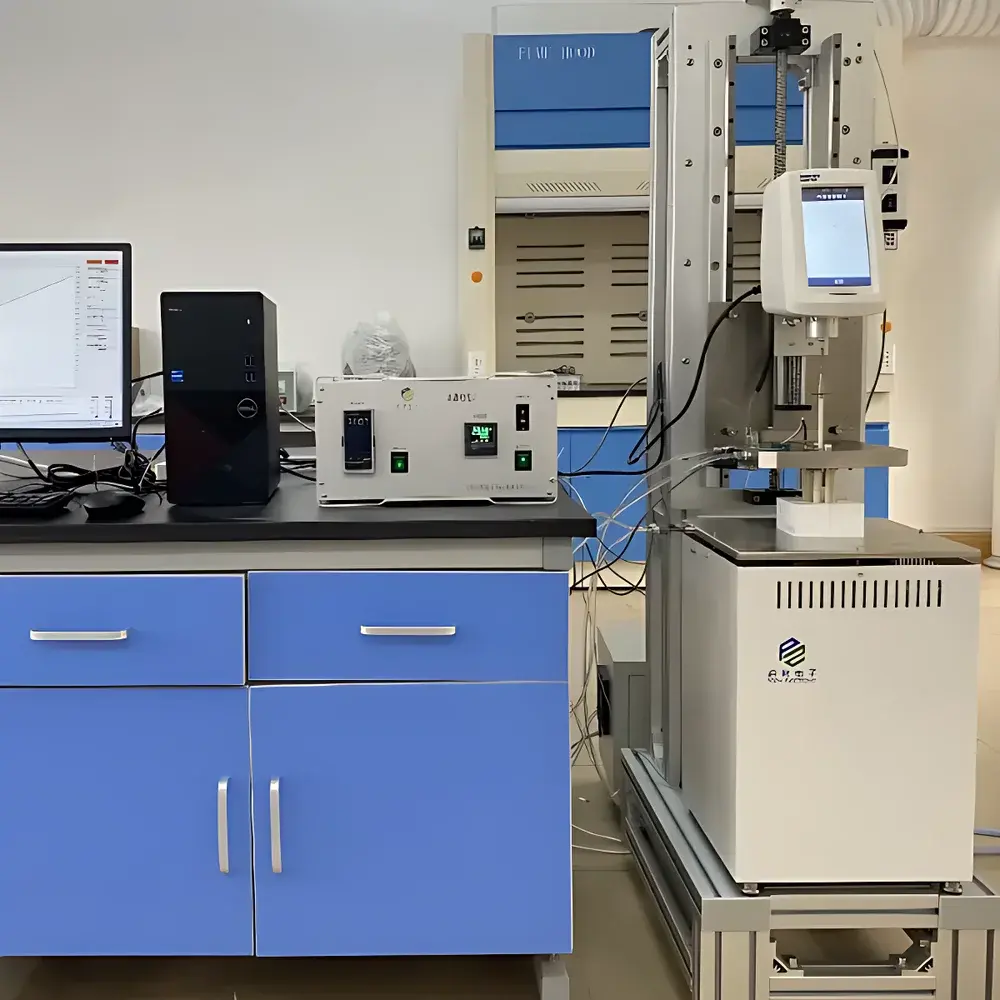
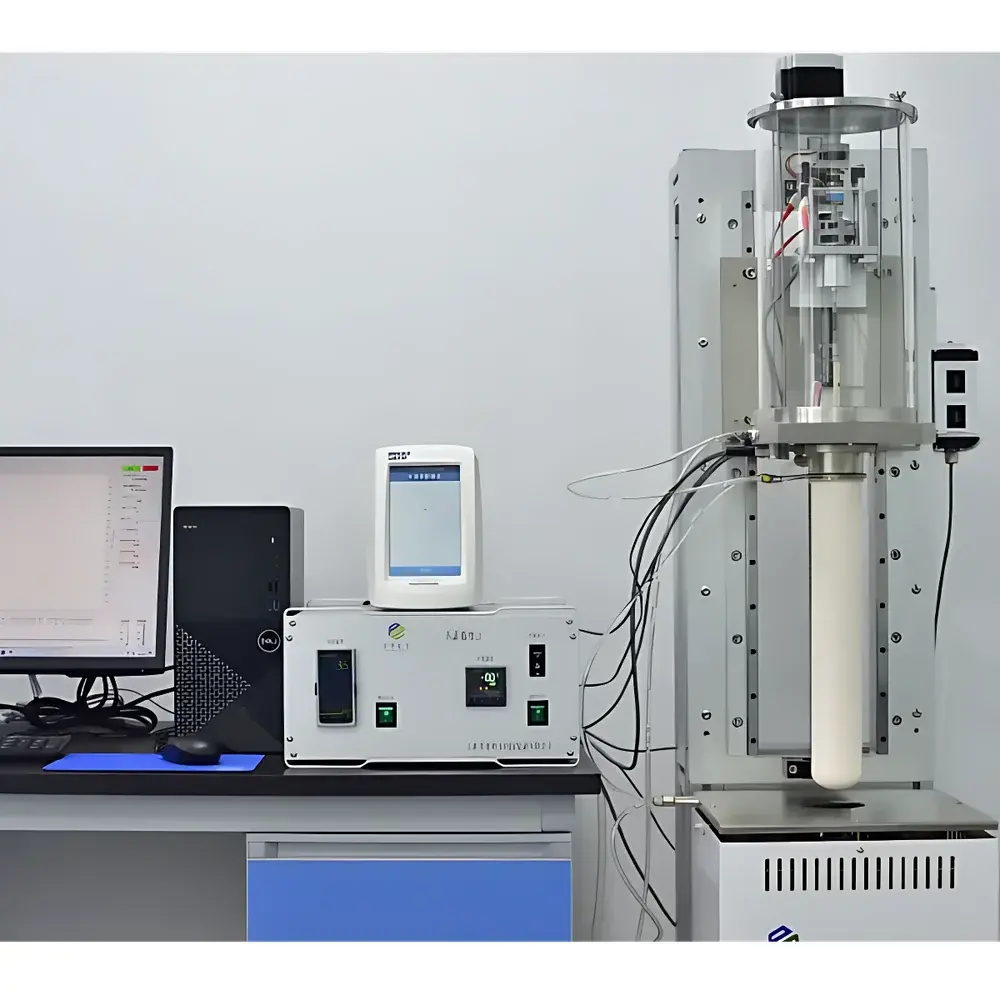
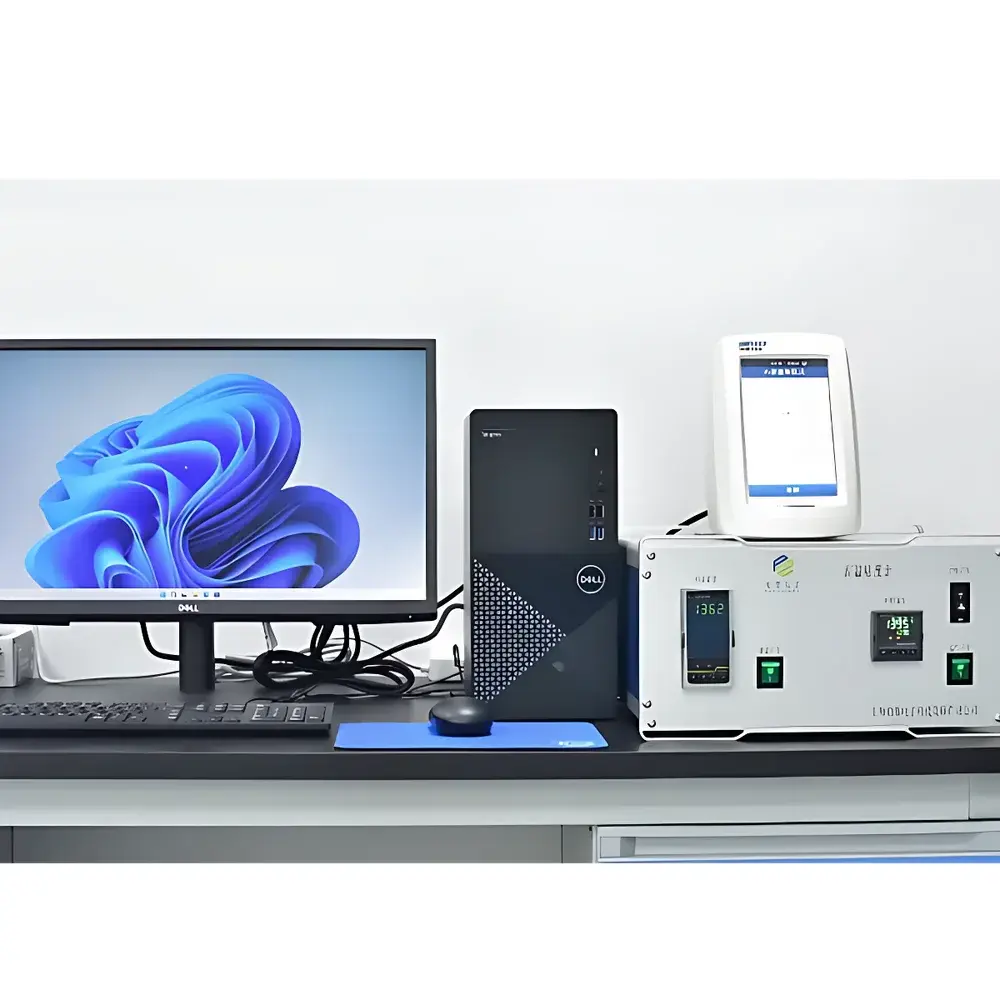
Pozhi RHEO1700 High-Temperature Rotational Viscometer for Glass Melts
| Brand | Pozhi Electronic |
|---|---|
| Origin | Shanghai, China |
| Manufacturer Type | Authorized Distributor |
| Instrument Type | Benchtop Fixed-Position Rotational Viscometer |
| Operating Environment | Ambient Temperature |
| Viscosity Range | 100–5,000,000 mPa·s |
| Temperature Range | 0–1700 °C |
| Temperature Resolution | 0.1 °C |
| Temperature Accuracy | ±1 °C |
| Heating Rate | 0–50 °C/min |
| Compliance | ASTM C965, GB/T 31424–2015 |
| Viscosity Measurement Core | Brookfield DVNext Rheometer Platform |
| Atmosphere | Air |
| Calibration Standard | NIST-Traceable Standard Glass 717a |
Overview
The Pozhi RHEO1700 High-Temperature Rotational Viscometer is an engineered solution for precise dynamic viscosity characterization of inorganic non-metallic melts—including optical glass, borosilicate compositions, photovoltaic glass, basalt fiber precursors, and silicate-based slag systems—within the critical temperature window of 0 °C to 1700 °C. It operates on the principle of Couette flow rheometry: a geometrically defined spindle (e.g., cylindrical, bob-and-cup, or custom high-temperature geometry) rotates at controlled angular velocity within the molten sample; the resulting viscous torque is transduced via a precision load cell and converted into absolute viscosity (η) using fundamental fluid mechanical relationships (η = τ/γ̇, where τ is shear stress and γ̇ is shear rate). This method delivers direct, SI-traceable viscosity values under steady-state or transient thermal ramping conditions—essential for modeling glass forming kinetics, optimizing annealing schedules, and qualifying melt homogeneity prior to fiber drawing or float bath processing.
Key Features
- Integrated Brookfield DVNext rheometer platform—certified for high-resolution torque measurement (±0.01% full scale), enabling reproducible viscosity determination across six decades (100–5×10⁶ mPa·s) with ±1% accuracy relative to reference values.
- High-stability temperature control system featuring Eurotherm EPC3016 digital controller with programmable multi-segment ramp/soak profiles, supporting linear, stepwise, and isothermal hold modes with real-time PID feedback from dual Pt100 sensors embedded in furnace walls and crucible base.
- Refractory-compatible furnace architecture rated to 1700 °C (optional configuration), constructed from vacuum-formed alumina fiber insulation and SiC heating elements, ensuring uniform axial/radial temperature gradients (<±2 °C over 50 mm sample height) and long-term thermal stability.
- NIST-traceable calibration protocol executed using certified Standard Reference Material (SRM) 717a glass, validated per ASTM C965 Annex A2, including independent verification of thermal drift compensation and rotational inertia correction algorithms.
- Air-atmosphere operation with integrated purge port and optional O₂ monitoring—designed for oxidizing environments typical of soda-lime, aluminosilicate, and phosphate glass processing without requiring inert gas infrastructure.
Sample Compatibility & Compliance
The RHEO1700 accommodates crucibles made from platinum-rhodium (Pt90/Rh10), iridium, or high-purity alumina (Al₂O₃ ≥99.8%), supporting sample volumes from 10 mL to 50 mL. It is validated for use with heterogeneous suspensions (e.g., glass frits, crystallizing melts) and low-volatility silicate systems exhibiting Newtonian or weakly shear-thinning behavior above their working point. Regulatory alignment includes full conformance with ASTM C965 (“Standard Test Method for Viscosity of Glass Above the Softening Point by Rotational Viscometry”) and Chinese national standard GB/T 31424–2015 (“Determination of High-Temperature Viscosity of Inorganic Non-Metallic Materials”). Data acquisition meets GLP/GMP documentation requirements, with audit-trail-enabled timestamping, user authentication, and electronic signature support compliant with FDA 21 CFR Part 11 when paired with optional secure software licensing.
Software & Data Management
Instrument control and data analysis are performed via PozhiVisco v4.2 software—a Windows-based application built on .NET Framework with native integration of Brookfield’s Rheo3000 API. The interface supports synchronized acquisition of viscosity, temperature, torque, rotational speed, and heating rate at up to 10 Hz sampling frequency. Raw datasets are exported in CSV and ASTM E1382-compliant XML formats; time-temperature-viscosity (TTV) curves can be fitted to Vogel–Fulcher–Tammann (VFT) or Arrhenius models directly within the software. All calibration records, test logs, and instrument configuration files are stored in an encrypted SQLite database with automatic daily backup and role-based access controls (Administrator, Operator, Reviewer).
Applications
- Development and QC of optical crown/flint glasses: quantifying viscosity at strain, annealing, and softening points (η = 10¹³·⁵, 10¹², and 10⁷·⁶ Pa·s respectively) to validate compositional design against Schott or Ohara catalog specifications.
- Photovoltaic glass manufacturing: assessing melt rheology during tin bath entry to prevent surface defects such as ripples or seeds caused by insufficient flow resistance.
- Metallic glass formation studies: mapping viscosity minima near Tg to identify critical cooling rates and predict glass-forming ability (GFA) indices (e.g., ΔTx, γ-parameter).
- Basalt fiber production: correlating high-temperature viscosity (at 1250–1450 °C) with drawability, filament diameter consistency, and tensile strength distribution in continuous fiber spinning lines.
- Slag viscosity modeling for metallurgical process optimization: determining liquidus temperatures and phase separation thresholds in CaO–SiO₂–Al₂O₃–MgO systems used in blast furnace and EAF operations.
FAQ
What spindle geometries are supported for high-temperature glass melts?
Standard configurations include Pt-Rh cylindrical spindles (L=30 mm, D=1.5 mm) and custom-designed bob-and-cup assemblies for improved thermal mass matching and reduced convection artifacts.
Is vacuum or inert gas operation possible?
The base configuration operates in ambient air; optional furnace modifications include flanged ports for nitrogen purging or vacuum sealing (≤10⁻² mbar), subject to crucible material compatibility and thermal expansion constraints.
How is thermal expansion of the spindle compensated during measurement?
Real-time spindle length correction is applied using pre-characterized thermal expansion coefficients for Pt-Rh alloys, integrated into the torque-to-viscosity conversion algorithm per ASTM C965 Section 8.4.
Can the system perform oscillatory measurements?
No—the RHEO1700 is configured exclusively for steady-shear rotational mode; dynamic oscillatory capability requires upgrade to a high-temperature parallel-plate rheometer platform.
What maintenance intervals are recommended for the furnace and drive assembly?
Furnace insulation inspection every 200 operating hours; Pt-Rh spindle recalibration every 500 h or after exposure >1500 °C; drive motor lubrication and encoder verification annually per ISO 17025 preventive maintenance schedule.



