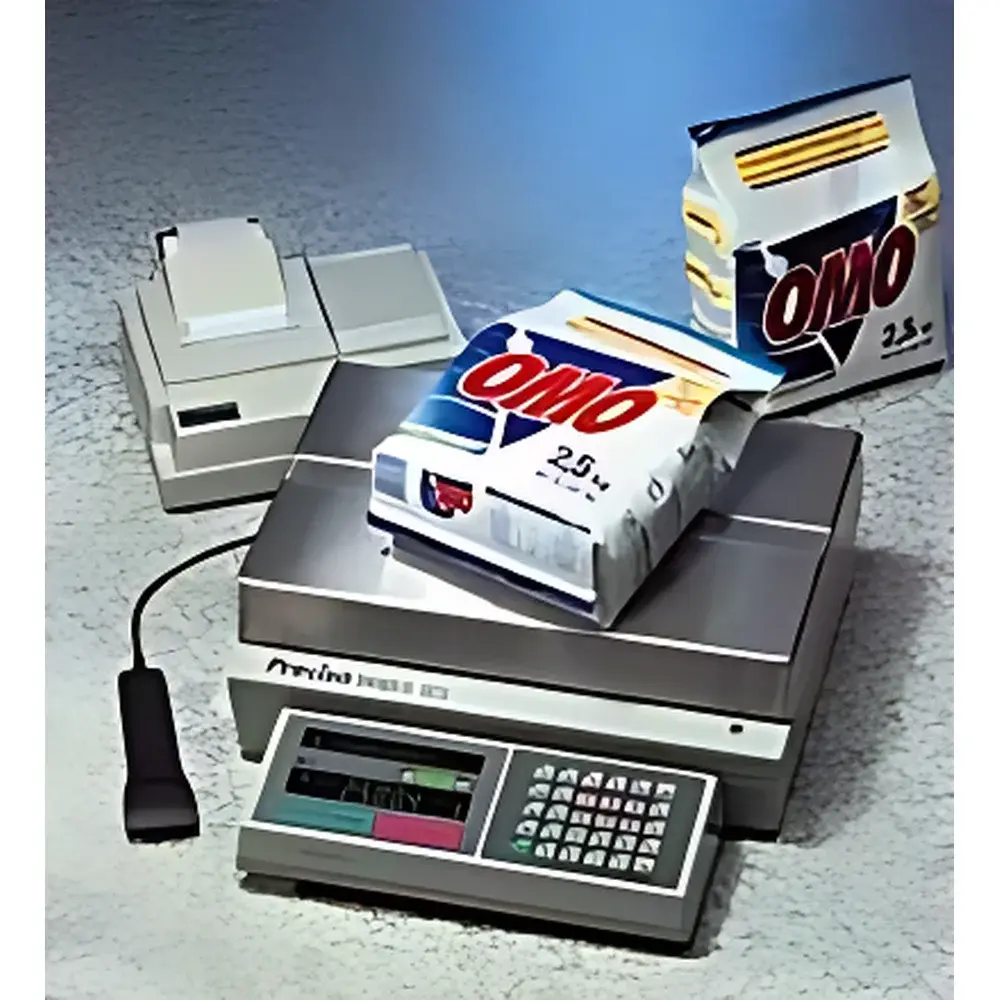
Precisa 30000D SCS Analytical Balance
| Brand | Precisa |
|---|---|
| Capacity | 30100 g |
| Readability | 0.1 g |
| Display Response Time | 0.08 / 0.16 / 0.32 sec (adjustable) |
| Stability Setting | LOW / MED / HIGH (adjustable) |
| Operating Temperature | 0–40 °C |
| Power Supply | AC 230 V, 50/60 Hz |
| Power Consumption | 13 VA |
| Calibration | Internal motorized weight, programmable auto-calibration every 24 h or triggered by ≥2 °C ambient temperature change |
| Dimensions (W×H×D) | 375 × 130 × 396 mm |
| Pan Size | 375 × 250 mm |
| Net Weight | 14.5 kg |
| Interface | RS-232/V24 |
| Compliance | ISO 9001 certified manufacturing process |
Overview
The Precisa 30000D SCS Analytical Balance is a high-capacity, high-stability laboratory balance engineered for precision mass measurement in quality control, formulation, and routine analytical workflows where reproducibility and long-term reliability are critical. Unlike standard analytical balances with sub-milligram readability, the 30000D SCS operates at 0.1 g resolution across a 30.1 kg capacity—positioning it at the intersection of analytical rigor and industrial-scale utility. Its measurement principle adheres to electromagnetic force compensation (EMFC), ensuring linearity, minimal drift, and immunity to mechanical wear over extended operational cycles. Designed and manufactured under ISO 9001-certified quality management systems in Switzerland, the instrument meets foundational metrological requirements for traceable mass determination in regulated environments—including those aligned with ISO/IEC 17025, USP Chapter <41>, and GLP-compliant documentation practices.
Key Features
- SCS (Smart Calibration System): Fully automated internal calibration using a built-in motorized reference weight; configurable for scheduled calibration every 24 hours or dynamic initiation upon detection of ≥2 °C ambient temperature fluctuation—ensuring continuous accuracy without manual intervention.
- Triple-response display timing (0.08 / 0.16 / 0.32 sec) and three-tier stability threshold (LOW/MED/HIGH) allow real-time optimization for varying sample dynamics—from viscous liquids to granular solids—minimizing settling delays without compromising repeatability.
- Dual-unit concurrent display and seamless unit conversion across 14 selectable mass and count formats (g, kg, dwt, oz, lb, ct, %, PCS, TLH, etc.), supporting multi-departmental reporting standards within global R&D and production facilities.
- Integrated bottom-loading interface and optional density determination kit (sold separately) enable direct solid/liquid specific gravity measurement via displacement method—eliminating intermediate calculations and reducing operator error.
- RS-232/V24 serial port supports bidirectional communication with PCs, LIMS, or thermal printers; compatible with standard ASCII protocols for raw data export, audit trail generation, and integration into 21 CFR Part 11–compliant electronic record systems when paired with validated software.
- User-configurable password protection, UMM (User Memory Module) parameter retention, and audible keypress feedback (enable/disable) enhance operational security and procedural consistency across shift-based laboratory operations.
Sample Compatibility & Compliance
The 30000D SCS accommodates heterogeneous sample types—including powders, bulk reagents, packaged components, and irregularly shaped objects—thanks to its oversized 375 × 250 mm stainless-steel weighing pan and low-profile chassis design. Its operating range (0–40 °C) ensures stable performance in non-climate-controlled QC labs, warehouses, or pilot-scale manufacturing suites. The balance complies with international electromagnetic compatibility (EMC) directives (IEC 61326-1) and safety standards (IEC 61010-1). While not inherently FDA 21 CFR Part 11–certified as a standalone device, its deterministic calibration log, timestamped event history, and RS-232 data integrity make it suitable for validation under GMP/GLP frameworks when deployed with qualified data acquisition software and documented SOPs.
Software & Data Management
No proprietary software is bundled; however, the RS-232 interface delivers ASCII-formatted output—including weight value, unit code, stability flag, and timestamp—enabling direct ingestion into Excel, LabArchives, Empower, or custom Python/Node.js parsers. Audit-ready data capture requires external logging tools that enforce write-once-read-many (WORM) storage, user authentication, and electronic signature workflows. The UMM retains up to 16 user-defined configurations (e.g., unit pairs, stability thresholds, print formatting), eliminating reconfiguration during power cycles or daily startup sequences.
Applications
- Raw material receipt inspection and batch release testing in pharmaceutical excipient and API manufacturing.
- Formulation dosing verification for nutraceutical blends, catalyst mixtures, and polymer masterbatches.
- Quality assurance of packaged goods (e.g., tablet blister packs, vial fills, sachet weights) prior to distribution.
- Density and specific gravity analysis of metals, ceramics, and polymer pellets using the optional immersion kit.
- Inventory reconciliation and component counting (PCS mode) in electronics assembly and medical device packaging lines.
- Calibration lab support for verifying Class M2 and M3 test weights per OIML R 111 guidelines.
FAQ
Does the 30000D SCS support external calibration with traceable weights?
Yes—the balance accepts external calibration via standard Class F1 or E2 weights through its guided calibration routine; internal calibration remains the default for routine operation.
Is the RS-232 interface compatible with modern Windows/macOS systems?
Yes—when used with a USB-to-serial adapter (e.g., FTDI chipset) and terminal emulation software (e.g., Tera Term, PuTTY), the interface functions identically to legacy COM ports.
Can the stability setting be locked to prevent accidental changes?
Yes—password protection applies to all configuration menus, including stability mode, display speed, and calibration scheduling.
What is the warm-up time required for optimal accuracy?
Precisa recommends a minimum 30-minute stabilization period after power-on before initiating critical measurements; internal calibration completes automatically during this phase.
Is the dust cover included as standard equipment?
Yes—a transparent acrylic anti-dust screen is supplied with each unit to minimize airborne particulate interference during static weighing operations.