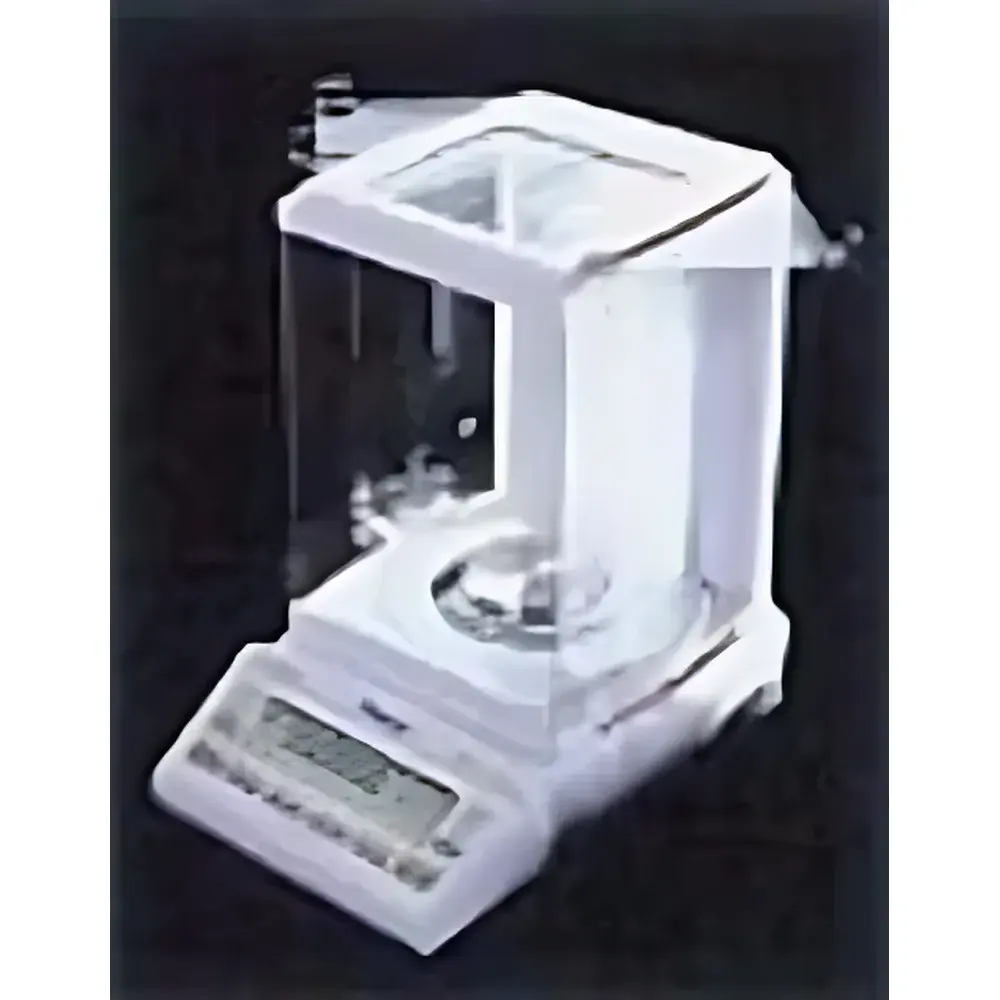
Precisa XR Series 0.01 mg Semi-Micro Balance
| Brand | Precisa |
|---|---|
| Origin | Switzerland |
| Model | XR Series |
| Readability | 0.01 mg (select models) |
| Capacity Range | 41–405 g |
| Construction | Full Aluminum Alloy Body with Anti-Static Coating |
| Calibration | Internal Motorized Calibration Weights |
| Auto-Calibration Trigger | ±2 °C Temperature Change or Every 24 h |
| Draft Shield | Integrated Retractable Glass Doors |
| Units | g, mg, ct, oz, lb, %, pcs, etc. |
| Functions | Summation Weighing, Piece Counting, Percentage Weighing, Animal Weighing, Dynamic Weighing |
| Compliance | ISO/IEC 17025, ASTM E898, USP <41>, GLP/GMP-Ready Audit Trail Support |
Overview
The Precisa XR Series 0.01 mg semi-micro balance is an engineered precision instrument designed for laboratories requiring trace-level mass measurement in regulated and research-intensive environments. Based on electromagnetic force compensation (EMFC) transduction technology, the XR series delivers high reproducibility and long-term stability under variable ambient conditions. Its core architecture integrates a monolithic aluminum alloy weighing chamber and base—designed to minimize thermal drift and mechanical resonance—while maintaining electrostatic dissipation across all operational surfaces. The balance operates within a controlled air environment enabled by its fully integrated, low-profile retractable draft shield system, eliminating rear-space interference during benchtop integration. With readability down to 0.01 mg (10 µg) and capacities spanning 41 g to 405 g across model variants, the XR platform supports both static and dynamic weighing protocols compliant with pharmacopeial and quality control standards.
Key Features
- Motorized internal calibration system with certified reference weights—enabling single-touch, traceable recalibration without manual intervention
- Intelligent auto-calibration logic triggered either by time interval (configurable up to 24 h) or temperature deviation (±2 °C threshold), ensuring continuous metrological integrity
- Retractable glass draft shield with concealed linear actuation—preserving rear bench space while maintaining ISO 17025-compliant environmental isolation
- Multi-function weighing modes including summation weighing (up to 99 entries), piece counting with statistical evaluation (mean weight, standard deviation), percentage weighing relative to reference mass, and stabilized animal weighing with real-time averaging
- Full aluminum alloy construction with conductive surface treatment—providing inherent anti-static performance and resistance to corrosion, vibration, and thermal expansion
- High-resolution graphical display with intuitive icon-based navigation and multilingual UI support (English, German, French, Spanish, Chinese)
Sample Compatibility & Compliance
The XR series accommodates a broad spectrum of sample types—from volatile pharmaceutical intermediates and hygroscopic reference standards to fine powders, micro-tablets, and biological specimens—without compromising repeatability. All models meet the mechanical and metrological requirements of ISO 9001, ISO/IEC 17025, and ASTM E898 for laboratory balances. For regulated environments, firmware supports 21 CFR Part 11-compliant user access control, electronic signature logging, and immutable audit trail generation—including timestamped records of calibration events, zero adjustments, unit changes, and method executions. The balance is validated for use in USP and applications, including assay uniformity testing, dissolution sample preparation, and reference standard dispensing.
Software & Data Management
Precisa’s optional LabX™ Connect software enables seamless bidirectional data exchange via RS232, USB, or Ethernet interfaces. Raw weighing data—including metadata such as operator ID, timestamp, environmental conditions (optional external sensor input), and calibration status—is exported directly to LIMS, ELN, or ERP systems in CSV, XML, or PDF formats. The embedded data logger retains up to 1,000 weighing records with full traceability. Firmware updates are performed securely over HTTPS with SHA-256 signature verification. All communication protocols adhere to IEC 62443-3-3 security guidelines for industrial automation systems.
Applications
- Pharmaceutical QC labs: Active pharmaceutical ingredient (API) weighing, reference standard preparation, and content uniformity testing per USP
- Academic and industrial research: Catalyst mass dosing, nanomaterial synthesis quantification, and gravimetric sorption analysis
- Clinical diagnostics: Reagent kit formulation, calibrator preparation, and trace-element standardization
- Materials science: Thin-film deposition mass monitoring, polymer additive blending, and ceramic powder batch verification
- Environmental testing labs: Filter weighing for PM2.5/PM10 analysis and gravimetric water content determination per ASTM D2234
FAQ
What is the difference between XR125SM and XR125SM-FR models?
The XR125SM offers fixed 0.01 mg readability across its full 125 g range, whereas the XR125SM-FR is a dual-range model providing 0.01 mg resolution from 41–125 g and 0.1 mg from 0–40 g—optimized for flexibility in multi-step workflows.
Does the XR series support GLP-compliant documentation?
Yes—when paired with LabX™ Connect or configured with internal logging enabled, the balance generates tamper-evident records meeting GLP audit requirements, including operator authentication, calibration history, and environmental metadata.
Can the draft shield be manually overridden?
No—the shield movement is fully automated and synchronized with weighing initiation; manual override is disabled to ensure consistent airflow control and measurement integrity.
Is external temperature/humidity compensation available?
The XR series includes built-in temperature compensation algorithms; optional external sensors (e.g., Vaisala HMP7) can be connected via analog input for enhanced environmental correlation in critical applications.
How often does the internal calibration weight require certification?
Per ISO/IEC 17025, the internal weights must be verified annually by an accredited calibration laboratory using traceable mass standards—documentation is retained in the device’s service log.