
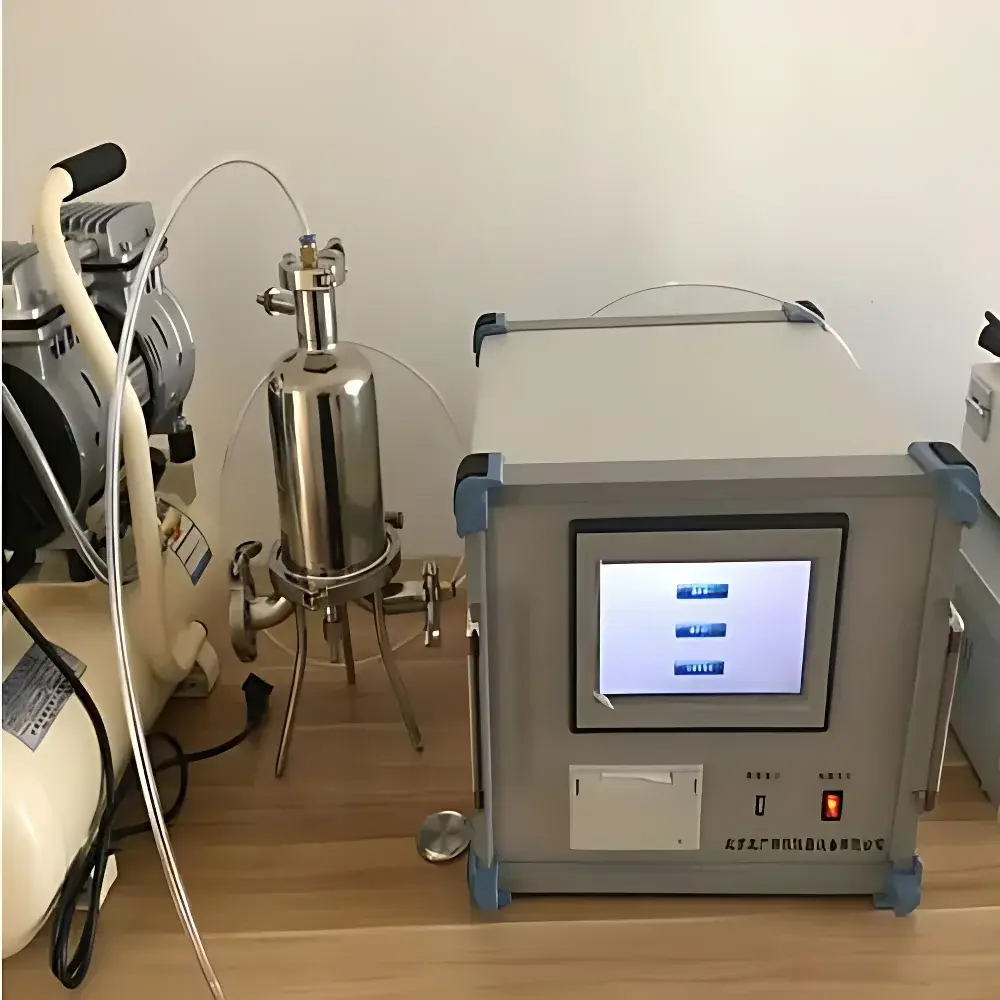
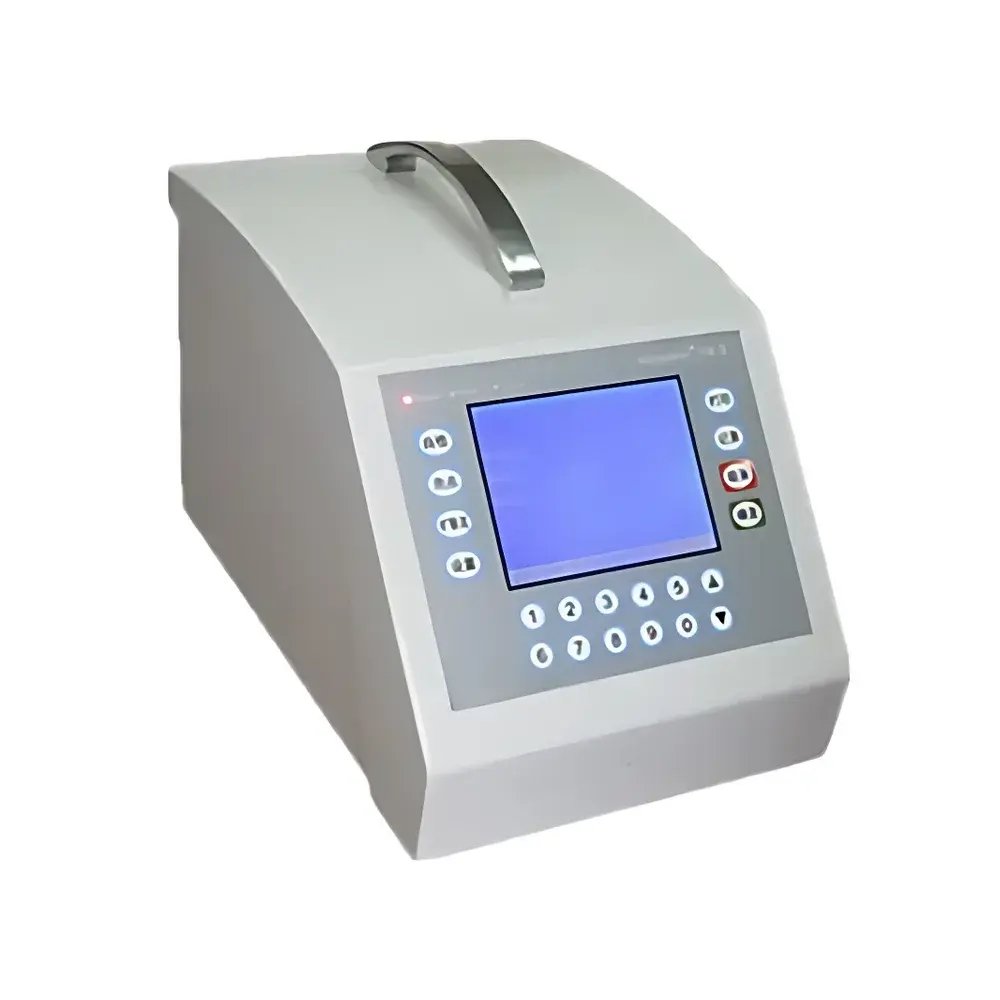
All Precision Instrument BQS-40 Automated Filter Integrity Tester for Pharmaceutical Sterile Filtration
| Brand | All Precision Instrument |
|---|---|
| Origin | Beijing, China |
| Manufacturer Type | Direct Manufacturer |
| Model | BQS-40 |
| Power Supply | 170–240 V AC, 50/60 Hz, 100 W |
| Maximum Operating Pressure | 7999 mbar |
| Inlet Gas Pressure | 3000 mbar |
| Test Pressure Range | 500–6900 mbar |
| Pressure Sensitivity | ±1.0 mbar |
| Bubble Point Accuracy | ±60 mbar |
| Dimensions (L×W×H) | 500 × 200 × 180 mm |
| Display | 5.7-inch 32-bit touchscreen |
| Language Options | English / Chinese |
| Data Storage | 32 GB (≥1 million test records) |
| Compliance | CE certified, FDA 21 CFR Part 11 compliant architecture, GMP-aligned audit trail |
| Enclosure Rating | IP54 |
| Supported Test Methods | Bubble Point, Diffusion Flow, Pressure Hold (Decay), Water Intrusion |
Overview
The All Precision Instrument BQS-40 Automated Filter Integrity Tester is a CE-certified, GMP-ready instrument engineered for quantitative integrity verification of hydrophobic and hydrophilic membrane filters used in pharmaceutical sterile filtration processes. It operates on the physical principles of capillary flow theory and gas diffusion kinetics—specifically, the relationship between applied differential gas pressure, surface tension of the wetting liquid, and pore geometry within microporous membranes. When a filter is fully wetted with a low-surface-tension fluid (e.g., fluorocarbon, anhydrous ethanol, or 60% IPA/water), liquid remains trapped in pores via capillary forces. Increasing upstream gas pressure displaces liquid from progressively smaller pores; the pressure at which bulk gas breakthrough occurs defines the bubble point (BP), directly correlating to the largest effective pore diameter. Complementary methods—including diffusion flow (spontaneous gas permeation through wetted pores under sub-bubble-point pressure), pressure hold (decay), and water intrusion (for hydrophobic filters)—enable comprehensive assessment of filter integrity, installation correctness, and system seal integrity. The BQS-40 implements real-time pressure–flow profiling and digital pneumatic control to eliminate variability inherent in manual or analog gas regulation.
Key Features
- Fully automated digital gas flow control subsystem—replaces outdated mechanical throttling valves, ensuring stable, repeatable pressurization across fluctuating inlet supply pressures (up to 3000 mbar)
- High-precision pressure sensors with ±1.0 mbar sensitivity and integrated temperature compensation for enhanced measurement reproducibility
- Multi-method validation suite: Bubble Point (BP), Diffusion Flow (DF), Pressure Hold (PH), and Water Intrusion (WI) per ASTM F838-22 and ISO 13408-2
- GMP-compliant software architecture featuring electronic signatures, four-tier user permission levels (1000 accounts), configurable audit trail, and full 21 CFR Part 11 readiness
- 5.7-inch industrial-grade touchscreen with bilingual UI (English/Chinese), intuitive workflow navigation, and context-sensitive help
- Onboard thermal printer with archival-grade output (legible >10 years); supports automatic post-test report generation including test parameters, curves, and pass/fail conclusions
- Expandable connectivity: RS232, USB host/device, optional Ethernet/Wi-Fi modules, and customizable I/O ports for integration into automated sterilization or SCADA systems
- IP54-rated enclosure with Staubli-compatible quick-connect fittings, dust- and splash-resistant design for cleanroom-adjacent environments
- Extended pneumatic path support (up to 100 m tubing length) without loss of accuracy—validated for large-volume housing testing (e.g., 12-cartridge, 20-inch filter housings)
Sample Compatibility & Compliance
The BQS-40 accommodates flat-sheet membranes, cartridge filters (PES, PVDF, nylon, PTFE, cellulose acetate), and capsule filters across diameters from 13 mm to 20 inches. It supports both offline benchtop testing and inline validation prior to use in bioprocessing or final-fill operations. Wetting liquid selection is critical: fluorocarbons (e.g., FC-40), anhydrous ethanol, or 60% isopropanol/water are recommended to ensure consistent surface tension (γ ≈ 10–25 mN/m) and avoid membrane damage. All test protocols align with regulatory expectations defined in USP , EU Annex 1, WHO TRS 961, and ISO 13408-2. The instrument’s built-in self-diagnostic routines verify sensor calibration, valve actuation, seal integrity, and firmware checksums at startup—ensuring operational reliability before each test sequence.
Software & Data Management
Running on a hardened Linux-based OS, the BQS-40 firmware delivers deterministic real-time control over pressure ramping, dwell timing, and flow sampling intervals. Each test generates timestamped raw data (pressure vs. time, flow vs. time), derived metrics (BP, DF rate, decay slope), and metadata (operator ID, filter lot, wetting fluid, environmental conditions). Data is stored locally on encrypted 32 GB flash memory with write-cycle optimization and supports export in CSV, PDF, and XML formats via USB. Audit trails record all user actions—including method edits, parameter overrides, report prints, and login/logout events—with immutable timestamps and operator attribution. Electronic signature capability meets ALCOA+ principles: attributable, legible, contemporaneous, original, accurate, and complete.
Applications
- Pre-use post-sterilization integrity testing of vent and process filters in bioreactor and buffer preparation systems
- Final filter validation prior to aseptic filling of parenterals, vaccines, and cell/gene therapy products
- Leak detection in stainless-steel housings, piping manifolds, and single-use assemblies
- Quality control release testing of purchased filter cartridges against manufacturer specifications
- Root cause analysis during filter failure investigations (e.g., bridging, compaction, or O-ring leakage)
- Supporting regulatory submissions requiring documented evidence of filter performance consistency across batches
FAQ
What wetting liquids are compatible with the BQS-40, and why does choice affect results?
Fluorocarbons (e.g., FC-40), anhydrous ethanol, and 60% isopropanol/water are validated options. Surface tension (γ) directly determines bubble point pressure (PBP = 4γcosθ/r); lower γ yields lower PBP. Using inconsistent or contaminated fluids introduces inter-test variability and invalidates comparative trending.
Can the BQS-40 perform tests on multi-cartridge housings?
Yes—it supports up to 12 × 20-inch cartridges simultaneously via programmable manifold control, with automatic compensation for total upstream volume and flow distribution.
How does the instrument ensure compliance with FDA 21 CFR Part 11?
Through role-based access control, mandatory electronic signatures for critical actions, tamper-evident audit logs with hash-verified entries, and secure data export protocols that preserve metadata integrity.
Is calibration traceable to national standards?
Pressure transducers are factory-calibrated against NIST-traceable references; users may perform field verification using certified deadweight testers or calibrated reference gauges.
Does the system support remote monitoring or integration with MES/LIMS?
Standard RS232 and USB interfaces enable basic data transfer; optional Ethernet/Wi-Fi modules and custom API development allow bidirectional communication with enterprise systems per customer requirements.





