
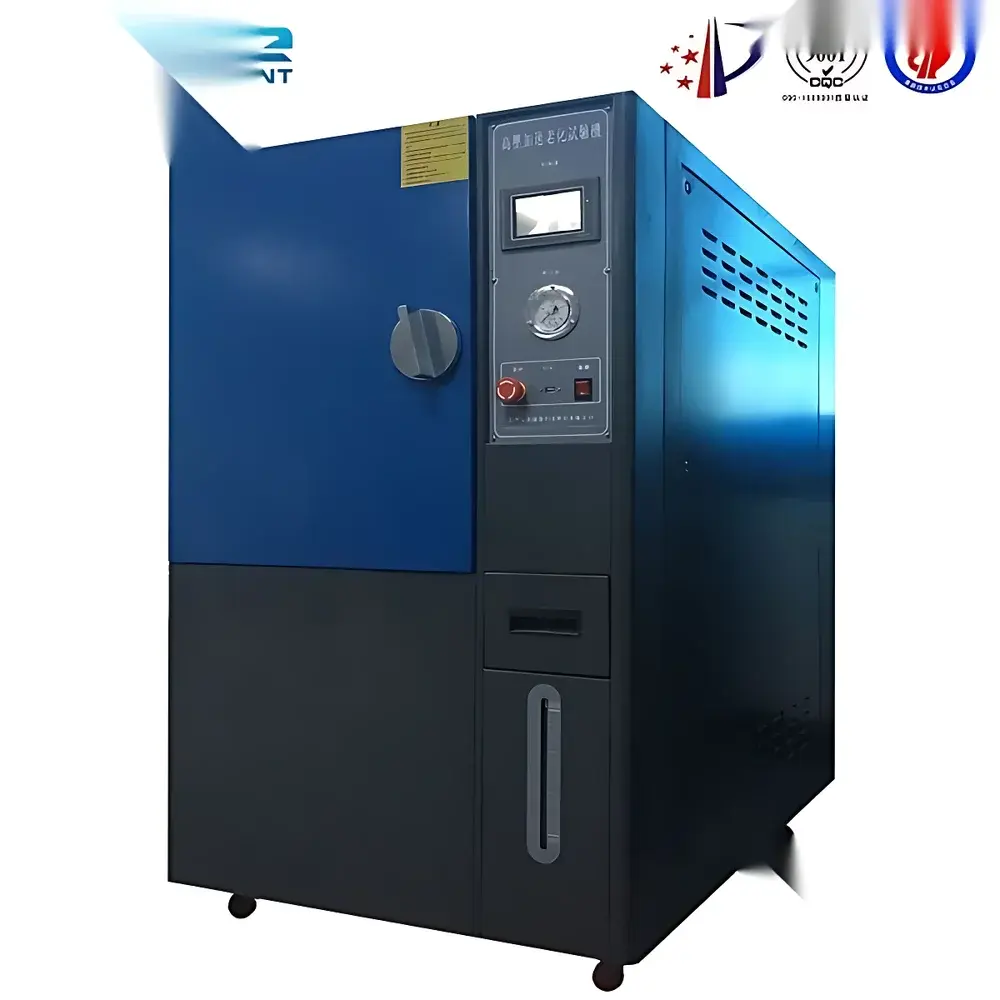
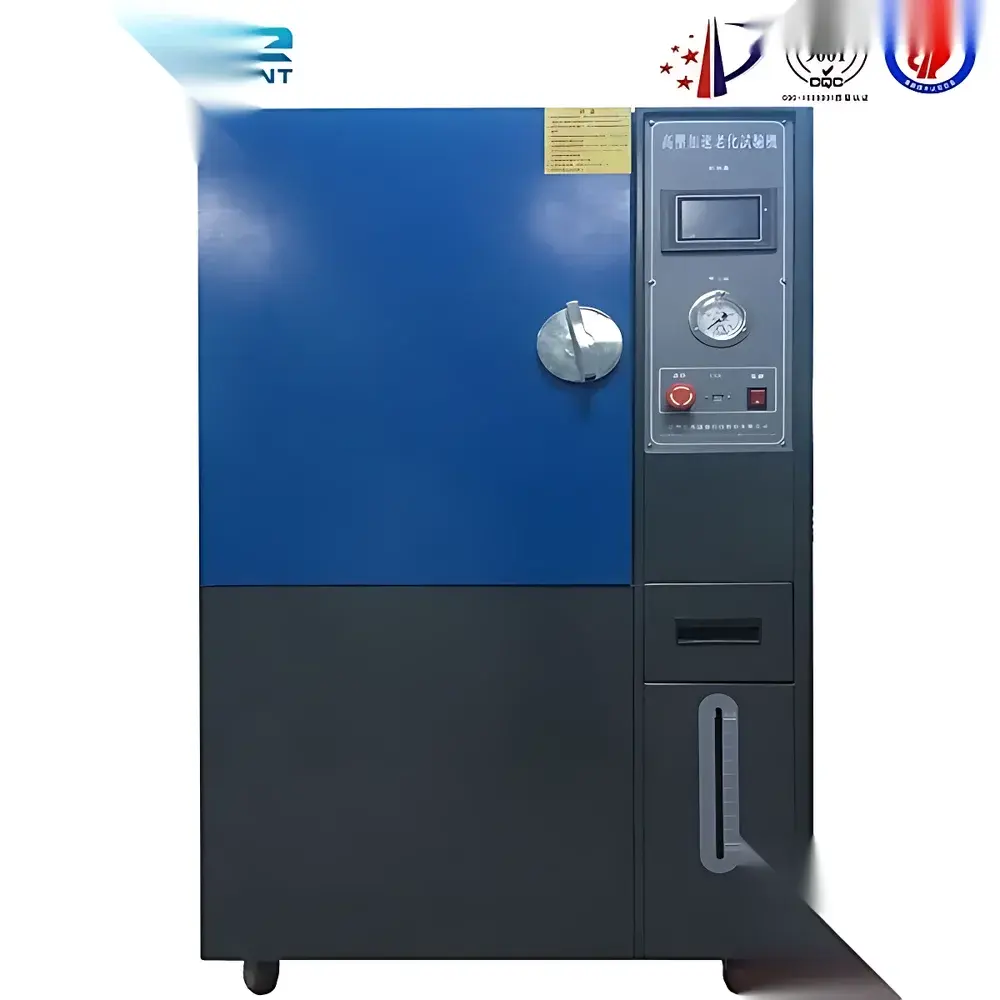
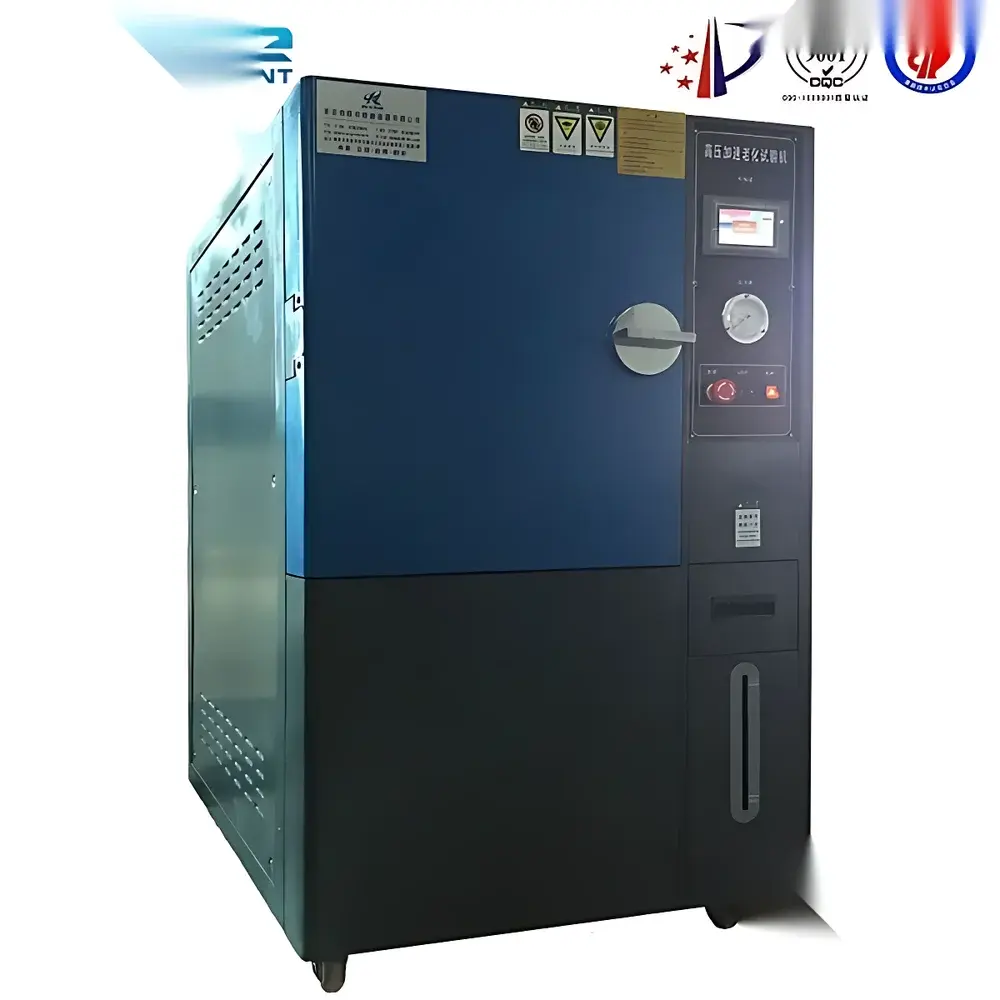
Preloaded Chamber PCT Accelerated Life Test System – OEM Manufacturer
| Key | Temperature Range: +110 °C to +132 °C |
|---|---|
| Temp. Uniformity | ±1.5 °C |
| Temp. Stability | ±0.5 °C |
| Humidity Range | 75–100 % RH (saturated steam) |
| Humidity Uniformity | ±3.0 % RH |
| Humidity Stability | ±1.5 % RH |
| Pressure Range | 0–2 kg/cm² (configurable up to 4 kg/cm²) |
| Max. Safety Pressure | 4 kg/cm² |
| Vacuum Preconditioning | Integrated particulate-filtered air intake (<1 µm) |
| Test Duration | 0–999 h |
| Steam Circulation | Natural convection |
| Water Consumption | Low—supports continuous operation up to 200 h per fill |
| Compliance | GB/T 10586–1989, GB/T 2423.3–1993 (IEC 60068-2-3), MIL-STD-810D Method 502.2, GJB 150.9–1986, GB/T 2423.34–1986, MIL-STD-883C Method 1004.2 |
Overview
The Preloaded Chamber PCT Accelerated Life Test System is a precision-engineered environmental stress screening platform designed for highly accelerated reliability validation of electronic components, semiconductor packages, PCB assemblies, and hermetically sealed devices under combined high temperature, high humidity, and elevated pressure conditions. Operating on the principle of Pressure Cooker Test (PCT) per JEDEC JESD22-A102 and A110, this system subjects test specimens to saturated steam environments at pressures exceeding ambient—thereby accelerating moisture diffusion into microstructures and enabling rapid detection of latent failures such as wire bond corrosion, delamination, popcorn cracking, and intermetallic degradation. Its cylindrical stainless-steel inner chamber conforms to industrial pressure vessel safety standards, while the vacuum-assisted preconditioning cycle removes ambient air and replaces it with filtered (<1 µm particulate) inert atmosphere—ensuring reproducible baseline purity prior to pressurization.
Key Features
- Cylindrical stainless-steel test chamber engineered for structural integrity and leak-tight performance at sustained pressures up to 4 kg/cm² (max safety rating); geometry minimizes condensate accumulation and eliminates drip-induced thermal shock.
- Radially contoured stainless-steel inner liner mitigates direct impingement of latent heat from saturated steam, ensuring uniform thermal loading across sample surfaces.
- Integrated vacuum purge cycle with HEPA-class particulate filtration (≤1 µm) prior to pressurization—critical for eliminating oxygen-driven oxidation pathways and maintaining controlled atmospheric composition.
- Low water consumption architecture: optimized steam generation and condensate recovery enable uninterrupted testing for up to 200 hours per single water fill—reducing operational overhead and improving test continuity.
- Precision PID-controlled heating and steam saturation system delivers stable temperature control (±0.5 °C) and humidity maintenance (±1.5 % RH) within the specified operational envelope (+110 °C to +132 °C / 75–100 % RH).
- Configurable pressure range: standard 0–2 kg/cm²; optional extended range up to 4 kg/cm² for ultra-accelerated qualification protocols requiring higher ΔP gradients.
Sample Compatibility & Compliance
This PCT system accommodates standard JEDEC trays, wafer carriers, and board-level fixtures without modification. Chamber geometry supports vertical or horizontal orientation of DUTs (Device Under Test), with configurable mounting rails and non-reactive support structures. The system complies with internationally recognized reliability testing standards including JEDEC JESD22-A102 (PCT), JESD22-A110 (UHAST), IEC 60749-26, and MIL-STD-883 Method 1004.2. It also satisfies environmental chamber metrology requirements per GB/T 5170.2 (temperature) and GB/T 5170.5 (humidity), with traceable calibration paths aligned to national metrological institutes. All safety interlocks—including overpressure relief valves, redundant pressure transducers, and real-time chamber integrity monitoring—meet ISO 13857 and EN 61000-6-2 requirements for industrial equipment.
Software & Data Management
The embedded controller features a real-time logging interface with timestamped records for temperature, relative humidity, absolute pressure, vacuum status, and elapsed test time. Data export is supported via USB and RS-485 (Modbus RTU) for integration into enterprise quality management systems (QMS). Audit trails include user login events, parameter modifications, and alarm acknowledgments—fully compliant with FDA 21 CFR Part 11 requirements when deployed with validated third-party LIMS or MES platforms. Optional Ethernet connectivity enables remote monitoring and secure TLS-encrypted data streaming to cloud-based analytics dashboards for cross-lab correlation and SPC trend analysis.
Applications
- Qualification of plastic-encapsulated microcircuits (PEMs) per MIL-PRF-38535 and AEC-Q200.
- Failure mode acceleration studies for flip-chip, WLP, and fan-out packaging technologies.
- Process validation of conformal coating integrity and underfill adhesion in automotive electronics.
- Reliability benchmarking of MEMS sensors and RF front-end modules exposed to humid tropical environments.
- Accelerated corrosion testing of solder alloys and copper metallization stacks under biased-HAST conditions (when configured with electrical biasing option).
FAQ
What is the maximum allowable test duration without refilling water?
The system supports up to 200 hours of continuous operation per single water fill under nominal operating conditions (121 °C / 2 kg/cm² / 100 % RH). Actual duration varies with setpoint combinations and ambient lab humidity.
Does the system meet GLP/GMP documentation requirements?
Yes—the controller provides full audit trail capability, electronic signature support, and calibrated sensor traceability. Validation documentation (IQ/OQ/PQ templates) is available upon request for regulated environments.
Can the chamber accommodate large-format PCBs or automotive ECUs?
Standard internal dimensions are configurable per OEM specification. Custom chamber liners and fixture interfaces are offered for non-standard DUT geometries up to 450 mm × 450 mm × 300 mm (W×D×H).
Is pressure calibration traceable to national standards?
All pressure transducers are supplied with NIST-traceable calibration certificates valid for 12 months. On-site recalibration services are available globally through authorized service partners.
How is temperature uniformity verified during qualification?
Uniformity mapping follows GB/T 5170.2 using nine calibrated PT100 sensors positioned per ASTM E744—center point plus eight spatially distributed locations defining the usable test volume.



