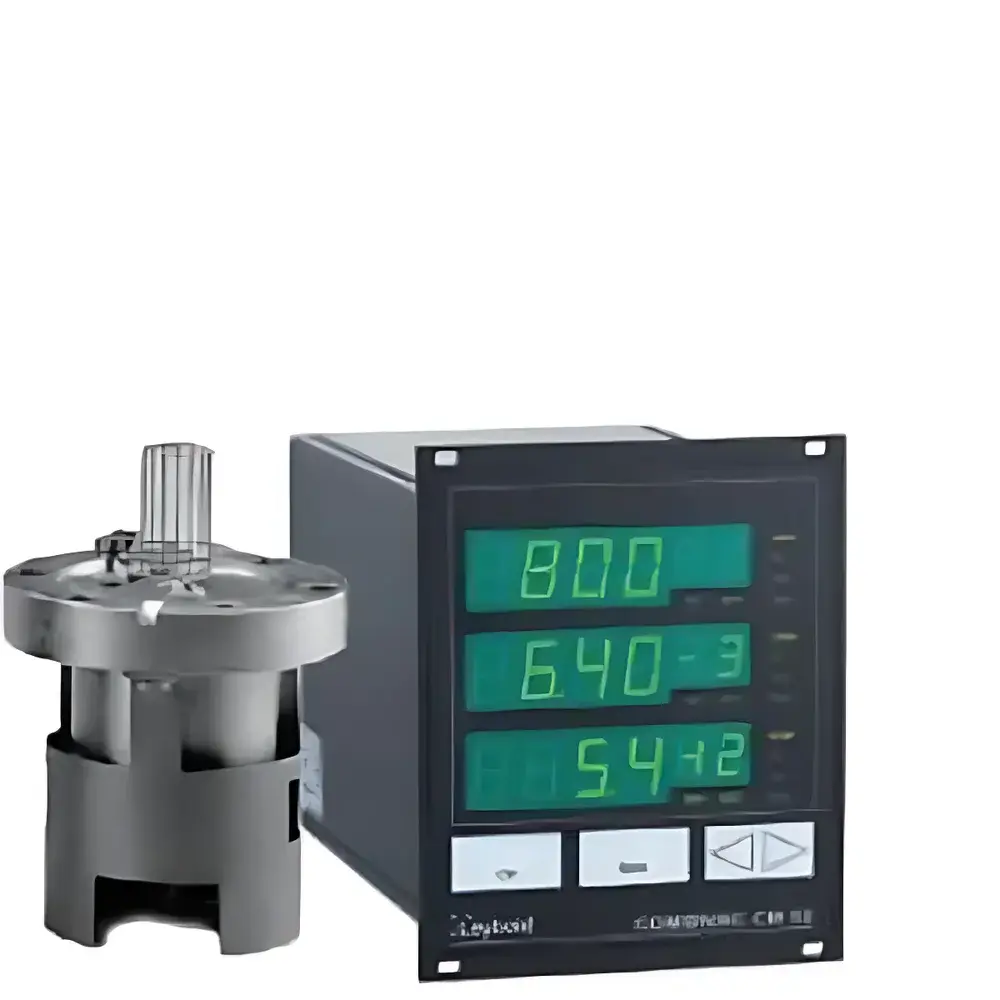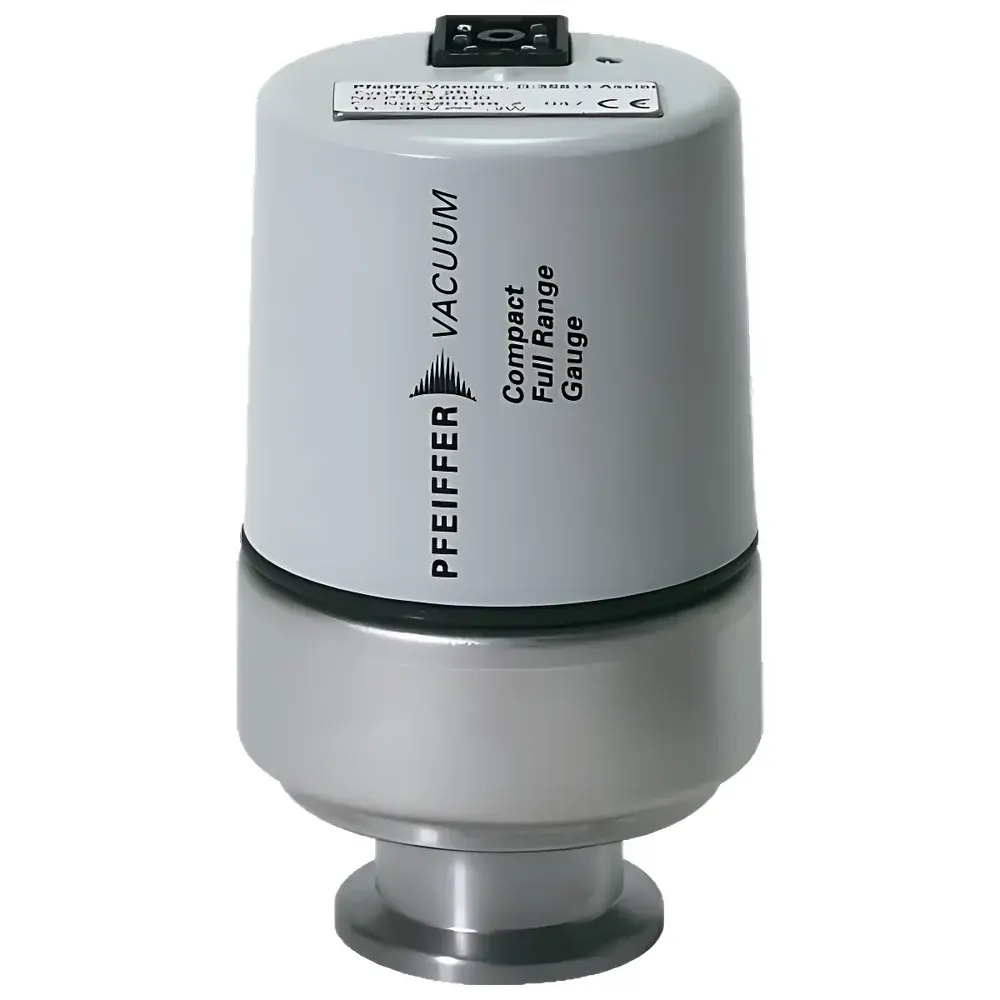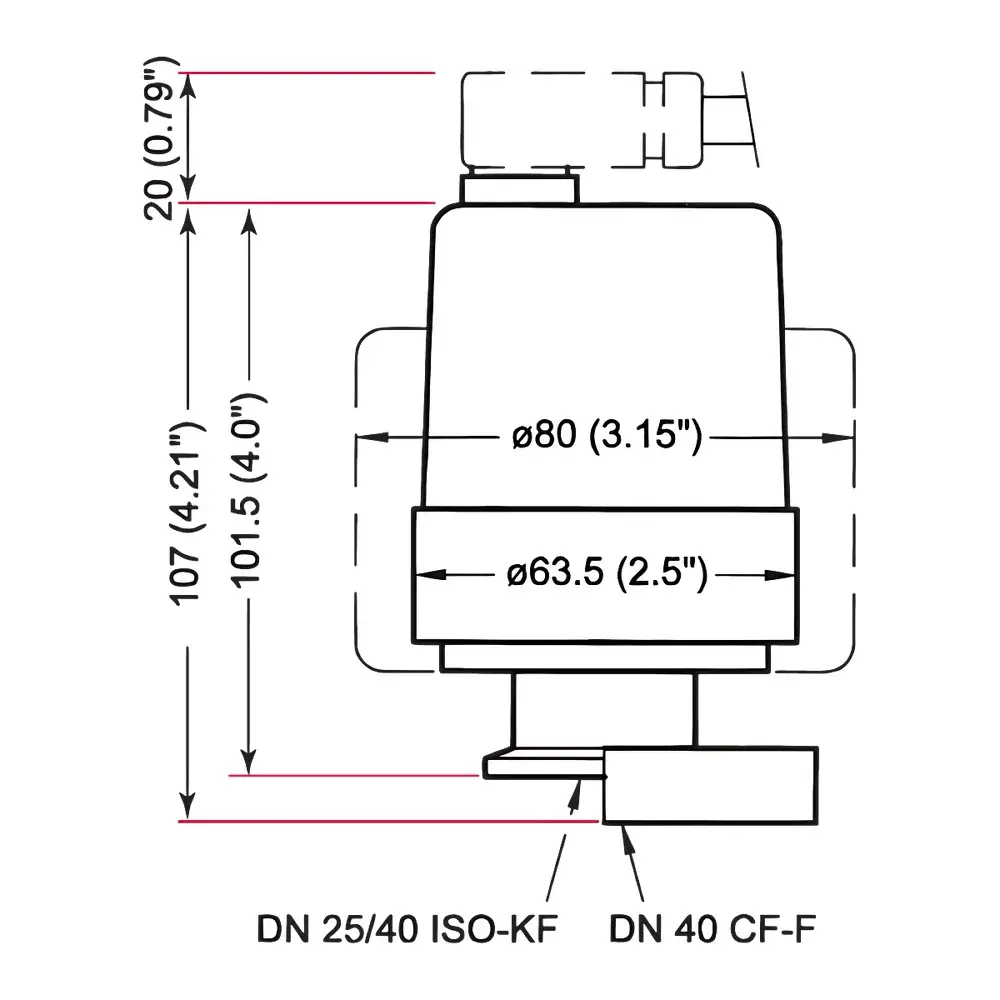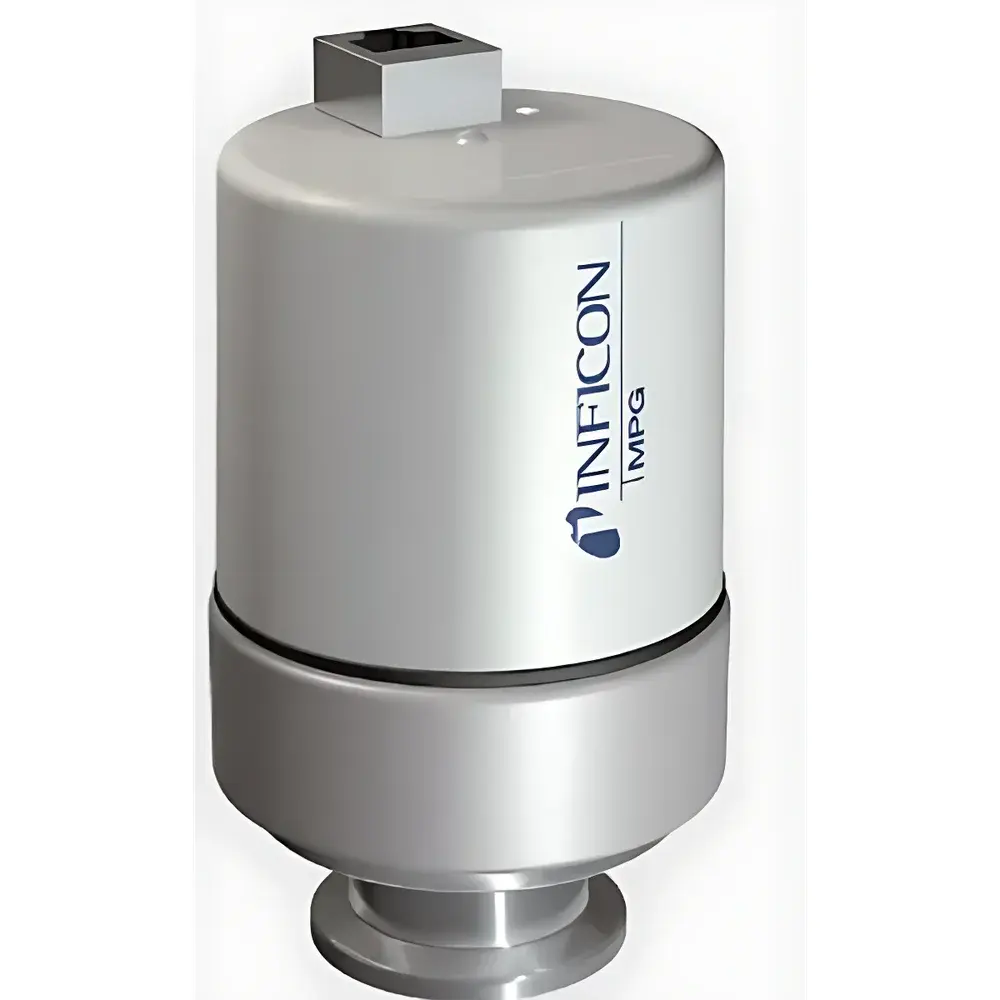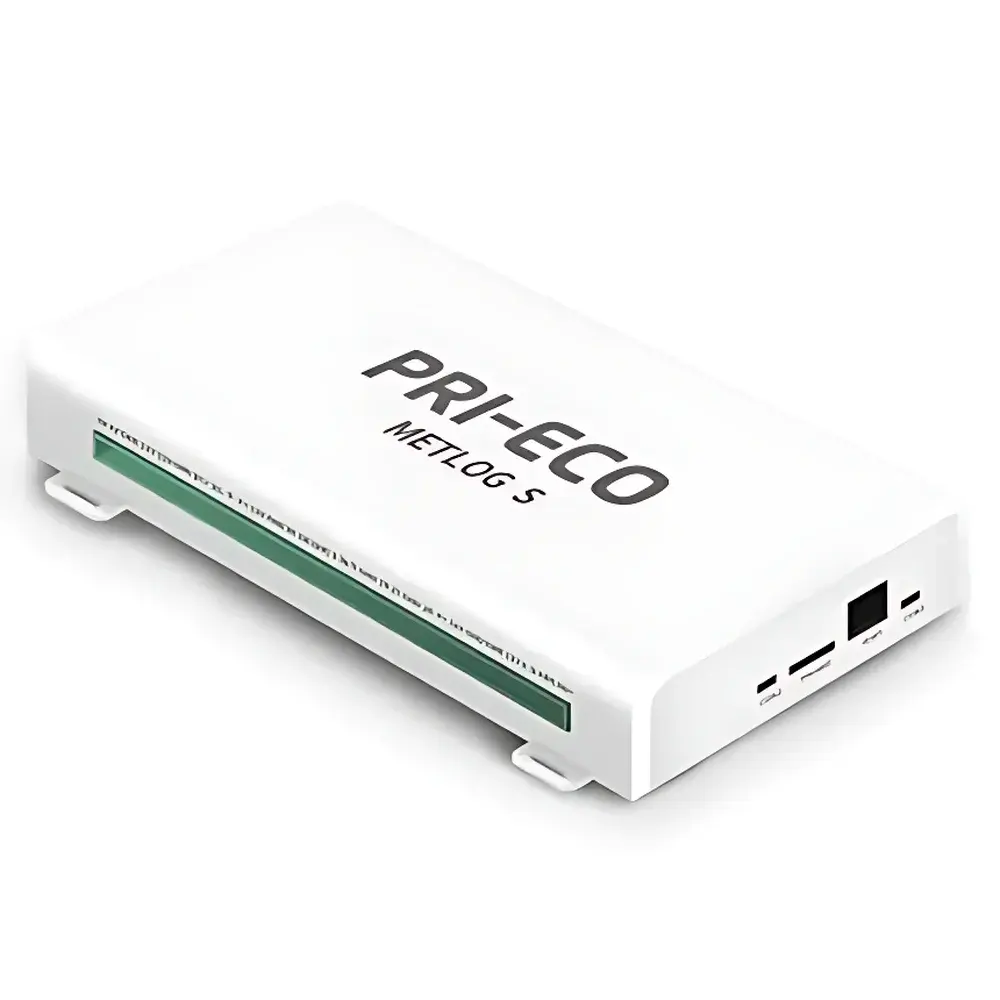
Pri-eco METLOG S Data Acquisition Unit
| Brand | Pri-eco |
|---|---|
| Origin | Beijing, China |
| Manufacturer Type | OEM Manufacturer |
| Country of Origin | China |
| Model | METLOG S |
| Pricing | Upon Request |
| CPU | 32-bit, 300 MHz |
| Analog Inputs | 1 differential channel with digital isolation |
| ADC Resolution | 12-bit (software-expandable to 24-bit) |
| Accuracy | ±(0.2% of reading + offset) at 0–40°C |
| Pulse Inputs | 2 channels (1 high-speed @ 250 kHz, 1 low-speed), both digitally isolated |
| Digital I/O | 8 configurable digital inputs/outputs supporting status detection, PWM, external interrupt, edge timing, contact closure counting, and high-frequency pulse counting |
| Communication Protocols | SDI-12, Modbus RTU/ASCII/TCP, TCP/IP, UDP, HTTP, I²C, SPI, PPP |
| Interfaces | Ethernet (RJ45), Micro-USB, CS I/O, RS-232, RS-485, UART |
| Onboard Wireless | Integrated 4G/5G LTE module (backward-compatible) |
| Memory | 64 MB SRAM + microSD slot supporting up to 32 GB removable flash storage |
| Real-Time Clock | ±3 min/year (optional GPS synchronization to ±10 µs) |
| Power Supply | 10–15 VDC input (±5 V max input limit) |
| Typical Idle Current | <1 mA @ 12 VDC |
| Active Current | 105 mA @ 12 VDC |
| Operating Temperature | –40°C to +70°C (standard), –55°C to +85°C (extended, non-condensing) |
| Dimensions | 20.5 × 11.2 × 3.5 cm |
| Weight | 0.6 kg |
Overview
The Pri-eco METLOG S Data Acquisition Unit is an industrial-grade, field-deployable data logger engineered for long-term, unattended monitoring across heterogeneous sensor networks. Built on a deterministic real-time architecture, it performs synchronized analog signal acquisition, pulse counting, digital event logging, and protocol translation—enabling seamless integration of legacy and modern environmental, meteorological, geotechnical, and industrial sensors into centralized telemetry systems. Its core measurement engine implements precision sigma-delta analog-to-digital conversion with hardware-level galvanic isolation per channel, ensuring signal integrity in electrically noisy or high-potential-difference environments. The unit operates under strict electromagnetic compatibility (EMC) design principles compliant with IEC 61000-4 series standards for surge immunity (Level 4), electrostatic discharge (Level 4), and fast transient burst (Level 4), making it suitable for outdoor installations near power infrastructure, wind farms, or construction sites where lightning-induced transients and ground-loop interference are prevalent.
Key Features
- 32-bit RISC CPU running at 300 MHz, optimized for deterministic task scheduling and low-latency I/O handling
- Dedicated digital isolation on every analog, pulse, and digital I/O channel—eliminating ground loops and common-mode voltage risks
- Independent regulated sensor excitation outputs (12 V, 5 V, 3.3 V) with full galvanic separation from system power rails
- Integrated dual-mode cellular modem supporting LTE Cat 1/Cat 4 (4G) and 5G NR NSA—with automatic fallback to 3G/2G for continuous connectivity in coverage-limited zones
- Native support for SDI-12, Modbus RTU/TCP, and custom ASCII-based protocols—enabling plug-and-play interoperability with Campbell Scientific, Decagon, Onset, and other Tier-1 sensor manufacturers
- Onboard Ethernet interface with DHCP, static IP, and PPPoE support—facilitating direct LAN integration or cellular failover routing
- Field-upgradable firmware via microSD card or over-the-air (OTA) using secure HTTPS-based delivery with SHA-256 signature verification
Sample Compatibility & Compliance
The METLOG S supports a broad spectrum of passive and active sensors used in environmental science, civil infrastructure monitoring, and process control applications—including thermistors, PT100/PT1000 RTDs, strain gauges, load cells, anemometers, tipping-bucket rain gauges, soil moisture probes (TDR/FDR), water level transducers, and gas concentration analyzers. Its modular I/O architecture allows configuration of mixed-signal measurement tasks without hardware modification. Regulatory compliance includes CE marking (EMC Directive 2014/30/EU, RoHS Directive 2011/65/EU), FCC Part 15 Subpart B (Class A), and adherence to ISO/IEC 17025 traceable calibration practices for factory-certified accuracy statements. For GxP-regulated deployments, the device supports audit-trail-enabled logging mode compatible with 21 CFR Part 11 requirements when paired with validated server-side data management software.
Software & Data Management
Pri-eco provides the METLOG Configuration Studio—a cross-platform desktop application (Windows/macOS/Linux) for intuitive setup of sampling intervals, trigger conditions, linearization tables, alarm thresholds, and data transmission profiles. Raw measurements are stored in binary-packed format on internal SRAM and mirrored to removable microSD cards using wear-leveling FAT32 filesystems. Data export options include CSV, JSON, and NetCDF4 formats; time-stamped records include metadata such as battery voltage, temperature, signal quality flags, and GPS-derived UTC timestamps (when optional GNSS module is installed). Secure cloud ingestion is supported via TLS 1.2–encrypted MQTT or RESTful HTTP POST endpoints, with configurable retry logic, payload compression, and certificate-pinning for zero-trust network architectures.
Applications
- Automated weather stations (AWS) complying with WMO No. 8 guidelines for surface observation networks
- Structural health monitoring (SHM) of bridges, dams, and tunnels using synchronized vibration and strain data streams
- Soil and groundwater monitoring in landfill leachate collection systems and remediation sites
- Energy efficiency benchmarking in commercial buildings via HVAC sensor fusion and submetering
- Remote SCADA edge node for distributed industrial assets lacking PLC infrastructure
- Calibration traceability systems requiring timestamped, immutable raw sensor logs for ISO/IEC 17025 accreditation
FAQ
Does the METLOG S support Modbus TCP server functionality?
Yes—it operates as both Modbus TCP client and server, enabling bidirectional data exchange with SCADA HMI systems and programmable logic controllers.
Can the device maintain accurate time synchronization without GPS?
The onboard RTC achieves ±3 minutes/year drift; however, for sub-second synchronization in time-critical applications (e.g., seismic array triggering), optional GPS module integration provides ±10 µs absolute UTC alignment.
Is firmware update possible over cellular networks?
Yes—via HTTPS-based OTA updates with cryptographic signature validation and rollback-safe dual-bank flash architecture.
What is the maximum sustainable sampling rate across all analog and pulse channels?
At full resolution (12-bit), the system supports concurrent 10 Hz analog sampling + 250 kHz pulse capture on Channel 1 + 1 kHz digital event logging on all 8 DIO lines—subject to user-defined decimation and buffering strategies.
How is data integrity ensured during power interruption?
All write operations use journaling and atomic commit semantics; SRAM buffers are backed by supercapacitors providing >10 seconds of hold-up time to complete pending writes to non-volatile storage.