
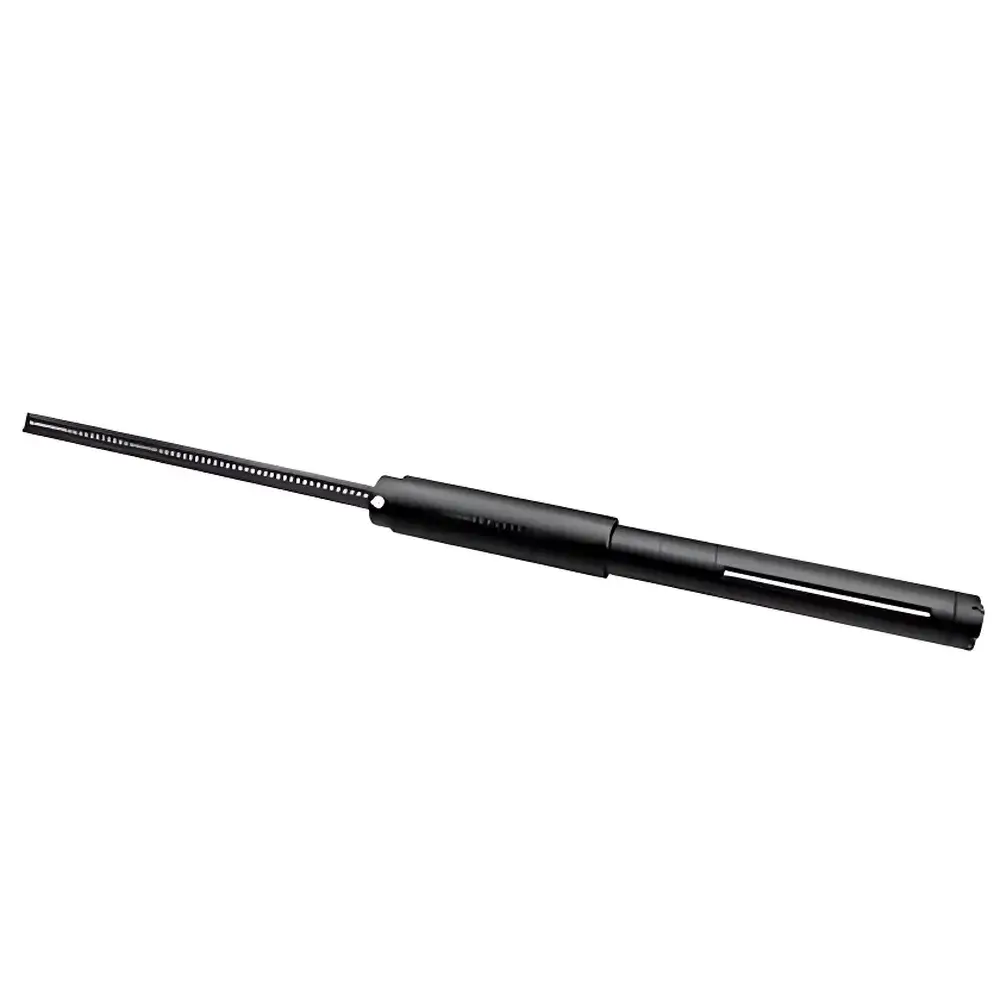
Pri-eco RhizoScan Plus In Situ Root Imaging Scanner
| Brand | Pri-eco |
|---|---|
| Origin | Beijing, China |
| Manufacturer Type | Direct Manufacturer |
| Model | RhizoScan Plus |
| Scanning Angle | 360° Full-Circle |
| Optical Resolution | 1200 DPI |
| Max. Scan Width | 212 mm |
| Dual Illumination | White Light + UV (365 nm) |
| Image Output | Simultaneous Color RGB + UV-Induced Fluorescence |
| Storage | 32 GB MicroSD Card (Removable) |
| Scan Time per Rotation | ~20 s |
| Wireless Connectivity | Integrated Wi-Fi 802.11n (AP Mode) |
| Power Supply | Rechargeable Lithium-ion Battery (6200 mAh) |
| Scanner Head Diameter | 47 mm or 62 mm |
| Compatible Minirhizotron Tube Dimensions | OD/ID = 55/49 mm or 70/64 mm |
| Guidance System | Dual Precision Guide Wheels (Non-Scuffing) |
| Remote Control | Web-Based Interface via Smartphone, Tablet, or Laptop (No Cables or Dedicated Software Required) |
| Deployment Modes | Portable Handheld or In Situ Automated (Timer-Triggered Acquisition, Customizable) |
Overview
The Pri-eco RhizoScan Plus In Situ Root Imaging Scanner is an engineered solution for non-invasive, high-fidelity root phenotyping in natural soil environments. It operates on the principle of minirhizotron-based optical imaging—utilizing a rotating, internally illuminated scanning head housed within a transparent acrylic or quartz minirhizotron tube permanently installed in the soil profile. Unlike destructive excavation or time-limited snapshot imaging, the RhizoScan Plus enables repeated, longitudinal monitoring of the same root cohort over weeks to months. Its dual-wavelength illumination system (broad-spectrum white light and 365 nm ultraviolet) allows simultaneous capture of structural morphology and physiological status: viable roots exhibit characteristic autofluorescence under UV excitation, while dead or senescing roots show diminished or absent fluorescence—enabling quantitative discrimination between living and non-living root tissue without chemical staining or exogenous dyes. The scanner’s 360° full-circumferential acquisition eliminates blind zones common in sector-scanned systems, ensuring complete radial coverage of root–soil interface geometry.
Key Features
- True 360° continuous rotational scanning with zero angular blind spots—achieved via precision stepper motor and coaxial optical path alignment.
- Dual-channel synchronized image capture: high-resolution color (RGB) under white light + UV-induced fluorescence (365 nm excitation) for viability assessment.
- Wireless, cable-free architecture: integrated Wi-Fi access point mode enables direct browser-based control and real-time image preview from any iOS, Android, or Windows device—no proprietary software installation required.
- Self-contained power system: 6200 mAh lithium-ion battery supports >12 hours of field operation; three batteries included for uninterrupted multi-day deployments.
- Passive mechanical guidance: dual polymer guide wheels minimize tube wall contact and prevent micro-scratching—preserving optical clarity across repeated scans and extending tube service life.
- Modular mechanical design: interchangeable scanner heads (47 mm / 62 mm OD) compatible with standard CID and Bartz minirhizotron tube specifications (55/49 mm and 70/64 mm OD/ID).
- Field-configurable deployment: supports both handheld portable use and permanent in situ installation with programmable auto-triggered imaging schedules (custom firmware option).
Sample Compatibility & Compliance
The RhizoScan Plus is validated for use with standard minirhizotron tubes installed at depths up to 1.5 m in mineral soils, loams, and structured organic substrates. It accommodates variable tube lengths (customizable per site requirements) and maintains consistent focus and illumination uniformity across the full 212 mm scan width. All optical components comply with ISO 9022-3 (optical instruments — environmental testing — part 3: thermal shock and humidity), and electronic subsystems meet IEC 60529 IP54 ingress protection standards for dust and water resistance during field handling. Data acquisition workflows support GLP-aligned metadata tagging (time stamp, GPS-assisted location, operator ID, tube ID), and raw image exports are stored in lossless TIFF format—ensuring traceability and compatibility with third-party analysis platforms such as RootReader3D, EZ-Rhizo, or WinRHIZO TRON.
Software & Data Management
Operation is managed exclusively through a responsive HTML5 web interface hosted locally on the scanner’s onboard Linux controller. Users navigate via any modern browser to http://rhizoscan.local, where live preview, manual scan initiation, battery status, memory usage, and Wi-Fi signal strength are displayed in real time. Acquired images are timestamped and stored on the removable 32 GB MicroSD card in a hierarchical folder structure (by date → tube ID → rotation index). Data export occurs via Wi-Fi transfer (drag-and-drop in browser), USB 2.0 host port, or direct SD card removal. No cloud dependency or vendor lock-in: all image files are standard TIFF/EXIF-compliant and contain embedded EXIF tags for exposure time, illumination mode, and rotational position. Firmware updates are delivered as signed .bin packages via secure HTTPS, supporting audit trails per FDA 21 CFR Part 11 requirements when used in regulated agricultural research settings.
Applications
- Long-term root architectural dynamics in response to drought, nutrient gradients, or mycorrhizal inoculation.
- Quantification of fine-root turnover rates and mortality timing in forest understories and agroecosystems.
- Validation of root growth simulations in terrestrial biosphere models (e.g., CLM, LPJ-GUESS).
- Phenotypic screening of root traits (e.g., branching density, diameter distribution, tip count) across crop germplasm collections.
- In situ assessment of root–pathogen interactions (e.g., nematode galling, fungal colonization) using UV fluorescence contrast.
- Soil biophysical feedback studies—correlating root proliferation patterns with localized changes in soil moisture or redox potential.
FAQ
Does the RhizoScan Plus require calibration before each scan?
No. The system employs factory-calibrated optics and fixed-focus lens design optimized for standard minirhizotron tube dimensions. A one-time geometric correction matrix is applied during firmware initialization and remains valid across all operational temperatures (−10 °C to +50 °C).
Can it be used in saturated or flooded soils?
Yes—provided the minirhizotron tube is properly sealed and grouted during installation. The scanner itself is not submersible, but its IP54-rated housing withstands high-humidity conditions and incidental splashing.
Is UV exposure harmful to roots during scanning?
No. The 365 nm UV LED emits low-intensity, pulsed illumination (<100 µW/cm² at tube wall) for <500 ms per frame—orders of magnitude below phototoxic thresholds reported in peer-reviewed root physiology literature.
How is data synchronization handled across multiple tubes or scanners?
Each unit broadcasts a unique SSID and stores local timestamps synchronized to UTC via NTP on first Wi-Fi connection. Batch processing scripts (Python-based, open-source) are available for cross-tube temporal alignment using shared reference markers.
What maintenance is required in long-term deployments?
Annual visual inspection of guide wheels and O-rings; replacement of desiccant capsule inside battery compartment every 12 months; cleaning of scanner window with ethanol-dampened lens tissue—no optical realignment needed.
Related Products




