
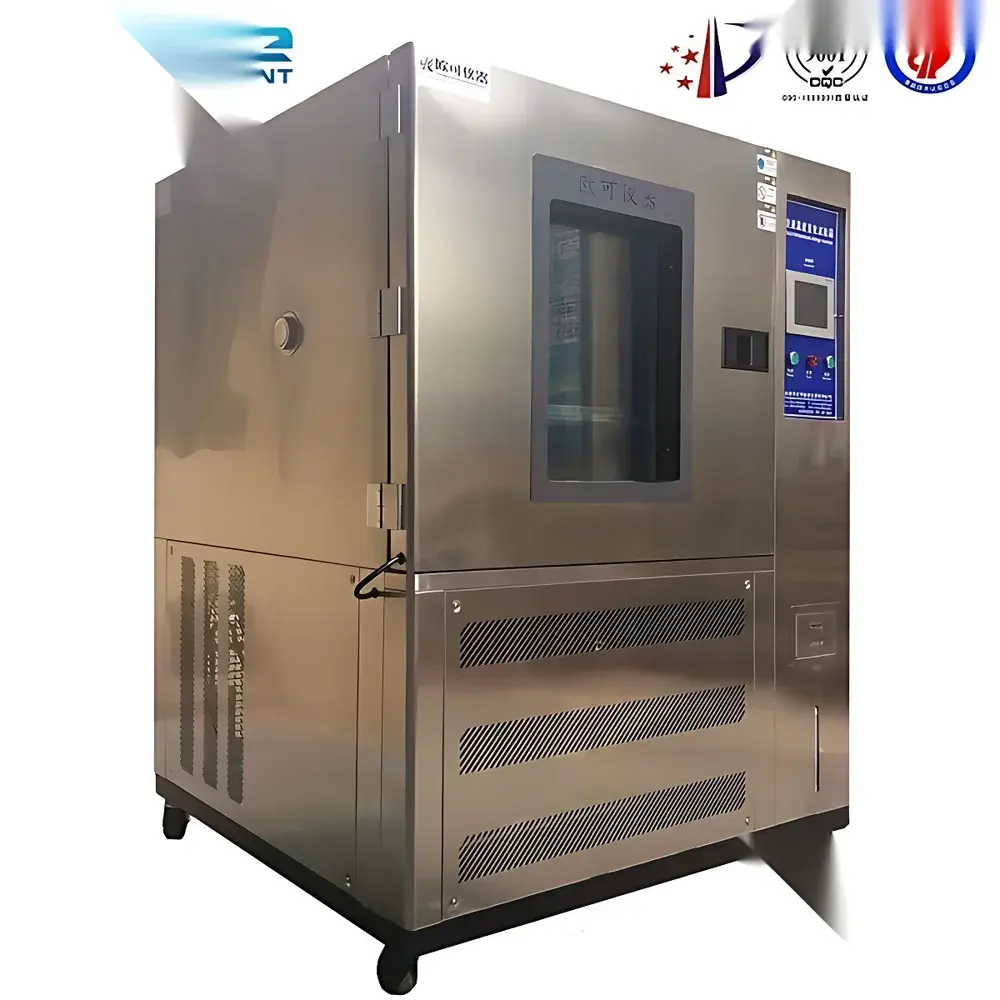
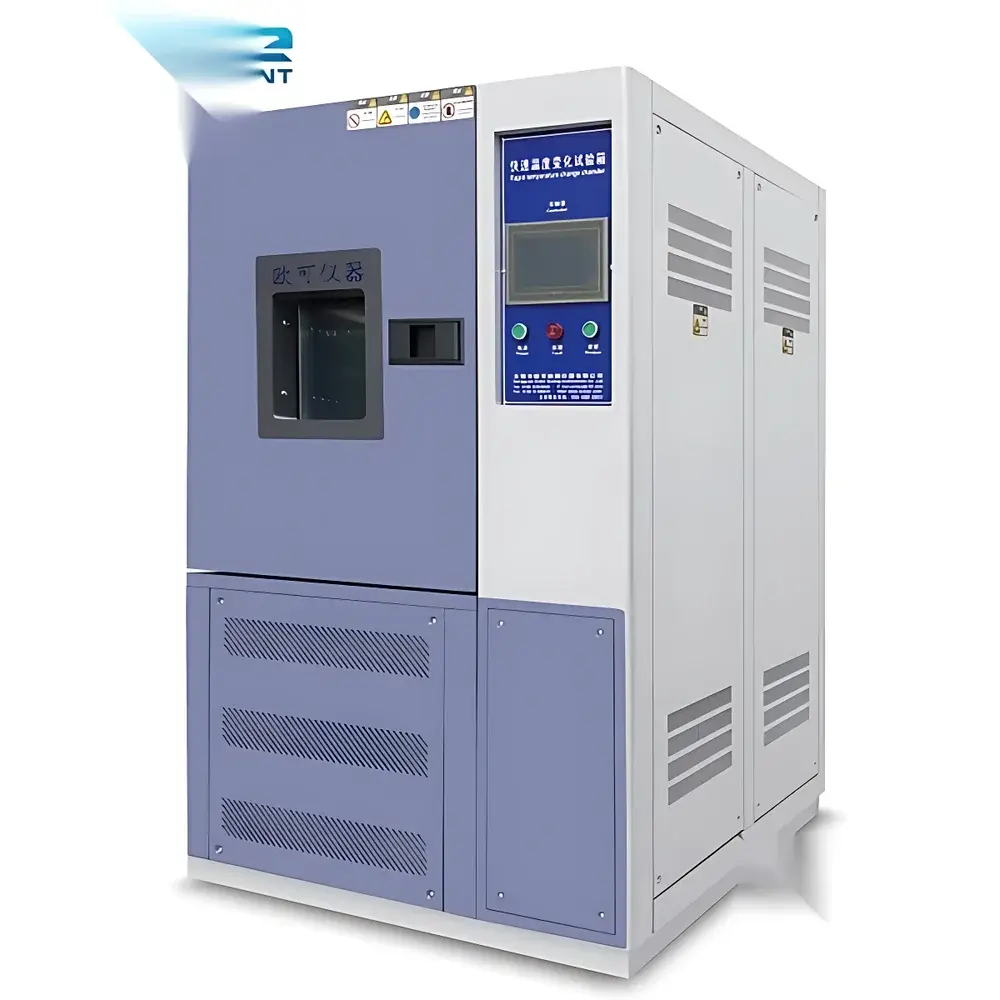
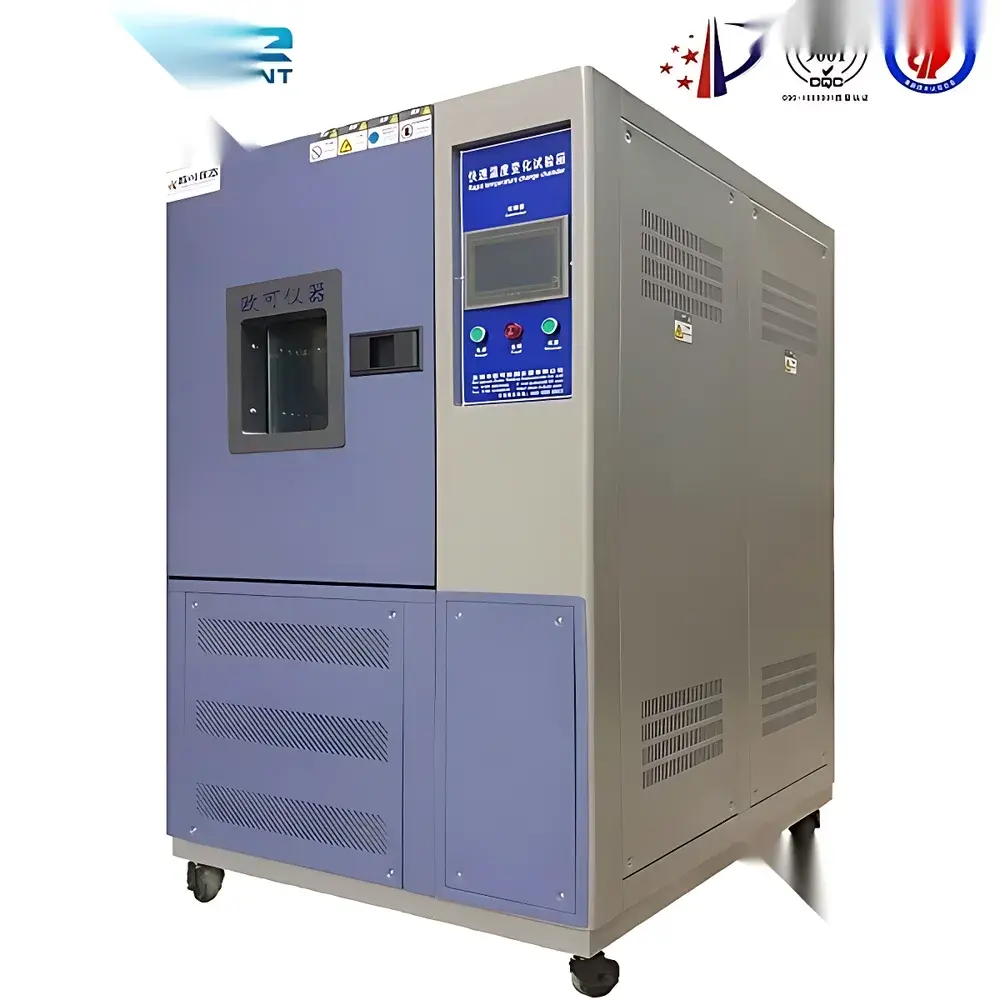
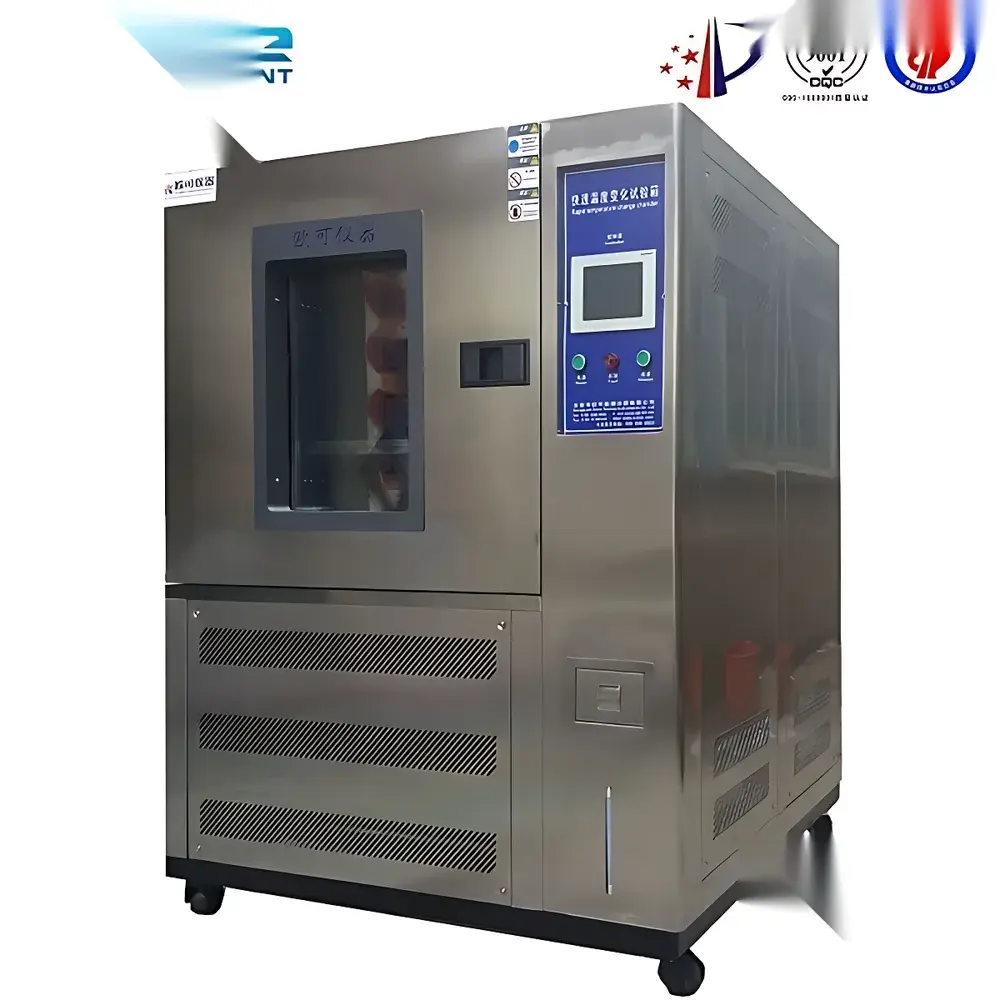
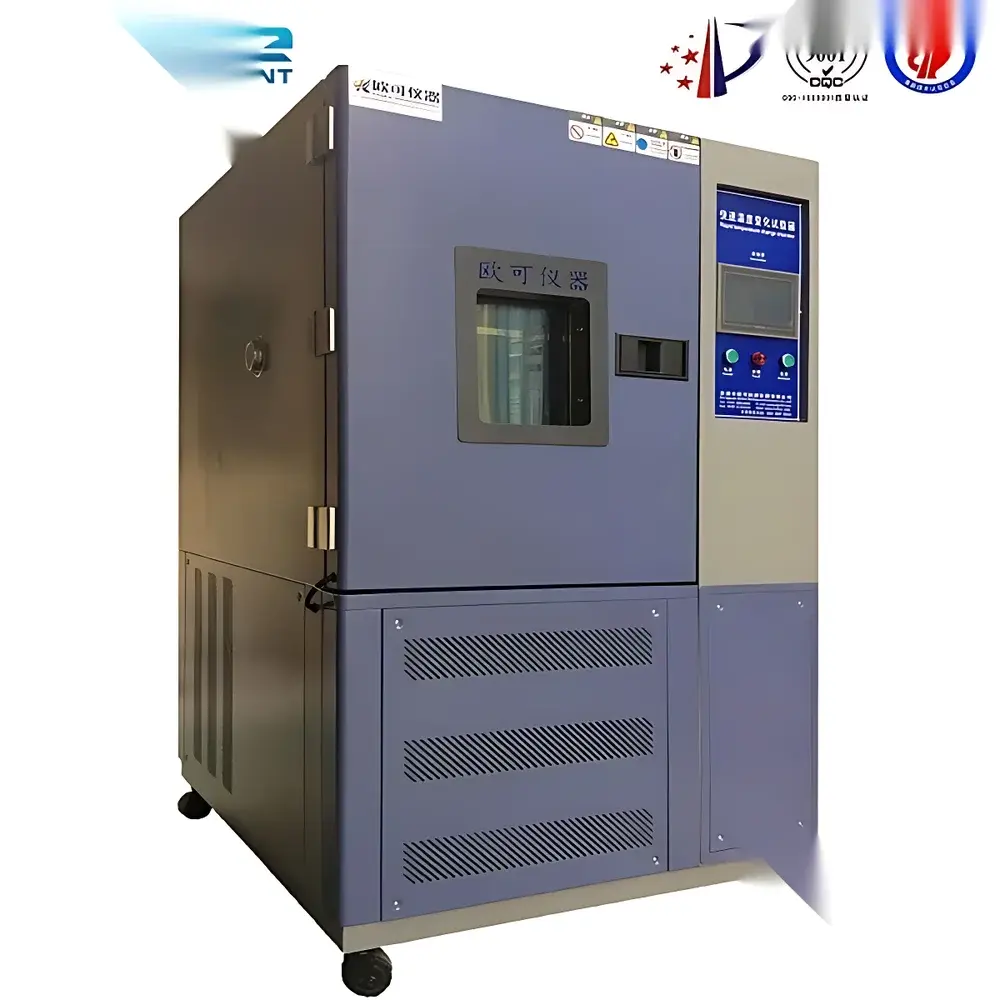
Programmable Rapid Temperature Change Test Chamber
| Brand | Custom OEM |
|---|---|
| Origin | Imported |
| Manufacturer Type | Authorized Distributor |
| Price | USD 14,000 (FOB) |
Overview
The Programmable Rapid Temperature Change Test Chamber is an engineered environmental simulation system designed for precise, repeatable thermal stress testing of electronic components, automotive modules, aerospace assemblies, and high-reliability materials. It operates on the principle of dual-chamber air-impingement thermal shock—utilizing physically separated high-temperature and low-temperature reservoirs with a high-efficiency insulated transfer mechanism to achieve rapid, programmable temperature transitions without mechanical movement of the test specimen. Unlike conventional single-chamber cycling chambers, this design eliminates thermal inertia delays and ensures true step-change thermal profiles compliant with MIL-STD-810H Method 503.5, IEC 60068-2-14, and JESD22-A104D. The chamber supports both static dwell-and-transition protocols and dynamic ramp-hold sequences, enabling validation of solder joint integrity, polymer dimensional stability, sealant adhesion, and interconnect fatigue under accelerated thermal aging conditions.
Key Features
- Triple-zone architecture: independent high-temp chamber (up to +150 °C), low-temp chamber (down to −70 °C), and insulated test zone—ensuring zero specimen displacement during thermal shock cycles
- Programmable transition rates from 5 °C/min to 25 °C/min (selectable in 1 °C/min increments), validated per ASTM E1545-22 calibration methodology
- PID-controlled 7-inch color touch HMI with bilingual (English/Chinese) interface, real-time trend logging, and user-level access control (Operator/Engineer/Admin)
- Full-enclosed refrigeration circuit using environmentally compliant R404A/R23 cascade system with oil return management and low-noise scroll compressors
- Uniformity-optimized airflow design: axial fan array with adjustable vane diffusers achieves ±2 °C temperature uniformity and ±3.0 %RH humidity uniformity (at ≥75 %RH) across full working volume
- Integrated safety redundancy: dual independent over-temperature cutouts, door interlock, refrigerant pressure monitoring, and PLC-based fault-lockout with event timestamping
Sample Compatibility & Compliance
The chamber accommodates DUTs up to 100 cm × 100 cm × 100 cm (KS-TH-1000 model), with standardized mounting rails and cable ports conforming to IEC 60068-2-1, IEC 60068-2-2, and IEC 60068-2-14 requirements. All models meet GB/T 2423.1–2023 (cold), GB/T 2423.2–2023 (heat), GB/T 2423.22–2012 (temperature change), and GJB 150.3–2009 / GJB 150.4–2009 / GJB 150.5–2009 military specifications. Humidity control (20–98 %RH standard; optional 5–98 %RH range) complies with ISO 16750-4 for automotive electronics environmental stress screening. Structural materials consist exclusively of electropolished SUS304 stainless steel interior surfaces (Ra ≤ 0.8 µm), ensuring corrosion resistance and cleanroom compatibility.
Software & Data Management
The embedded controller supports USB export of CSV-formatted test logs (timestamp, setpoint, chamber actual, DUT thermocouple inputs, alarm history). Optional Ethernet connectivity enables integration with LabVIEW™, MATLAB® Data Acquisition Toolbox, or enterprise MES platforms via Modbus TCP or OPC UA. Audit trails include user login/logout events, parameter modification history, and calibration certificate metadata—fully traceable for GLP/GMP-regulated environments. Firmware adheres to IEC 62443-3-3 security guidelines, with password-protected configuration modes and firmware signature verification.
Applications
- Thermal shock qualification of PCBAs per IPC-9701A and JEDEC J-STD-020E
- Reliability screening of battery modules (Li-ion, solid-state) under extreme ambient cycling
- Validation of optical sensor housings for automotive ADAS systems (ISO 16750-4 Level 3)
- Material coefficient-of-thermal-expansion (CTE) mismatch analysis in multi-layer ceramic packages
- Accelerated life testing of elastomeric seals, gaskets, and potting compounds
- Pre-compliance testing for DO-160 Section 4 (temperature variation) and RTCA/DO-160G
FAQ
What standards does this chamber support for thermal shock validation?
It fully implements IEC 60068-2-14 (Change of temperature), MIL-STD-810H Method 503.5 (Temperature Shock), and JESD22-A104D (Temperature Cycling), with documented uncertainty budgets traceable to NIST standards.
Can the chamber operate under humidity-controlled thermal shock conditions?
Yes—the standard configuration includes 20–98 %RH control; extended range (5–98 %RH) is available as a factory-installed option with enhanced dew-point regulation and anti-condensation pre-heating logic.
Is remote monitoring and control supported out of the box?
Local HMI operation is standard; Ethernet-based remote supervision requires optional communication module installation and configuration via vendor-supplied configuration utility.
What is the typical calibration interval and traceability documentation provided?
Initial factory calibration includes NIST-traceable certificates for temperature (±0.3 °C at key points) and humidity (±2.0 %RH); recommended recalibration every 12 months or after 2000 operational hours.
Does the system support custom profile scripting beyond built-in templates?
Yes—advanced users may import .csv-defined time-setpoint sequences with up to 999 segments, including conditional branching based on internal sensor feedback or external digital I/O triggers.



