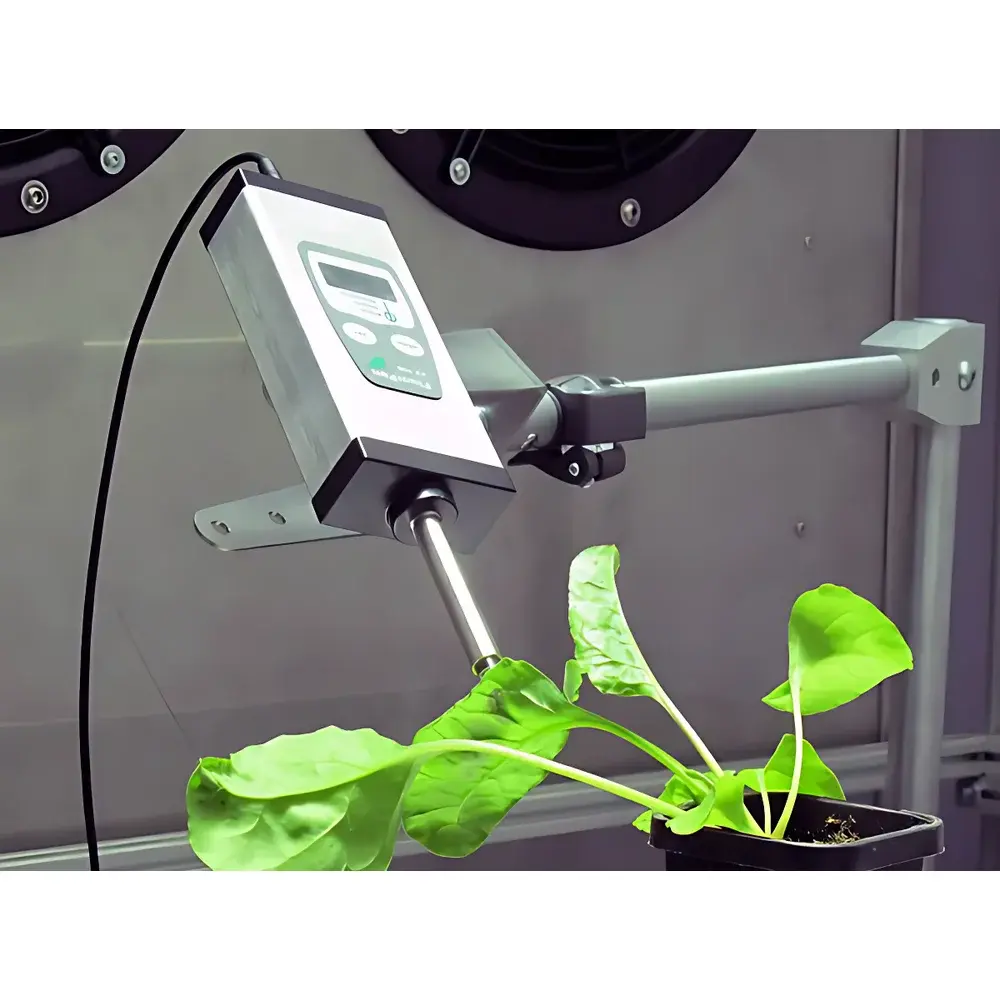
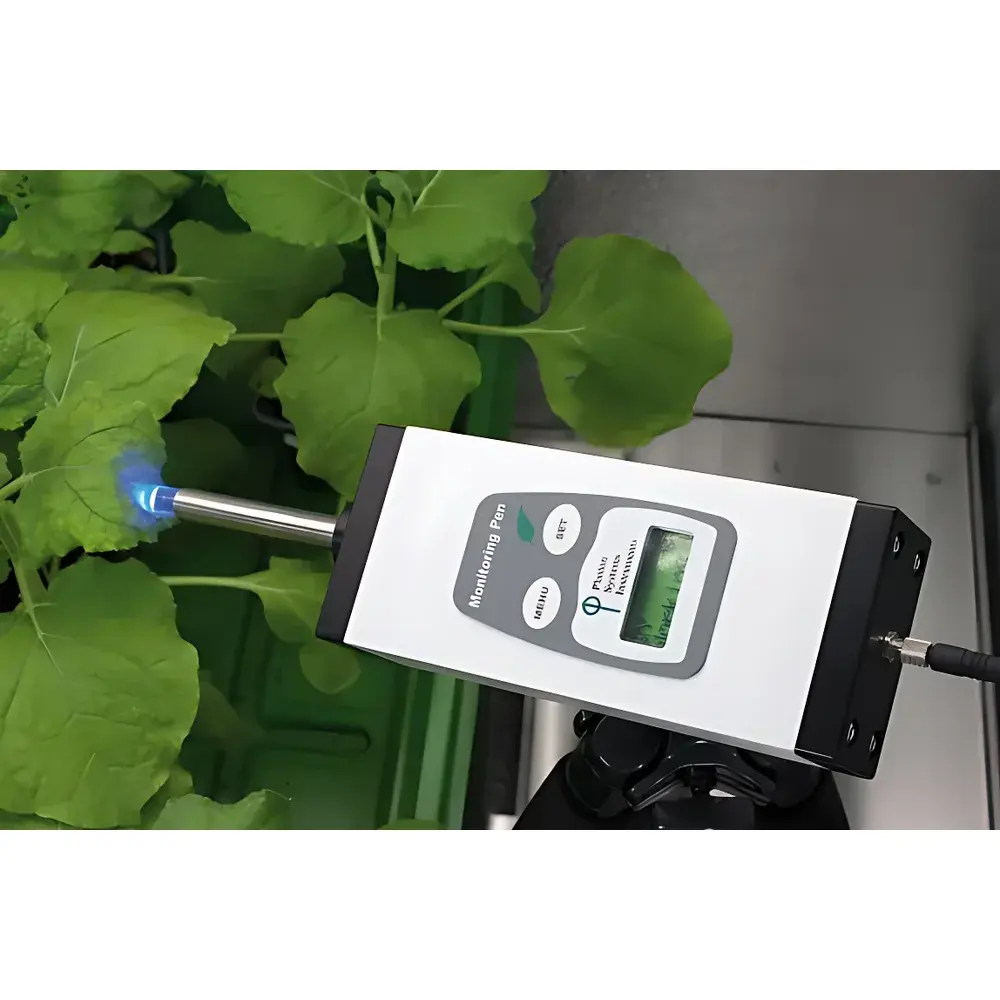
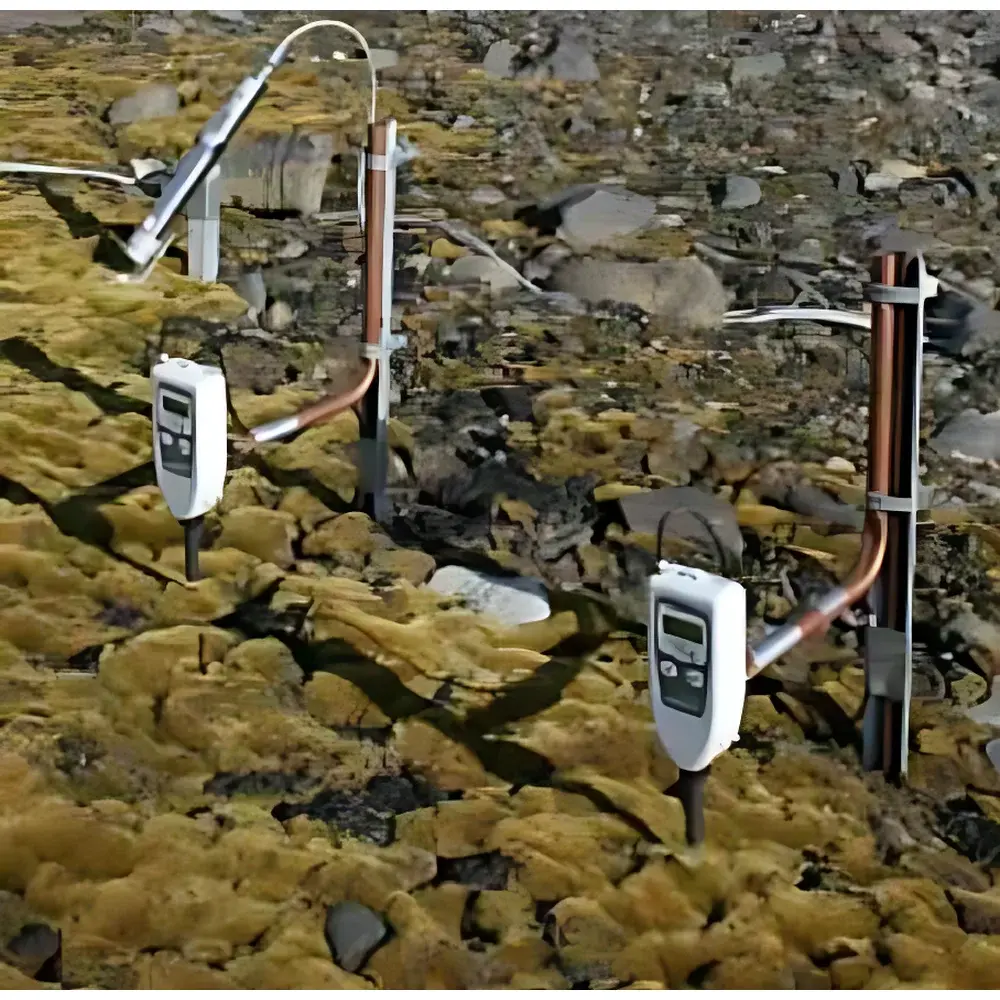
PSI Monitoring Pen MP100 Chlorophyll Fluorescence Auto-Monitoring System
| Brand | PSI (Czech Republic) |
|---|---|
| Origin | Czech Republic |
| Model | MP100 |
| Measurement Principle | Pulse-Amplitude-Modulated (PAM) Chlorophyll Fluorescence |
| OJIP Time Resolution | 10 µs (100,000 samples/s) |
| Fluorescence Parameters | >50 including F₀, Fₘ, Fᵥ/Fₘ, ΦPSII, NPQ, Rfd, PAR, PI_ABS, ABS/RC, Mo, Area, Sm |
| Light Sources | Adjustable blue LED (470 nm), optional multi-wavelength LEDs |
| Actinic Light Range | 0–1000 µmol(photon)·m⁻²·s⁻¹ |
| Saturation Pulse Intensity | 0–3000 µmol(photon)·m⁻²·s⁻¹ |
| Measuring Light Intensity | 0–0.09 µmol(photon)·m⁻²·s⁻¹ |
| PAR Sensor | Cosine-corrected, 400–700 nm, ±5% accuracy, output in µmol(photon)·m⁻²·s⁻¹ |
| Memory Capacity | 16 MB, up to 100,000 timestamped measurements |
| Power Options | Rechargeable 12 Ah lead-acid battery (operating range +10 to +40 °C) or non-rechargeable 5.5 Ah Li-SOCl₂ battery (–40 to +60 °C) |
| Waterproof Rating | IP68 (MP100-E: terrestrial |
| MP100-A | submersible up to 2 m standard, customizable to 10 m) |
| Dimensions | 135 × 65 × 33 mm |
| Display | 2×8 character LCD |
| Interface | USB, optional GSM/GPRS or LoRaWAN for remote data transmission |
| Software | FluorPen v1.1 (Windows 7+) for data export (CSV, Excel), kinetic curve visualization, and parameter batch analysis |
| Compliance | Designed for GLP-aligned long-term field deployment |
Overview
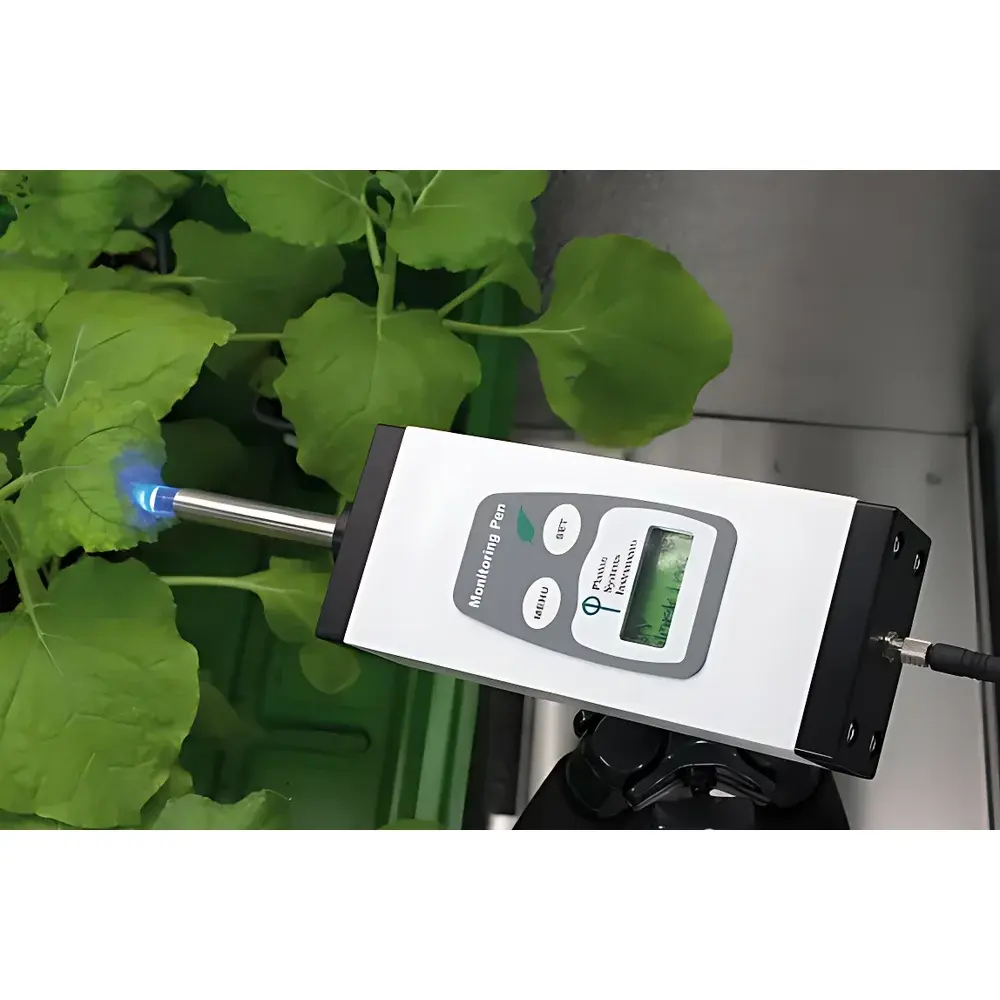
The PSI Monitoring Pen MP100 is a field-deployable, autonomous chlorophyll fluorescence monitoring system engineered for high-temporal-resolution physiological phenotyping of photosynthetic organisms under natural or controlled environments. Based on the pulse-amplitude-modulation (PAM) principle, it quantifies photochemical efficiency of Photosystem II (PSII) by resolving subtle changes in chlorophyll a fluorescence yield under precisely controlled actinic, measuring, and saturating light regimes. Unlike benchtop fluorometers, the MP100 integrates real-time data acquisition, onboard programmable logic, and environmental resilience—enabling unattended operation across extreme terrestrial and aquatic settings, from Arctic tundra to freshwater phytoplankton communities. Its core architecture implements standardized biophysical protocols—including OJIP transient analysis (with 10 µs temporal resolution), rapid light curves (LC), non-photochemical quenching (NPQ) kinetics, and quantum yield (ΦPSII) tracking—making it suitable for longitudinal studies requiring reproducible, timestamped physiological metrics aligned with international plant physiology standards (e.g., ASTM E2912-13, ISO 14237).
Key Features
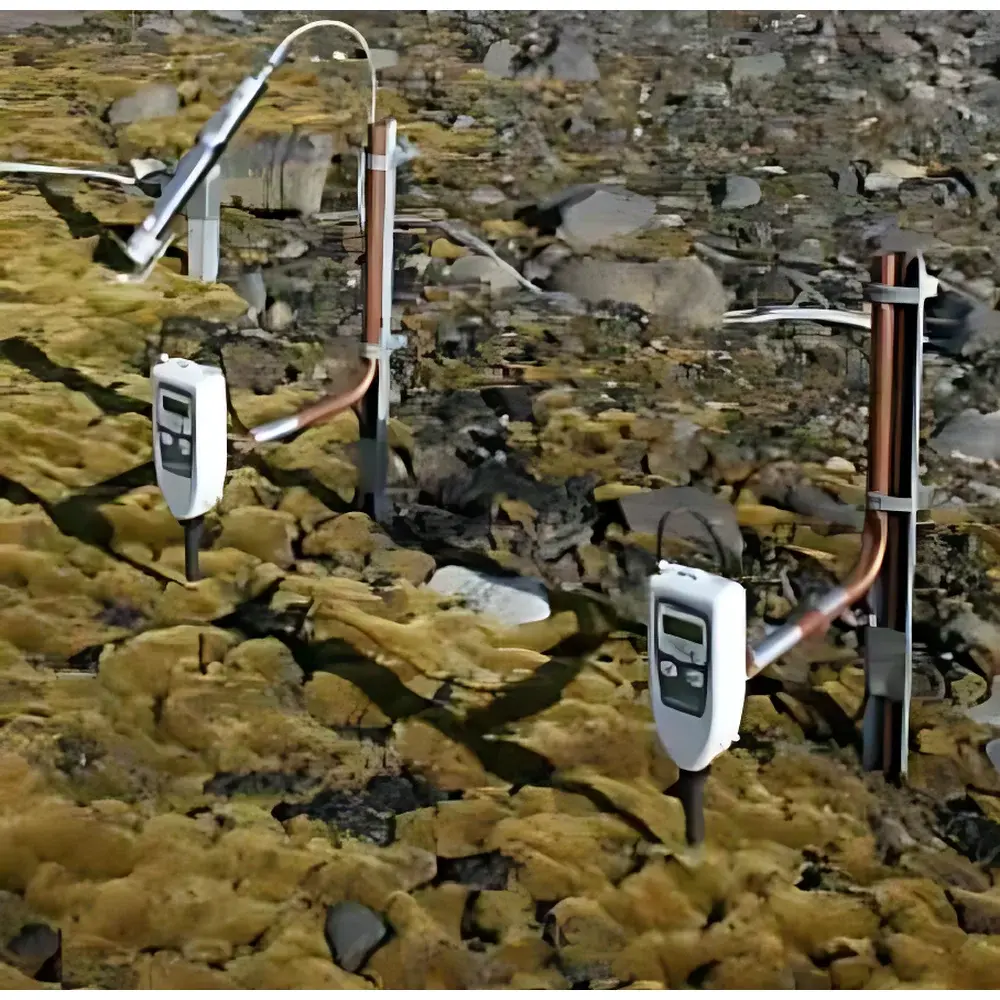
- Autonomous field operation: Programmable measurement schedules (e.g., hourly QY, diel OJIP, or event-triggered NPQ) with internal clock synchronization and battery life up to 2 years (at 1 measurement/hour).
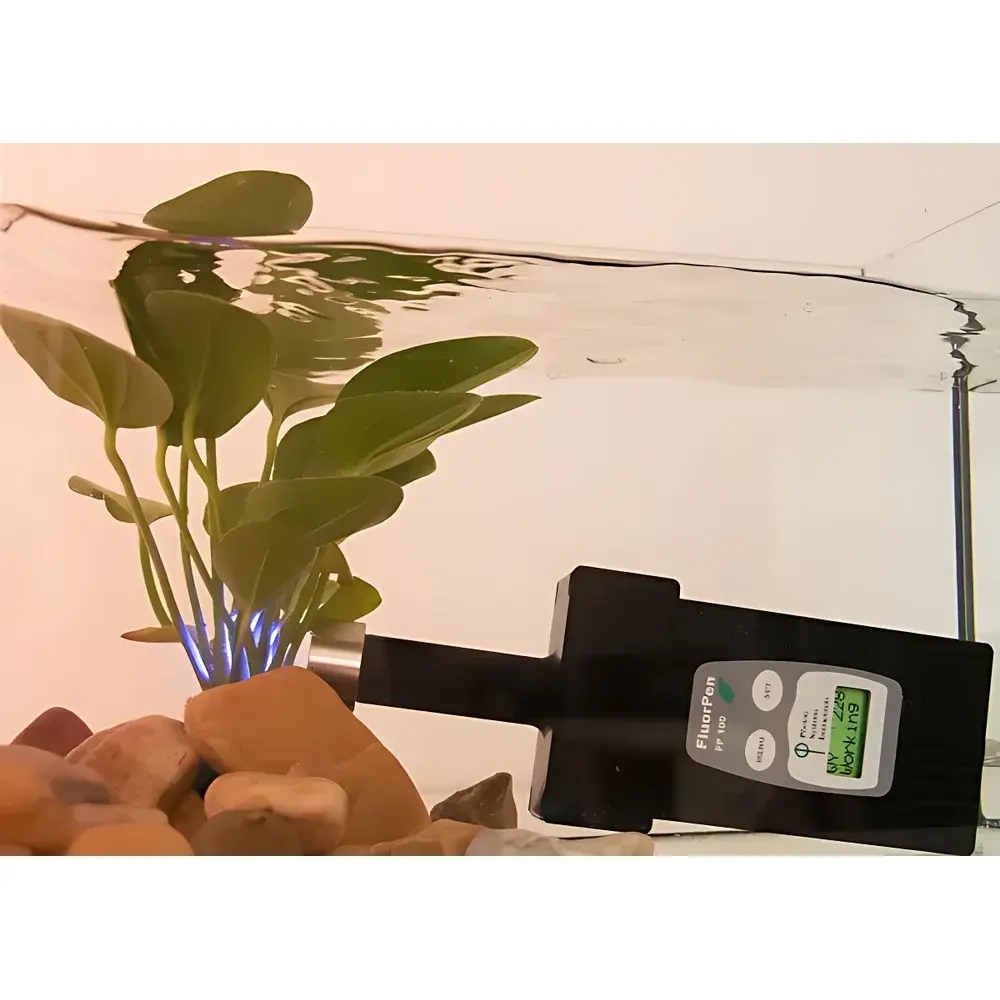
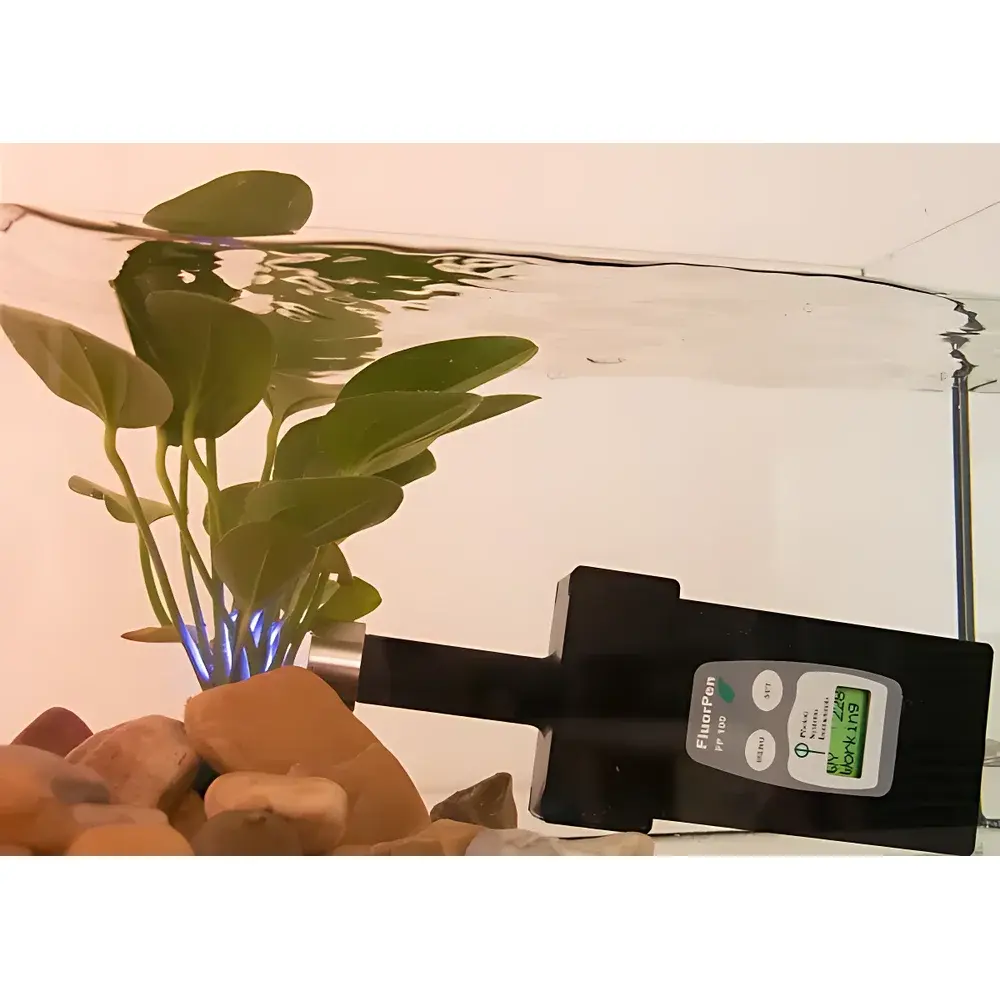
- Dual-environment hardware variants: MP100-E (IP68-rated terrestrial enclosure with aluminum housing) and MP100-A (submersible version rated to 2 m depth, extendable to 10 m upon request).
- High-fidelity optical subsystem: Blue LED excitation source (470 nm), spectrally matched to Chl a absorption maxima; optional multi-wavelength LED modules available for species-specific optimization.
- Integrated PAR sensor with cosine correction (80° acceptance angle), calibrated across 400–700 nm, enabling concurrent irradiance-normalized fluorescence parameterization.
- Onboard 16 MB flash memory storing up to 100,000 timestamped datasets, each containing full parameter sets (F₀, Fₘ, Fᵥ/Fₘ, NPQ, PIAbs, ABS/RC, Mo, Area, Sm, etc.) and raw kinetic traces.
- Low-power embedded BIOS with over-the-air upgradability, supporting firmware enhancements for new measurement protocols or sensor calibration routines.
Sample Compatibility & Compliance
The MP100 accommodates intact leaves (broadleaf and needle), mosses, lichens, macroalgae, and submerged phytoplankton suspensions via non-invasive contact or proximity-based measurement. Its probe geometry ensures minimal shadowing and consistent leaf-to-sensor distance control. All fluorescence parameters conform to the widely adopted conventions defined by Strasser et al. (2004) and Schreiber et al. (1986), ensuring cross-study comparability. Data logging adheres to GLP-aligned practices: each entry includes UTC timestamp, instrument ID, temperature (via onboard thermistor), PAR reading, and user-defined site metadata. Optional GPS module integration enables georeferenced dataset generation compliant with FAO’s Agri-Environmental Indicators framework and EU Biodiversity Strategy 2030 monitoring requirements.
Software & Data Management
FluorPen v1.1 software provides secure local data retrieval via USB, batch processing of OJIP transients, automated parameter extraction, and export to CSV or Excel formats for downstream statistical modeling (e.g., R, Python, MATLAB). The software implements built-in quality filters for motion artifact rejection and dark-adaptation validation. Audit trails record all user actions, file exports, and parameter recalculations—supporting FDA 21 CFR Part 11 readiness when paired with institutional electronic signature workflows. Remote data access is enabled via optional GSM/GPRS or LoRaWAN telemetry modules, allowing real-time dashboard visualization through MQTT-compatible SCADA platforms or custom cloud APIs.
Applications
- Long-term photophysiological monitoring of crop stress responses (drought, heat, nutrient deficiency) in field trials.
- Ecophysiological assessment of alpine, boreal, and polar vegetation under climate change scenarios.
- Early detection of herbicide mode-of-action effects in regulatory phytotoxicity testing (OECD 208, EPPO PP 1/165).
- In situ phytoplankton productivity estimation in limnological and marine observatories.
- Validation of remote sensing indices (e.g., PRI, SIF) using ground-truthed fluorescence kinetics.
- Synchronization of multi-node MP100 arrays via central data logger for landscape-scale photosynthetic heterogeneity mapping.
FAQ
What is the maximum submersion depth for the MP100-A model?
Standard MP100-A units are certified for continuous operation at 2 meters depth; custom-engineered housings support deployments up to 10 meters upon request.
Can the MP100 operate without external power for extended periods?
Yes—configured with the low-temperature Li-SOCl₂ battery pack, it sustains hourly QY measurements for ≥2 years without maintenance in ambient temperatures ranging from –40 °C to +60 °C.
Does the system comply with regulatory data integrity standards?
While not a regulated medical device, its timestamped, immutable log structure, firmware version tracking, and export audit trail meet foundational requirements for GLP-compliant environmental monitoring programs and ISO/IEC 17025-accredited labs.
How is calibration maintained during long-term deployments?
Factory-calibrated optical channels are drift-compensated via periodic dark-reference acquisitions; users may perform field verification using standardized reference foils (e.g., Spectralon®) and re-import calibration coefficients via FluorPen software.
Is multi-unit synchronization supported?
Yes—up to 32 MP100 units can be daisy-chained to a central data aggregator (e.g., CR1000X) for coordinated measurement triggers and unified time-series alignment via PTPv2 or NTP protocols.