PSI PlantScreen-R Mobile Plant Phenotyping Imaging System
| Brand | PSI (Czech Republic) |
|---|---|
| Origin | Czech Republic |
| Model | PlantScreen-R |
| Type | Mobile Field-Deployable Plant Phenotyping Platform |
| Standard Imaging Modules | RGB (5 MP), FluorCam Chlorophyll Fluorescence (35 × 35 cm FOV) |
| Optional Modules | VNIR/SWIR Hyperspectral Imaging, NIR Imaging (900–1700 nm), Thermal IR Imaging (640 × 480, 30 mK sensitivity), 3D Laser Scanning |
| Max Plant Height Capacity | 100 cm |
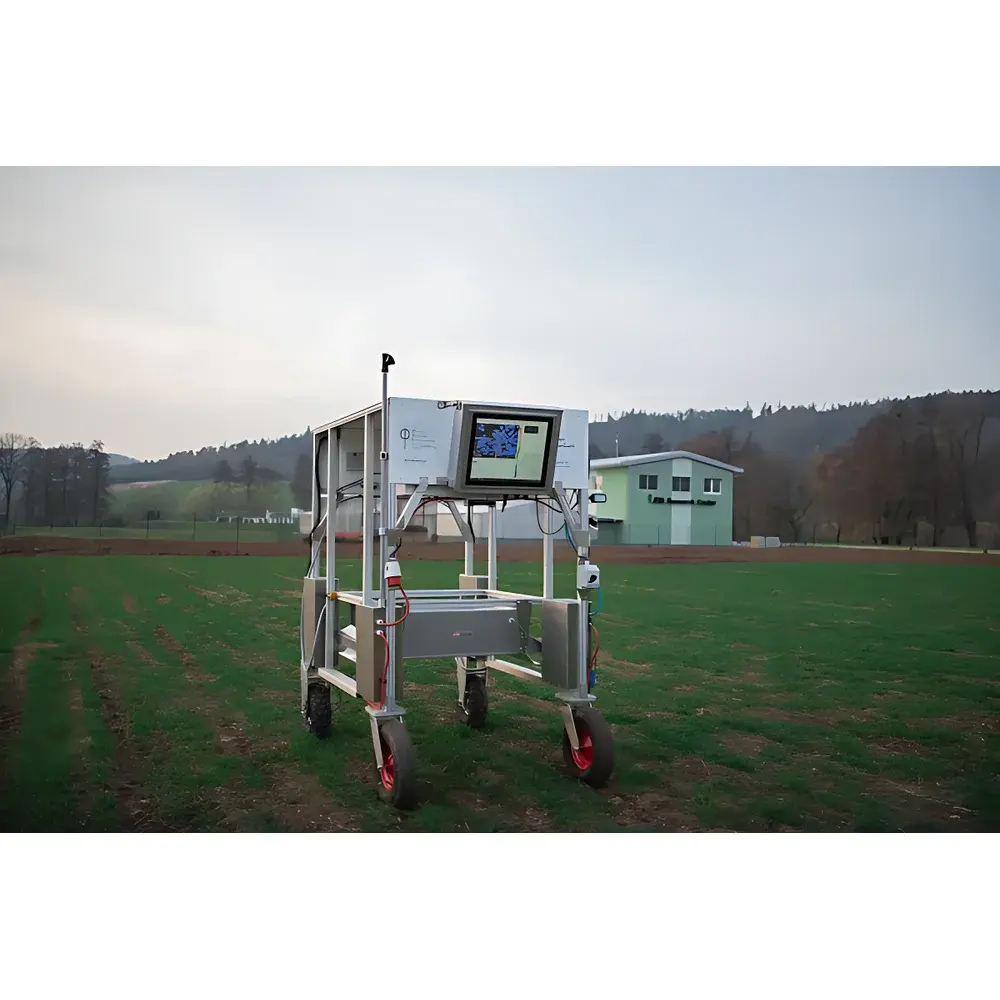
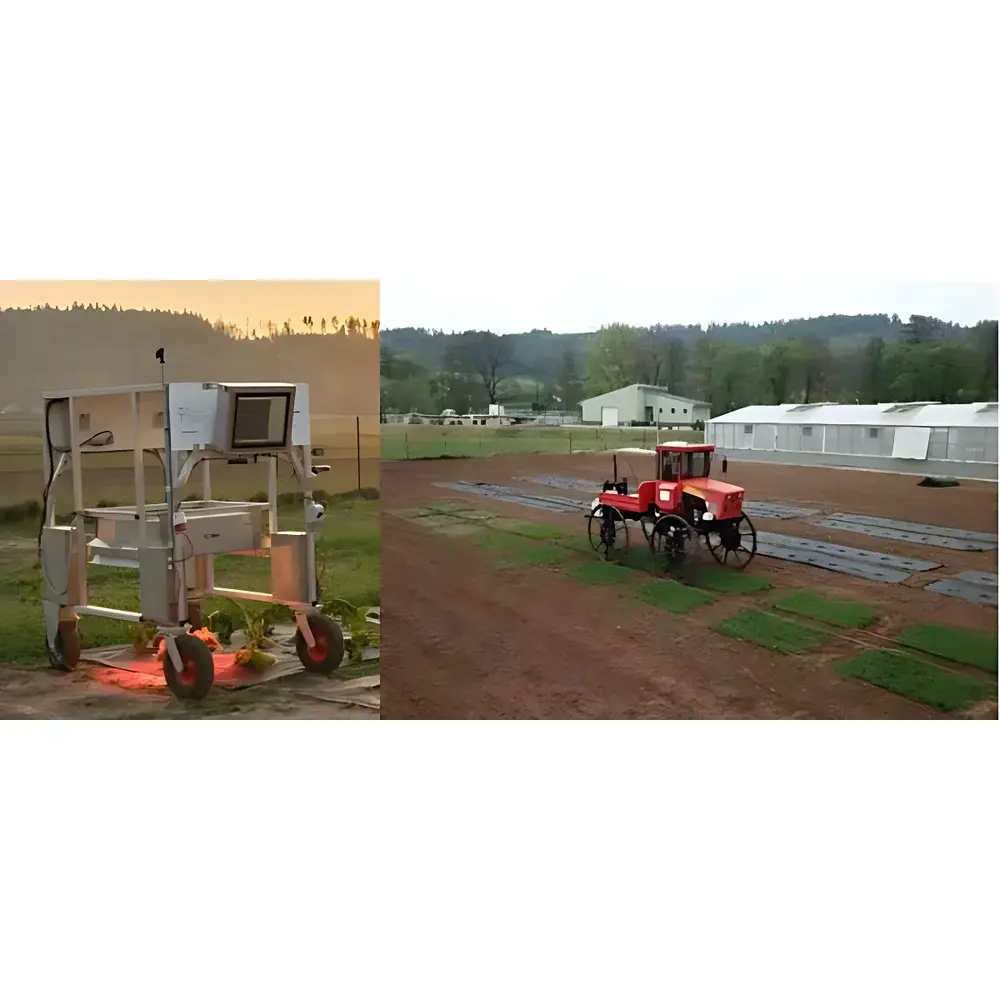
| Frame | Adjustable Aluminum Rover Chassis with Motorized Drive Wheels |
| Compliance | Designed for GLP-aligned field phenotyping workflows, compatible with ISO 22057 (Plant Phenotyping — Terminology and Functional Requirements), ASTM E2912 (Standard Guide for In Situ Spectral Reflectance Measurements) |
Overview
The PSI PlantScreen-R Mobile Plant Phenotyping Imaging System is an engineered field-deployable platform designed for non-invasive, high-throughput in situ phenotyping of crops and wild plant species under greenhouse, open-field, or semi-natural conditions. Built upon the proven architecture of the FluorCam Rover system, the PlantScreen-R integrates multi-modal optical sensing—spanning visible, fluorescence, near-infrared, thermal infrared, and 3D structural imaging—within a single motorized, height-adjustable aluminum rover chassis. Its core measurement principles include pulse-amplitude modulated (PAM) chlorophyll fluorescence kinetics, reflectance-based spectral analysis (RGB, NIR, hyperspectral), microbolometer-based thermography, and time-of-flight laser triangulation for 3D morphometrics. The system enables quantitative assessment of functional traits—including photosynthetic efficiency (ΦPSII, NPQ, Fv/Fm), stomatal conductance proxies (via thermal heterogeneity), water status dynamics (NIR absorption at 940 nm), canopy architecture (3D point cloud reconstruction), and pigment-based health indices (greenness, color segmentation)—all acquired simultaneously or in user-defined temporal sequences. Unlike stationary phenotyping platforms, the PlantScreen-R maintains metrological consistency across spatially distributed plots without requiring plant relocation, thereby preserving physiological integrity and ecological context.
Key Features
- Motorized four-wheel aluminum rover chassis with adjustable height (up to 100 cm clearance), enabling stable deployment on uneven terrain and compatibility with standard field plot dimensions.
- Integrated dual-sensor FluorCam module: 1.4 Mpixel cooled CCD (16-bit A/D), equipped with synchronized 620 nm orange LEDs (Fo measurement), dual-color actinic light (620 nm + cool white), 4000 µmol photons·m⁻²·s⁻¹ saturating flash, and 735 nm far-red LED (Fo′ determination); supports full Kautsky induction, OJIP transient, and fluorescence quenching analysis.
- High-resolution RGB imaging unit: 5 MP CMOS sensor (2560 × 1920, 14.1 fps), 2.2 µm pixel pitch; delivers morphometric parameters including projected leaf area, convex hull area, eccentricity, solidity, petiole angle estimation, and time-series relative growth rate (RGR) modeling.
- Thermal infrared camera: Uncooled microbolometer (640 × 480 pixels, NETD ≤ 30 mK, 7.5–13 µm spectral band); calibrated for absolute surface temperature mapping (–20 to 120 °C) with reference sensor synchronization for ambient correction.
- NIR imaging module: InGaAs focal plane array (638 × 510 pixels, 14-bit A/D, 118 fps), 900–1700 nm spectral response; optimized for water absorption band ratioing (e.g., 940 nm/1100 nm) to generate quantitative dehydration maps independent of illumination variability.
- 3D laser scanning subsystem: Class 1 eye-safe diode laser with real-time point cloud generation; supports volumetric biomass estimation, internode length quantification, leaf inclination angle distribution, and canopy height model (CHM) derivation.
- Modular expansion capability: Seamless integration of soil sensor networks (soil moisture, EC, temperature at multiple depths), PAR/solar irradiance loggers, CO₂/O₂ gas analyzers, and root observation ports via standardized I/O and CAN bus interfaces.
Sample Compatibility & Compliance
The PlantScreen-R accommodates intact plants from seedling stage through maturity—ranging from Arabidopsis thaliana rosettes to tall-statured maize or sorghum canopies—without physical disturbance. It operates under ambient lighting or controlled supplemental illumination, supporting both diurnal cycle monitoring and stress imposition protocols (e.g., progressive drought, heat ramping, nutrient deficiency). All imaging modules comply with traceable calibration standards: FluorCam measurements align with the Minimal Fluorescence Protocol (ISO 10211), thermal data adhere to ASTM E1933 (Standard Test Methods for Measuring and Compensating for Emissivity), and spectral reflectance outputs conform to ISO 22057 Annex B guidelines for field phenotyping metadata structure. Data provenance is maintained via embedded timestamps, GPS geotags (optional), hardware-level sensor diagnostics, and audit-trail-enabled user authentication—supporting regulatory readiness for GLP-compliant trials and USDA-ARS or EU Horizon-funded field studies.
Software & Data Management
The PlantScreen-R runs PSI’s proprietary PhenotypeStudio software suite, deployed on an onboard industrial-grade PC with touchscreen HMI interface. The system implements a modular protocol engine allowing users to define fully automated measurement sequences—including multi-sensor trigger logic, dwell times, environmental condition logging, and conditional branching based on real-time parameter thresholds. Acquired datasets are stored in vendor-neutral HDF5 format with embedded ontological metadata (using MIAPPE v1.1 schema). Analysis pipelines include batch-processing of fluorescence kinetics (Fv/Fm, ΦPSII, Rfd), thermal anomaly detection (z-score-based pixel clustering), NIR water index calculation (WI = R₉₄₀/R₁₁₀₀), and 3D mesh reconstruction (via Poisson surface reconstruction). All results are visualized in interactive dashboards with export options for CSV, TIFF, and JSON-LD. Software updates are delivered remotely via secure HTTPS channel; version history, change logs, and validation reports are accessible within the application. The system supports 21 CFR Part 11–compliant electronic signatures when configured with LDAP/Active Directory integration and role-based access control (RBAC).
Applications
- Field-scale QTL mapping and GWAS validation using dynamic photosynthetic performance as intermediate phenotypes.
- In situ drought resilience screening across breeding populations via synchronized thermal-NIR-fluorescence response profiling.
- Canopy-level carbon assimilation modeling using combined ΦPSII, stomatal conductance (Tₘᵢₙ–Tₘₐₓ differential), and LAI-derived light interception estimates.
- Root-shoot coordination studies when coupled with SoilTron mini-lysimeters, enabling simultaneous aboveground imaging and belowground water flux quantification.
- Phenotypic stability assessment across agroecological zones via longitudinal multi-season deployments with cross-site calibration transfer.
- Ecophysiological monitoring of native vegetation under climate change gradients (elevation transects, urban heat islands, post-fire succession).
FAQ
Is the PlantScreen-R suitable for unattended overnight operation?
Yes—the rover chassis includes IP54-rated enclosures, battery management with 8–12 h runtime (expandable), and watchdog-triggered recovery logic. Environmental sensors log continuously during dark periods, and thermal/NIR imaging remains functional under moonlight or low-light conditions.
Can fluorescence and thermal data be acquired simultaneously?
Yes—hardware-synchronized triggering ensures sub-millisecond alignment between FluorCam exposure windows and thermal frame capture, enabling direct pixel-wise correlation of photosynthetic yield and surface temperature anomalies.
What level of technical support does PSI provide for field deployments?
PSI offers on-site commissioning, operator certification workshops, remote diagnostics via encrypted VNC, and annual firmware/software validation packages aligned with ISO/IEC 17025 internal audit requirements.
Are raw sensor data files accessible for third-party analysis?
All modalities output calibrated, georeferenced, time-stamped binary streams (HDF5) with documented scaling factors and coordinate transforms—no proprietary compression or obfuscation is applied.
How is system accuracy validated across changing ambient temperatures?
Each imaging module undergoes factory calibration against NIST-traceable references (e.g., blackbody sources for IR, quantum efficiency standards for CCD/InGaAs); field recalibration routines are embedded in PhenotypeStudio and triggered automatically before each measurement session.
Related Products