
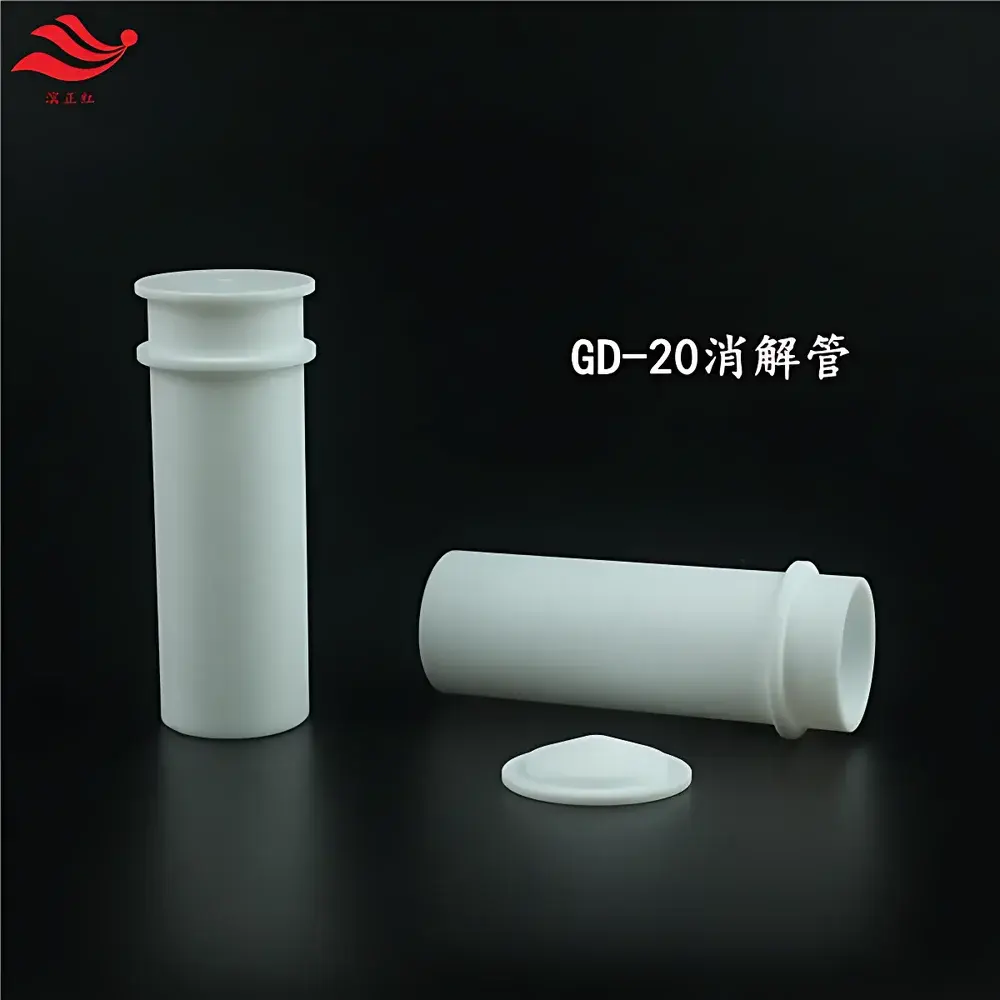
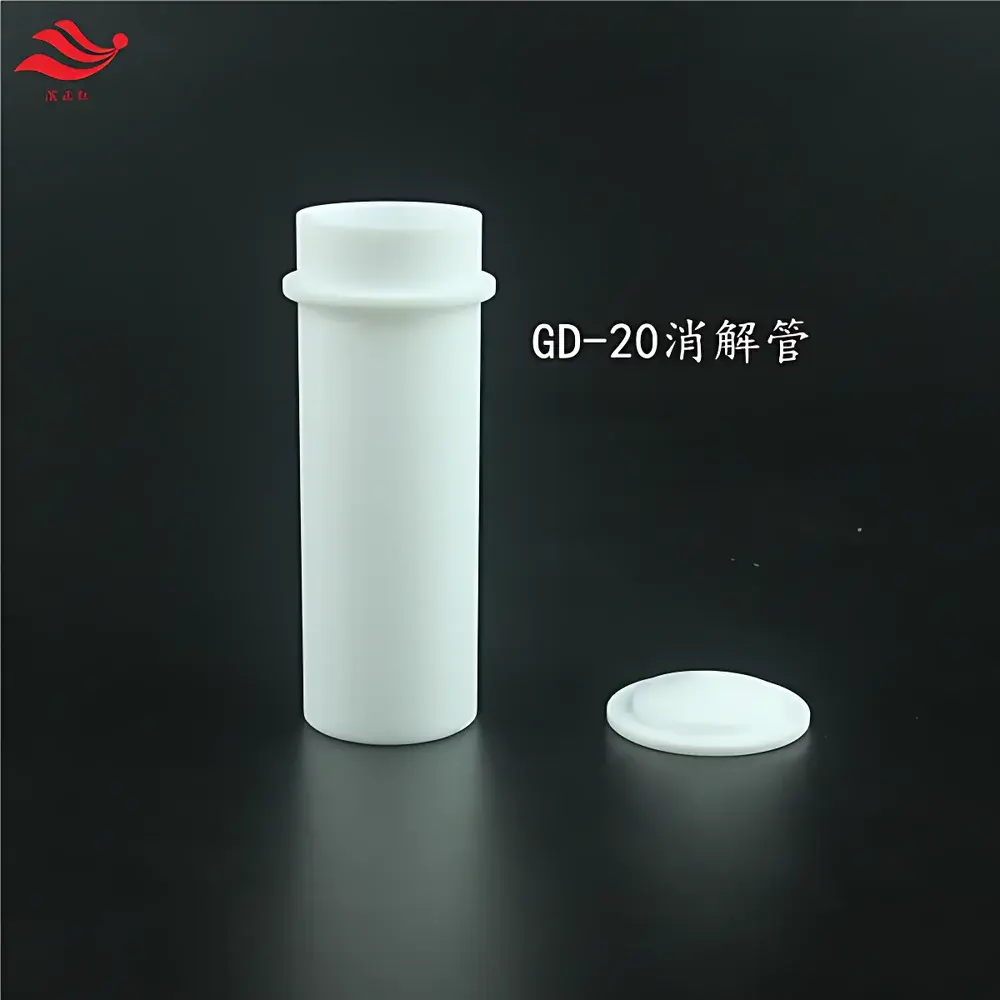
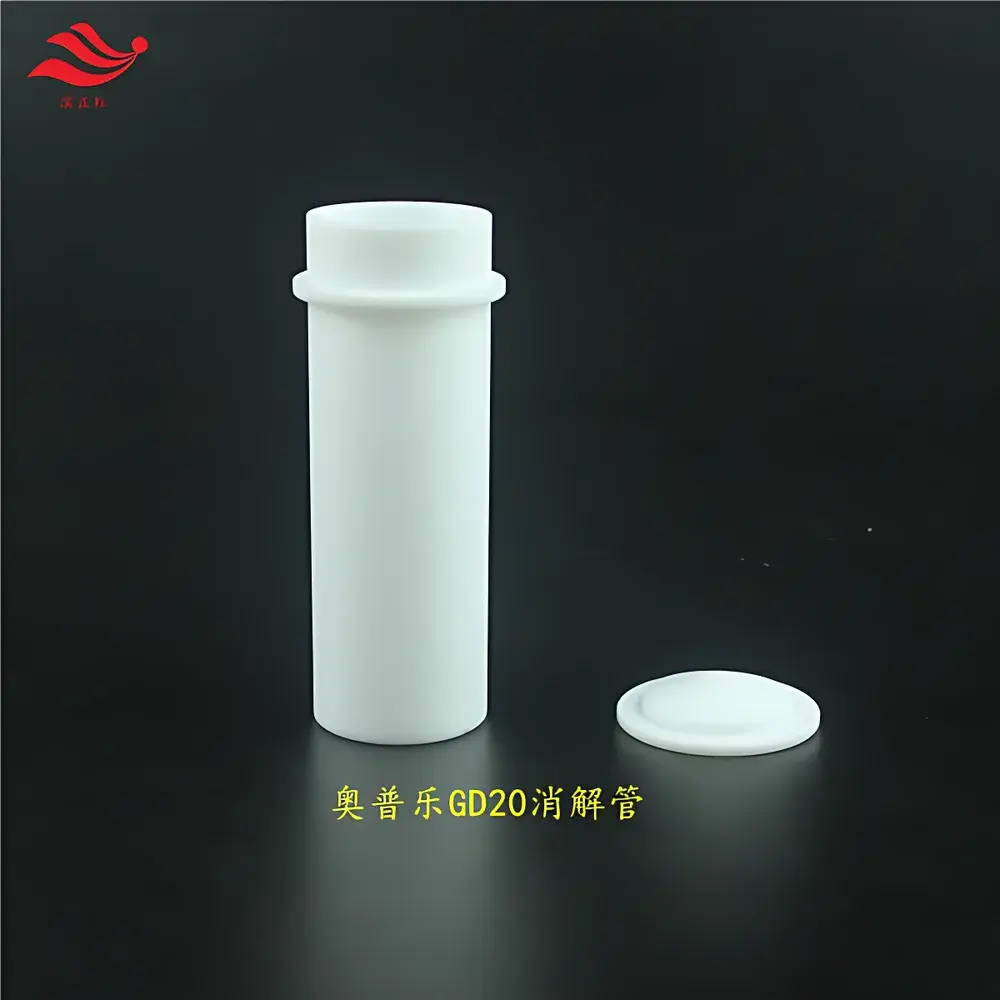
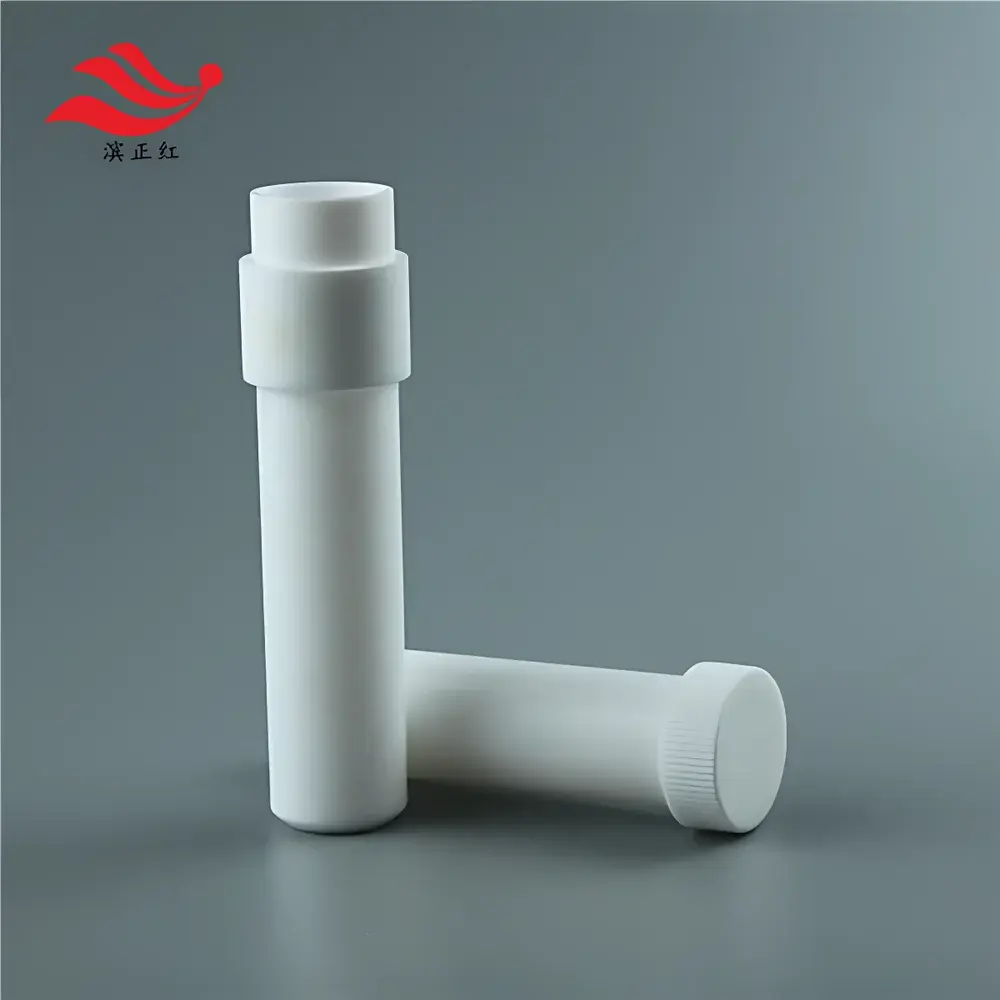
PTFE Digestion Vessel 100 mL for GD-20 Microwave Digestion System
| Brand | Binzhenghong |
|---|---|
| Origin | Jiangsu, China |
| Manufacturer Type | Direct Manufacturer |
| Country of Origin | China |
| Model | GD-20 Digestion Vessel |
| Material | PTFE (Polytetrafluoroethylene) |
| Capacity | 100 mL |
| Inner Diameter | 40 mm |
| Depth | 110 mm |
| Compatibility | GD-20 Microwave Digestion Instrument |
Overview
The PTFE Digestion Vessel 100 mL for GD-20 Microwave Digestion System is a high-purity, chemically inert sample containment component engineered for closed-vessel microwave-assisted acid digestion in analytical laboratories. Constructed entirely from virgin polytetrafluoroethylene (PTFE), this vessel leverages the exceptional thermal stability (up to 260 °C continuous service), near-universal chemical resistance—including concentrated hydrofluoric acid (HF), aqua regia, and hot alkaline solutions—and ultra-low extractables profile required for trace-metal and ultra-trace elemental analysis. Designed as a direct-fit consumable for the GD-20 microwave digestion platform, it operates within the instrument’s controlled pressure and temperature envelope to ensure reproducible decomposition of organic matrices (e.g., biological tissues, soils, polymers, foodstuffs) and refractory inorganic samples (e.g., silicates, oxides) prior to quantification by ICP-OES, ICP-MS, or AAS.
Key Features
- Monolithic PTFE construction with no adhesives, fillers, or secondary polymer layers—ensuring zero background contamination and compliance with ISO/IEC 17025 traceability requirements for method validation.
- Precision-machined geometry: 40 mm inner diameter and 110 mm depth optimized for uniform microwave energy coupling, consistent heating profiles, and efficient vapor-phase reflux during digestion cycles.
- Chemical compatibility validated per ASTM D5178 and ISO 11885 protocols for use with HNO₃, HCl, HF, H₂O₂, and mixed-acid systems under elevated temperature/pressure conditions.
- Thermal shock resistance tested across −200 °C to +260 °C cycling without dimensional deformation or microcracking—critical for rapid post-digestion cooling and handling safety.
- Surface roughness (Ra) < 0.4 µm, minimizing analyte adsorption and enabling quantitative recovery of volatile elements (e.g., As, Se, Hg) during subsequent dilution and analysis.
Sample Compatibility & Compliance
This vessel supports digestion of diverse sample types including environmental solids (sediments, sludges), clinical specimens (urine, serum, tissue homogenates), agricultural commodities (grains, forage), and industrial materials (catalysts, ceramics). It conforms to key regulatory frameworks governing sample preparation integrity: USP and for elemental impurities testing; EPA Methods 3050B, 3051A, and 3052 for environmental matrix digestion; and ISO 14851/14852 for biodegradability-related metal leaching studies. When used in conjunction with GD-20 system audit logs and vessel batch traceability documentation, it supports GLP-compliant workflows and FDA 21 CFR Part 11–aligned electronic record retention.
Software & Data Management
While the vessel itself is a passive consumable, its integration into the GD-20 platform enables full digital traceability via the instrument’s embedded LIMS-compatible software. Each digestion run automatically records vessel ID (if RFID-tagged), ramp time, hold temperature/pressure setpoints, and total cycle duration—parameters exportable in CSV or XML format for QA/QC review. Batch-level metadata (e.g., lot number, sterilization date, pre-use blank test results) can be linked to analytical data files in laboratory information management systems (LIMS), fulfilling ISO/IEC 17025 clause 7.5.2 on equipment identification and calibration status tracking.
Applications
- Preparation of certified reference materials (CRMs) for multi-element calibration standards in ICP-MS laboratories.
- Digestion of high-silica geological samples requiring HF-based dissolution without borosilicate glass interference.
- Regulatory testing of consumer products (toys, electronics) per EN 71-3 and CPSIA lead/cadmium extraction protocols.
- Method development for speciation analysis where redox-sensitive elements (e.g., Cr(III)/Cr(VI), Sb(III)/Sb(V)) must be preserved during sample breakdown.
- Routine QC of pharmaceutical excipients per ICH Q2(R2) guidelines requiring low-background digestion for residual catalyst screening.
FAQ
Can this PTFE vessel be reused after cleaning?
Yes—provided it undergoes rigorous post-digestion decontamination (e.g., sequential rinsing with 10% HNO₃, ultrapure water, and acetone), followed by visual inspection for scratches or discoloration. Reuse is limited to ≤5 cycles for trace-metal work; single-use is recommended for sub-ppt level analyses.
Is this vessel compatible with other microwave digestion systems besides GD-20?
Mechanical fit is specific to GD-20 rotor geometry and sealing interface. Cross-platform use is not validated and may compromise pressure containment integrity or thermal uniformity.
Does the vessel meet USP Class VI biocompatibility requirements?
While PTFE inherently satisfies USP cytotoxicity and implantation criteria, formal Class VI certification requires device-level testing per ISO 10993. This vessel is intended for analytical—not biomedical—applications.
What is the maximum safe operating pressure for this vessel?
When used with the GD-20 system’s safety-rated rotor and pressure control firmware, the vessel is rated for sustained operation up to 80 bar at 240 °C—consistent with manufacturer specifications for the GD-20 platform.
How should empty vessels be stored to prevent contamination?
Store inverted in a clean, dust-free laminar flow hood or sealed polypropylene container with desiccant. Avoid contact with silicone-based greases or ambient lab air containing airborne metals (e.g., near ICP nebulizers).



