
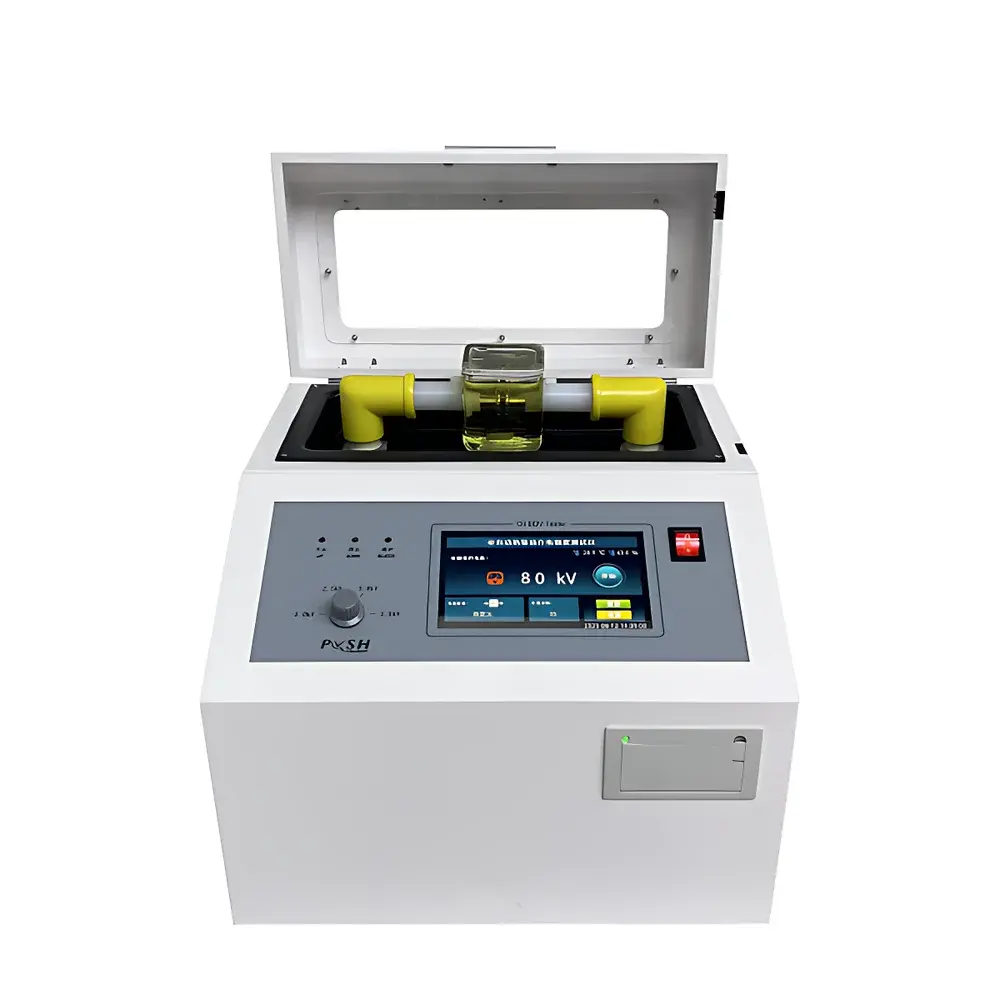
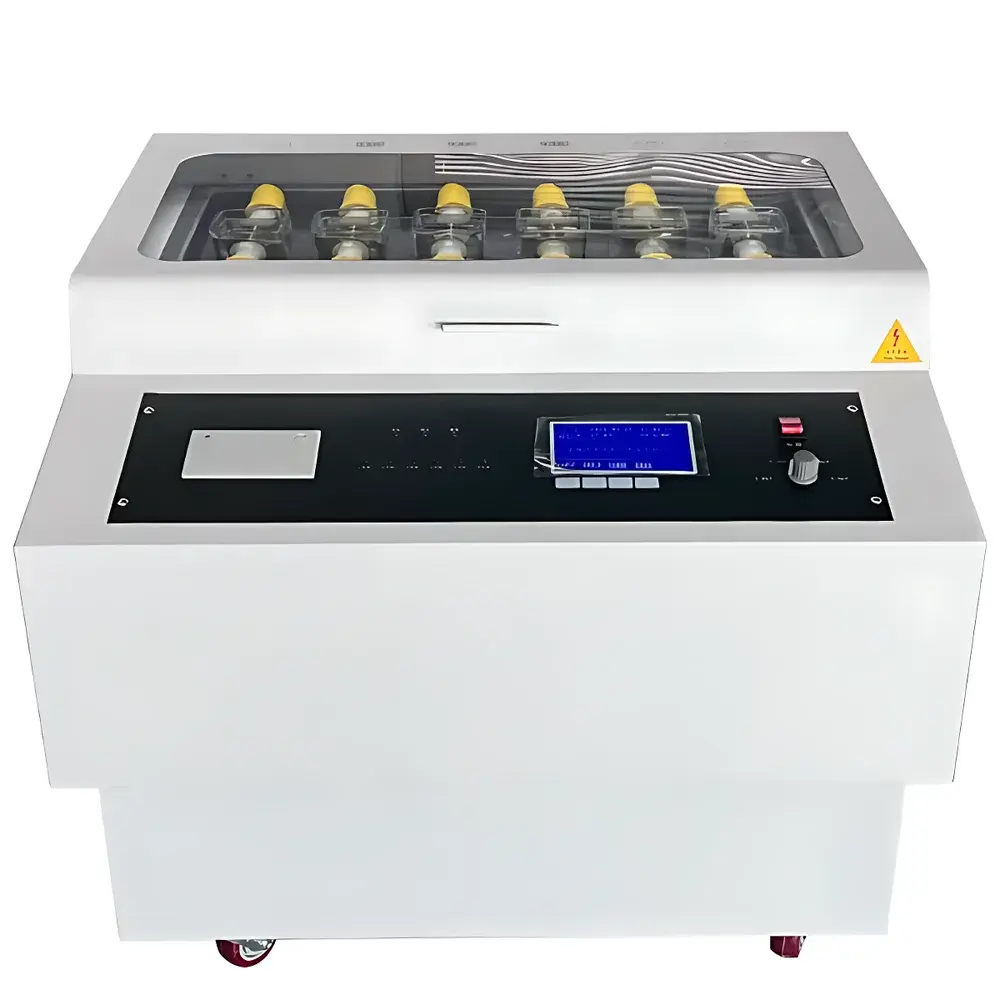
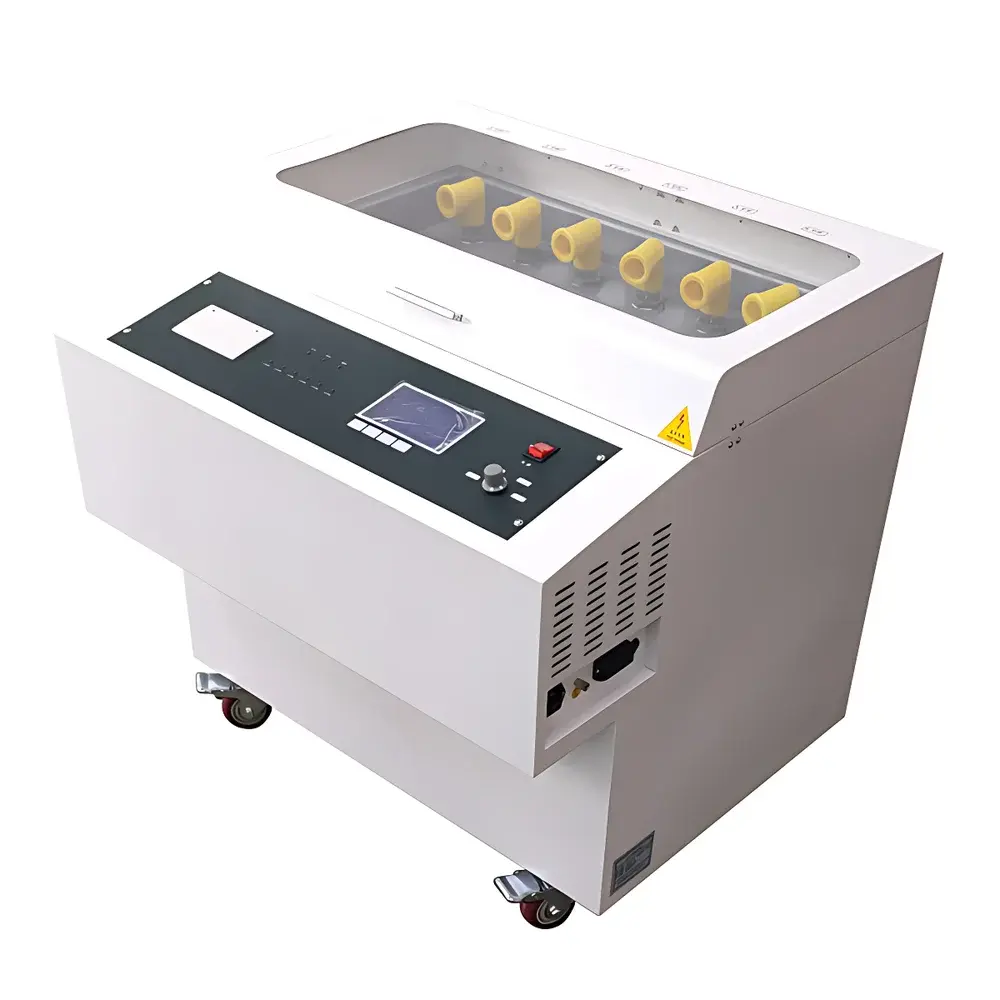
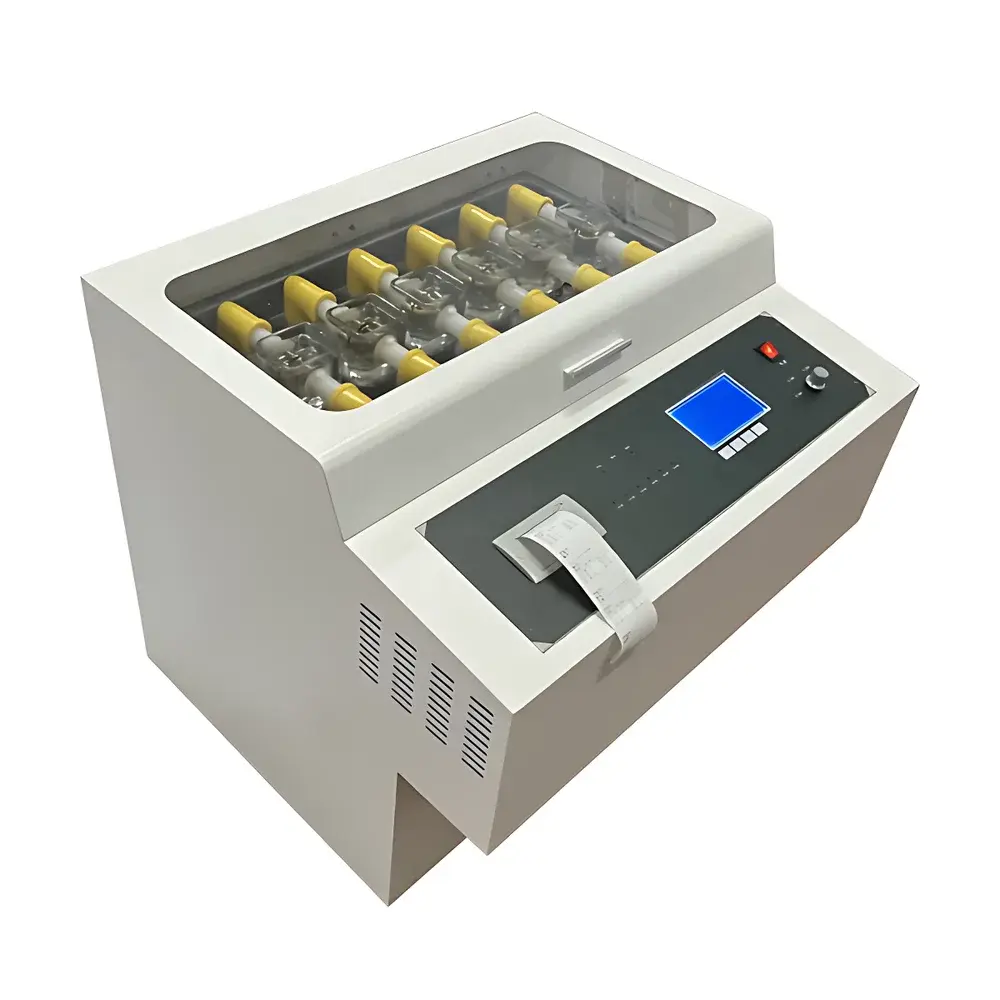
PUSH PS-1006 Six-Cup Insulating Oil Dielectric Strength Tester
| Brand | PUSH |
|---|---|
| Origin | Hebei, China |
| Manufacturer Type | Manufacturer |
| Country of Origin | China |
| Model | PS-1006 |
| Breakdown Voltage Range | 0–80 kV |
| Step-Up Transformer Capacity | 1.5 kVA |
| Step-Up Rates | 2.0 / 2.5 / 3.0 / 3.5 kV/s (selectable) |
| Electrode Gap | 2.5 mm (standard) |
| Power Supply | AC 220 V ±10%, 50 ±5 Hz |
| Power Consumption | <200 W |
| Ambient Operating Temperature | 0–40 °C |
| Relative Humidity | ≤85% |
| Display | Large LCD with Chinese character interface |
| Dimensions | 760 × 670 × 770 mm |
| Weight | 48 kg |
Overview
The PUSH PS-1006 Six-Cup Insulating Oil Dielectric Strength Tester is a fully digital, microprocessor-controlled instrument engineered for precise and repeatable measurement of dielectric breakdown voltage in transformer oils, turbine oils, and other non-aqueous insulating liquids. It operates on the principle of controlled high-voltage ramping across standardized electrode gaps immersed in the test sample—complying with the fundamental electrostatic breakdown mechanism described in IEC 60156, ASTM D877, and ASTM D1816. Designed specifically for power generation, transmission, and distribution utilities—as well as transformer manufacturing and oil reclamation facilities—the PS-1006 delivers consistent performance under field and laboratory conditions. Its six-cup configuration enables sequential or parallel testing of multiple samples without manual oil replacement or electrode cleaning between runs, significantly improving throughput while maintaining strict procedural integrity per GB/T 507–2002, DL/T 429.9–2021, and DL/T 596–1996.
Key Features
- Six independent test cups with borosilicate glass construction—optically clear, chemically inert, and resistant to thermal shock and high-voltage tracking; eliminates leakage paths and ensures long-term dimensional stability of the 2.5 mm electrode gap.
- Digital step-up rate selection (2.0, 2.5, 3.0, or 3.5 kV/s) with real-time closed-loop voltage regulation, minimizing overshoot and enabling compliance with both slow-ramp (ASTM D877) and fast-ramp (IEC 60156) test protocols.
- High-fidelity high-voltage sampling directly at the electrode terminals—bypassing analog signal conditioning stages—to preserve measurement linearity and reduce A/D conversion error to <±0.5% of full scale.
- Embedded watchdog timer architecture with dual-redundant firmware monitoring, preventing lockup during extended unattended operation—a critical requirement for overnight batch testing in substation maintenance labs.
- Integrated overvoltage, overcurrent, and short-circuit protection circuits with automatic arc quenching and post-breakdown discharge hold-off (≥200 ms), ensuring operator safety and electrode surface integrity across >10,000 test cycles.
- Portable industrial chassis with casters and reinforced lifting points; rated IP2X for indoor use and validated for stable operation at altitudes up to 2,000 m above sea level.
Sample Compatibility & Compliance
The PS-1006 accommodates standard 400 mL insulating oil specimens per cup, including mineral-based, silicone, and synthetic ester fluids meeting IEEE C57.106 and IEC 60296 specifications. It supports routine acceptance testing, periodic condition monitoring, and post-filtration verification workflows. All test sequences adhere to traceable calibration chains aligned with ISO/IEC 17025 requirements. The instrument’s firmware implements audit-ready test logging—including timestamped breakdown values, ramp rate, ambient temperature/humidity metadata, and operator ID—and supports export to CSV for integration into LIMS or SAP QM modules. Full compliance with electromagnetic compatibility standards EN 61326-1 (industrial environment) and electrical safety standard EN 61010-1 is verified via third-party certification reports available upon request.
Software & Data Management
No external PC is required for operation: all test execution, parameter configuration, and result review occur via the built-in 5.7-inch monochrome LCD with tactile membrane keypad. However, optional RS-232 and USB-B interfaces enable bidirectional communication with host systems running custom SCADA or enterprise QA platforms. Test records include raw voltage-time waveforms (sampled at 10 kHz), peak breakdown value, pre-breakdown leakage current trend (if enabled), and pass/fail status against user-defined limits. Data export preserves GLP/GMP-relevant attributes: electronic signature fields, immutable timestamps, and tamper-evident file hashing. Firmware updates are delivered via signed binary packages to maintain regulatory alignment with FDA 21 CFR Part 11 Annex 11 expectations for electronic records in critical infrastructure environments.
Applications
- Routine dielectric strength verification of new and reclaimed transformer oil prior to commissioning or re-injection into service.
- Condition-based maintenance scheduling for aging power transformers—correlating breakdown voltage trends with moisture content (Karl Fischer titration) and acidity (ASTM D974).
- Quality assurance screening of insulating oils supplied by OEMs and third-party blenders.
- Research-grade evaluation of additive package stability under accelerated aging (IEC 60296 Annex B) and oxidation resistance.
- Field deployment in mobile substations and remote switchgear bays where portability, low power draw (<200 W), and immunity to grid voltage fluctuations are essential.
FAQ
What standards does the PS-1006 support out-of-the-box?
It natively implements GB/T 507–2002, DL/T 429.9–2021, ASTM D877, and IEC 60156 test algorithms—including automatic pass/fail judgment per specified voltage thresholds and repeatability criteria.
Can the electrode gap be adjusted for non-standard testing?
No—the 2.5 mm gap is fixed per cup to ensure metrological consistency and eliminate operator-induced variability; alternative gap configurations require separate certified accessories not included with the base unit.
Is calibration traceable to national standards?
Yes—each unit ships with a factory calibration certificate traceable to CNAS-accredited reference standards; annual recalibration is recommended and supported via authorized service centers in Asia and EMEA.
Does the instrument support multi-language UI?
The standard interface displays Chinese characters only; English-language firmware is available as a configurable option upon order placement.
What maintenance is required between tests?
After each breakdown event, the system automatically flushes residual carbon particles using integrated air purge nozzles; manual wiping of electrodes is only necessary after every 50 tests or when visible contamination is observed.



