
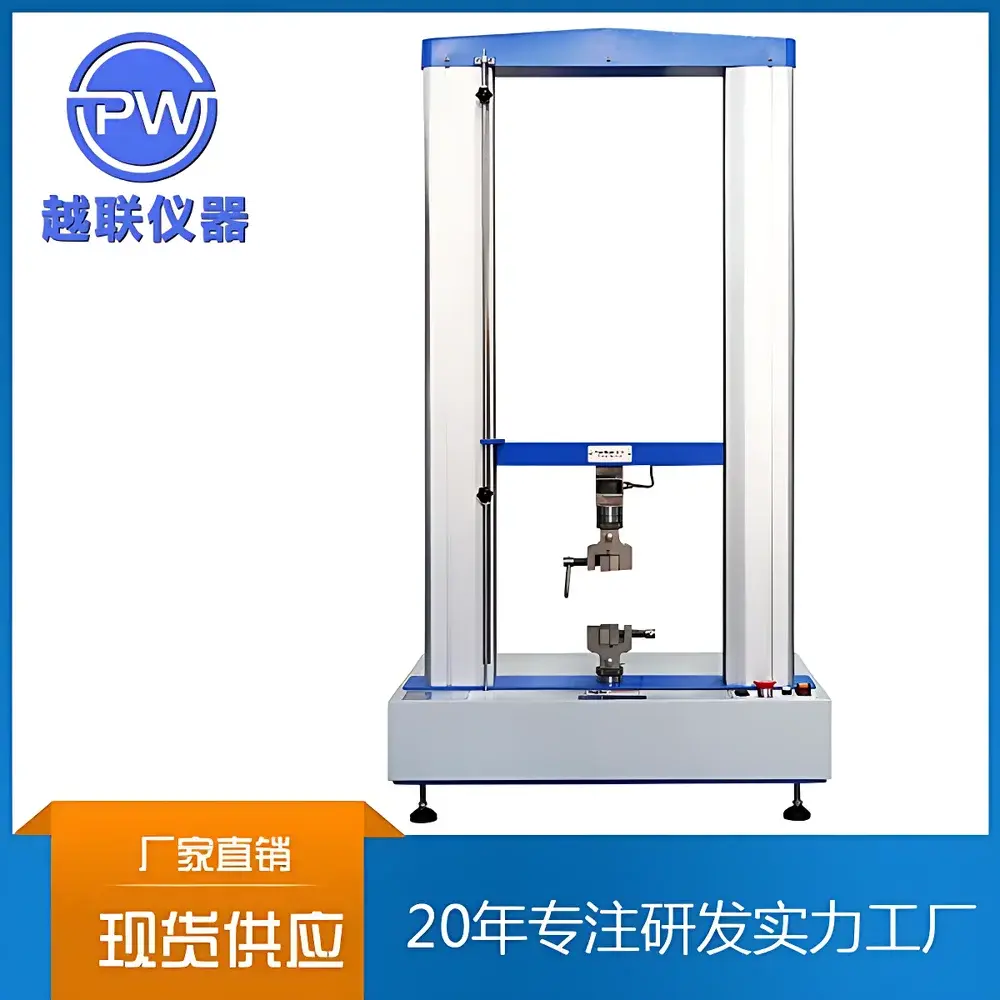
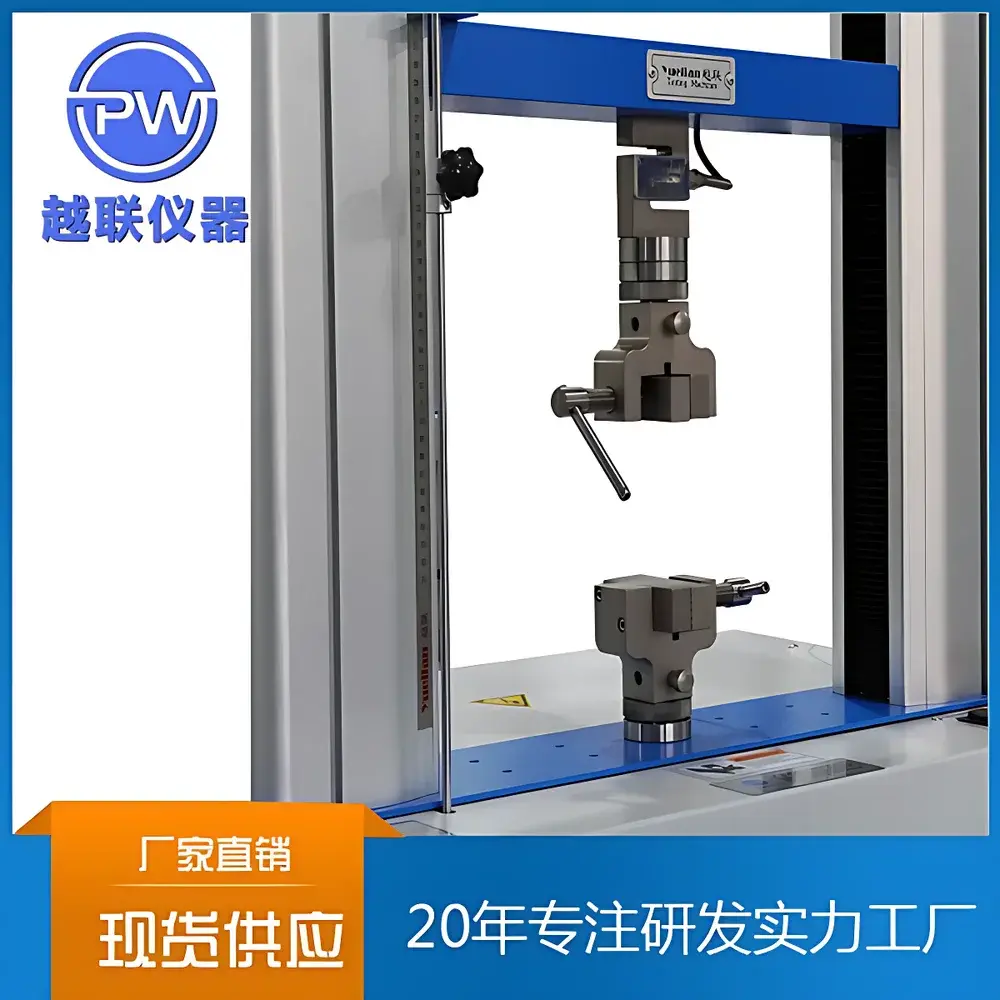
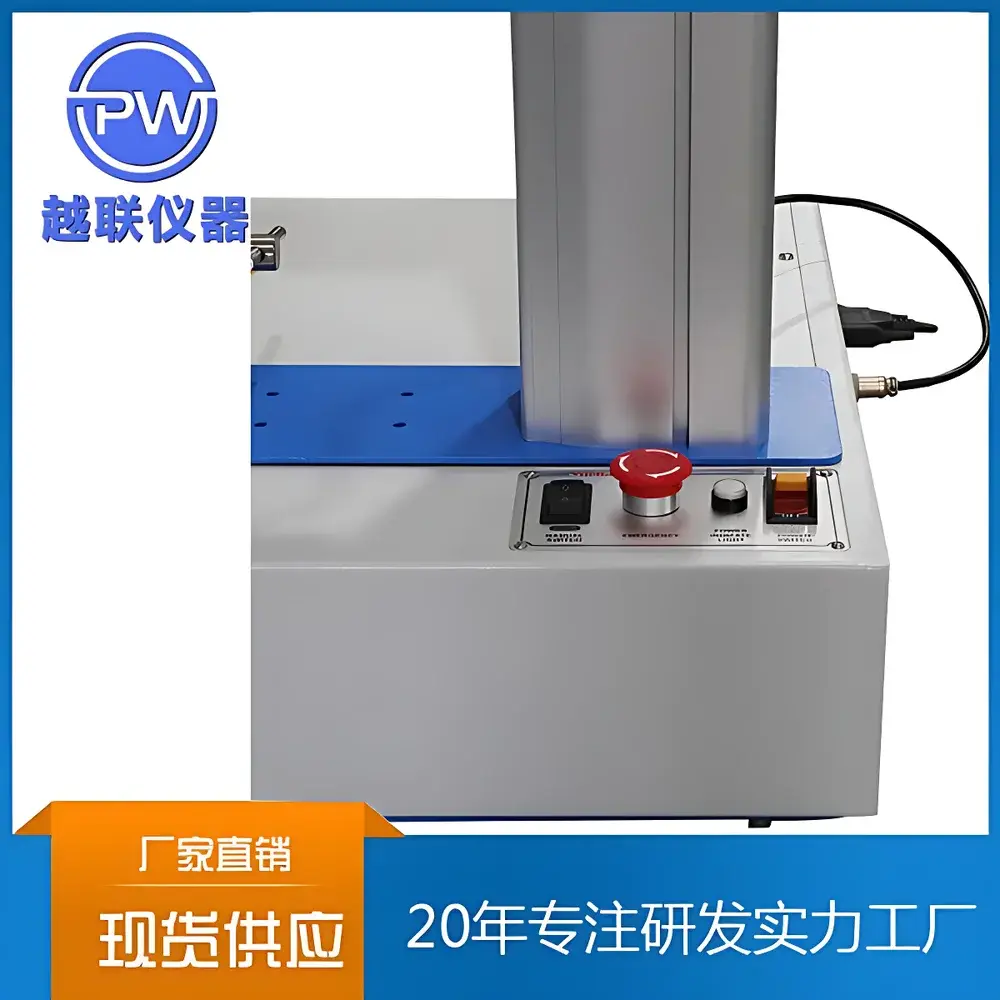
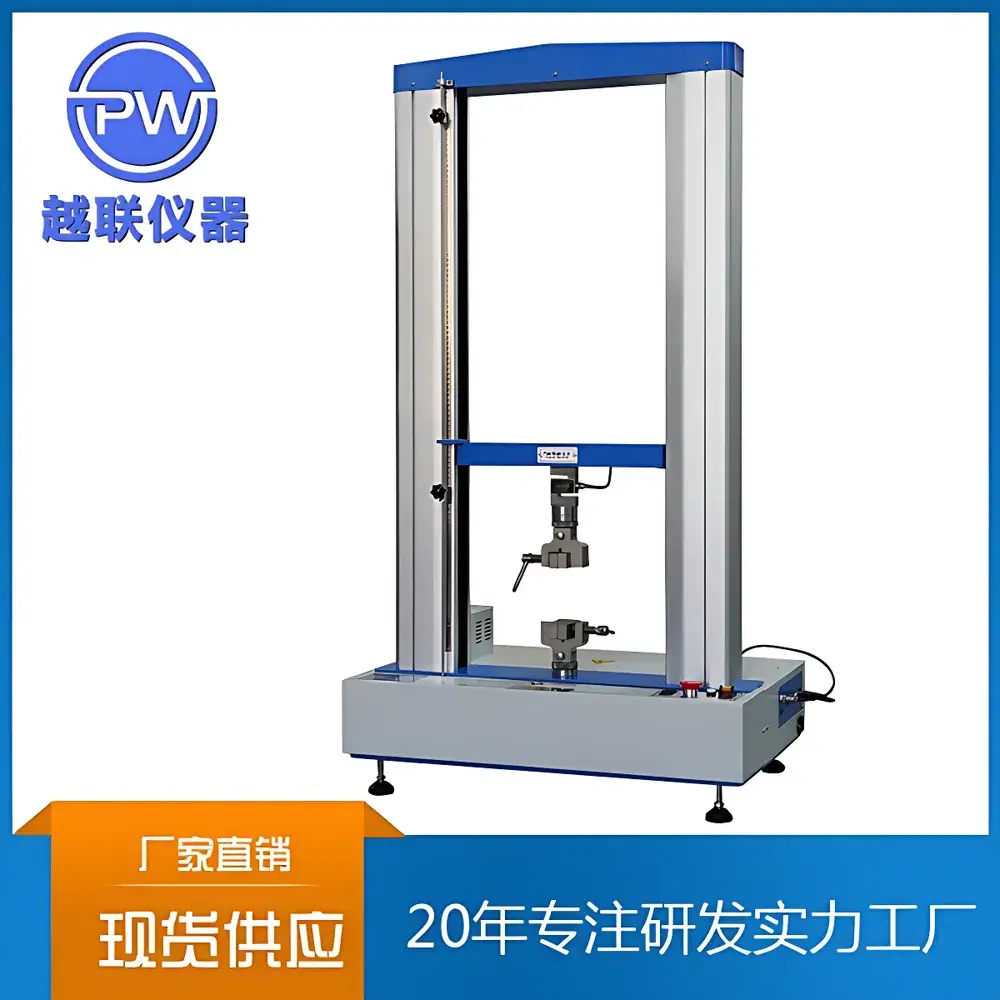
PW Universal Tensile and Compression Testing Machine PW-UD20
| Brand | Yuelian / PW |
|---|---|
| Origin | Guangdong, China |
| Manufacturer Type | Authorized Distributor |
| Product Origin | Domestic (China) |
| Model | PW-UD20 |
| Price Range | USD 1,400 – 12,800 (FOB Guangdong) |
| Max Load Capacity | 5 kN (optional sensor range: 10 N to 5 kN) |
| Control System | Full PC-based closed-loop servo control |
| Force Resolution | 1/500,000 FS |
| Displacement Resolution | 1/500,000 mm |
| Force Accuracy | ±0.3% of reading (sensor), system compliance with ISO 7500-1 Class 0.5 |
| Displacement Accuracy | ±0.5% of reading |
| Effective Stroke | 800 mm (customizable) |
| Speed Range | 0.01–500 mm/min (adjustable in 0.01 mm/min increments) |
| Test Space (W×D) | 420 mm × — mm (depth customizable) |
| Frame Material | Precision-machined 45# structural steel, sandblasted + electrostatic epoxy coating |
| Protection | Molded aluminum alloy dust cover, anodized surface finish |
| Drive System | High-torque AC servo motor + preloaded precision ground ball screw (C5 grade) |
| Position Feedback | High-line-count optical encoder (≥2,000 PPR), real-time digital interpolation |
| Load Cell | Dual-range or single-range S-type or cantilever load cell, temperature-compensated, bridge output (mV/V), IP65 rated |
| Data Acquisition | 24-bit isolated ADC with continuous unsegmented sampling, 500 kHz max sampling rate |
| Communication Interface | Optically isolated USB 2.0 (USB-B), compatible with Windows 10/11 x64 |
| Software Compliance | Supports 21 CFR Part 11 audit trail (optional configuration), GLP/GMP-ready metadata logging |
| Units | SI (N, mm, MPa), metric (kgf, cm), imperial (lbf, inch, kpsi) |
| Test Modes | Tensile, compression, flexure, peel, tear, shear, puncture, cyclic fatigue (displacement-, load-, or time-controlled) |
| Safety | Dual-channel hardware limit switches, overload cutoff, emergency stop, automatic post-fracture return, programmable upper/lower travel limits |
Overview
The PW-UD20 Universal Tensile and Compression Testing Machine is a dual-column electromechanical testing system engineered for high-fidelity mechanical property characterization of solid materials across R&D laboratories, QC departments, and contract testing facilities. It operates on the principle of controlled displacement-driven loading, where a precision servo motor actuates a preloaded ball screw to apply calibrated axial force to a specimen clamped between upper and lower grips. Force is measured via a temperature-stabilized, bridge-type strain-gauge load cell; displacement is tracked via high-resolution optical encoder feedback synchronized with real-time 24-bit analog-to-digital conversion. The system conforms to ISO 7500-1:2018 (static calibration of force-proving instruments), ASTM E4-23 (practices for force verification of testing machines), and GB/T 228.1–2021 (metallic materials tensile testing), ensuring metrological traceability and inter-laboratory comparability.
Key Features
- Modular dual-column frame constructed from stress-relieved 45# carbon steel, finished with industrial-grade electrostatic epoxy coating for corrosion resistance and long-term dimensional stability.
- High-precision C5-class ground ball screw transmission paired with a low-inertia AC servo motor, delivering smooth motion control across the full speed range (0.01–500 mm/min) with <±0.1% speed deviation at steady state.
- Isolated 24-bit ADC data acquisition system supporting unsegmented, continuous sampling at up to 500 kHz—enabling accurate capture of transient events such as yield point onset, crack propagation initiation, and dynamic failure modes.
- Optically isolated USB interface eliminates ground-loop interference, permitting safe hot-plug operation and eliminating risk of serial port damage during extended test campaigns.
- Multi-level software permission architecture (operator, supervisor, manufacturer) supports role-based access control, audit log generation, and secure parameter lockdown—essential for regulated environments under ISO/IEC 17025 or FDA 21 CFR Part 11 compliance programs.
- Real-time curve rendering with adjustable axis scaling, multi-curve overlay (up to 16 traces), differential analysis, and automated feature detection (e.g., yield point, modulus region, fracture point).
Sample Compatibility & Compliance
The PW-UD20 accommodates specimens ranging from thin polymer films (<10 µm) to rigid metal bars (up to 25 mm thickness), provided appropriate fixtures are selected. Standard configurations support ASTM D638 (plastics tensile), ASTM D3330 (adhesive peel), ISO 1133 (melt flow index correlation), ISO 527 (tensile properties of plastics), JIS K6251 (rubber tensile), and GB/T 7124 (adhesives shear strength). Fixture interchangeability enables rapid reconfiguration for tensile, compression, 3-point bend, loop tack, and dart impact tests. All mechanical components meet RoHS Directive 2011/65/EU; electrical design complies with IEC 61000-6-2 (immunity) and IEC 61000-6-4 (emission) standards. CE marking is available upon request with EU Declaration of Conformity.
Software & Data Management
The included PC-based test control and analysis suite runs natively on Windows 10/11 (64-bit) and supports Unicode multilingual UI (English, Chinese, Spanish, German, French, Japanese). Core capabilities include:
- Configurable test method templates aligned with ASTM, ISO, EN, JIS, and GB standards—each defining default parameters, calculation algorithms, and pass/fail criteria.
- Automated report generation in PDF, DOCX, XLSX, and XML formats with embedded metadata (operator ID, timestamp, environmental conditions, calibration certificate ID).
- SQL-based local database storing raw waveform data, processed results, and user annotations—indexed by batch ID, material grade, and test date for traceability.
- Raw data export in CSV or ASCII format with millisecond-level time stamps, enabling third-party statistical process control (SPC) integration or finite element model validation.
- Batch mode execution for unattended sequential testing with auto-reset, fixture recognition prompts, and failure-triggered email alerts (SMTP-enabled).
Applications
The PW-UD20 serves as a foundational platform for mechanical evaluation in diverse sectors:
- Battery manufacturing: Quantification of pouch cell aluminum-plastic laminate peel strength (ASTM F903), electrode binder adhesion (GB/T 30487), and separator tensile integrity under thermal stress.
- Automotive supply chain: Validation of thermoplastic elastomer (TPE) compression set (ISO 815), brake pad shear strength (SAE J661), and airbag fabric burst resistance (ISO 13938).
- Medical device QA: Verification of suture tensile strength (ISO 10555-1), catheter shaft kink resistance (ISO 5840-3), and hydrogel film elongation at break (ASTM D882).
- Packaging R&D: Measurement of heat-seal peel force (ASTM F88), flexible barrier film puncture resistance (ASTM F1306), and corrugated board edge crush test (ECT, TAPPI T811).
- Academic materials science: Extraction of Young’s modulus, Poisson’s ratio, and viscoelastic relaxation spectra from time-dependent creep/recovery protocols.
FAQ
What load cell options are available for the PW-UD20?
Standard configuration includes a 5 kN S-type load cell (±0.3% accuracy, 1 mV/V output). Optional calibrated sensors include 10 N, 100 N, 500 N, 2 kN, and 10 kN ranges—all traceable to NIM (National Institute of Metrology, China) or NIST-equivalent standards.
Can the system perform cyclic fatigue testing?
Yes—software version 3.2+ supports displacement-controlled, load-controlled, or strain-controlled sinusoidal, triangular, or trapezoidal waveforms with programmable frequency (0.001–5 Hz), maximum cycles (10⁹), and stop conditions (run-out, force drop >10%, or displacement drift >5%).
Is GLP-compliant audit trail functionality included?
Audit trail logging (user actions, parameter changes, calibration events) is enabled by default. For full 21 CFR Part 11 compliance—including electronic signatures and immutable record retention—contact technical support for validated software configuration and IQ/OQ documentation packages.
What is the warranty coverage and service response time?
Standard warranty: 24 months parts and labor, excluding consumables (grips, load cells subject to misuse). On-site service response: ≤5 business days within mainland China; remote diagnostics and firmware updates available globally via secure VPN.
How is system calibration verified before shipment?
Each unit undergoes full-load static calibration per ISO 7500-1 using certified deadweight standards (0.01% uncertainty) and dynamic verification via reference transducers calibrated against NIM primary standards. A full calibration certificate with uncertainty budget is supplied with delivery.



