
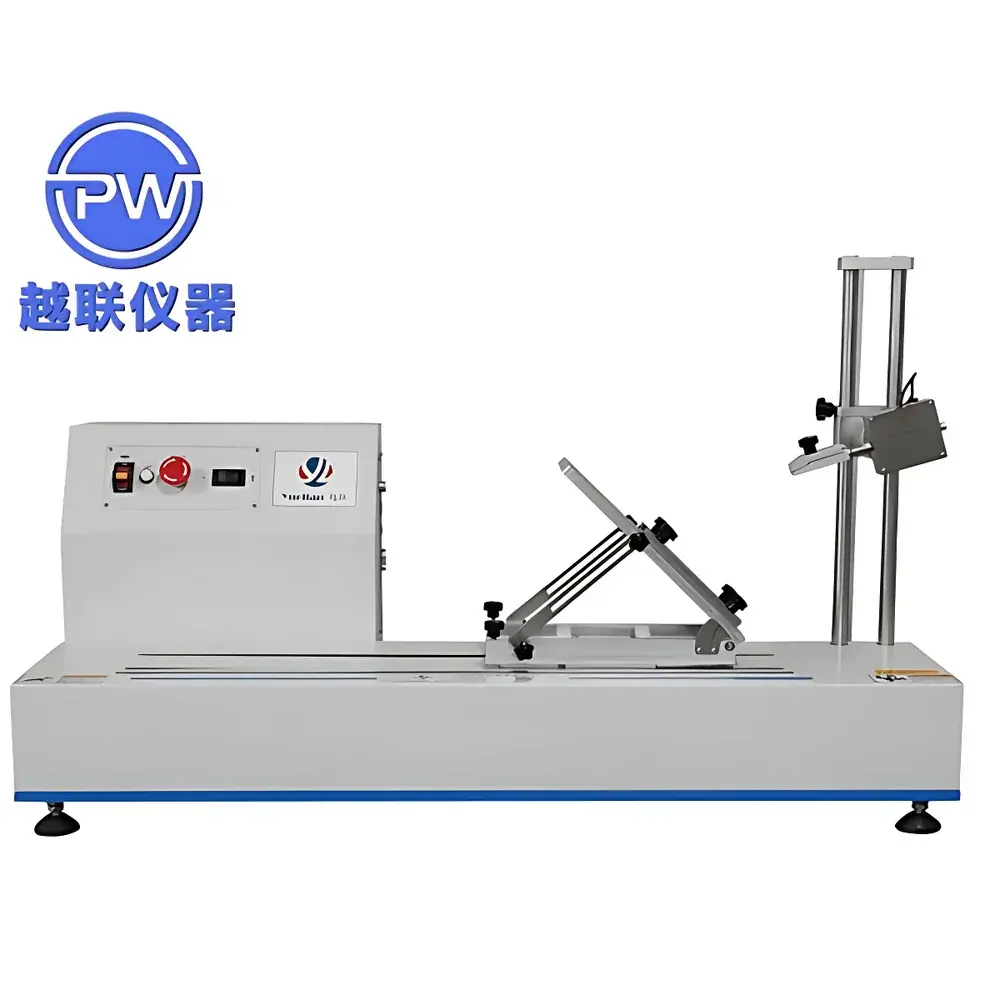
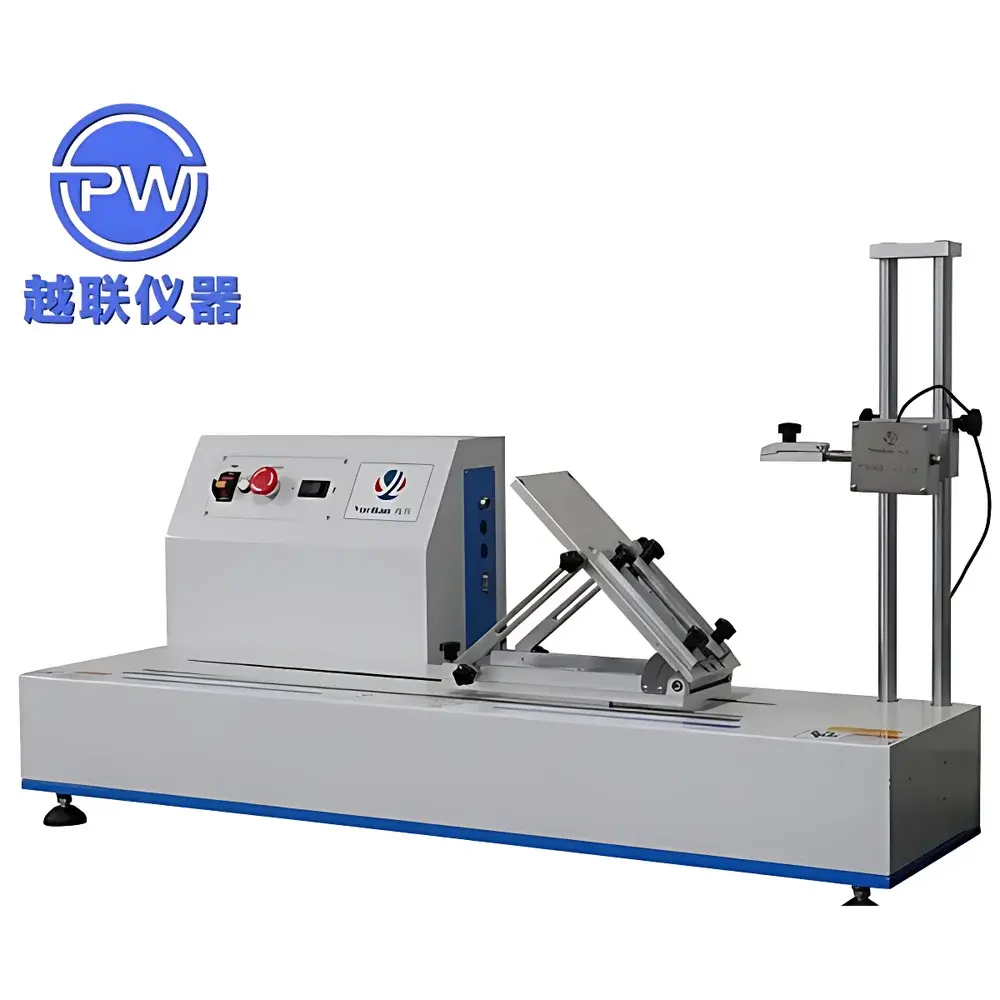
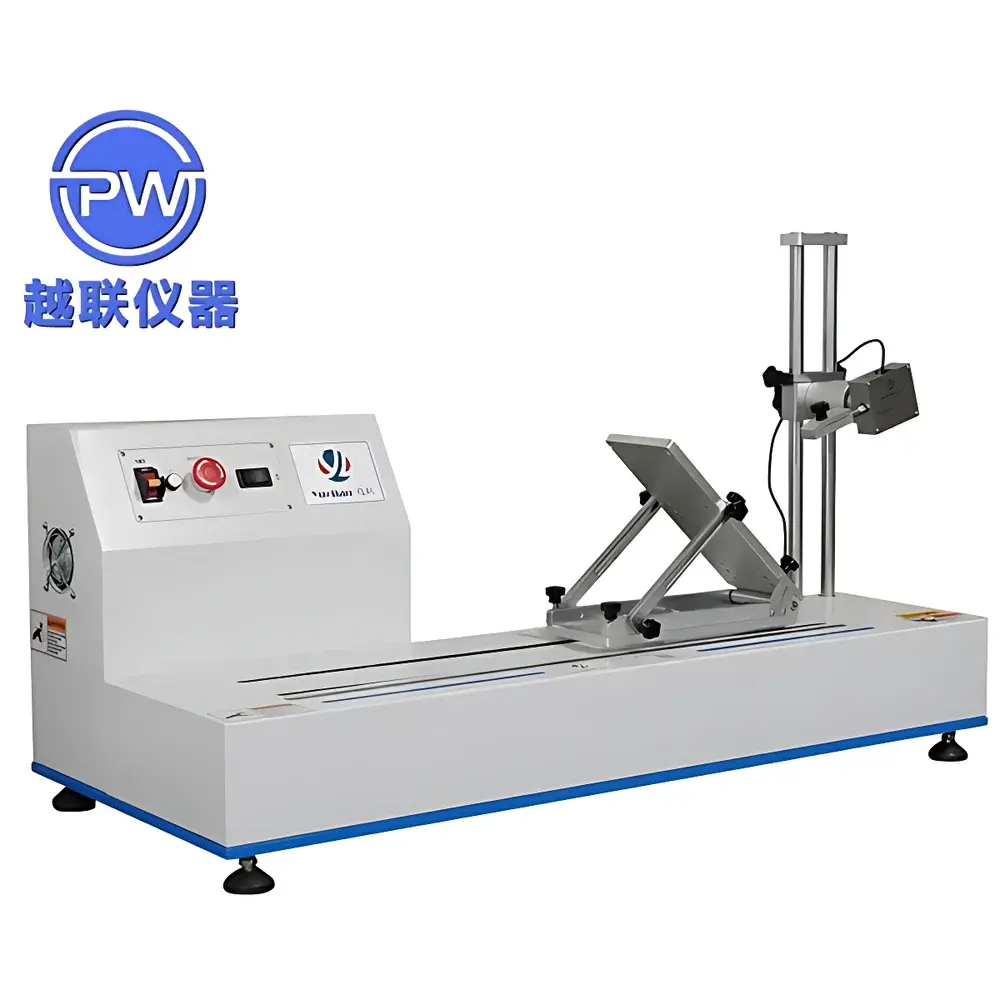
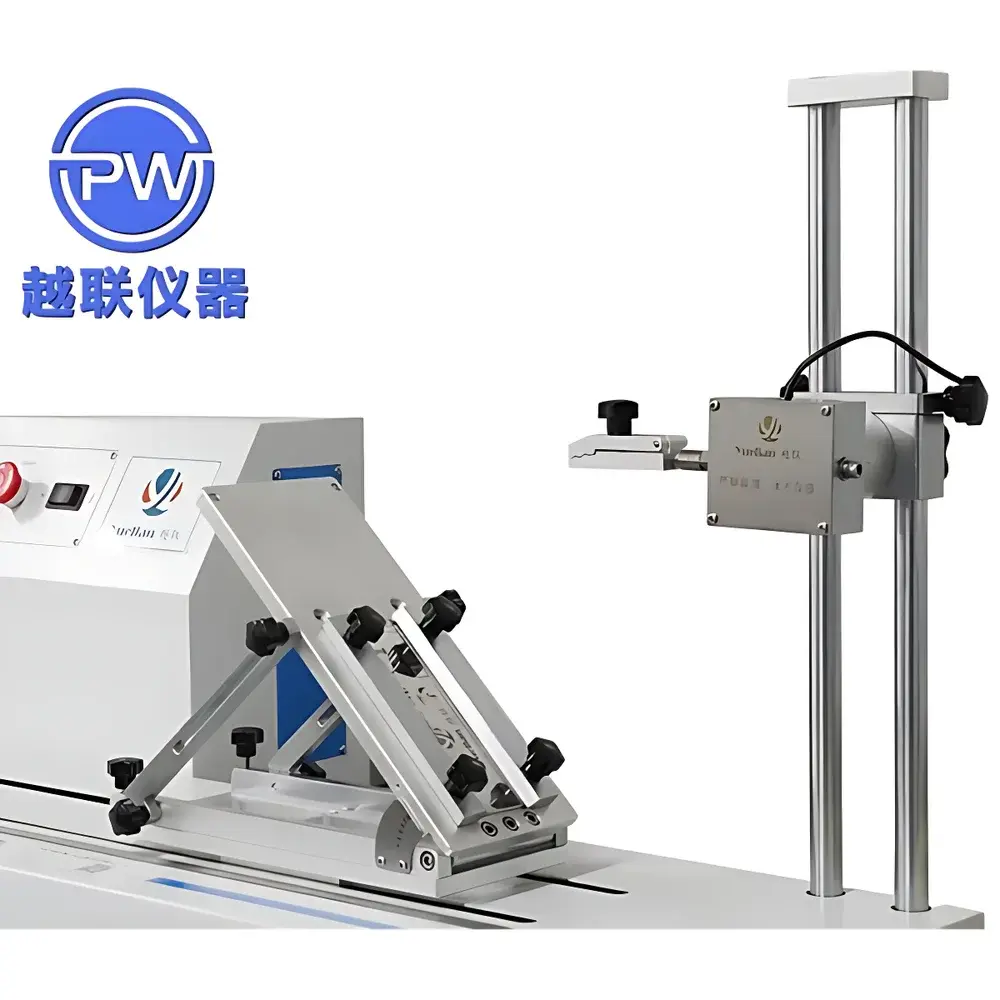
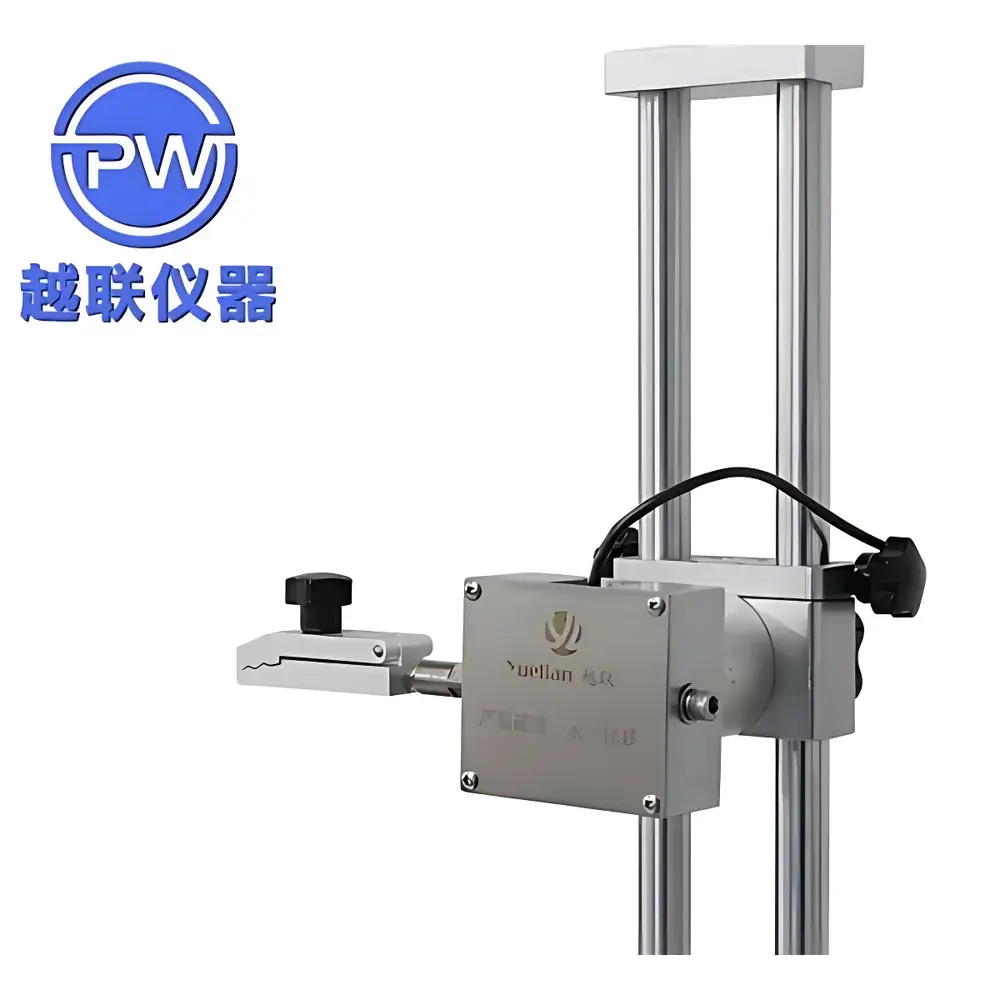
PW Universal Testing Machine PW-US30 Horizontal High-Speed Peel Tester
| Brand | PW (Yuelian) |
|---|---|
| Origin | Guangdong, China |
| Model | PW-US30 |
| Instrument Type | Electromechanical Universal Testing Machine |
| Force Capacity | Up to 1 kN |
| Speed Range | 0.01–30,000 mm/min |
| Position Resolution | 1/1,000,000 |
| Load Resolution | 1/1,000,000 |
| Load Accuracy | ±0.1% FS |
| Sensor Accuracy | 0.03% FS |
| Displacement Measurement Accuracy | 0.5 class |
| Force Measurement Range | 0.5–100% FS |
| Displacement Measurement Range | 1–100% FS |
| Data Acquisition Rate | 1200 Hz |
| Compliant Standards | ISO 7500-1, ASTM E4, ASTM D3330, GB/T 2792, GB/T 7124-2008, JIS B7721/B7733, EN 10002-1, DIN 51221, BS 1610 |
Overview
The PW-US30 Horizontal High-Speed Peel Tester is an electromechanical universal testing machine engineered for high-fidelity mechanical characterization of adhesive interfaces, flexible laminates, and thin-film materials under dynamic peel conditions. Designed around a horizontal load frame architecture, it employs a high-bandwidth servo motor drive system coupled with precision ground ball screws and high-line-count optical encoders to achieve exceptional positional fidelity and force response linearity. Its core measurement principle relies on real-time, high-frequency acquisition of tensile force and displacement during controlled 90° or 180° peel separation—enabling quantification of interfacial adhesion strength, cohesive failure mode, and energy dissipation behavior in compliance with standardized peel test protocols. With a maximum test speed of 30,000 mm/min and a 1200 Hz sampling rate, the PW-US30 captures transient mechanical events—such as initial tack onset, stick-slip transitions, and catastrophic delamination—with sub-millisecond temporal resolution, making it suitable for R&D validation, QC release testing, and accelerated aging studies in regulated manufacturing environments.
Key Features
- Horizontal configuration optimized for low-friction, gravity-neutral peel testing of tapes, labels, films, and laminated substrates—eliminating sag-induced error inherent in vertical systems.
- Ultra-high-speed actuation: achieves target velocity within 0.1 s; programmable speed range from 0.01 to 30,000 mm/min with closed-loop feedback control.
- High-resolution dual-channel data acquisition: 1/1,000,000 resolution for both load and displacement, supported by a 24-bit analog-to-digital converter with continuous unsegmented scaling (±500,000 code count).
- Modular sensor compatibility: interchangeable load cells from 10 N to 1 kN full scale, calibrated to ISO 7500-1 Class 0.5 accuracy and traceable to national metrological standards.
- Rigid 45# carbon steel frame with sandblasted surface and electrostatic powder coating—resistant to abrasion, corrosion, and environmental degradation in laboratory and production-floor settings.
- Integrated safety architecture: dual-limit mechanical end stops, overload cutoff, emergency stop button, and automatic return-to-origin upon specimen rupture.
- Optically isolated USB 2.0 interface ensures electromagnetic compatibility and enables hot-plug operation without risk of serial port damage or ground-loop interference.
Sample Compatibility & Compliance
The PW-US30 supports standardized mechanical testing of compliant specimens per international regulatory and industry specifications. It accommodates adhesive tapes (pressure-sensitive, acrylic, rubber-based), die-cut elastomeric components, flexible printed electronics, medical device laminates, and packaging films requiring peel, shear, tensile, or tear evaluation. The system conforms to ISO 7500-1 (static calibration of force-proving instruments), ASTM D3330 (peel adhesion of pressure-sensitive tapes), ASTM E4 (load verification of testing machines), GB/T 2792 (180° peel strength of adhesive tapes), GB/T 7124-2008 (adhesive shear strength), JIS B7721/B7733 (tensile testing machines), and EN 10002-1 (metallic materials tensile testing). All calibration certificates are issued with uncertainty statements aligned with ISO/IEC 17025 requirements. Optional audit-ready software modules support 21 CFR Part 11-compliant electronic signatures, user access control tiers (operator, supervisor, administrator), and full audit trail logging for GLP/GMP-regulated laboratories.
Software & Data Management
The PW-US30 is operated via PW-TestSuite v4.x—a Windows-native, multi-language platform supporting English, Chinese, Spanish, German, French, and Japanese with dynamically translated field labels and unit systems. The software provides full parametric control over test profiles—including displacement-controlled, load-controlled, time-controlled, and cyclic fatigue modes. Real-time curve rendering includes automatic peak detection, yield point identification, modulus calculation (secant/tangent), and area-under-curve integration for peel energy quantification. Post-test analysis tools enable overlay comparison of up to 16 curves with independent axis scaling, statistical summary generation (mean, SD, CV%), raw data export in CSV, TXT, or XML formats, and direct report generation in PDF, Word, or Excel. Database-driven result storage supports metadata tagging (batch ID, operator, environmental conditions), version-controlled method templates, and SQL-compatible query functionality for enterprise LIMS integration.
Applications
- Quantitative peel strength validation of medical transdermal patches against ISO 10993-5 biocompatibility requirements.
- Quality control of automotive interior trim adhesives per OEM-specific peel specifications (e.g., Ford WSS-M99P1111-A, GMW14872).
- Development and optimization of sustainable packaging laminates—evaluating recyclability-related delamination thresholds under variable humidity and temperature.
- Shear resistance testing of structural tapes used in aerospace composite bonding applications (per ASTM D1002).
- Dynamic fatigue assessment of flexible OLED encapsulation layers subjected to repeated bending cycles.
- Regulatory submission support for FDA 510(k) or CE marking dossiers requiring mechanical performance evidence per ISO 14971 risk management standards.
FAQ
What is the maximum recommended test speed for reliable peel data acquisition?
The system maintains full measurement fidelity at speeds up to 30,000 mm/min; however, for ASTM D3330-compliant 180° peel tests, optimal repeatability is achieved between 300–3000 mm/min depending on substrate stiffness and adhesive rheology.
Can the PW-US30 perform ASTM D1002 lap-shear testing?
Yes—when equipped with appropriate shear fixtures and calibrated 1 kN load cell, the system meets ASTM D1002 geometric and loading rate requirements for metallic adhesive joints.
Is the software validated for use in FDA-regulated environments?
The optional 21 CFR Part 11 add-on module includes electronic signature workflows, role-based permissions, and immutable audit trails—fully supporting validation documentation per GAMP5 guidelines.
How is traceability maintained for calibration and maintenance records?
All calibrations are performed using NIST-traceable reference standards; digital logs—including date, technician ID, equipment ID, and deviation reports—are embedded in the test database and exportable as PDF.
Does the system support custom test methods beyond preconfigured standards?
Yes—the method editor allows creation of user-defined test sequences with conditional logic, multi-stage ramp/hold segments, and real-time pass/fail criteria based on force, displacement, or time thresholds.



