
PyroScience RF-O2 Fluorescence-Based Fiber-Optic Oxygen Analyzer
| Origin | Europe |
|---|---|
| Manufacturer Type | Authorized Distributor |
| Product Category | Imported Instrument |
| Model | RF-O2 |
| Instrument Type | Optical Oxygen Analyzer |
| Measurement Range | 0–50% O₂ (0–23 mg/L) |
| Accuracy | ±0.2% O₂ @ 20% O₂ |
| Detection Limit | 0.02% O₂ (0.01 mg/L) |
| Resolution | 0.05% O₂ @ 20% O₂ |
| Response Time | <1 s (probe-dependent) |
| Sampling Frequency | Up to 20 Hz (PiccolO₂), 4 Hz (FireStingO₂) |
Overview
The PyroScience RF-O2 Fluorescence-Based Fiber-Optic Oxygen Analyzer is a high-precision, non-consumptive optical measurement platform engineered for quantitative oxygen monitoring across gaseous and aqueous phases. It implements the patented REDFLASH photoluminescence quenching principle: an O₂-sensitive indicator (REDFLASH dye) immobilized on sensor surfaces is excited by modulated red light (620 nm), emitting near-infrared fluorescence (760–790 nm); molecular oxygen dynamically quenches this emission, with phase shift of the fluorescent signal serving as the primary transduction metric. This phase-based detection eliminates intensity drift artifacts, ensures long-term stability, and provides immunity to photobleaching, fiber bending losses, or excitation source fluctuations. Unlike electrochemical or Clark-type sensors, the RF-O2 system consumes no oxygen during measurement, introduces no electrolyte interference, and exhibits negligible cross-sensitivity to CO₂, H₂S, pH, or redox-active species—making it uniquely suited for delicate biological, environmental, and process-critical applications where sample integrity and temporal fidelity are paramount.
Key Features
- Non-invasive, zero-oxygen-consumption sensing enabled by solid-state optical transduction
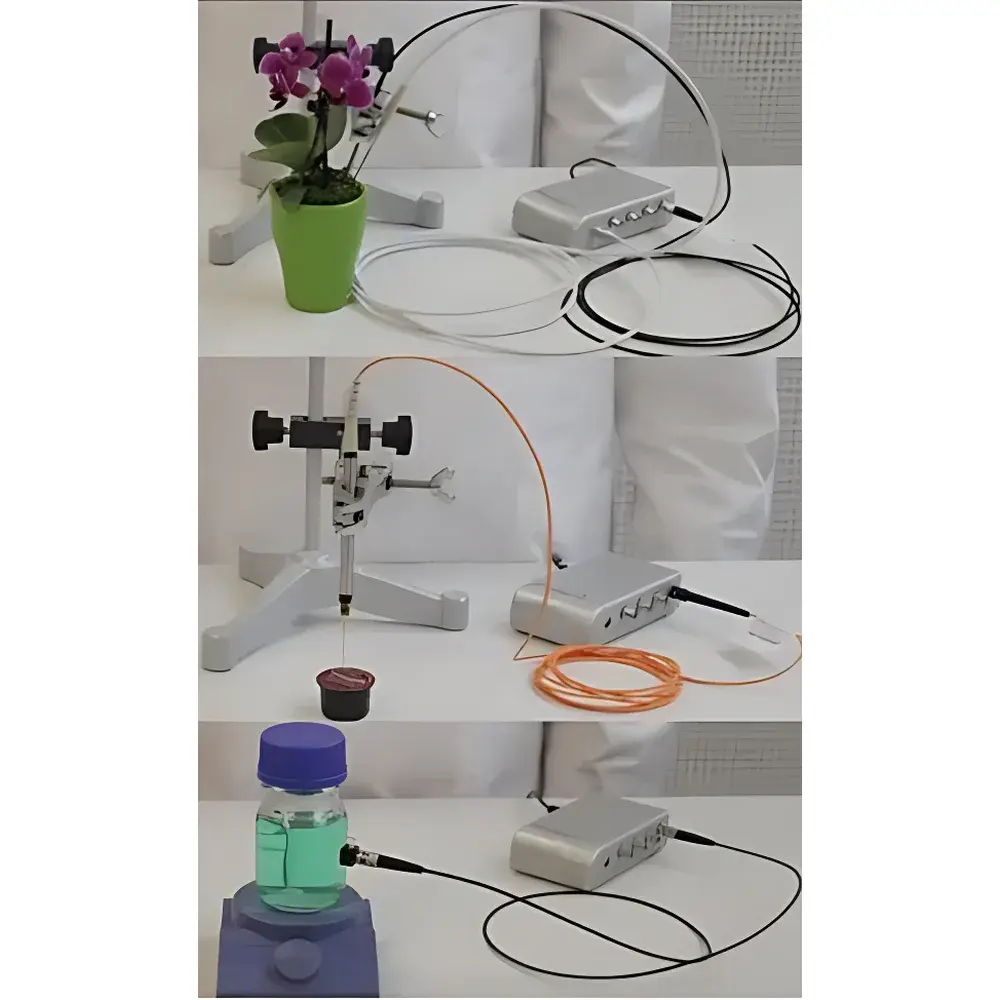
- Multi-format sensor architecture: needle-type microprobes (50–430 µm diameter), immersion probes (3 mm OD), non-contact sensor spots (for transparent vessel walls), and nanoparticle suspensions for micro-volume liquid analysis
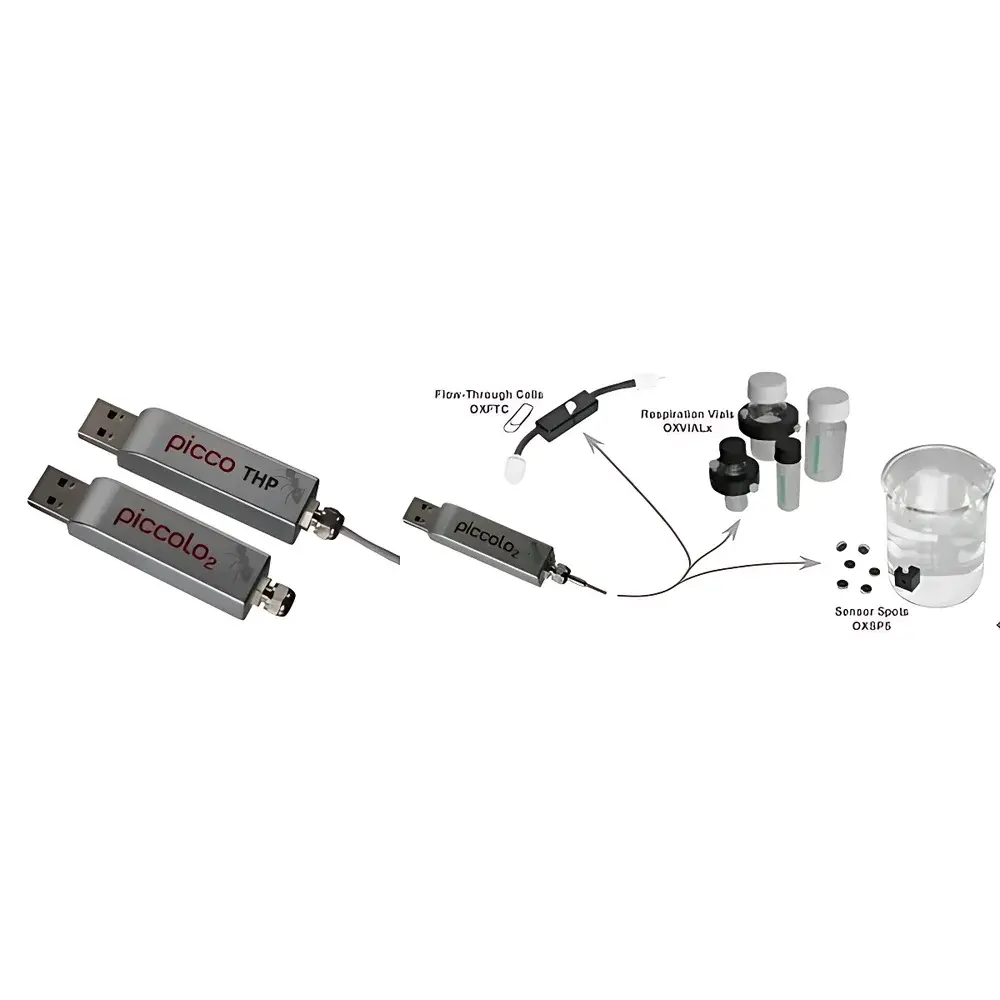
- Dual-platform instrumentation: FireStingO₂ (1/2/4-channel, integrated barometric pressure & humidity compensation, -40 to 125°C operating range) and PiccolO₂ (USB-powered, pocket-sized, 20 Hz sampling)
- Real-time temperature, pressure, and relative humidity compensation via on-board sensors (FireStingO₂) or optional PiccoTHP module (PiccolO₂)
- Robust calibration protocol supporting two-point (0% and air-saturated) or multi-point linear/nonlinear fitting; traceable to NIST-certified gas standards and Winkler titration reference methods
- Compliance-ready data logging: timestamped, metadata-embedded datasets with audit-trail capability in Pyro Oxygen Logger software
Sample Compatibility & Compliance
The RF-O2 system supports direct, in situ oxygen quantification in heterogeneous matrices—including seawater, sediment porewater, blood plasma, cell culture media, soil interstitial gas, fermentation broth, wine in oak barrels, and respiratory chamber headspace. Sensor spot configurations enable sterile, non-penetrating measurements in bioreactors and incubators without compromising containment integrity. All hardware and firmware comply with IEC 61326-1 (EMC for laboratory equipment) and CE marking requirements. Data acquisition workflows align with GLP and GMP documentation standards; Pyro Oxygen Logger supports configurable user access levels, electronic signatures, and export formats compatible with LIMS integration (CSV, Excel, HDF5). While not FDA 21 CFR Part 11–certified out-of-the-box, the software architecture permits validation under ISO/IEC 17025 and ASTM D8287 (Standard Guide for Optical Oxygen Sensors in Environmental Applications).
Software & Data Management
Pyro Oxygen Logger is a Windows-based application providing full instrument control, real-time visualization, and post-acquisition analysis. Key capabilities include: automatic sensor identification and parameter loading; customizable time-series overlays with dual Y-axes (e.g., O₂ + temperature); dynamic baseline correction; export of calibrated concentration values with uncertainty propagation; batch processing of multi-channel datasets; and generation of publication-ready graphs with SI-compliant units. The software stores raw phase-shift, temperature, pressure, and humidity readings alongside calculated O₂ values, enabling retrospective reprocessing if calibration parameters are updated. All data files contain embedded metadata (sensor ID, calibration date, operator, location, experimental notes), satisfying FAIR (Findable, Accessible, Interoperable, Reusable) data principles. Export options include ASCII, MATLAB (.mat), and standardized netCDF for climate and oceanographic repositories.
Applications
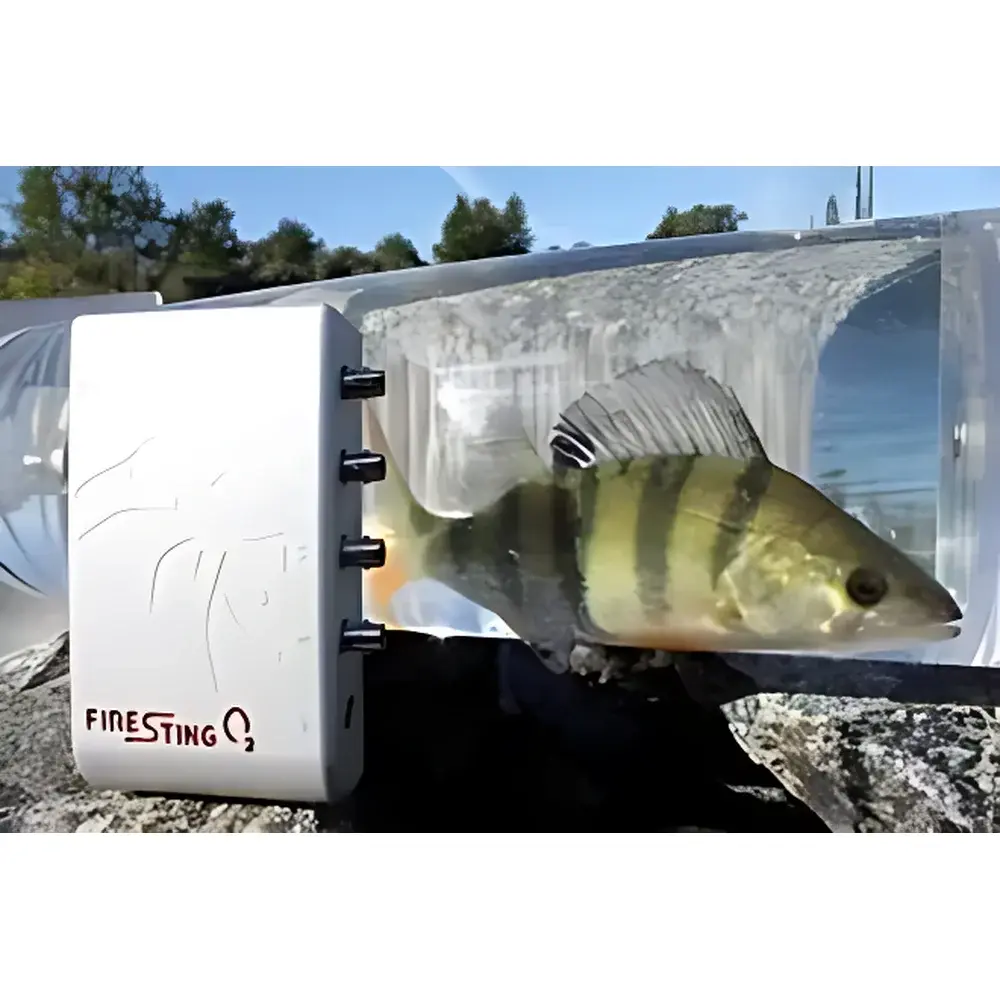
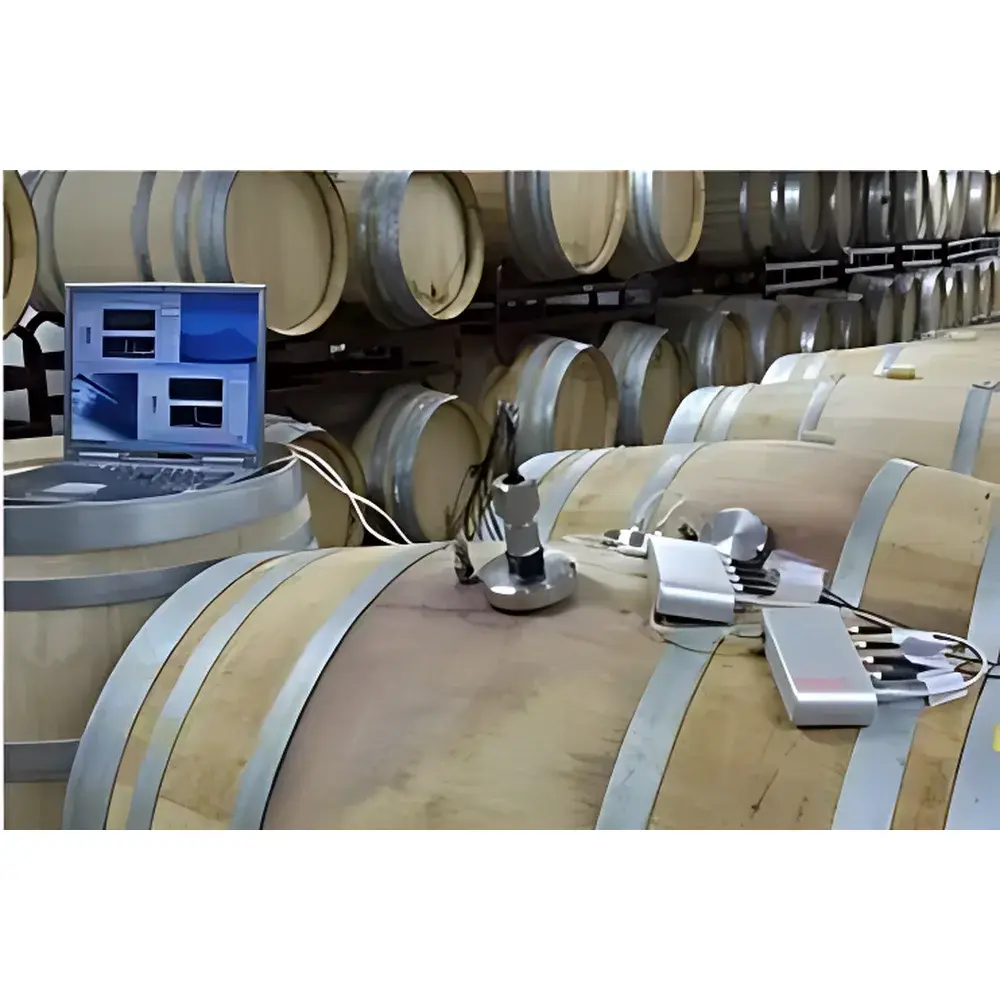
The RF-O2 platform is widely deployed in peer-reviewed research across disciplines requiring high-fidelity O₂ kinetics. In marine biogeochemistry, it quantifies benthic oxygen consumption in sediment cores (e.g., bioirrigation studies at Bordeaux University) and tracks coral reef metabolism under ocean acidification stress (University of Gothenburg). In physiological ecology, it measures thermal limits of fish aerobic scope via respirometry (Woods Hole Oceanographic Institution, Ulm University), monitors neural tissue oxygenation in cerebrospinal fluid (Ulm University), and characterizes plant mitochondrial respiration in isolated thylakoids (Turku University). Industrial applications include real-time dissolved oxygen profiling during wine barrel aging (University of Valladolid), optimization of bioreactor aeration strategies (ISO 14040-compliant LCA studies), and validation of anaerobic digestion efficiency in wastewater treatment plants. Its sub-second response and nano-liter spatial resolution also support single-cell metabolic phenotyping and microfluidic reaction monitoring.
FAQ
How does phase-based fluorescence detection improve measurement stability compared to intensity-based optical sensors?
Phase shift measurement is inherently insensitive to variations in light source output, fiber coupling efficiency, or photodetector gain—factors that cause drift in intensity-based systems. This enables multi-year sensor deployment without recalibration in field deployments such as sediment profiling or long-term bioreactor monitoring.
Can RF-O2 sensors be sterilized for use in aseptic cell culture or clinical applications?
Yes—sensor spots and glass-encapsulated microprobes withstand autoclaving (121°C, 20 min), ethylene oxide gas, and 70% ethanol immersion. Nanoparticle formulations are filter-sterilizable (0.22 µm PVDF).
Is temperature compensation mandatory for accurate O₂ quantification?
Yes. Oxygen solubility and quenching kinetics are temperature-dependent. FireStingO₂ integrates a high-accuracy thermistor (±0.3°C) and applies real-time correction using the empirical Stern–Volmer equation with temperature coefficients derived from PyroScience’s sensor-specific calibration databases.
What is the typical service life of an RF-O2 sensor under continuous operation?
Probes and sensor spots are rated for ≥10⁷ data points (FireStingO₂) or ≥2×10⁷ points (sensor spots), corresponding to >2 years of continuous 1-Hz logging. Shelf life exceeds 3 years when stored desiccated and dark at room temperature.
Does the system support synchronization with external devices such as respirometers or gas chromatographs?
Yes—FireStingO₂ provides TTL-compatible trigger input/output ports and analog voltage outputs (0–2.5 V) for hardware-level synchronization with third-party instrumentation, enabling tightly coupled multi-parameter physiological assays.




