
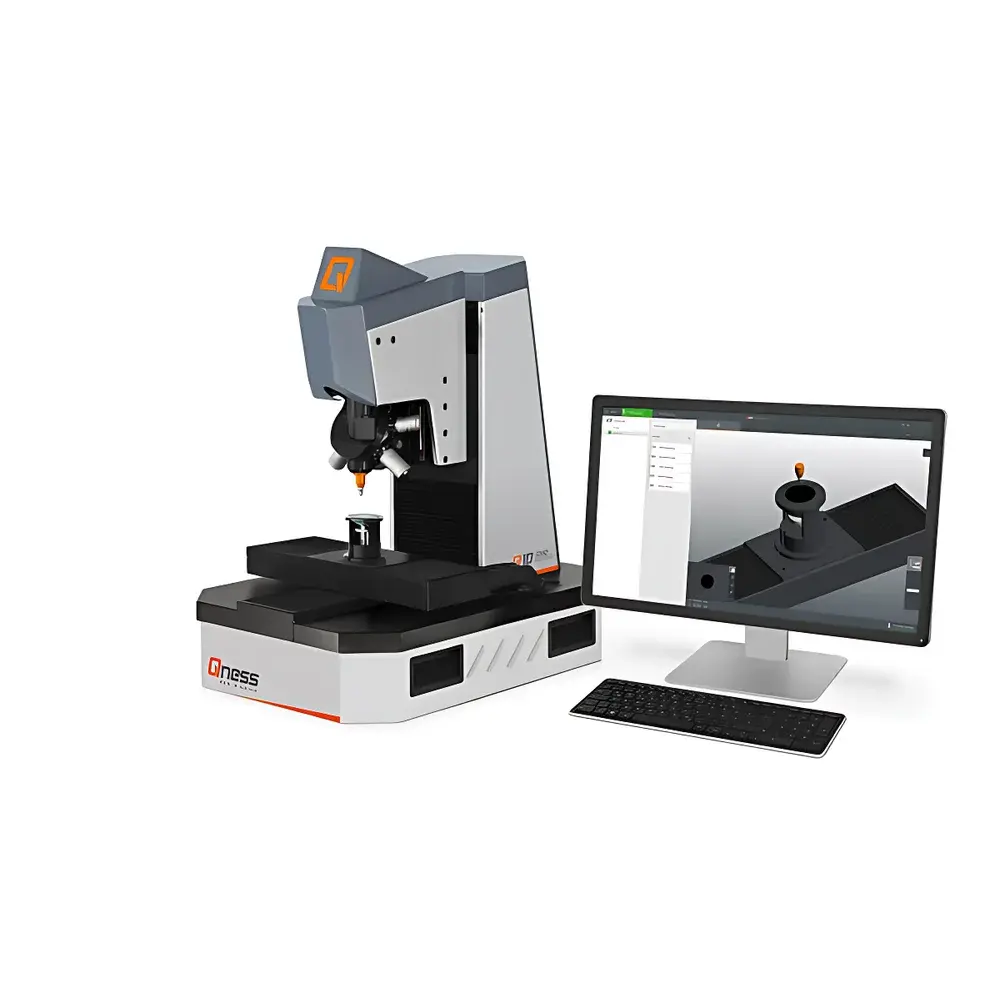
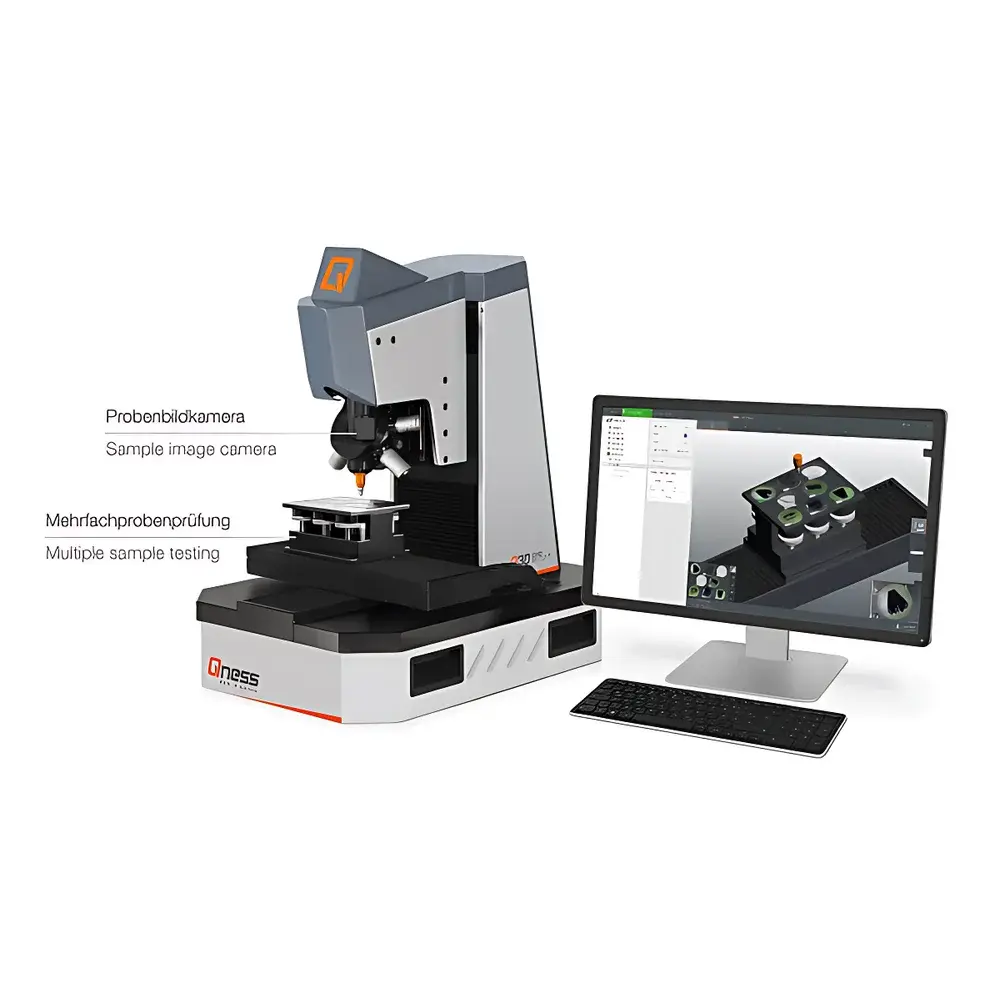
QATM Q10 CHD MASTER/Plus Microhardness Tester
| Brand | QATM |
|---|---|
| Origin | Austria |
| Model | Q10 CHD MASTER/Plus |
| Instrument Type | Microhardness Tester |
| Control System | Electromechanical closed-loop sensor actuation |
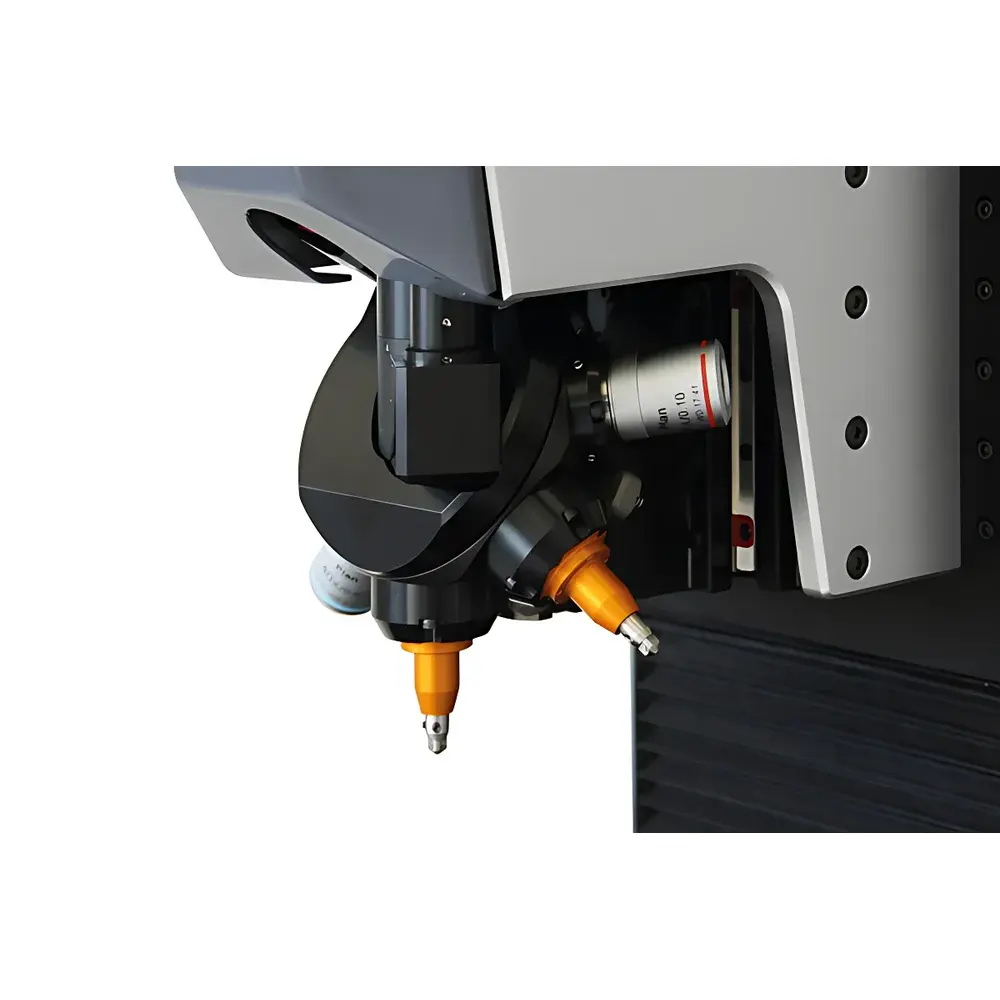
| Turret | 6-position motorized turret |
| Operating Concept | 3D intuitive human-machine interface |
| Test Automation | Fully programmable sequence-based testing with adaptive dwell-time termination |
| Data Output | Configurable report templates with embedded hardness conversion algorithms |
| Image Quality | High-resolution optical imaging system with LED illumination and digital autofocus capability |
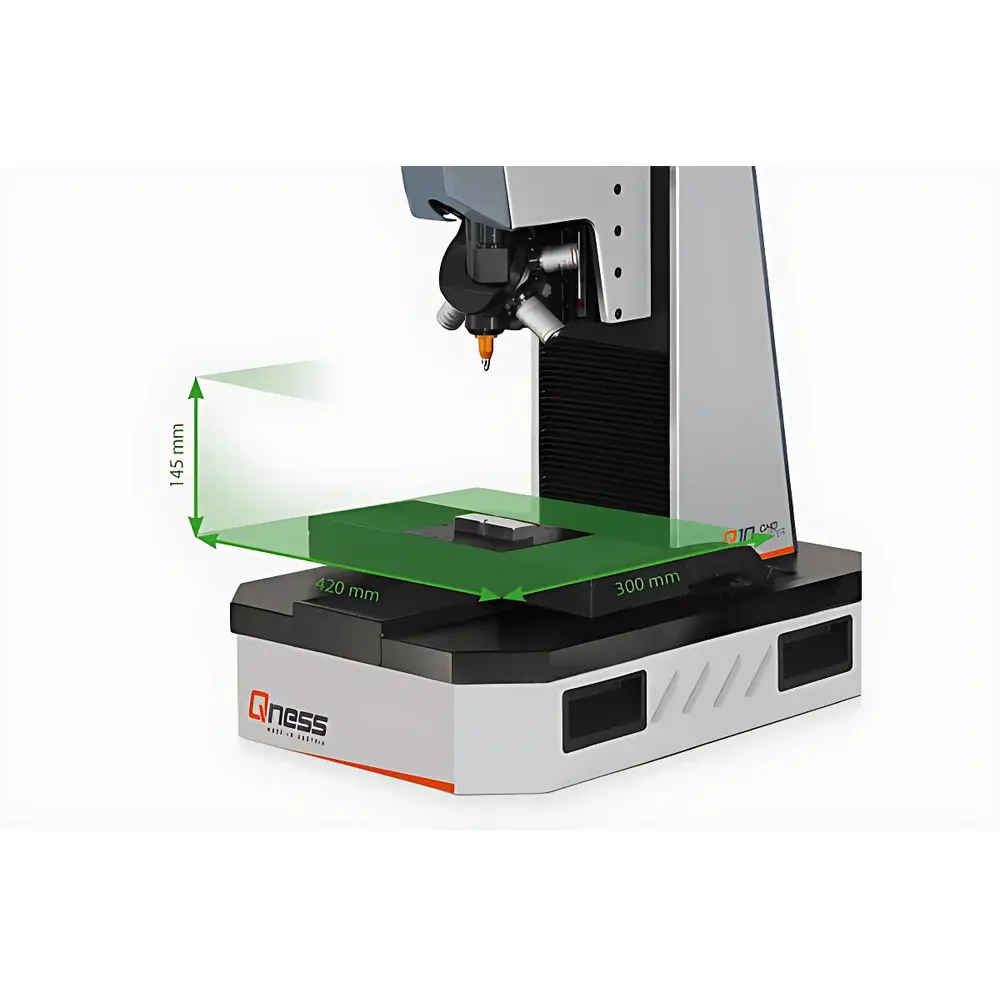
| Testing Space | Large X-Y-Z travel range (X: 200 mm, Y: 200 mm, Z: 150 mm) |
| Connectivity | Ethernet, USB 3.0, RS-232, optional integration with LIMS and MES systems |
Overview
The QATM Q10 CHD MASTER/Plus is a high-precision microhardness tester engineered for repeatable, traceable, and standards-compliant hardness evaluation of metallic alloys, thin films, coatings, heat-treated surfaces, and advanced ceramics. It operates on the Vickers and Knoop indentation principles—applying a precisely controlled diamond pyramid indenter under calibrated load (ranging from 10 gF to 10 kgF), followed by automated optical measurement of the residual impression using high-magnification digital microscopy. Designed and manufactured in Austria, the instrument integrates closed-loop electromechanical force actuation to ensure load accuracy within ±0.5% of set value across the full range, eliminating mechanical hysteresis and drift associated with traditional electromagnetic or pneumatic loading systems. Its modular architecture supports both routine QC workflows and R&D-grade material characterization, with full compliance to ISO 6507-1, ASTM E384, and EN ISO 14577 for microhardness testing.
Key Features
- Electromechanical closed-loop load control ensures stable, reproducible indentation forces independent of ambient temperature or mechanical wear.
- Motorized 6-position turret enables seamless switching between Vickers and Knoop indenters, objective lenses (5×, 10×, 20×, 40×, 50×, 100×), and calibration standards—fully programmable per test sequence.
- 3D intuitive operation concept: Touchscreen-driven workflow navigation with context-sensitive guidance, real-time load/displacement preview, and visual feedback during positioning and focusing.
- Adaptive dwell-time termination: Test automatically concludes once hardness values stabilize within user-defined tolerance bands, reducing unnecessary cycle time without compromising statistical validity.
- High-resolution imaging subsystem features 5 MP CMOS sensor, LED-cold white illumination with intensity modulation, and software-controlled autofocus—optimized for low-contrast and reflective surfaces.
- Large testing volume (200 × 200 × 150 mm) accommodates bulk components, cross-sectioned welds, and multi-site sample arrays without repositioning.
Sample Compatibility & Compliance
The Q10 CHD MASTER/Plus accepts polished metallographic mounts, coated substrates up to 100 mm in diameter, and irregularly shaped specimens via custom fixture support. Surface preparation requirements align with ISO 1463 and ASTM E3 for microhardness specimen preparation. All hardness calculations apply standardized diagonal measurement algorithms compliant with ISO 6507-2 and include automatic correction for curvature and edge effects. The system supports audit-ready documentation per GLP and GMP environments, including electronic signatures, full test parameter logging, image timestamping, and 21 CFR Part 11–compliant data integrity features when paired with QATM’s optional Q-METRO software suite.
Software & Data Management
Q-METRO v5.x provides comprehensive test definition, execution, and reporting functionality. Users define multi-point grids, hierarchical test plans (e.g., case depth profiling, coating gradient analysis), and conditional logic (e.g., “if HV > 800, switch to Knoop”). Raw images, indentation coordinates, load/time curves, and hardness values are stored in vendor-neutral HDF5 format. Export options include CSV, PDF (with embedded metadata), and XML for LIMS integration. Report templates are fully customizable—supporting company branding, multilingual annotations, and automatic hardness-scale conversions (HV ↔ HK ↔ HRC ↔ HBW) based on ISO 18265 and ASTM E140 tables.
Applications
- Case depth verification in carburized, nitrided, and induction-hardened steel components.
- Coating adhesion assessment via microhardness gradient mapping across interface zones.
- Quality control of sintered tungsten carbide grades and ceramic matrix composites.
- Failure analysis of fracture origins in turbine blades and aerospace fasteners.
- Thin-film hardness evaluation on semiconductor wafers and PVD/CVD-deposited layers.
- Research-grade indentation size effect (ISE) studies requiring sub-micron load resolution and nanoscale image registration.
FAQ
What hardness scales does the Q10 CHD MASTER/Plus support natively?
Vickers (HV) and Knoop (HK) hardness scales are measured directly; conversions to Rockwell (HRC), Brinell (HBW), and Shore scales are available via built-in ISO/ASTM-compliant algorithms.
Is the system compatible with automated sample changers?
Yes—the instrument includes TTL and RS-232 interfaces for third-party autoloader synchronization, and native support for QATM’s optional Q-CHANGER robotic stage.
Can hardness data be exported to ERP or SAP systems?
Yes—via configurable REST API endpoints and ODBC-compliant database connectors included in Q-METRO Enterprise edition.
Does the system meet ISO/IEC 17025 laboratory accreditation requirements?
When operated with certified reference blocks, documented calibration procedures, and validated software configuration, the system fulfills metrological traceability requirements outlined in ISO/IEC 17025:2017 clause 6.4.6 and 6.5.2.
What maintenance intervals are recommended for long-term accuracy?
Annual performance verification against certified hardness reference blocks and biannual calibration of the closed-loop load cell and optical measurement chain are advised per QATM Technical Bulletin TB-Q10-02.



