
QATM Qness 60 A/A+ EVO Automated Microhardness Tester
| Brand | QATM |
|---|---|
| Origin | Austria |
| Model | Qness 60 A/A+ EVO |
| Instrument Type | Microhardness Tester |
| Test Force Range | 0.25 g – 62.5 kgf |
| Indenter | ASTM- and DAkkS-certified Vickers diamond |
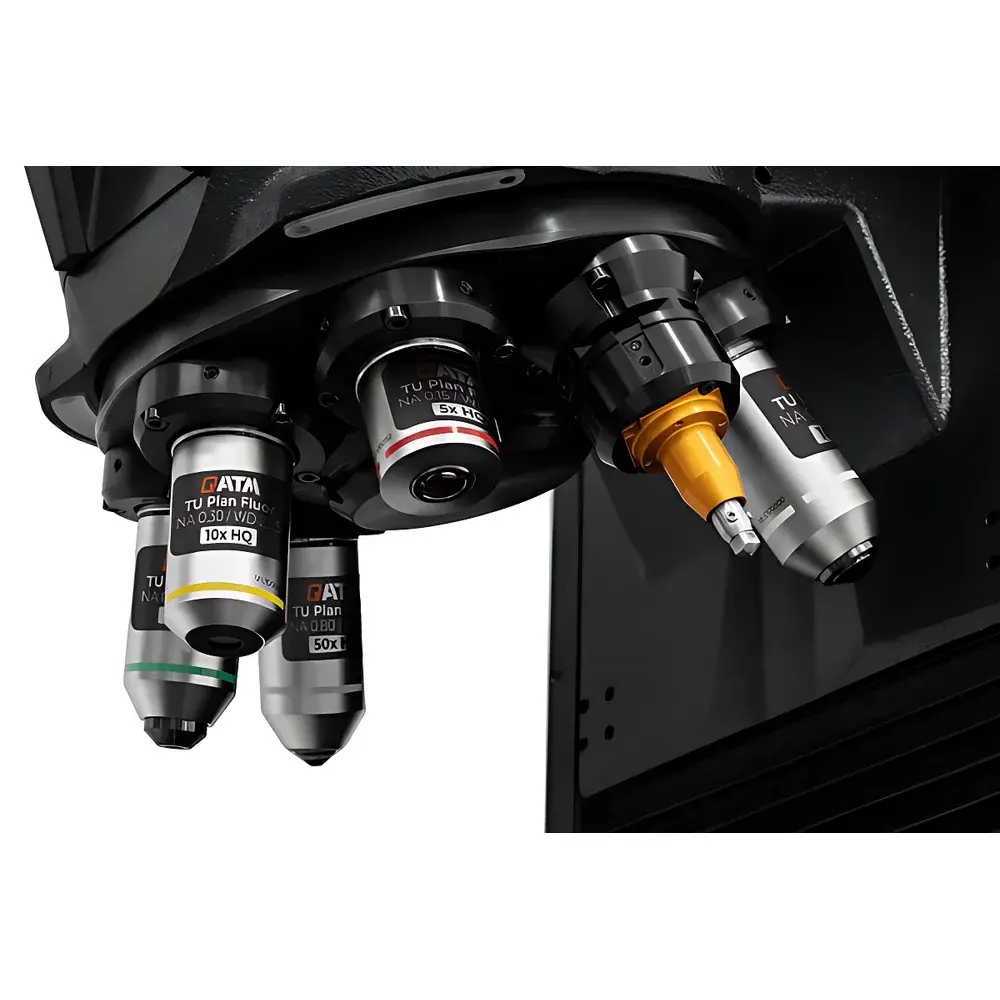
| Turret | 8-position motorized |
| Illumination | White LED with electric iris shutter |
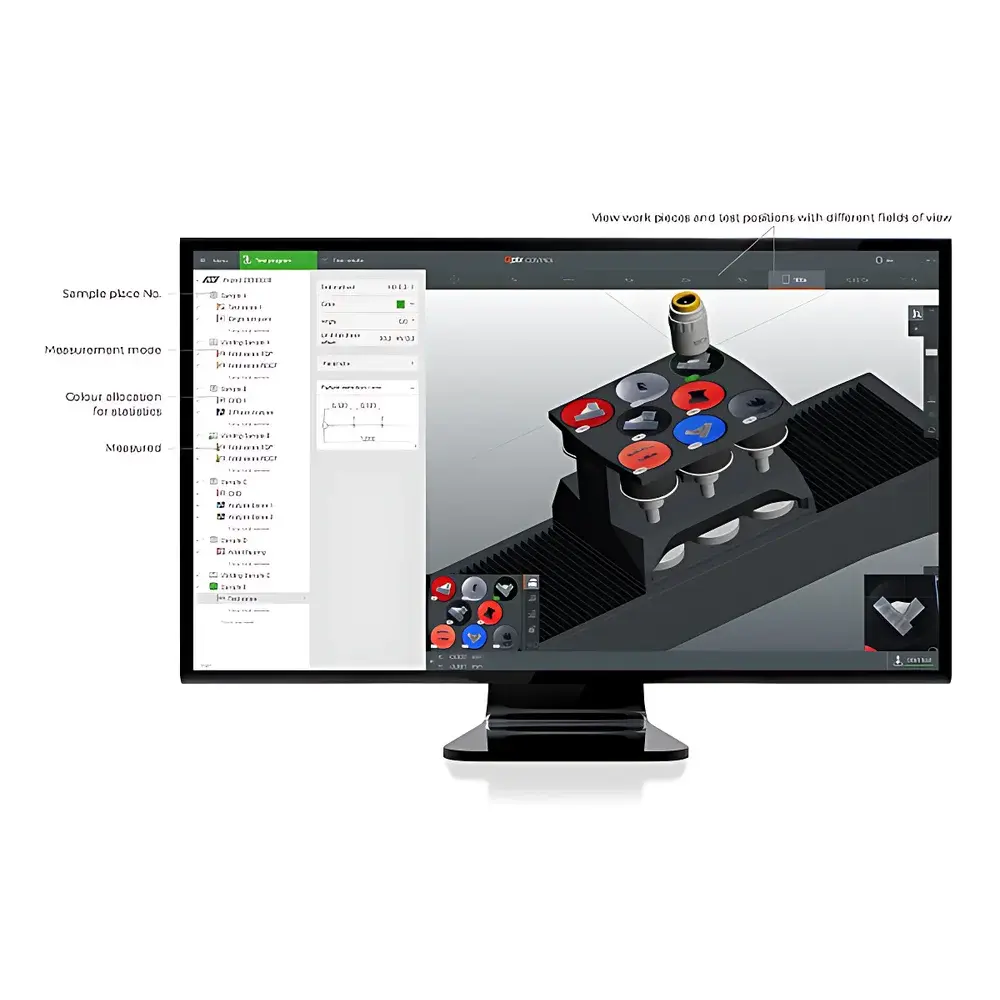
| Software | Qpix Control2 with intuitive 3D control interface |
| Positioning System | Direct-read linear encoders on X/Y/Z axes (0.5 µm resolution) |
| Optional Feature (A+ only) | Panoramic camera with automated image acquisition (49 × 37 mm field of view) |
| Microstructural Analysis Module | INSPECT (modularly licensable) |
Overview
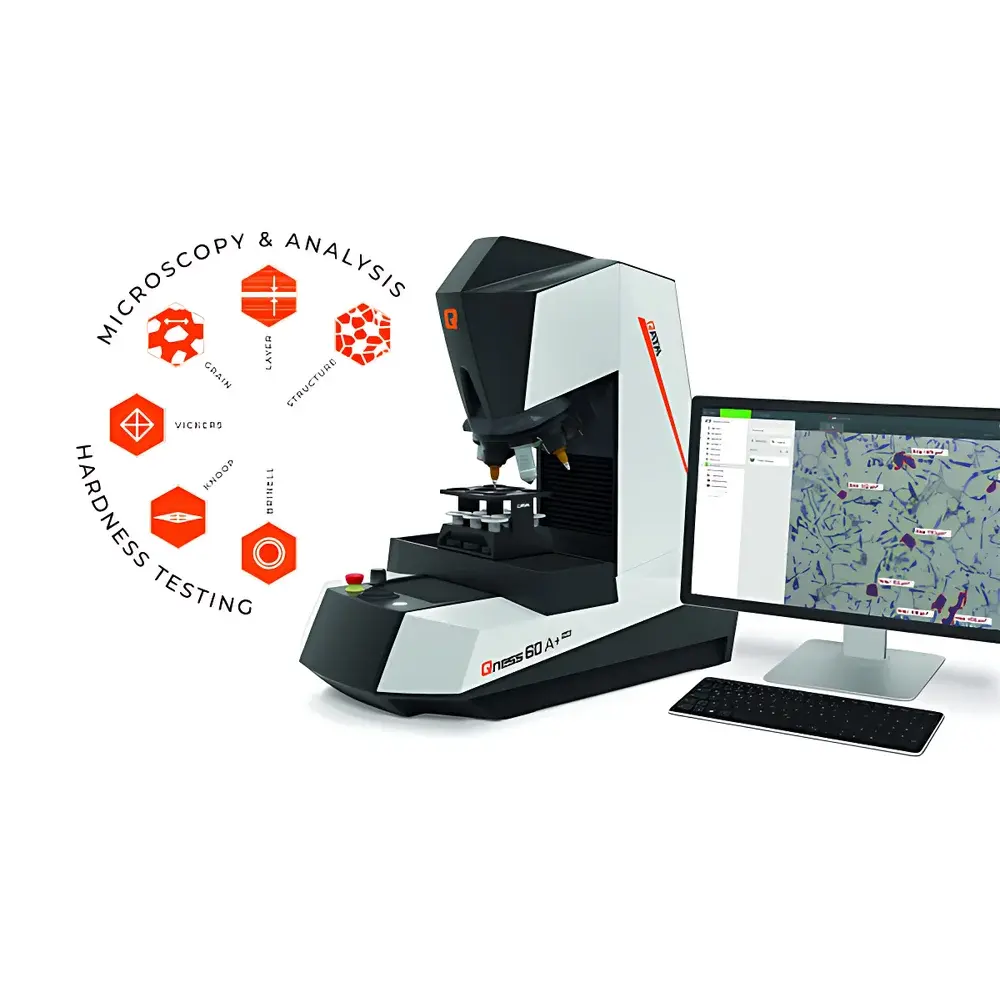
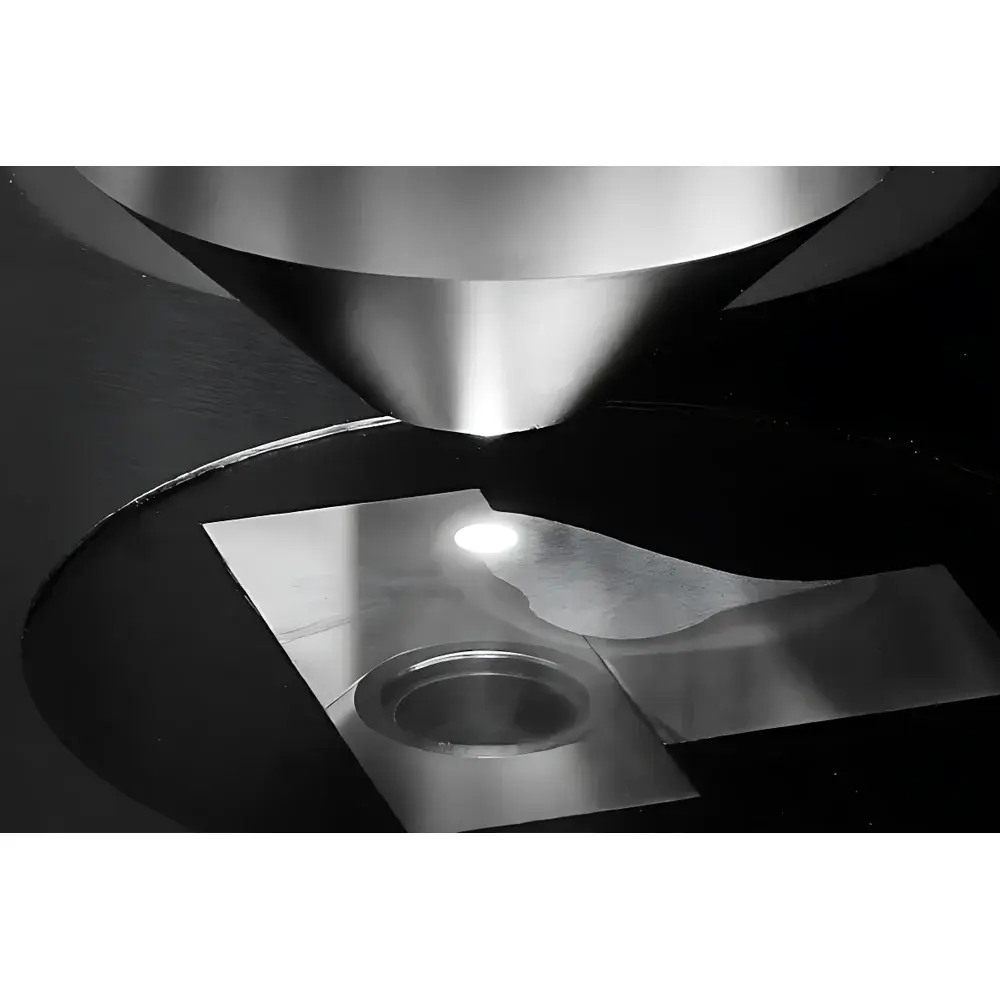
The QATM Qness 60 A/A+ EVO is a fully automated microhardness testing system engineered for precision, repeatability, and integration within modern metallurgical and materials science laboratories. Based on the standardized Vickers indentation principle—where a pyramidal diamond indenter is applied under controlled load to produce a geometrically defined impression—the system delivers quantitative hardness values (HV) traceable to international standards. Its dual-function architecture unifies microhardness measurement and high-fidelity optical microstructural analysis in a single platform, eliminating manual repositioning and enabling correlated mechanical-property-to-microstructure workflows. Designed and manufactured in Austria, the instrument meets stringent European engineering tolerances and conforms to ISO 6507-1 (Metallic materials — Vickers hardness test), ASTM E384 (Standard Test Method for Knoop and Vickers Hardness of Materials), and supports GLP/GMP-compliant documentation requirements through audit-trail-enabled software.
Key Features
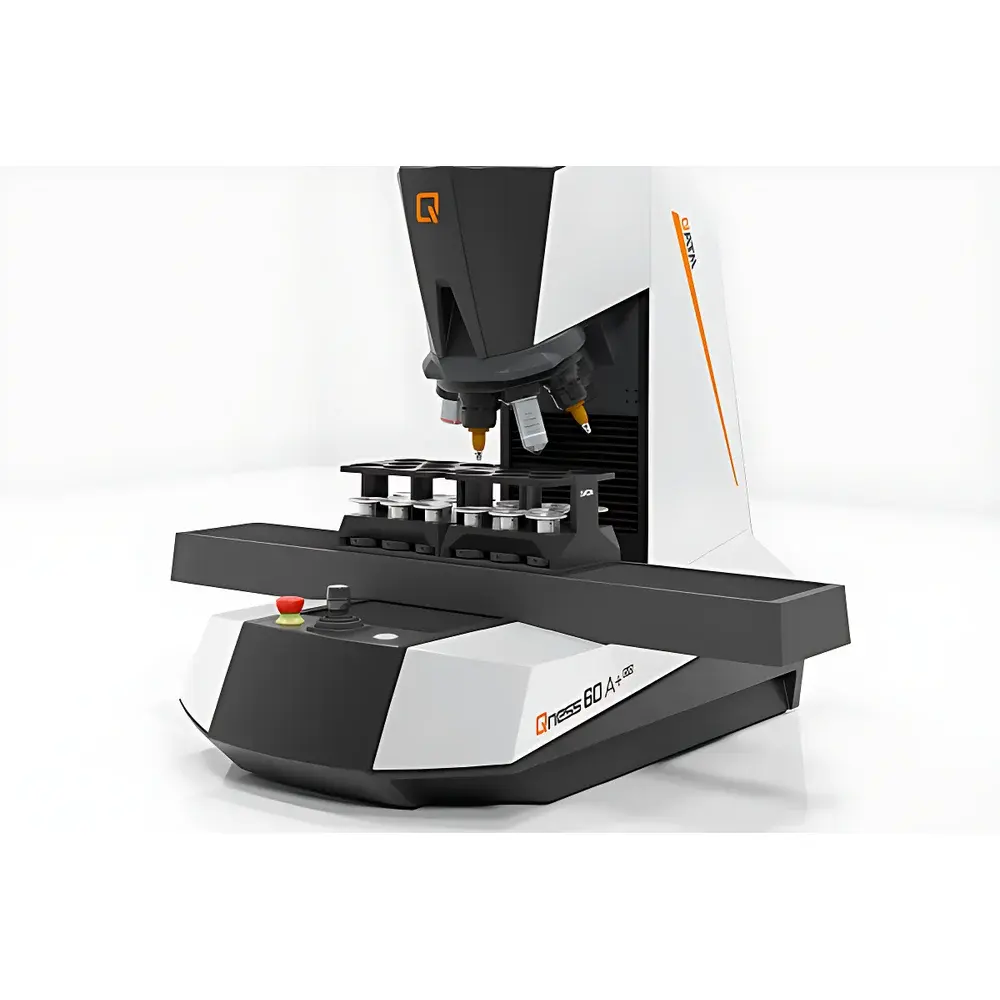
- Three-axis motorized stage with direct-read linear encoders on X, Y, and Z axes—achieving positional resolution of 0.5 µm and sub-micron repeatability across full travel range.
- Eight-position fully motorized turret accommodating multiple indenters and objectives; enables rapid switching between Vickers, Knoop, or future-proofed custom tips without manual intervention.
- Calibrated white LED illumination with electronically controlled iris shutter ensures consistent brightness and contrast across varying surface reflectivity and sample topography.
- Integrated high-resolution color camera system optimized for real-time indentation imaging, focus validation, and post-test evaluation—supporting both single-point and grid-based mapping protocols.
- Qpix Control2 software featuring an intuitive 3D navigation interface for spatial planning, test sequence definition, and live coordinate feedback—reducing operator training time and minimizing misalignment errors.
- A+ variant includes a dedicated panoramic camera module capable of stitching and acquiring full-field-of-view images (49 × 37 mm) with automatic focus and exposure optimization—enabling large-area grain structure assessment prior to hardness mapping.
Sample Compatibility & Compliance
The Qness 60 A/A+ EVO accommodates samples up to 250 mm × 250 mm × 120 mm (W × D × H) with optional height extension kits. It supports polished metallographic mounts, as-received sheet metal, coated substrates, sintered ceramics, and thin-film specimens—provided surface roughness remains below Ra 0.2 µm for reliable indentation geometry. All Vickers diamond indenters are supplied with valid DAkkS calibration certificates (German national accreditation body) and ASTM E407-compliant verification documentation. The system’s mechanical stability and thermal mass design minimize drift during extended test sequences (>1,000 indents), satisfying long-duration QA/QC requirements per ISO/IEC 17025-accredited laboratories.
Software & Data Management
Qpix Control2 provides full control over test method definition—including dwell time, loading/unloading rates, dwell stabilization, and multi-load series execution. All measurements are timestamped and logged with full metadata: operator ID, environmental conditions (optional sensor integration), machine status, and raw image files. Data export supports CSV, XML, and PDF report generation compliant with FDA 21 CFR Part 11 requirements when configured with electronic signatures and audit trail activation. The modular INSPECT package—licensed separately—adds quantitative image analysis capabilities: phase fraction calculation, grain size distribution (ASTM E112), inclusion counting (ISO 4967), and hardness gradient profiling across weld zones or diffusion layers.
Applications
This system serves critical roles in failure analysis labs evaluating heat-affected zones in aerospace alloys; R&D departments characterizing case depth in carburized steels; quality assurance teams validating coating adhesion and substrate hardness in medical implants; and academic institutions conducting fundamental studies on irradiation-induced hardening in nuclear materials. Its ability to execute unattended overnight test campaigns—combined with deterministic path planning and auto-refocusing—makes it suitable for ISO 17025 proficiency testing, round-robin interlaboratory studies, and production lot release verification.
FAQ
Does the Qness 60 A/A+ EVO support Knoop hardness testing?
Yes—the 8-position turret allows installation of Knoop indenters, and Qpix Control2 includes dedicated Knoop test method templates with automatic diagonal measurement and HK calculation per ASTM E384.
Can the system integrate with existing LIMS or MES platforms?
Yes—via configurable RESTful API and OPC UA server option, enabling bidirectional data exchange with laboratory information management systems and manufacturing execution environments.
Is remote operation and monitoring supported?
Yes—Qpix Control2 supports secure remote desktop access and real-time status dashboards accessible via enterprise-authenticated web interface.
What maintenance intervals are recommended for the indentation mechanism?
QATM recommends annual recalibration of force application and encoder alignment by certified service engineers; no user-serviceable parts exist within the load cell or actuator assembly.
How is traceability ensured for hardness results?
Each test record includes embedded references to DAkkS-certified indenter serial numbers, force calibration certificates, and optical magnification verification reports—all archived alongside raw data.



