
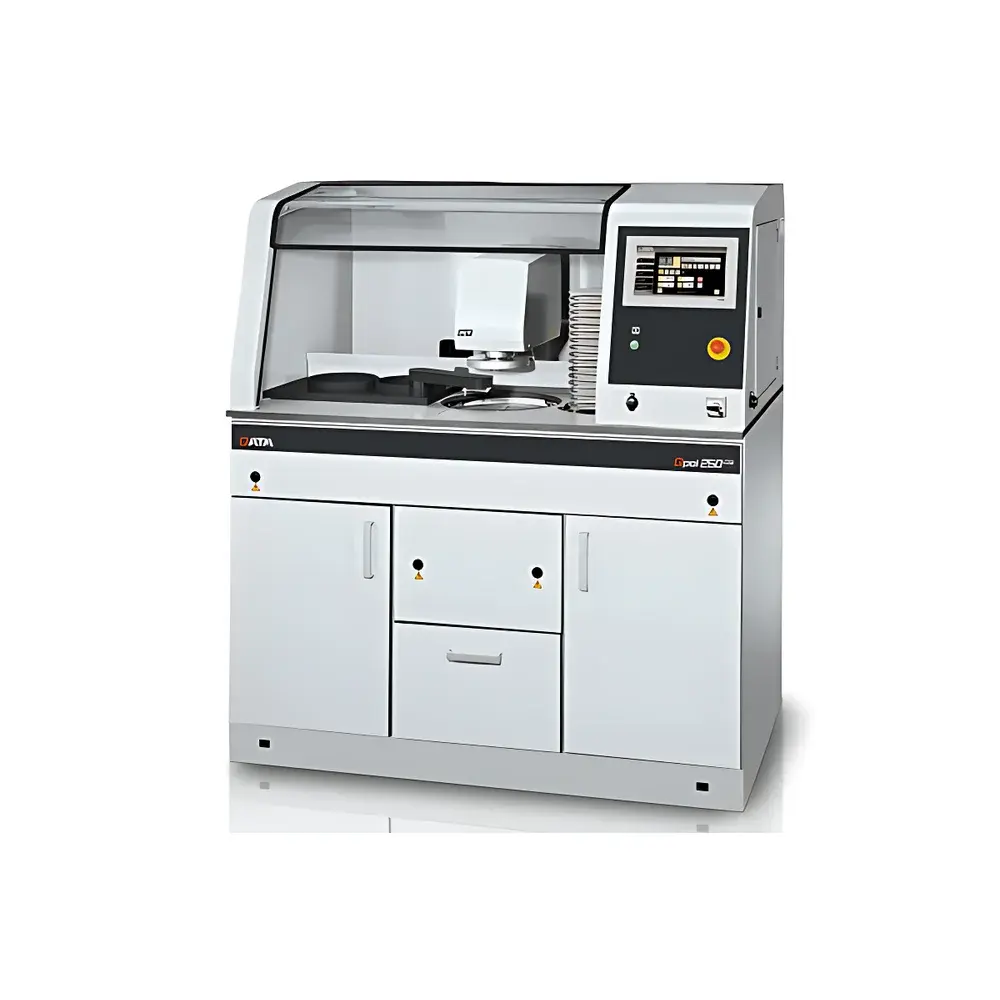
QATM Qpol 250 BOT (SAPHIR X-Change) Fully Automated Grinding and Polishing System
| Brand | QATM (formerly ATM) |
|---|---|
| Origin | Germany |
| Model | Qpol 250 BOT (SAPHIR X-Change) |
| Dimensions (L×W×D) | 1320 × 1500 × 800 mm |
| Grinding/Polishing Disc Count | 1 |
| Disc Diameter | 250 mm |
| Disc Speed | 50–600 rpm |
| Control Head Speed | 30–150 rpm |
| Material Removal Control Resolution | 0.1 mm |
| Input Water Pressure | ≤6 bar |
| Drain Outlet | DN50 |
| Compressed Air Supply | 6 bar, NG8 coupling |
| Rated Power (Main Drive) | 1.1 kW (S3/40%) |
| Control Head Motor Power | 0.17 kW (S1) |
| Clamp Max. Diameter | 160 mm |
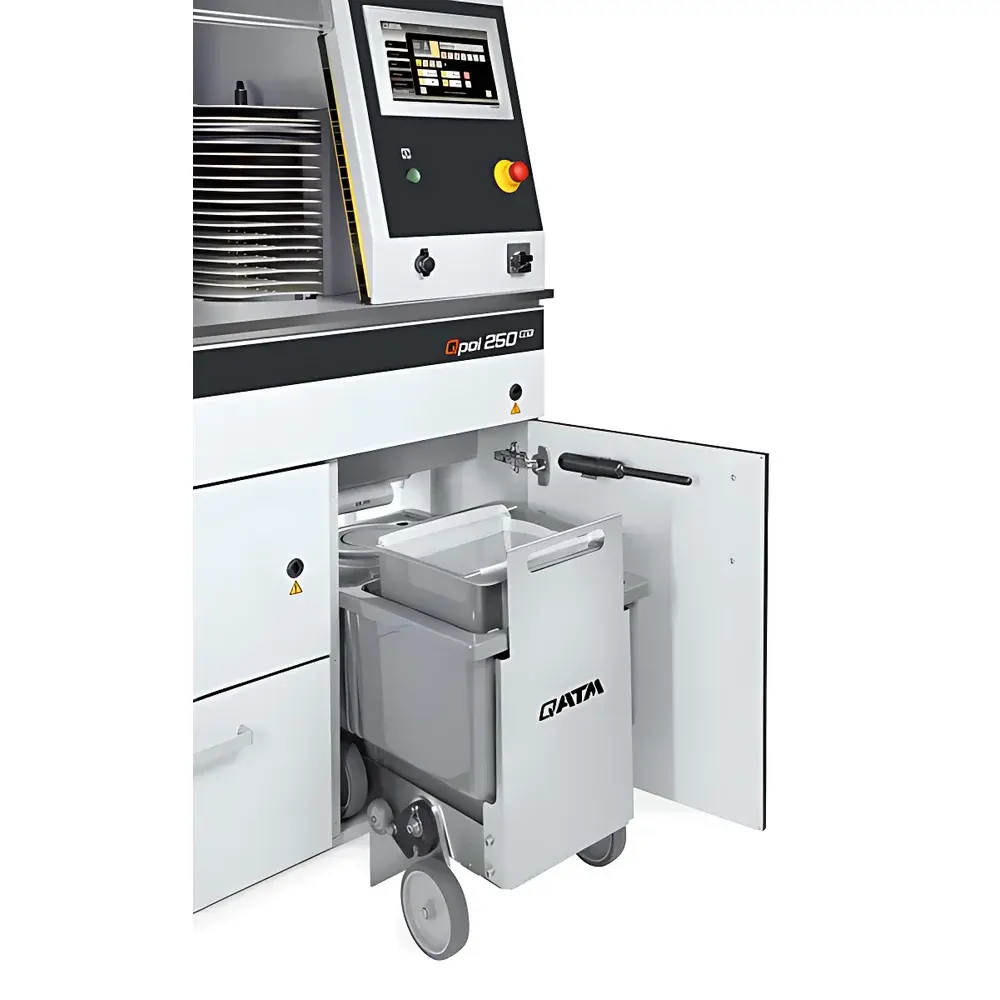
| Sediment Tank Capacity | 45 L |
| Safety Features | Light Curtain, Semi-Enclosed Work Area with Shielding Panel |
Overview
The QATM Qpol 250 BOT (SAPHIR X-Change) is a fully automated, single-disc grinding and polishing system engineered for high-precision metallographic sample preparation in regulated laboratory environments. Designed and manufactured in Germany, it implements a coaxial force-controlled grinding and polishing principle—where the specimen holder applies consistent normal force while rotating concentrically over a motor-driven 250 mm disc. This architecture ensures uniform material removal, minimal edge rounding, and exceptional repeatability across batches. Unlike semi-automated or modular systems, the Qpol 250 BOT integrates all core functions—including media handling, fluid dispensing, waste management, and post-process cleaning—into a compact footprint (1320 × 1500 × 800 mm), eliminating inter-unit cabling, manual transfer steps, and operator-dependent alignment. Its architecture supports full traceability and process standardization, making it suitable for ISO 17025-accredited labs, automotive component QA, aerospace materials R&D, and third-party testing facilities requiring audit-ready documentation.
Key Features
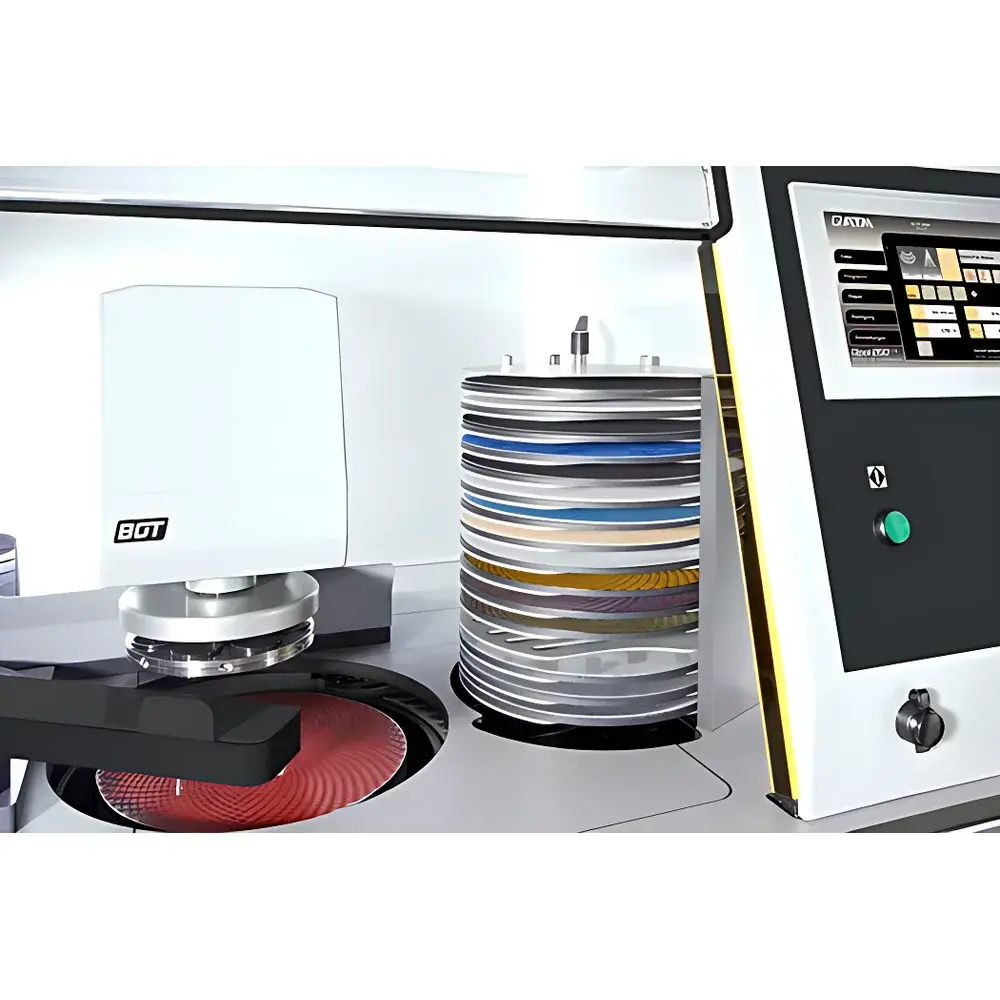
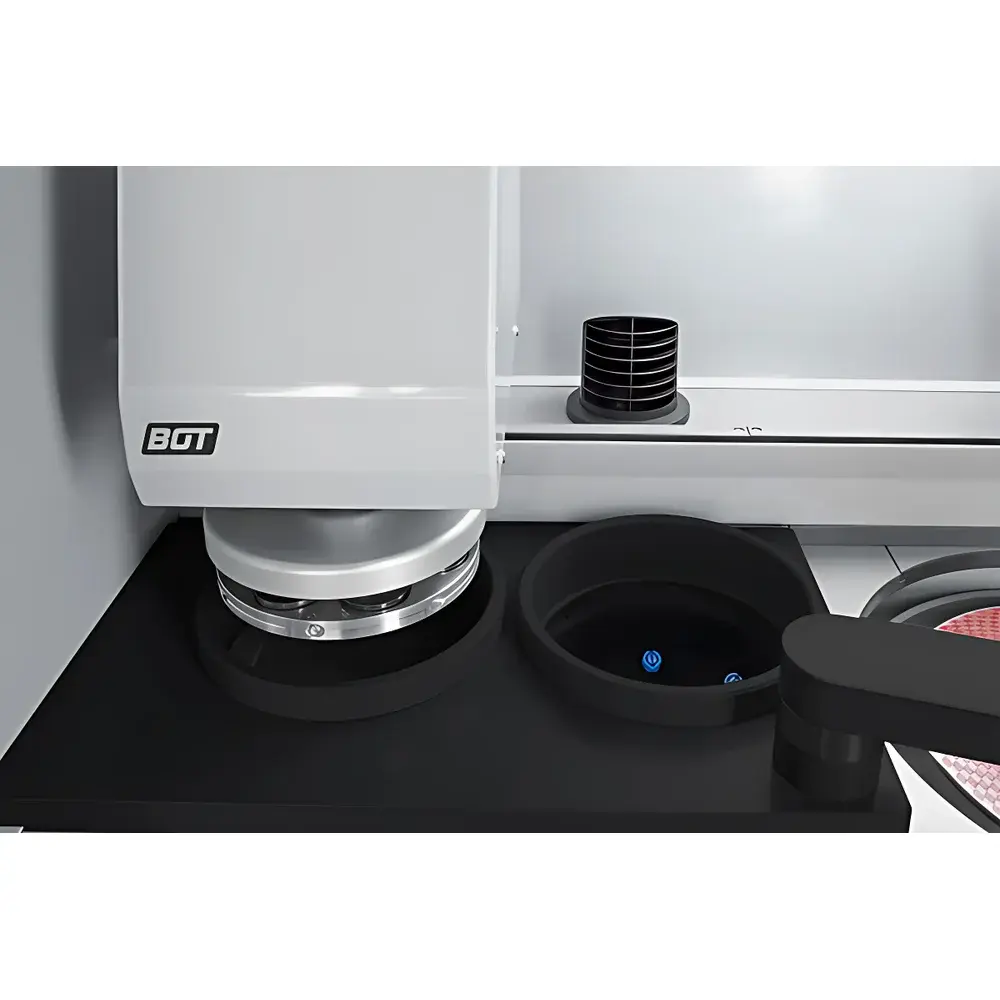
- Coaxial force-controlled grinding and polishing head with adjustable rotational speed (30–150 rpm) and programmable downforce profile
- Single 250 mm grinding/polishing disc driven at variable speeds (50–600 rpm) with torque monitoring and thermal overload protection
- SAPHIR X-Change automatic media exchange system: stores and deploys up to 16 consumable pads or discs without manual intervention
- Integrated 6-position reagent dispensing unit: four channels for diamond suspensions or lubricants, two dedicated to final polishing colloidal silica or alumina slurries
- Onboard ultrasonic cleaning station with timed cycle control and temperature monitoring
- 45 L sediment tank with level sensor and integrated filtration bypass; compliant with local wastewater pre-treatment requirements
- Full-spectrum fluid management: pressurized water supply (≤6 bar), DN50 gravity drain, and regulated compressed air (6 bar, NG8 quick-coupling)
- Tactile 10.1″ industrial touchscreen HMI with multi-language UI, password-protected user levels, and embedded recipe library (up to 99 customizable methods)
- Light curtain safety interface (EN ISO 13857 compliant) and semi-enclosed work area with polycarbonate shielding panel
Sample Compatibility & Compliance
The Qpol 250 BOT accommodates specimens up to 160 mm in diameter using its center-force clamping mechanism, supporting planar, cylindrical, and irregular geometries via optional adapter kits (e.g., for turbine blades or weld coupons). It complies with ISO 15630-3 (metallographic specimen preparation), ASTM E3 (standard guide for preparation of metallographic specimens), and VDI 2655 (German guideline for automated microstructure analysis workflows). All electronic controls meet CE, UL 61010-1, and EMC Directive 2014/30/EU requirements. Audit trails—including method execution logs, parameter changes, user IDs, timestamps, and fluid consumption records—are stored locally and exportable in CSV or PDF format, satisfying GLP and GMP documentation expectations per FDA 21 CFR Part 11 when deployed with validated IT infrastructure.
Software & Data Management
The embedded control software provides real-time monitoring of disc speed, applied force, elapsed time per step, and fluid delivery volume. Each method includes configurable stages: coarse grinding, intermediate polishing, fine polishing, and ultrasonic rinse—each with independent dwell time, rotation direction (CW/CCW), and force ramping profiles. Process data is timestamped and archived with SHA-256 checksum integrity verification. Optional Ethernet/IP or Modbus TCP connectivity enables integration into LIMS or MES platforms. Remote diagnostics and firmware updates are supported via secure HTTPS portal access (no cloud storage). All configuration files adhere to IEC 62443-3-3 cybersecurity baseline standards for laboratory instrumentation.
Applications
This system is routinely deployed in failure analysis laboratories preparing cross-sections of solder joints, additive-manufactured alloys, and coated substrates; in foundry QA departments validating porosity and inclusion distribution per ASTM E1245; and in nuclear materials testing centers where surface integrity must comply with ASME BPVC Section II, Part A requirements. Its precision material removal control (0.1 mm resolution) enables reproducible thinning of TEM lamellae precursors and controlled decarburization layer removal on heat-treated steels. The integrated ethanol-compatible fluid path supports solvent-based cleaning for electron microscopy prep, while the closed-loop slurry delivery minimizes airborne particulate generation—critical in cleanroom-adjacent prep areas.
FAQ
Does the Qpol 250 BOT support ASTM E3-compliant sequential grinding protocols?
Yes. Predefined method templates include ASTM E3 Stage I–IV sequences with automatic transition logic, force calibration checks, and dwell-time validation.
Can the system be validated for GMP environments?
Yes. IQ/OQ documentation packages are available upon request, including test scripts for force accuracy (±1.5 N), speed stability (±0.5% setpoint), and fluid dispense volume repeatability (RSD <2.0%).
Is remote software update capability included?
Yes. Firmware updates are delivered via signed binary packages through the web-based admin interface; no external USB media required.
What maintenance intervals are recommended for the SAPHIR X-Change mechanism?
Lubrication and belt tension verification every 500 operating hours; full actuator calibration every 2,000 hours or annually—whichever occurs first.
Are custom clamp fixtures available for non-standard specimen geometries?
Yes. QATM offers engineering consultation and CNC-machined fixture design services under NDA, with lead times typically 4–6 weeks.



