
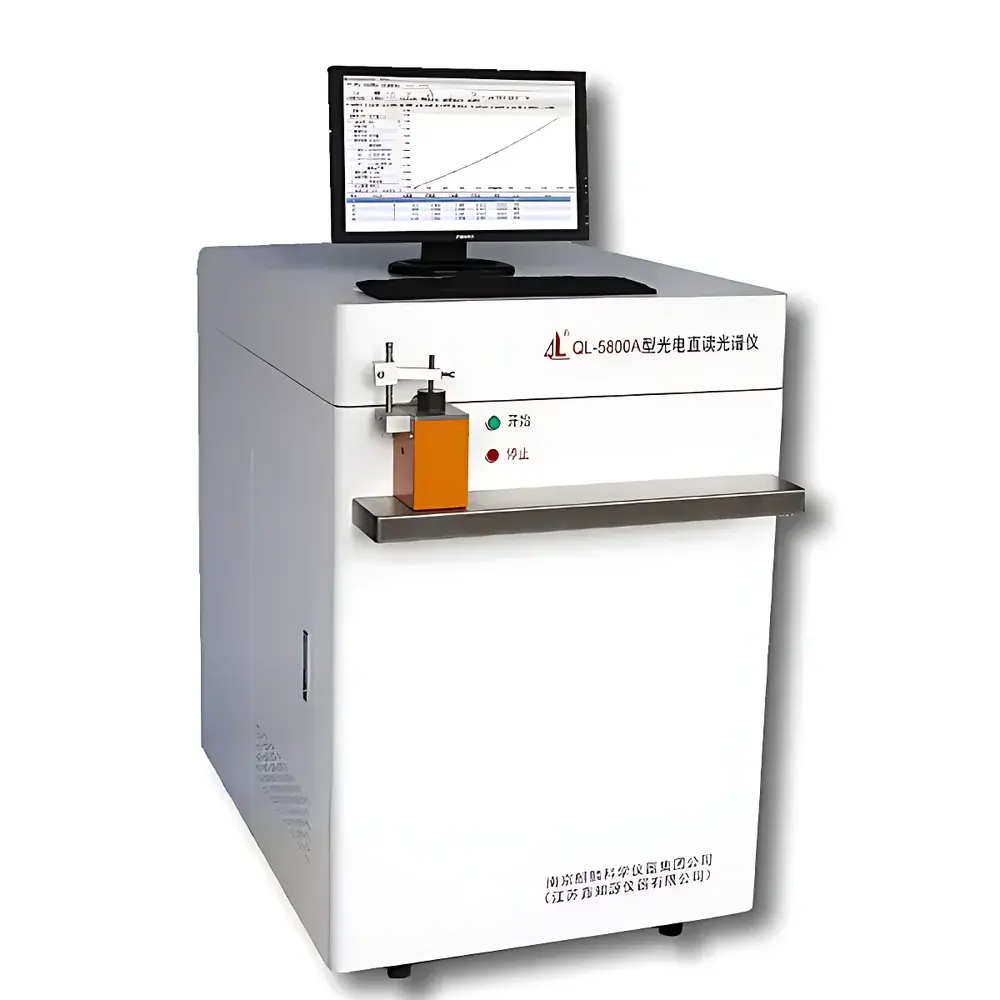
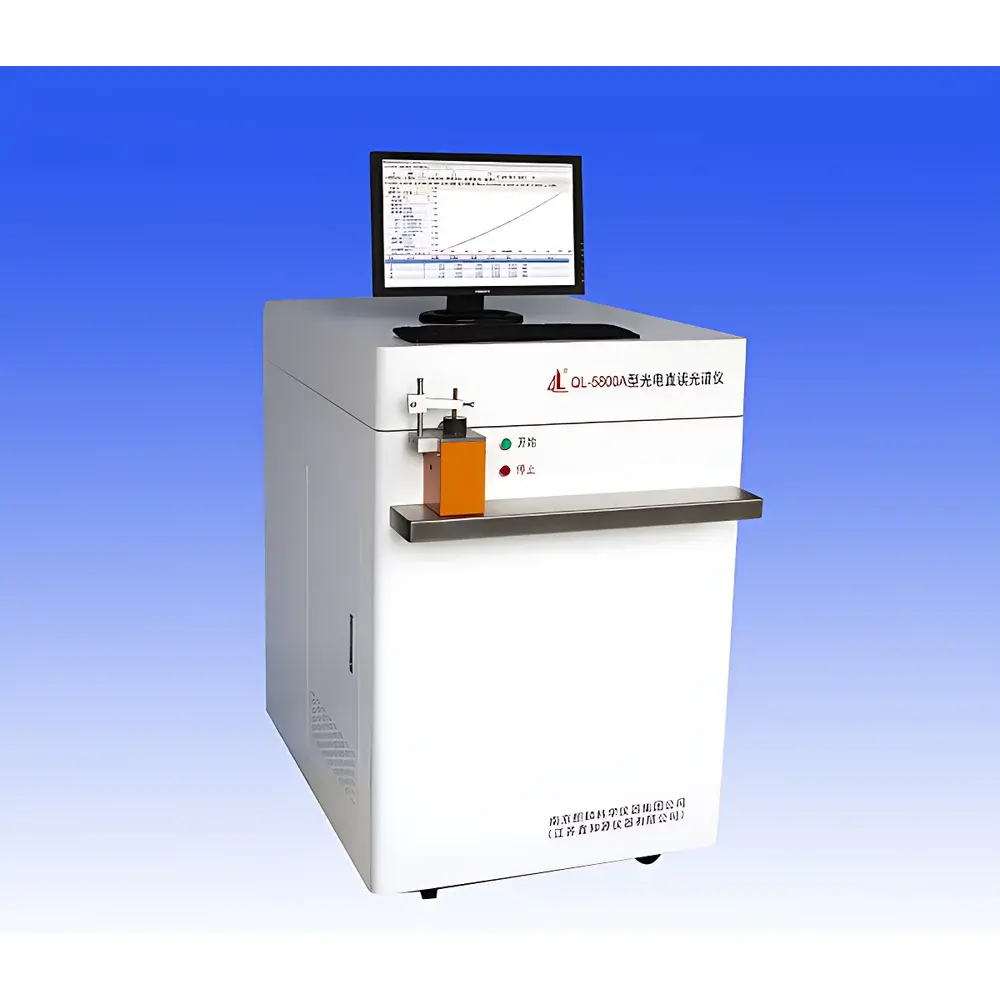
Qilin QL-5800A Spark Optical Emission Spectrometer (OES)
| Brand | Qilin / QL |
|---|---|
| Origin | Jiangsu, China |
| Manufacturer Type | Authorized Distributor |
| Country of Manufacture | China |
| Model | QL-5800A |
| Instrument Type | Floor-standing |
| Excitation Method | Spark Discharge |
| Detector Type | Photomultiplier Tube (PMT) |
| Focal Length | 750 mm |
| Grating Groove Density | 2400 lines/mm |
| Wavelength Range | 130–600 nm |
| Number of Analytical Channels | 32 |
Overview
The Qilin QL-5800A Spark Optical Emission Spectrometer is a floor-standing, vacuum-compatible direct-reading spectrometer engineered for high-precision elemental analysis of solid metallic samples. It operates on the principle of spark-induced optical emission spectroscopy (OES), where a controlled high-energy spark discharge vaporizes and excites atoms at the sample surface, generating element-specific atomic emission lines in the ultraviolet to visible spectrum (130–600 nm). These emissions are dispersed by a high-resolution 750 mm focal length Czerny-Turner monochromator with a 2400 lines/mm ruled grating and detected using an array of photomultiplier tubes (PMTs). The instrument’s Paschen-Runge optical layout—combined with vacuum purging—ensures minimal atmospheric absorption (especially below 190 nm), enabling accurate quantification of key non-metals (C, P, S, N) and trace alloying elements (e.g., B, Sn, As) in ferrous and non-ferrous matrices. Designed for routine laboratory and foundry-floor use, the QL-5800A delivers rapid, reproducible bulk composition data with RSD ≤ 0.2% under standardized operating conditions.
Key Features
- 750 mm focal length Paschen-Runge spectrometer with vacuum optical chamber for stable UV transmission and enhanced resolution (0.55 nm/mm linear dispersion).
- Ruled diffraction grating (2400 lines/mm, 30 × 50 mm² active area) optimized for first-order blaze at 300 nm, supporting flexible spectral line selection to avoid interferences.
- Digital spark source with adjustable frequency (100–1000 Hz), peak current control (up to 120 A pre-ignition, 30 A exposure), and auto-adjusted DC peak voltage (300 V) for optimal excitation across Fe, Al, Cu, Ni, Mg, Zn, Pb, Co, and Sn-based alloys.
- 32-channel PMT detection system with 28 mm diameter side-window tubes (10-stage dynode chain), low dark current, and high signal-to-noise ratio; each channel features 8-step programmable negative high-voltage adjustment (−550 V to −1000 V) to optimize dynamic range per element.
- Thermally stabilized optical bench maintained at 38 °C ± 0.2 °C to minimize thermal drift and ensure long-term wavelength calibration stability.
- Spark stand with 4 mm analytical gap, argon-flushed sample chamber, and no requirement for water cooling—enabling uninterrupted sequential analysis of >50 samples per hour.
- Linear motor-driven entrance slit scanning and fixed exit slits (50 µm / 75 µm options) for precise wavelength registration and scalable channel expansion up to 48 positions.
- Integrated single-board controller for real-time pulse integration, synchronized with PC-based acquisition software via high-speed serial interface.
Sample Compatibility & Compliance
The QL-5800A supports solid conductive metallic samples conforming to ISO 11577:2015 (metallic materials — spark OES — general requirements) and ASTM E415-22 (standard test method for analysis of carbon and low-alloy steel by spark OES). Sample geometries include discs (≥20 mm Ø), rods, and machined coupons meeting flatness and surface finish requirements per ISO 11093-1. The system accommodates common base metals—including Fe, Al, Cu, Ni, Mg, Zn, Pb, Sn, Co—and their alloys without hardware modification. All optical and electronic subsystems comply with IEC 61000-6-3 (EMC emission limits) and IEC 61010-1 (safety requirements for electrical equipment). While not certified to FDA 21 CFR Part 11 out-of-the-box, audit-ready data logging (including user ID, timestamp, integration parameters, and raw intensity values) is supported through optional configuration for GLP/GMP environments.
Software & Data Management
The QL-5800A operates under a native Windows-based application providing full control over calibration, analysis, and reporting. Key capabilities include multi-point intensity calibration with internal standard normalization (e.g., Fe I 371.993 nm), matrix-matched type standardization, and drift correction via reference channel monitoring. The software maintains a relational database (SQL Server Express compatible) storing spectra, calibration curves, sample IDs, operator logs, and QC results. Export formats include CSV, XML, and PDF reports compliant with ISO/IEC 17025 documentation requirements. Remote data transfer is enabled via TCP/IP, supporting integration into LIMS platforms. Audit trail functionality—recording all parameter changes, recalibrations, and result modifications—is available with role-based user authentication.
Applications
The QL-5800A serves as a primary analytical tool in metallurgical laboratories, foundries, and quality control departments requiring fast, reliable compositional verification. Typical applications include: incoming raw material inspection (scrap, ingots, master alloys); melt-process control during steelmaking and aluminum casting; finished product certification per ASTM A751, EN 10027, or GB/T standards; failure analysis involving segregation or contamination; and supplier qualification testing. Its ability to quantify light elements (C, S, P, N) down to sub-0.001 wt% levels—combined with robust performance on challenging matrices such as high-Cr stainless steels or low-Zn brasses—makes it suitable for both R&D and production-line deployment.
FAQ
What vacuum level is required for optimal UV performance?
The optical chamber is evacuated to ≤10 Pa prior to analysis and maintained under continuous vacuum pumping to ensure transmission stability below 190 nm.
Can the instrument analyze coated or plated samples?
Surface coatings must be removed by milling or grinding to expose homogeneous bulk material; spark ablation does not penetrate typical electroplated layers reliably.
Is external argon purification required?
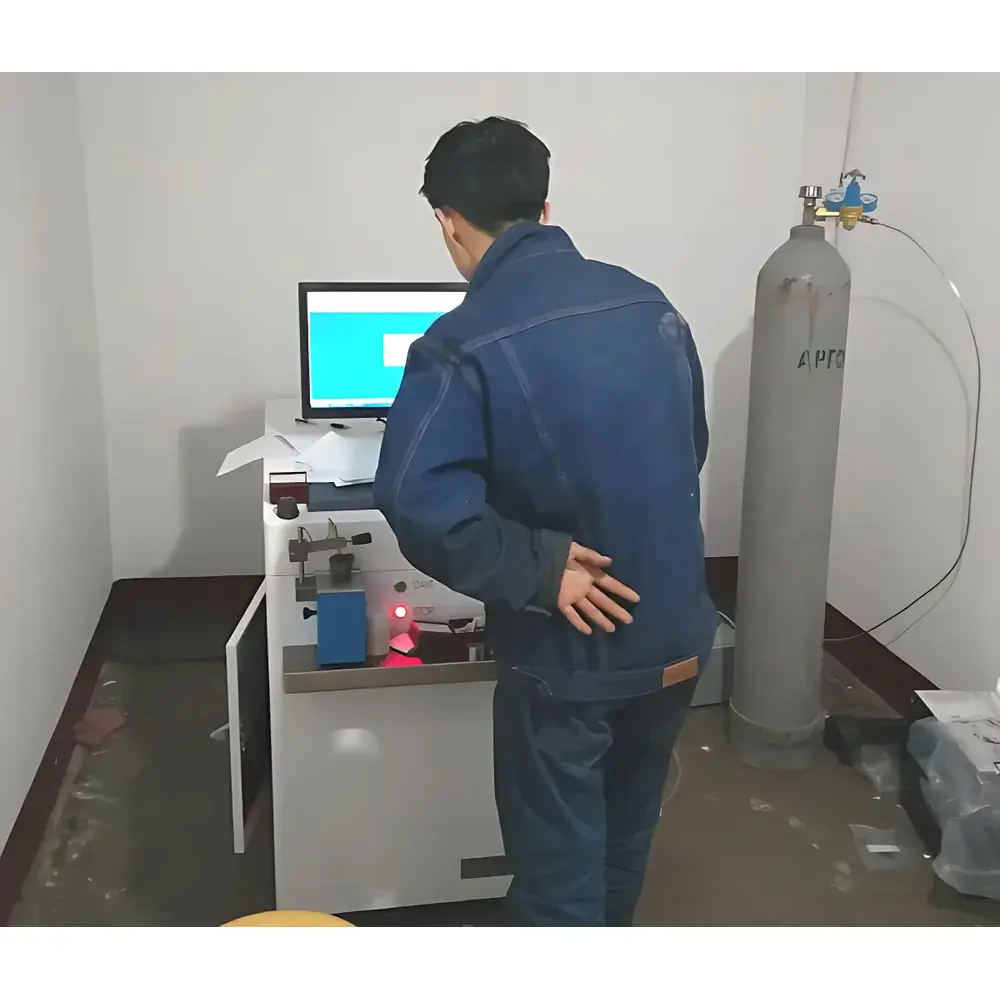
A standard 99.998% purity argon supply with ≤0.1 ppm O₂/H₂O is sufficient; no additional purifier is needed if gas lines are properly sealed and dried.
How often does the grating require recalibration?
Wavelength calibration is performed automatically during startup using internal Hg/Ar spectral references; full mechanical recalibration is recommended annually or after major maintenance.
Does the system support ASTM E1086 compliance for stainless steel analysis?
Yes—the pre-installed calibration packages include ASTM E1086-compliant working curves for Cr-Ni-Mo stainless grades when using certified reference materials traceable to NIST SRMs.






