
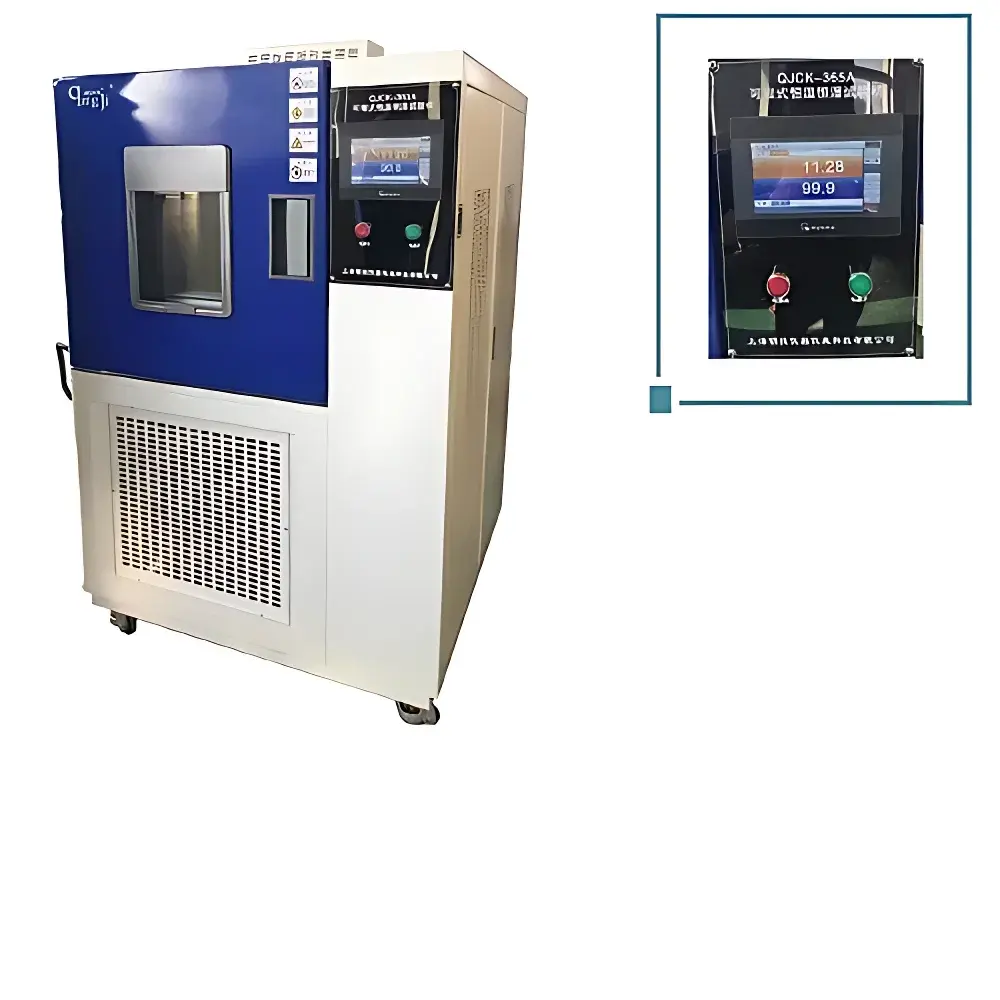
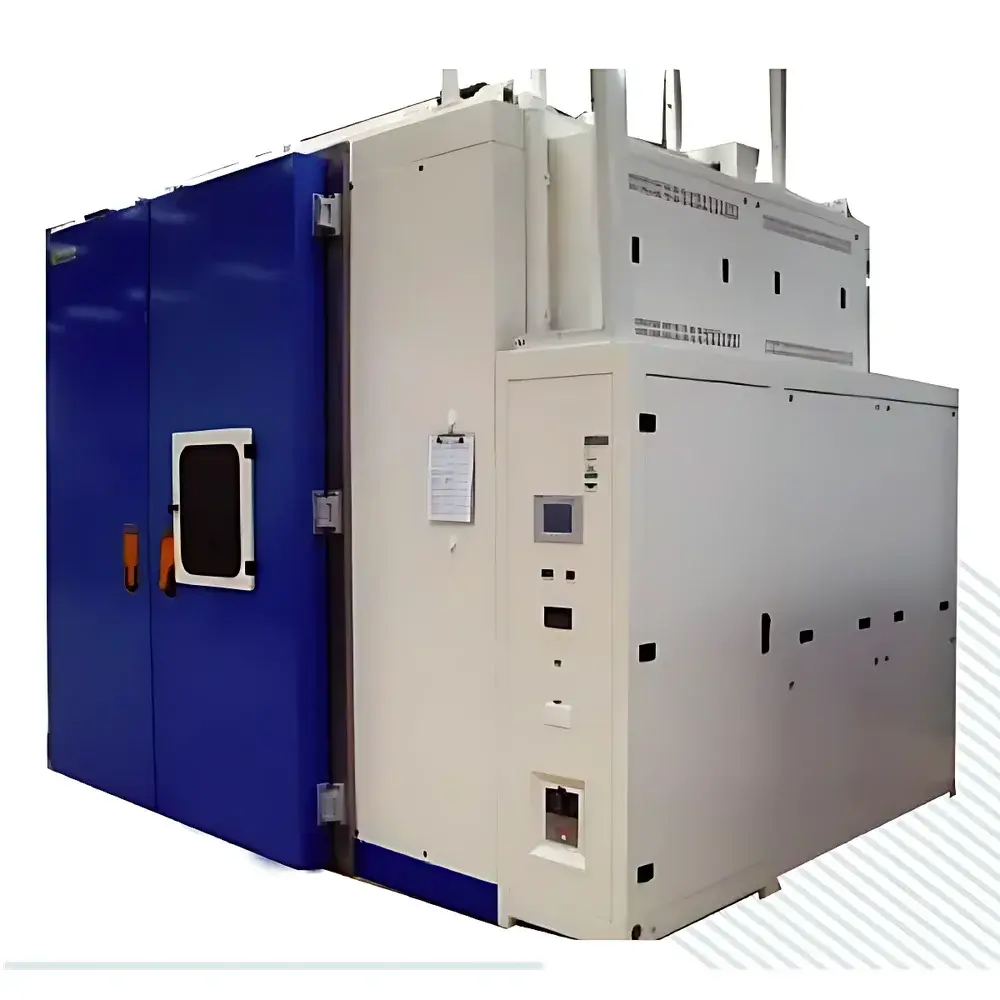
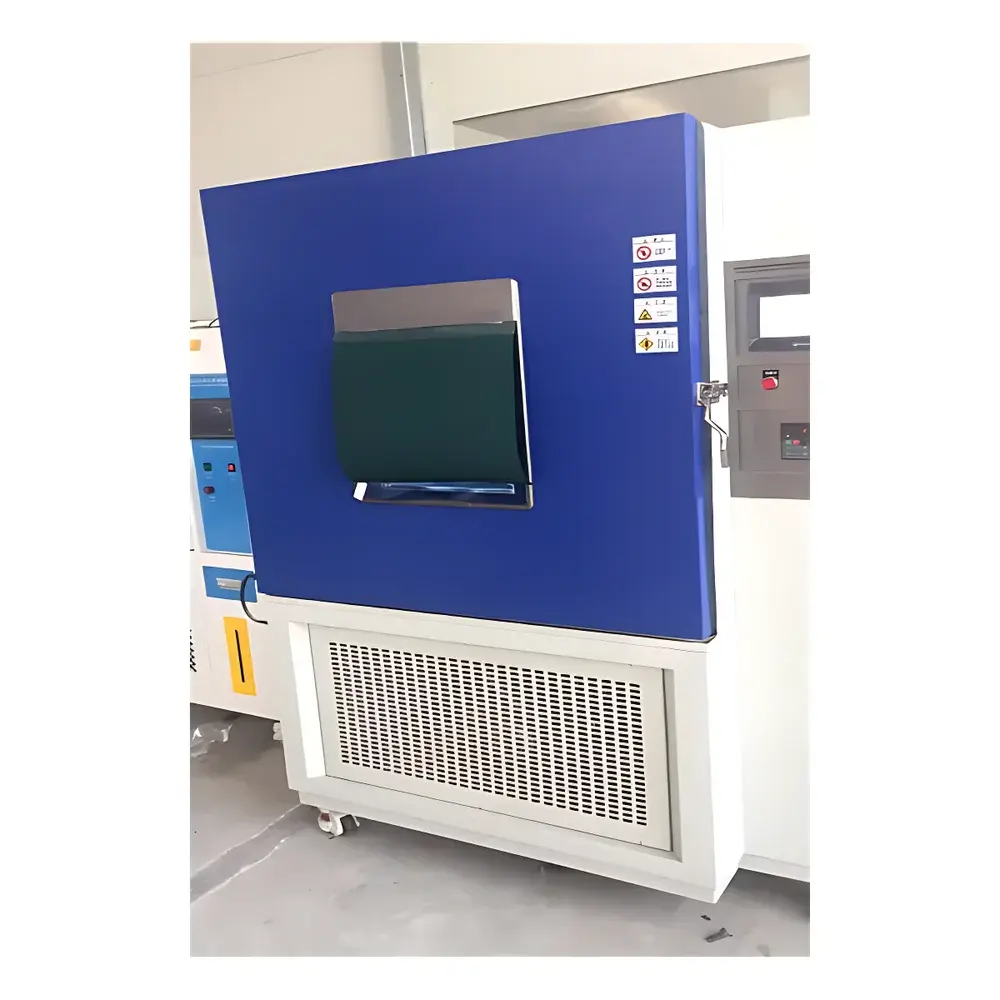
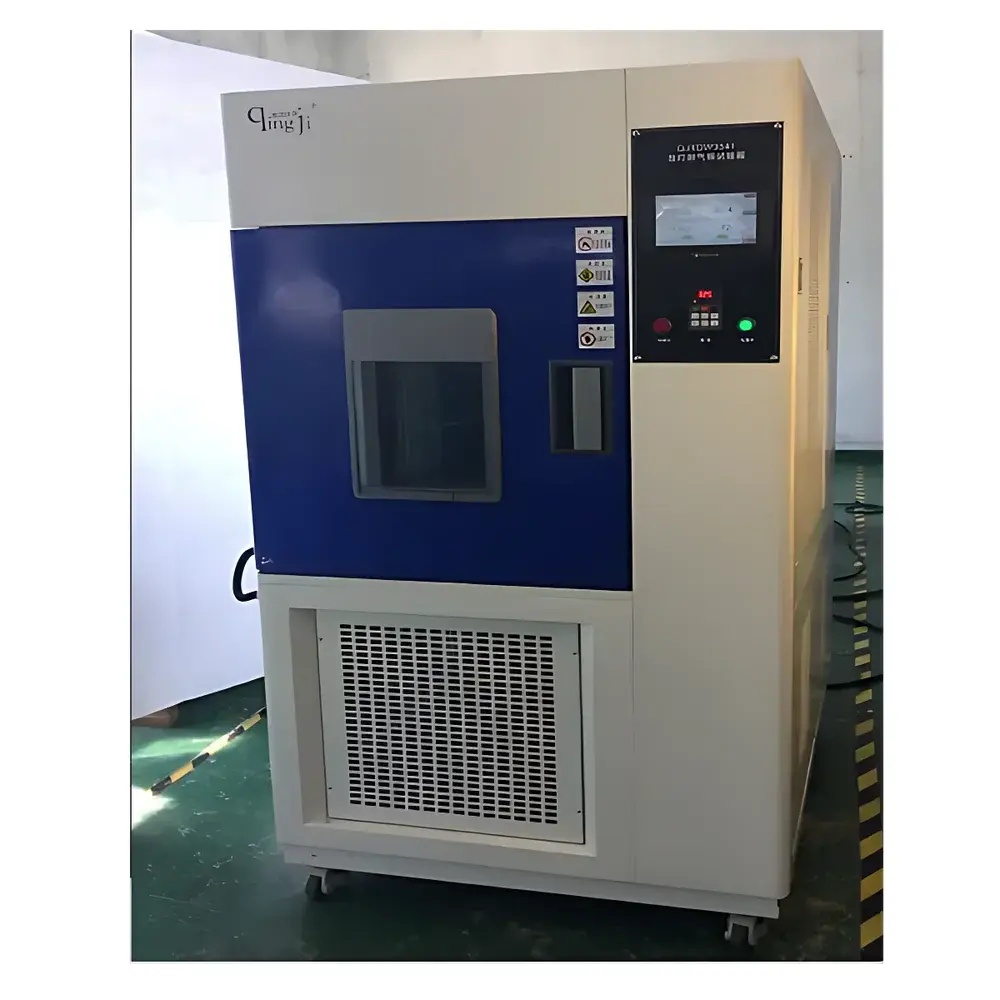
Qingji QJCK-350 High-Low Temperature Environmental Test Chamber
| Brand | Qingji |
|---|---|
| Origin | Shanghai, China |
| Model | QJCK-350 |
| Temperature Range | -70°C to +150°C |
| Refrigeration Method | Compressor-based Cooling |
| Temperature Fluctuation | ±0.5°C |
| Temperature Uniformity | ±2.0°C |
| Temperature Deviation | ±2.0°C |
| Heating Rate | ≤60 min (-20°C to 100°C) |
| Cooling Rate | ≤45–80 min (20°C to -40°C) |
| Internal Chamber Dimensions | Customizable per test requirement |
| Humidity Range | 10%–99.9% RH |
| Humidity Resolution | 0.01% RH |
| Temperature Resolution | 0.01°C |
| Programmable Steps | 120 programs / 1200 segments |
| Humidity Accuracy | ±2.5% RH |
| Temperature Accuracy | ±0.5°C |
| Humidity Uniformity | ±3.0% RH |
| Power Supply | 220 V AC |
| Rated Power | 2.0 kW |
| Net Weight | ~180 kg |
Overview
The Qingji QJCK-350 High-Low Temperature Environmental Test Chamber is an engineered platform for controlled thermal stress evaluation of materials and components under static or programmable temperature profiles. Designed in accordance with the fundamental principles of thermodynamic chamber control—utilizing dual-stage compressor refrigeration, PID-controlled electric heating, and forced-air convection—the system delivers stable, repeatable thermal environments across a wide operational range from -70°C to +150°C. Unlike ambient-condition simulators, this chamber integrates precision sensor networks (Pt100 RTD temperature sensors and capacitive humidity transducers) with closed-loop feedback algorithms to maintain thermal equilibrium within stringent tolerances. Its architecture supports both steady-state exposure and dynamic thermal cycling protocols, making it suitable for accelerated aging, thermal shock pre-screening, and environmental qualification testing required by international product development workflows.
Key Features
- Wide operational temperature range: -70°C to +150°C, enabling validation of low-temperature brittleness and high-temperature creep behavior.
- Compressor-based refrigeration system with optimized heat exchange design ensures consistent cooling performance without liquid nitrogen dependency.
- PID-controlled heating elements provide fine-grained thermal regulation with resolution of 0.01°C and stability of ±0.5°C (fluctuation).
- Forced-air circulation via axial fans guarantees uniform temperature distribution (±2.0°C deviation across working volume) and minimizes thermal stratification.
- Programmable controller supporting up to 120 multi-step test sequences (1200 total segments), with ramp/soak logic, loop repetition, and user-defined pause functions.
- Robust stainless-steel inner chamber (SUS304) and insulated double-wall construction (polyurethane foam, ≥100 mm thickness) ensure long-term thermal integrity and energy efficiency.
- Real-time data logging capability via built-in memory and optional USB/RS485 interface for traceable test record generation.
Sample Compatibility & Compliance
The QJCK-350 accommodates diverse sample geometries and material classes—including printed circuit boards (PCBs), polymer housings, battery modules, optical lenses, and metallic fasteners—within its customizable internal workspace. Chamber access ports (optional) support external cabling for in-situ electrical monitoring during thermal exposure. The system complies with core environmental test standards including IEC 60068-2-1 (cold), IEC 60068-2-2 (dry heat), and GB/T 2423.1–2423.2 (Chinese national equivalents). While not intrinsically rated for explosive atmospheres, its standard configuration meets general laboratory safety requirements per IEC 61010-1. For regulated industries, the controller firmware supports audit-trail-ready operation when paired with validated PC-based data acquisition software compliant with FDA 21 CFR Part 11 (electronic records/signatures) and GLP/GMP documentation frameworks.
Software & Data Management
The embedded controller features a 7-inch TFT LCD touchscreen with intuitive icon-driven navigation, multilingual UI (English/Chinese), and real-time graphing of temperature/humidity trajectories. Test logs—including setpoints, actual values, timestamps, alarm events, and operator IDs—are stored internally (≥10,000 data points) and exportable as CSV files. Optional Qingji LabControl™ PC software enables remote monitoring, automated report generation (PDF/Excel), statistical process analysis (SPC), and integration with enterprise LIMS or MES platforms via OPC UA or Modbus TCP. All software modules undergo version-controlled validation, with documented IQ/OQ protocols available upon request for regulated users.
Applications
- Electronics reliability: Thermal cycling of semiconductor packages, solder joint fatigue assessment, and PCB warpage analysis under extreme thermal gradients.
- Automotive component validation: Testing of sensors, connectors, and infotainment systems per ISO 16750-4 (road vehicles—environmental conditions).
- Pharmaceutical packaging stability: Accelerated shelf-life studies on blister packs and vial stoppers under ICH Q1A(R2)-defined temperature/humidity stress conditions.
- Aerospace material screening: Evaluation of composite resin matrix behavior at cryogenic temperatures relevant to satellite thermal vacuum pre-testing.
- Quality assurance in manufacturing: Final verification of batch consistency for elastomers, adhesives, and coated metals prior to shipment.
FAQ
What is the standard warranty coverage for the QJCK-350?
The unit carries a 12-month parts-and-labor warranty from date of commissioning, inclusive of on-site technician support for initial setup and calibration verification.
Can the chamber be integrated into an existing facility HVAC or exhaust system?
Yes—optional ducting interfaces and exhaust adapters are available; installation must comply with local ventilation codes and maintain minimum ambient room temperature (15–30°C) and relative humidity (<80% RH, non-condensing).
Is third-party calibration certification included with delivery?
Factory calibration certificates (traceable to NIM, China) are provided; ISO/IEC 17025-accredited field calibration services can be arranged separately.
Does the controller support password-protected user roles?
Yes—administrator, engineer, and operator profiles with configurable access rights to programming, data export, and system settings.
What maintenance intervals are recommended for optimal long-term performance?
Compressor oil inspection every 24 months; condenser coil cleaning every 6 months; sensor verification annually or per test campaign criticality assessment.



