
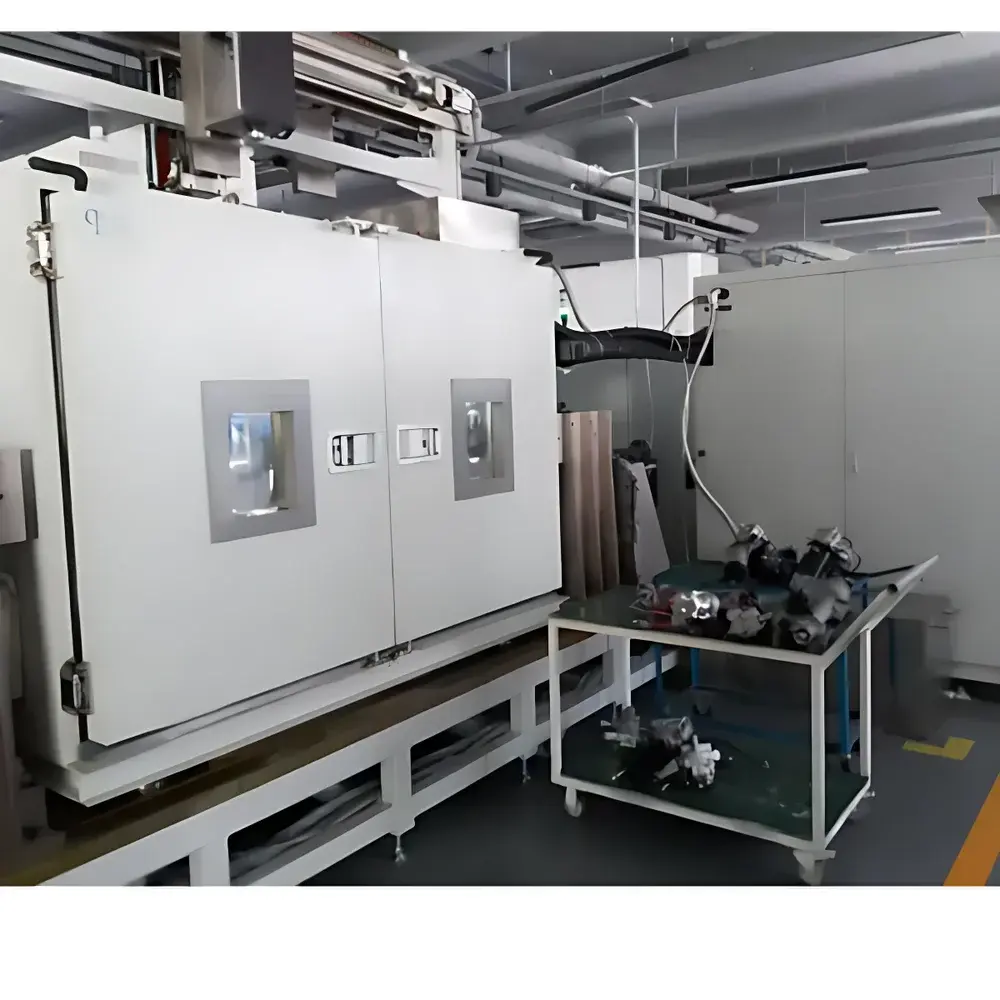
Qingji QJCK-395A Thermal Shock Test Chamber with Ice-Water Spray Function
| Brand | Qingji |
|---|---|
| Origin | Shanghai, China |
| Model | QJCK-395A |
| Temperature Range | −45 °C to +150 °C |
| Compliance | GB/T 28046.4–2011, VW 80000:2009-10 |
| Application Scope | Automotive, Aerospace, Electronics, Appliance Reliability Testing |
Overview
The Qingji QJCK-395A Thermal Shock Test Chamber with Ice-Water Spray Function is an integrated environmental reliability testing system engineered for simultaneous and sequential thermal shock exposure and dynamic liquid impact simulation under controlled temperature extremes. Unlike conventional thermal cycling or rain test chambers, this dual-mode platform combines rapid temperature transition capability (−45 °C to +150 °C) with programmable high-velocity ice-water spray delivery—enabling realistic simulation of combined thermal-mechanical stress conditions encountered during transportation, field operation, or extreme climatic exposure. The chamber operates on a two-zone thermal shock architecture with independent refrigeration and heating circuits, ensuring precise dwell time control and transition rates compliant with automotive and aerospace qualification protocols. Its ice-water spray subsystem utilizes calibrated nozzles, adjustable flow rate (0–15 L/min), and chilled water supply (≤5 °C) to replicate wind-driven rain, wheel-splash, hose-down, or marine wave impact scenarios under sub-zero ambient conditions—a critical requirement for validating ingress protection (IPX9K-level equivalent), seal integrity, and material dimensional stability across wide thermal gradients.
Key Features
- Integrated dual-function design: thermal shock chamber + ice-water impact simulator in single footprint
- Temperature range: −45 °C to +150 °C with ramp rates up to 15 °C/min (typical, load-dependent)
- Independent refrigeration (cascade R404A/R23 system) and electric heating subsystems for stable thermal control
- Programmable ice-water spray module: nozzle pressure 0.5–10 bar, spray angle 0°–180°, pulse or continuous mode
- Chilled water supply interface compatible with external glycol-cooled recirculation units (optional)
- Stainless steel 304 inner chamber with reinforced sealing gaskets and anti-condensation heating strips
- Touchscreen HMI with preloaded test profiles per GB/T 28046.4–2011, VW 80000:2009-10, ISO 16750-4, and SAE J2344
- Real-time logging of chamber temperature, spray duration/frequency, and sample surface thermocouple inputs (optional)
Sample Compatibility & Compliance
The QJCK-395A accommodates samples up to 600 mm × 600 mm × 600 mm (W×D×H) with standardized mounting fixtures for automotive ECUs, lighting assemblies, battery enclosures, and consumer electronics housings. It supports both static and rotationally mounted test specimens during spray cycles. The system meets the environmental stress screening requirements defined in GB/T 28046.4–2011 (Road vehicles — Environmental conditions and electrical testing — Part 4: Climatic loads) and VW 80000:2009-10 (Environmental testing for components). While not certified to IP rating standards per IEC 60529, its operational envelope aligns with test conditions referenced in IPX9K (high-pressure, high-temperature water jet) when executed at elevated chamber temperatures. All thermal profiles and spray sequences are fully traceable and support GLP-compliant audit trails when paired with optional data acquisition modules.
Software & Data Management
Control firmware includes embedded Ethernet (TCP/IP) and RS485 interfaces for integration into centralized lab management systems. The standard software package enables creation of multi-step test programs combining thermal soak, ramp, dwell, and synchronized spray events—with user-defined trigger logic (e.g., initiate spray upon reaching −30 °C). Data export is supported in CSV and XML formats; timestamped logs include chamber setpoint/actual temperature, refrigerant pressures, heater duty cycle, and spray valve status. Optional FDA 21 CFR Part 11-compliant software add-on provides electronic signatures, role-based access control, and immutable audit trail generation for regulated quality systems.
Applications
- Automotive component validation: headlamp lens adhesion, connector housing cracking, sensor housing seal failure under thermal-cyclic water ingress
- Aerospace avionics enclosure testing per DO-160 Section 8 (temperature) and Section 10 (water exposure)
- Consumer electronics waterproofing verification for devices rated IP67/IP68 under sub-zero startup conditions
- Battery pack thermal runaway containment evaluation during cold-soak followed by simulated road splash
- Material science studies on polymer embrittlement, elastomer compression set, and adhesive bond degradation under coupled thermal–hydromechanical loading
FAQ
Does the QJCK-395A meet ISO 16750-4 requirements for road vehicle environmental testing?
Yes—the chamber’s temperature profile fidelity, spray timing accuracy, and operational envelope fully satisfy Clause 4.3 (temperature cycling with water exposure) and Annex C (test sequence C: low temperature + water jet) of ISO 16750-4:2010.
Can the ice-water spray function operate independently of thermal cycling?
Yes. The spray subsystem can be activated in standalone mode at any stabilized chamber temperature within the full −45 °C to +150 °C range.
Is calibration documentation provided with shipment?
Each unit ships with a factory calibration certificate covering temperature uniformity (±1.5 °C at 100 mm from walls), thermal transition rate verification, and spray flow rate calibration at three pressure points.
What maintenance intervals are recommended for long-term reliability?
Refrigeration oil and filter replacement every 24 months; nozzle inspection and cleaning every 500 spray hours; annual verification of temperature sensor drift against NIST-traceable references.



