
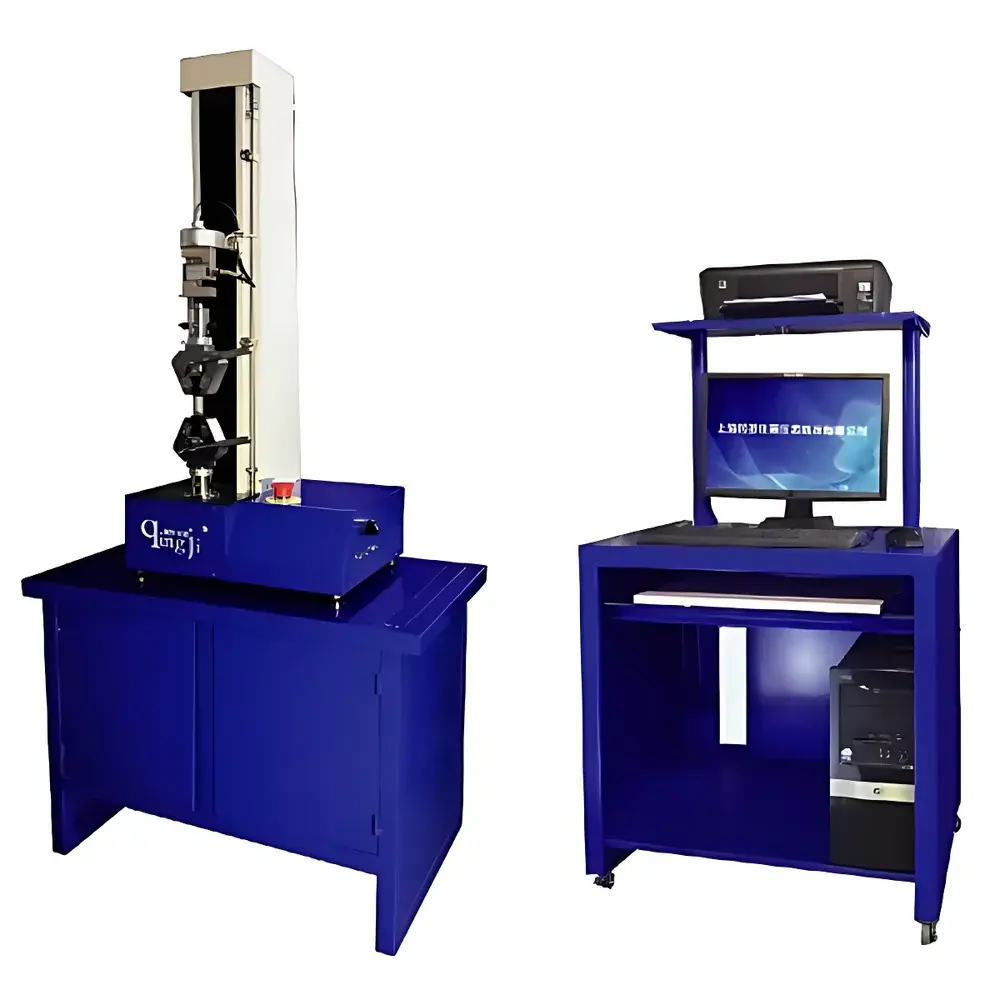
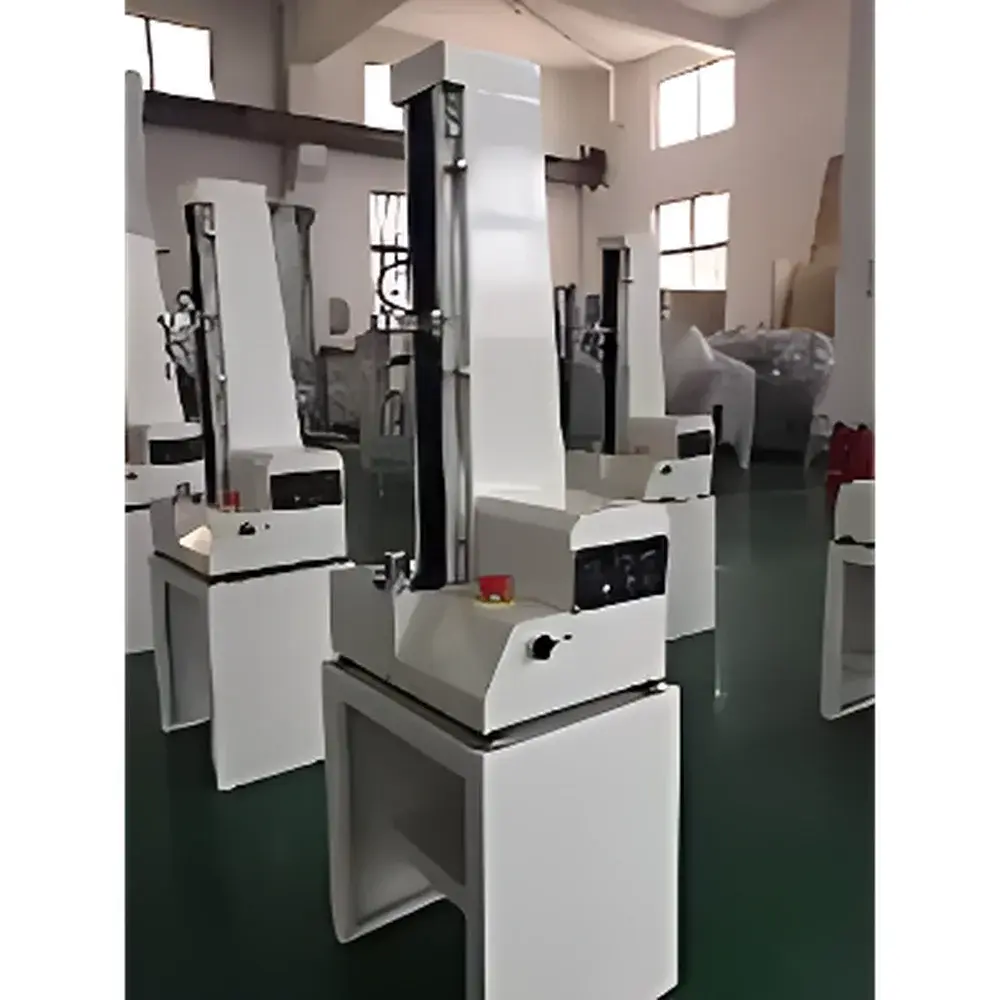
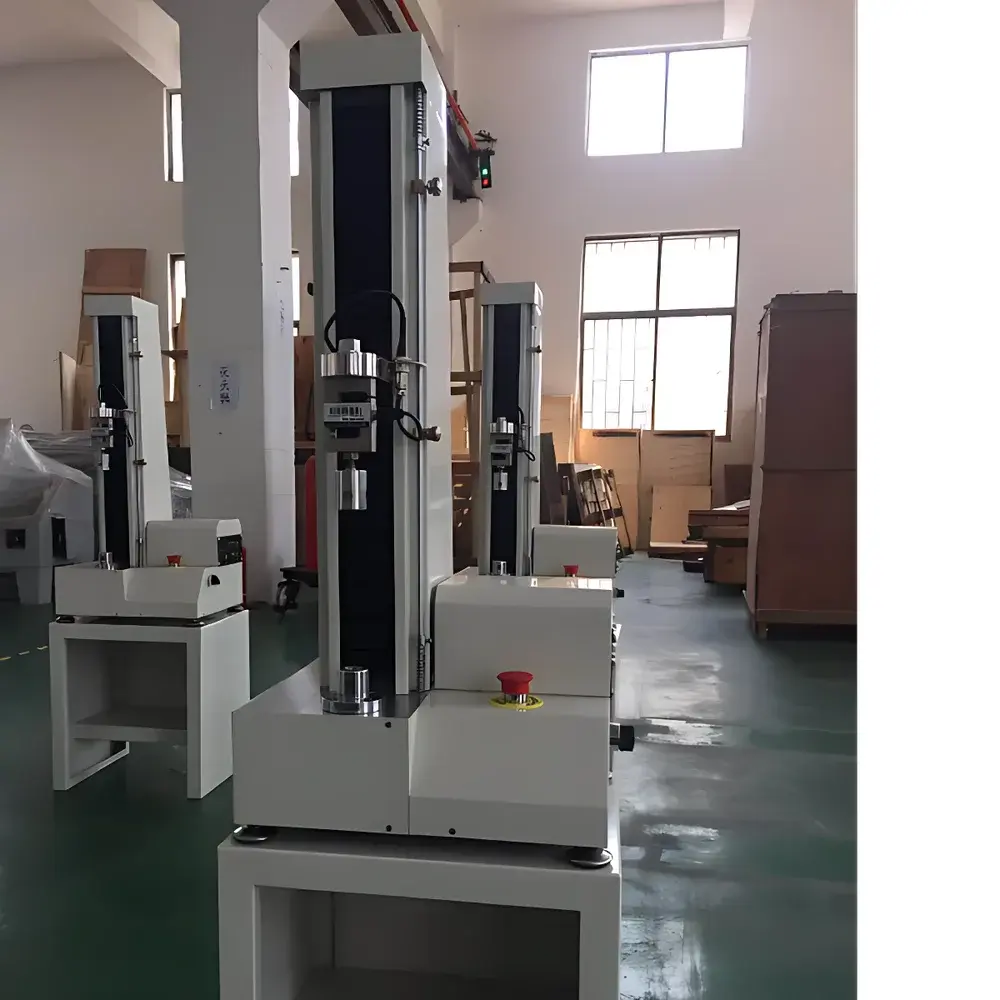
Qinji QJ210 Digital Peel & Tensile Testing Machine
| Brand | Qinji |
|---|---|
| Origin | Shanghai, China |
| Model | QJ210 |
| Instrument Type | Electromechanical Tensile Tester |
| Maximum Test Load | 2.5 kN |
| Force Measurement Range | 0–2.5 kN |
| Force Accuracy | ±0.5% of full scale |
| Crosshead Travel | 300 mm |
| Displacement Resolution | 0.001 mm |
| Effective Test Width | 150 mm |
| Speed Range | 0.01–1000 mm/min |
| Speed Accuracy | ±0.5% of set value |
| Displacement Accuracy | ±0.5% of reading |
| Load Cell Resolution | 500,000 counts (full-scale, unsegmented) |
| Motor Power | 200 W |
| Dimensions (L×W×H) | 430 × 315 × 855 mm |
| Net Weight | 40 kg |
Overview
The Qinji QJ210 Digital Peel & Tensile Testing Machine is an electromechanical universal testing system engineered for precision measurement of peel strength, tensile strength, adhesion, and bond integrity across flexible packaging, adhesive tapes, laminated films, medical device assemblies, and thin-sheet materials. It operates on the principle of controlled uniaxial force application via a high-resolution servo-driven crosshead, with real-time acquisition of load, displacement, and deformation data. Designed to meet the mechanical test requirements of ISO 8510-2, ASTM D903, ASTM D3330, GB/T 2790–2792, JIS Z0237, and other internationally recognized standards, the QJ210 delivers repeatable, traceable results in compliance with GLP-aligned laboratory practices. Its compact footprint (430 × 315 × 855 mm) and lightweight construction (40 kg) enable integration into QC labs, R&D workstations, and production-line validation environments without requiring reinforced flooring or dedicated structural support.
Key Features
- High-fidelity force measurement using a calibrated 2.5 kN load cell with 500,000 internal resolution counts — no range switching required across the full 0–2.5 kN span.
- Precision displacement sensing with 0.001 mm resolution and ±0.5% accuracy, synchronized with load acquisition at ≥1 kHz sampling rate.
- Wide-speed electromechanical actuation (0.01–1000 mm/min), adjustable in 0.01 mm/min increments; standard test speed preset at 300 mm/min per ISO/ASTM peel protocols.
- Dual-mode operation: standalone LCD controller with programmable test parameters (preload, break detection, hold time, return speed), plus optional PC-based control via USB or RS232 interface.
- Integrated safety architecture including electronic travel limits, overload cutoff (>110% FS), emergency stop, and motorized crosshead return with manual jog capability.
- Robust mechanical design featuring a synchronous belt reduction system coupled to a 200 W servo motor — minimizing backlash, thermal drift, and maintenance intervals.
- Surface-treated enclosure with industrial-grade baked enamel finish for corrosion resistance and long-term dimensional stability.
Sample Compatibility & Compliance
The QJ210 accommodates specimens up to 150 mm wide and 300 mm effective gauge length, supporting standard peel fixtures (T-peel, 90° peel, 180° peel), tensile grips (pneumatic or wedge-type optional), and custom jigs for specialized geometries. It complies with metrological traceability requirements under ISO/IEC 17025 when used with certified calibration artifacts. Data output formats (CSV, PDF, XML) support audit-ready documentation for FDA 21 CFR Part 11–aligned environments where electronic records and signature integrity are mandated. Routine verification follows ASTM E4 and ISO 7500-1 procedures for force and displacement system validation.
Software & Data Management
The included PC software provides full test method configuration, real-time curve plotting (force vs. displacement, stress vs. strain), automatic peak detection, and statistical reporting (mean, SD, CV%, min/max). All raw data files retain embedded metadata: operator ID, timestamp, environmental conditions (optional sensor input), calibration certificate ID, and instrument serial number. Audit trails log user actions (method edits, result deletions, report exports) with immutable timestamps — satisfying GLP/GMP documentation expectations. Exported reports conform to ISO 14644-1 and USP formatting conventions for materials characterization.
Applications
- Quantification of adhesive bond strength in pressure-sensitive tapes, labels, and medical transdermal patches.
- Peel performance evaluation of laminated food packaging, pharmaceutical blister foils, and battery separator films.
- Tensile modulus and elongation-at-break determination for nonwovens, elastomeric films, and thin polymer substrates.
- Quality conformance testing per customer-specific specifications (e.g., automotive interior trim bonding, electronics flex-circuit lamination).
- R&D screening of formulation changes in hot-melt adhesives, solvent-based coatings, and UV-curable resins.
FAQ
What international standards does the QJ210 support out-of-the-box?
Preconfigured test methods include ASTM D903 (peel resistance), ASTM D3330 (adhesive tape peel), ISO 8510-2 (flexible material peel), GB/T 2790–2792 (Chinese national standards for adhesion), and JIS Z0237 (Japanese peel specifications). Custom method templates can be imported via XML.
Is the system compliant with FDA 21 CFR Part 11?
Yes — when deployed with validated software, role-based user accounts, electronic signatures, and enabled audit trail logging, the QJ210 meets baseline technical controls for electronic records and signatures in regulated life science environments.
Can the QJ210 perform cyclic or dwell tests?
Standard firmware supports single-cycle tension and peel. Optional advanced motion control module enables programmed dwell periods, multi-step loading sequences, and relaxation profiling — subject to hardware revision verification.
What calibration documentation is provided at shipment?
Each unit ships with a factory calibration certificate traceable to NIM (National Institute of Metrology, China), covering force (0.5% FS accuracy), displacement (±0.5%), and speed (±0.5%). Certificate includes as-found/as-left data and uncertainty budgets per ISO/IEC 17025 Annex A.
Is remote technical support available for overseas users?
Yes — firmware updates, method troubleshooting, and data interpretation guidance are delivered via secure screen-sharing sessions and documented in multilingual (EN/CN/DE/JP) knowledge base articles. On-site service is coordinated through authorized regional partners.



