
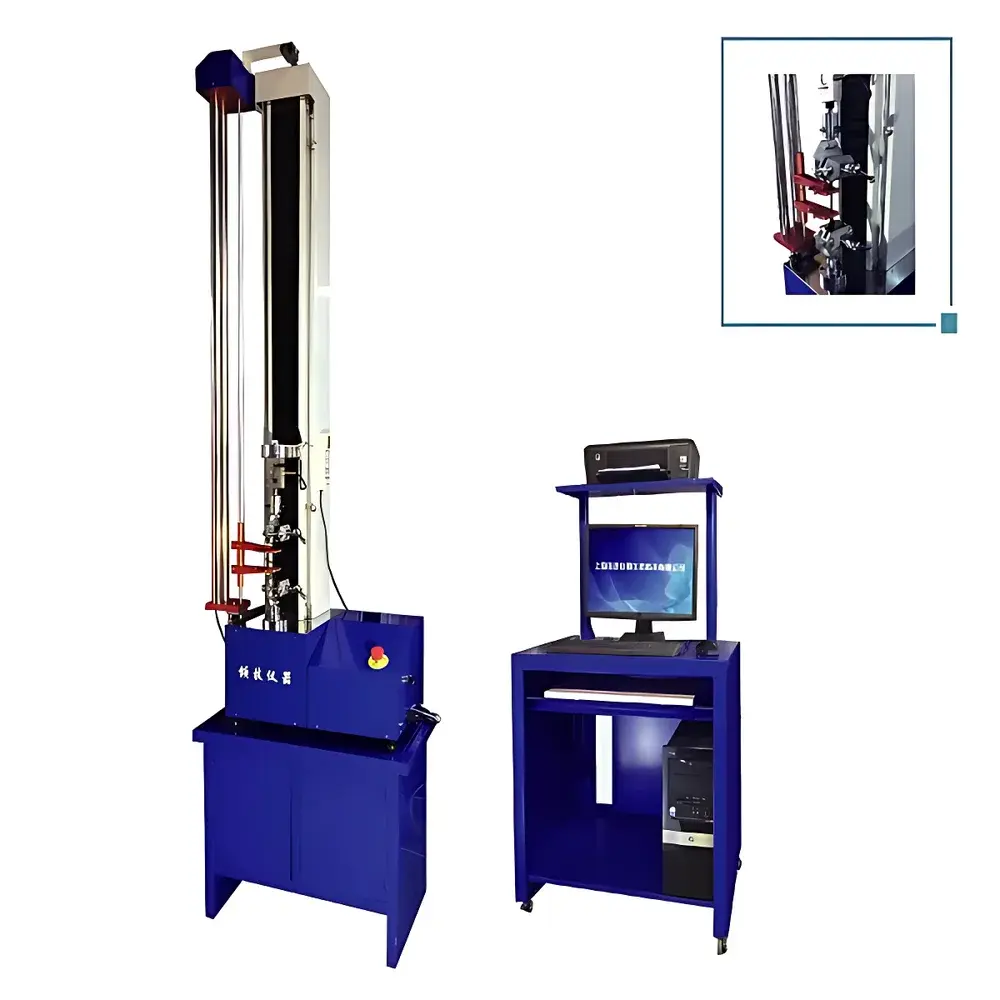
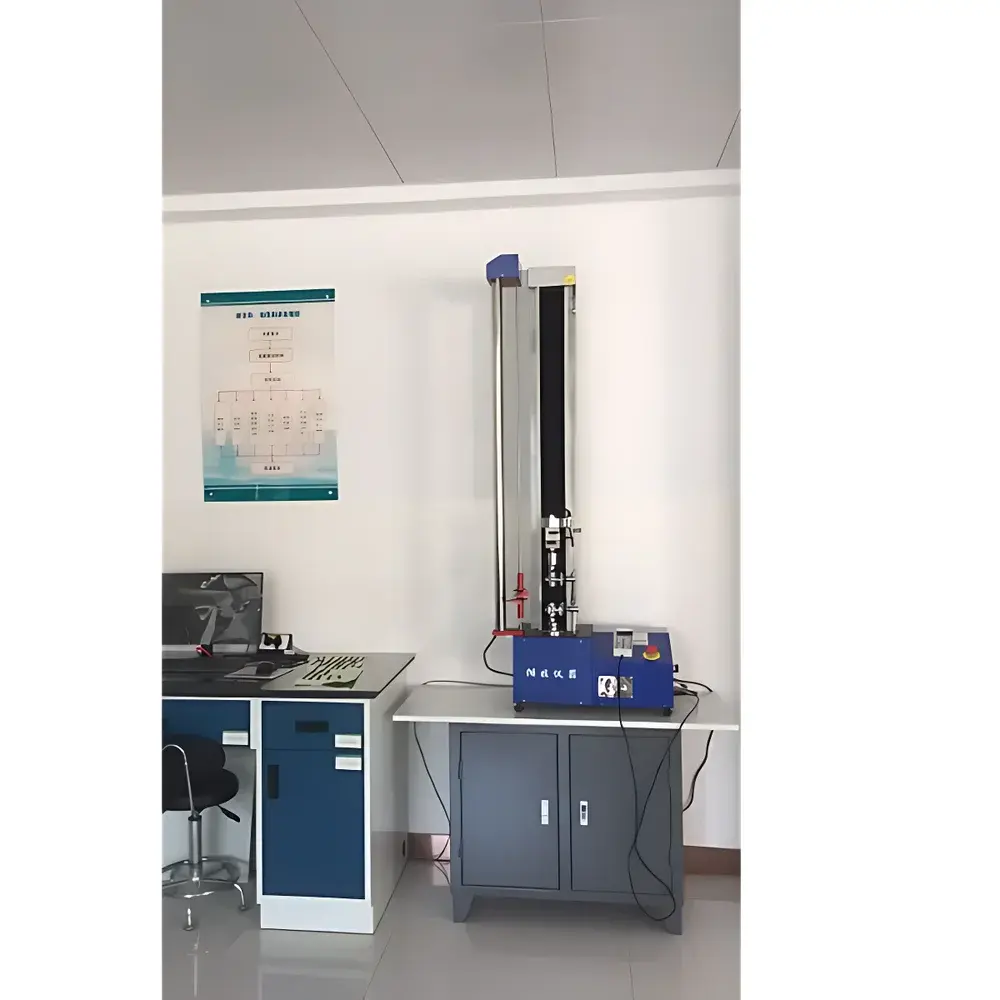
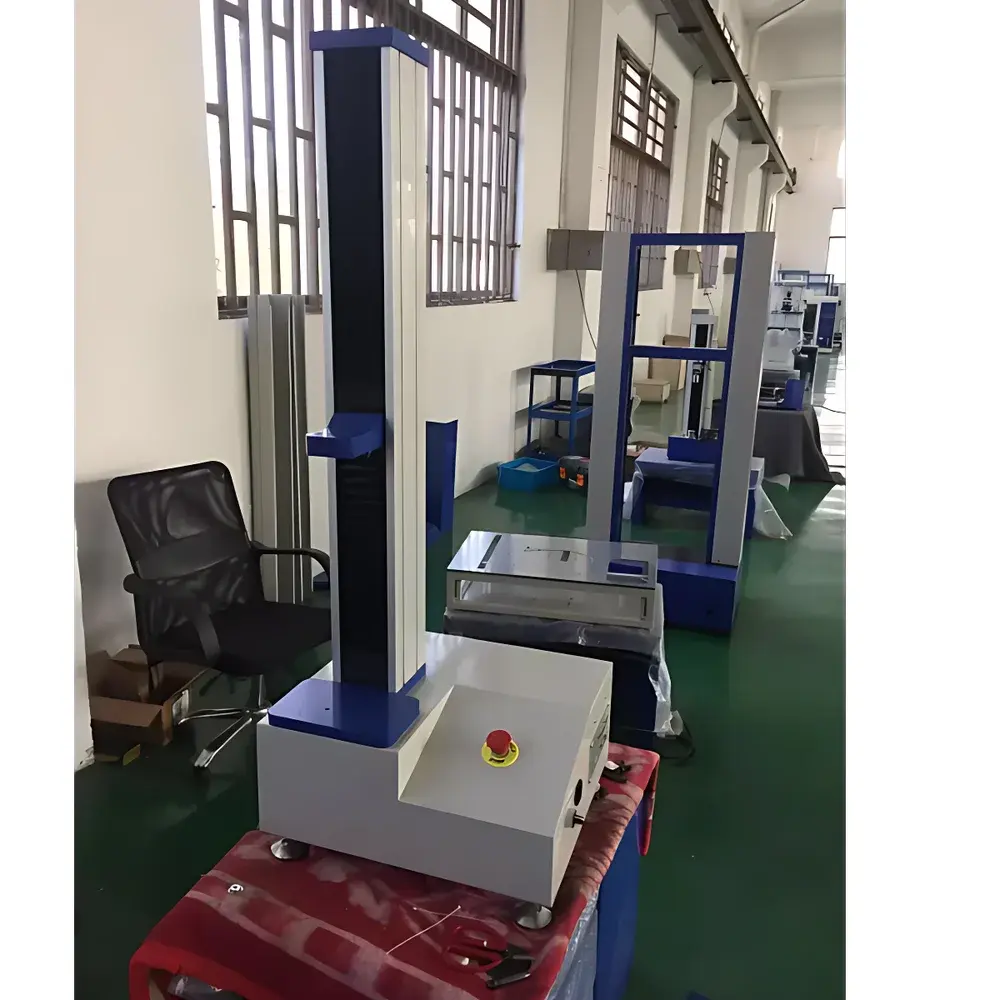
Qinji QJ210A-5KN Electronic Universal Testing Machine
| Brand | Qinji |
|---|---|
| Origin | Shanghai, China |
| Model | QJ210A-5KN |
| Load Capacity | 0–5000 N |
| Load Accuracy | ±0.5% |
| Test Speed Range | 0.001–1000 mm/min |
| Speed Accuracy | ±0.5% |
| Displacement Measurement Accuracy | ±0.5% |
| Strain/Deformation Accuracy | ±0.5% |
| Effective Test Width | 150 mm |
| Effective Tensile Travel | 300 mm (extendable) |
| Safety Features | Electronic travel limit protection, emergency stop button |
| Machine Weight | ~45 kg |
| Control Interface | Full LCD digital control + PC-based software integration |
| Compliance | Designed for ASTM E8/E21, ISO 6892-1, GB/T 228.1 testing protocols |
Overview
The Qinji QJ210A-5KN Electronic Universal Testing Machine is an entry-level electromechanical tensile and compression tester engineered for precision mechanical property evaluation of metallic wires (e.g., copper conductors), polymers, thin films, adhesives, and composite specimens in R&D laboratories and QC environments. It operates on the principle of controlled uniaxial force application via a servo-controlled ball-screw actuator, with real-time measurement of load (via calibrated S-type load cell), displacement (high-resolution encoder), and optional strain (via extensometer or video-based digital image correlation). The system delivers traceable, repeatable results compliant with internationally recognized mechanical testing standards—including ASTM E8/E21 (tensile testing of metallic materials), ISO 6892-1 (metallic materials — tensile testing — part 1: method at room temperature), and GB/T 228.1 (Chinese national standard equivalent). Its modular architecture supports both standalone operation via integrated LCD controller and full PC-based automation, enabling seamless integration into GLP-compliant workflows.
Key Features
- High-fidelity 5 kN load cell with ±0.5% full-scale accuracy, traceable to national metrological standards
- Adjustable crosshead speed range from 0.001 to 1000 mm/min, programmable in 0.001 mm/min increments for creep, quasi-static, and high-rate testing
- Dual-mode control: intuitive front-panel LCD interface for rapid setup; Windows-compatible software for advanced test sequencing, multi-step profiles, and audit-ready data logging
- Robust aluminum extrusion frame with powder-coated finish—optimized for stability, minimal thermal drift, and long-term dimensional integrity
- Standardized 150 mm test width and 300 mm vertical travel (field-extendable), accommodating ASTM-standard dog-bone specimens and custom geometries
- Integrated safety subsystem including electronic stroke limit switches, hardware-triggered emergency stop, and automatic load cutoff upon specimen failure
- Modular fixture compatibility: supplied with wedge-action tensile grips; optional accessories include compression platens, bend fixtures, peel test jigs, and pneumatic clamps
Sample Compatibility & Compliance
The QJ210A-5KN accommodates specimens ranging from fine-diameter copper wire (≥0.1 mm) to rigid plastic bars (≤15 mm thick) and flexible laminates. Its design facilitates standardized tests per ISO 527-2 (plastics), ASTM D638 (tensile properties of plastics), ASTM D3039 (composite tensile), and ISO 11843 (determination of detection limits). All firmware and software modules support configurable pass/fail criteria, statistical reporting (mean, SD, CV%), and export to CSV, PDF, or XML formats compatible with LIMS platforms. Data integrity meets ALCOA+ principles: attributable, legible, contemporaneous, original, accurate, complete, consistent, enduring, and available—enabling compliance with FDA 21 CFR Part 11 when configured with user authentication, electronic signatures, and audit trail logging.
Software & Data Management
The included PC software provides ISO/IEC 17025-aligned test method templates, customizable report generation (including stress–strain curves, modulus calculation, yield point identification, and elongation-at-break), and automated calibration certificate import. Raw data files retain native timestamping, operator ID, environmental metadata (optional ambient temperature/humidity input), and instrument configuration snapshots. Version-controlled firmware updates are delivered via secure HTTPS portal. Software architecture supports role-based access control (RBAC), with distinct permissions for operators, supervisors, and QA auditors—ensuring separation of duties during test execution, result review, and report approval.
Applications
- Tensile strength and elongation testing of copper, aluminum, and stainless-steel wires per IEC 60228 and ASTM B33
- Compression modulus determination of thermoplastic elastomers and foams
- Three-point bending analysis of PCB substrates and fiber-reinforced polymer laminates
- Peel strength assessment of pressure-sensitive adhesives (PSAs) and medical tape constructs
- Creep and relaxation behavior characterization under constant load conditions
- Educational use in materials science curricula for hands-on mechanical property demonstration
FAQ
Is the QJ210A-5KN suitable for ISO 17025-accredited laboratories?
Yes—when deployed with documented calibration certificates, validated software, defined SOPs, and trained personnel, it fulfills the technical requirements for routine mechanical testing in accredited facilities.
Can the machine perform cyclic loading or fatigue tests?
No—the QJ210A-5KN is designed for static and quasi-static monotonic loading only. For dynamic or high-cycle fatigue applications, a dedicated electrodynamic or hydraulic servo-hydraulic system is required.
What is the recommended calibration interval?
Annual calibration is advised; however, frequency should be determined by usage intensity, criticality of test outcomes, and internal quality policy—per ISO/IEC 17025 Clause 6.5.
Does the system support external extensometers?
Yes—standard analog or digital LVDT/strain-gauge extensometers with 0–10 V or RS-232 output can be integrated via optional signal conditioning module.
Are spare parts and consumables available globally?
Qinji maintains regional distribution partners across APAC, EMEA, and LATAM; all critical components—including load cells, grips, and encoder assemblies—are stocked with lead times under 4 weeks.



