
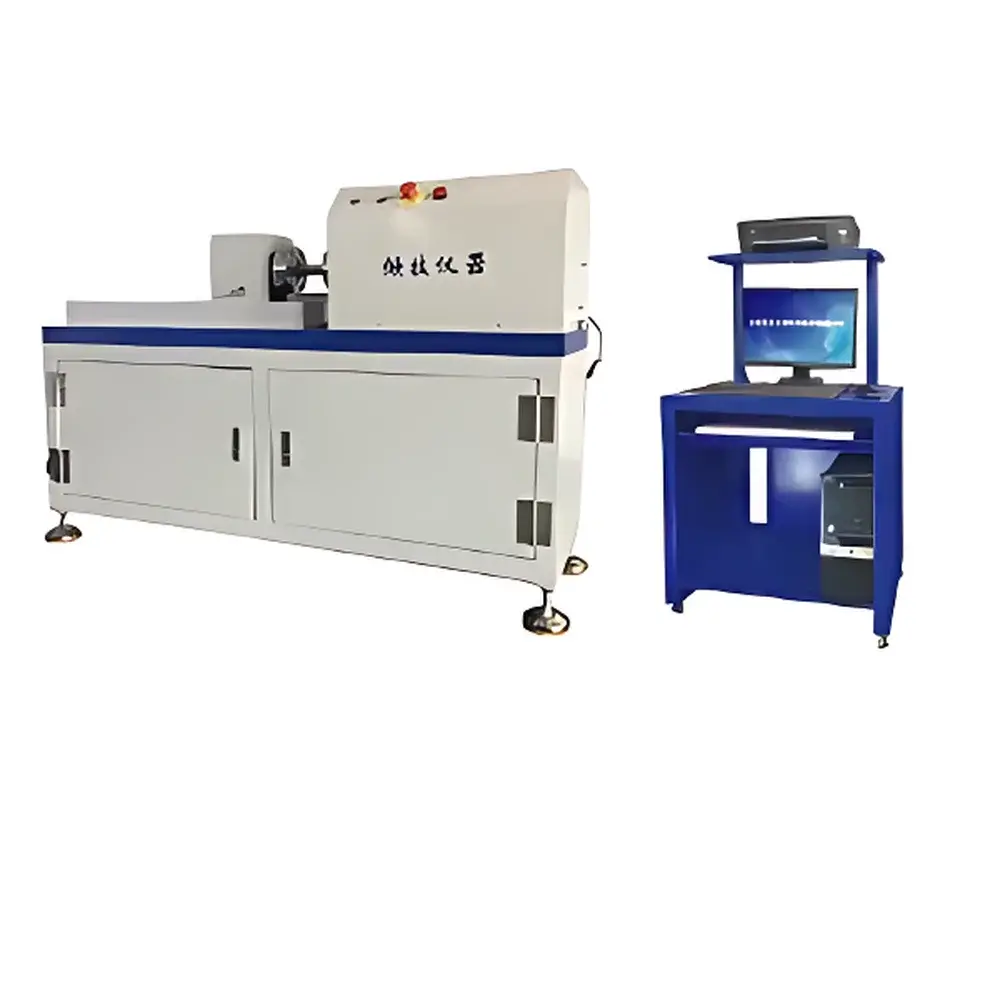
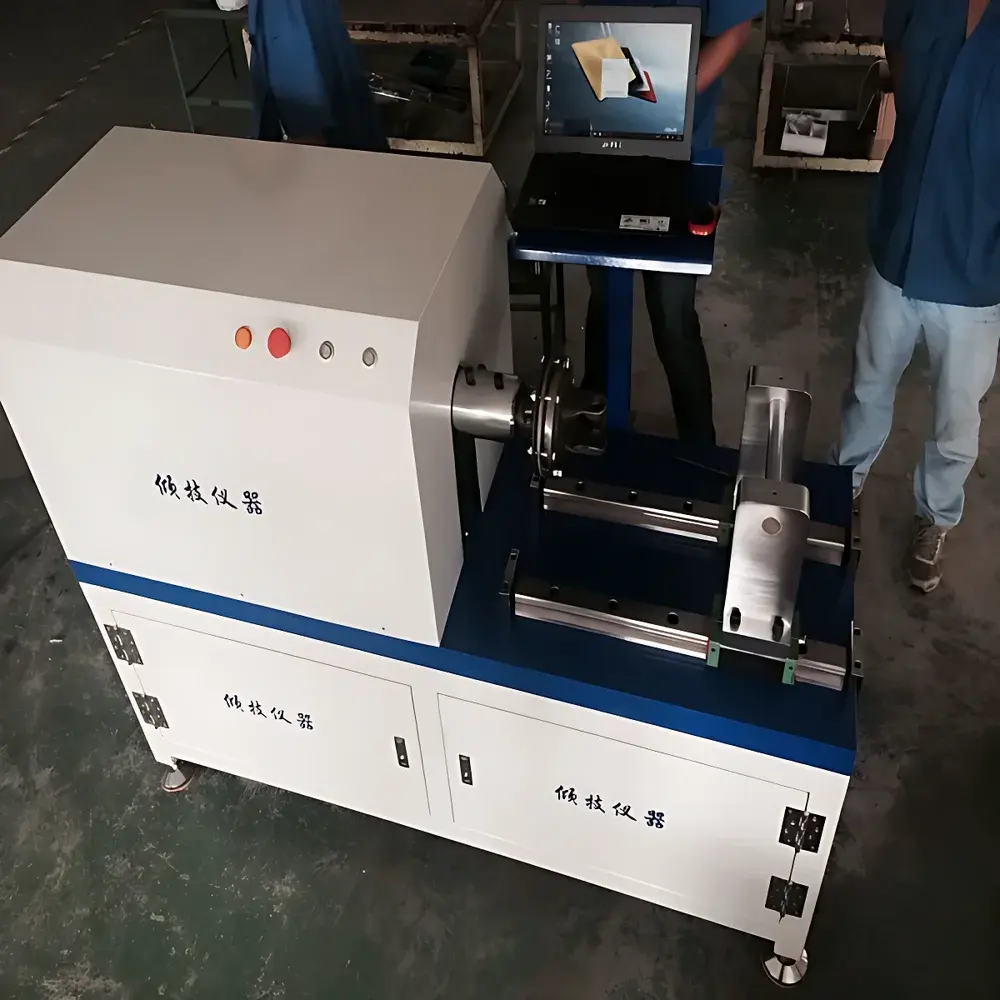
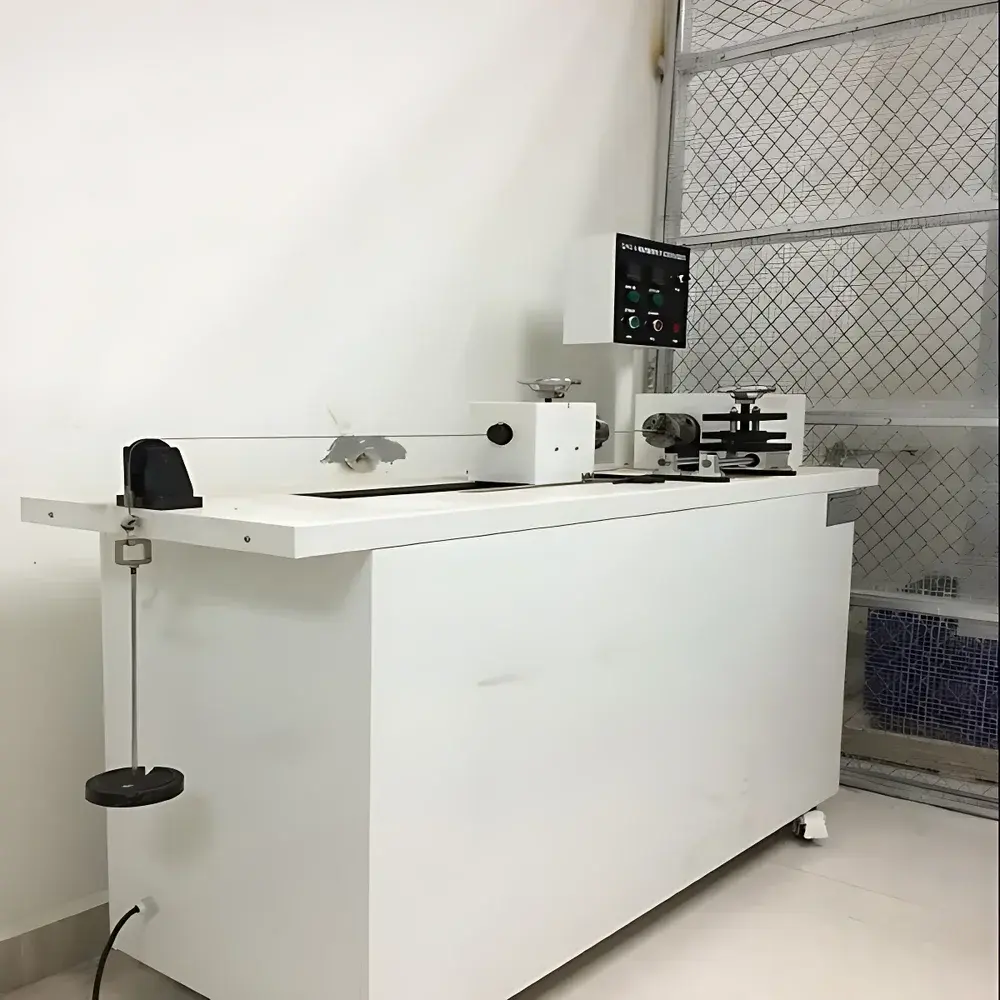
Qinji QJNZ-500NM Torsion Testing Machine
| Brand | Qinji |
|---|---|
| Origin | Shanghai, China |
| Model | QJNZ-500NM |
| Max Torque | 500 N·m |
| Torque Measurement Range | 0–500 N·m |
| Angular Resolution | ±0.001° |
| Torsion Angle Range | 0 to ±100,000° (4-digit display) |
| Motor Power | 0.75 kW |
| Torque Measurement Accuracy | ±0.5% FS |
| Angular Measurement Accuracy | ±0.5% FS |
| Torsion Speed Range | 0.01–1000 °/min (infinitely variable) |
| Speed Accuracy | ±0.2% of reading |
| Torque Resolution | 1/350,000 full scale (no range switching) |
| Gauge Length Adjustment | 1500 mm |
| Specimen Clamping Diameter | Φ8–Φ40 mm (extendable) |
| Dimensions (L×W×H) | 2800 × 4700 × 1250 mm |
| Weight | 1500 kg |
Overview
The Qinji QJNZ-500NM Torsion Testing Machine is a precision-engineered electromechanical system designed for static and quasi-static torsional characterization of metallic and non-metallic materials, structural components, and mechanical assemblies. It operates on the principle of controlled angular displacement under applied torque, enabling direct measurement of torsional stiffness, yield torque, ultimate torsional strength, plastic deformation behavior, and shear modulus (G) when coupled with high-resolution angular transducers and calibrated load cells. The machine complies with internationally referenced mechanical testing standards including GB/T 9370–1999 (Methods for Determination of Torsional Properties of Metallic Materials), GB/T 239–1999 (Torsion Testing of Metallic Wires), and JJG 269–1981 (Verification Regulation for Torque Measuring Instruments), ensuring data integrity for quality control, R&D validation, and regulatory submissions in manufacturing and academic laboratories.
Key Features
- High-fidelity torque sensing with ±0.5% full-scale accuracy and 1/350,000 resolution across the entire 0–500 N·m range—no range switching required for consistent linearity and repeatability.
- Precision angular measurement system with ±0.001° resolution and ±0.5% FS accuracy over a full ±100,000° rotation range, supporting both low-angle elasticity analysis and large-deformation plasticity studies.
- Infinitely variable torsion speed control from 0.01 to 1000 °/min, with speed stability maintained within ±0.2% of setpoint—critical for strain-rate-sensitive material evaluation per ISO 7888 or ASTM E143.
- Rugged dual-column frame with 1500 mm adjustable gauge length and self-centering hydraulic or mechanical chucks accommodating specimens from Φ8 mm to Φ40 mm (customizable for larger diameters).
- Integrated 0.75 kW servo motor drive with closed-loop position and torque feedback, delivering smooth acceleration/deceleration profiles and eliminating mechanical backlash during reversal tests.
- Compliance-ready architecture: supports audit trails, user-level access control, and electronic signature functionality—aligned with GLP, GMP, and FDA 21 CFR Part 11 requirements when used with validated software modules.
Sample Compatibility & Compliance
The QJNZ-500NM accommodates solid rods, hollow tubes, fasteners, shafts, springs, composite laminates, and polymer extrusions. Its modular fixture interface allows rapid reconfiguration for standardized test geometries (e.g., round, square, rectangular cross-sections) and custom fixtures for automotive driveline components or biomedical implants. All mechanical and metrological performance parameters are traceably calibrated against national standards (CNAS-accredited reference laboratories). Test reports generated by the system include metadata such as environmental conditions (optional sensor integration), operator ID, calibration certificate numbers, and timestamped raw data files—meeting documentation requirements for ISO/IEC 17025 accredited labs and third-party certification bodies.
Software & Data Management
The system runs on a Windows-based virtual instrumentation platform built using LabVIEW™ runtime engine. It provides real-time synchronized acquisition of torque, angle, time, and optional auxiliary channels (e.g., temperature, axial force). Built-in analysis tools compute shear stress/strain curves, proportional limit, modulus of rigidity (G), non-proportional limit (τp0.01), and failure criteria per ASTM E143 and ISO 14577. Data export formats include CSV, XML, and PDF report templates compliant with internal QA protocols. Raw binary files (.tdms) retain full 16-bit ADC resolution for post-hoc reprocessing. Software validation documentation—including IQ/OQ protocols and change control logs—is available upon request for regulated environments.
Applications
- Quality assurance of threaded fasteners, drive shafts, and torsion springs in automotive and aerospace OEM supply chains.
- Shear modulus (G) and torsional yield strength determination for aluminum alloys, titanium grades, and high-strength steels per GB/T 9370 and ASTM E143.
- Creep and stress-relaxation testing under constant torque or constant angle conditions (with optional environmental chamber integration).
- Evaluation of polymer melt elasticity and fiber-reinforced composite torsional damping characteristics.
- Calibration verification of industrial torque wrenches and transducers in metrology labs.
- Teaching laboratories for undergraduate mechanics of materials courses—supporting hands-on experiments on Saint-Venant’s torsion theory and warping effects.
FAQ
Does the QJNZ-500NM support automated test sequences and pass/fail logic?
Yes—the software allows creation of multi-step test programs with conditional branching, automatic stop triggers (e.g., torque threshold, angle limit, or time duration), and configurable pass/fail criteria based on user-defined tolerances.
Is calibration certification included with shipment?
Each unit ships with a factory calibration certificate traceable to NIM (National Institute of Metrology, China), covering torque and angular measurement channels. Optional ISO/IEC 17025 calibration certificates are available at additional cost.
Can the system be integrated into an existing MES or LIMS environment?
Yes—via TCP/IP or OPC UA protocol support, the controller exposes structured test data (JSON/XML) for seamless ingestion into enterprise systems. API documentation and driver libraries are provided for custom integration.
What maintenance intervals are recommended for long-term reliability?
Routine lubrication of lead screws and chuck mechanisms every 500 operational hours; annual verification of load cell linearity and encoder zero drift; biannual inspection of servo motor brushes and thermal protection circuits.
Are there options for elevated temperature or corrosive atmosphere testing?
The base system is rated for ambient operation (10–35°C, <80% RH). Environmental chambers (−70°C to +300°C) and inert gas purge enclosures can be retrofitted with mechanical and electrical interface kits supplied by Qinji’s engineering team.
Related Products



