
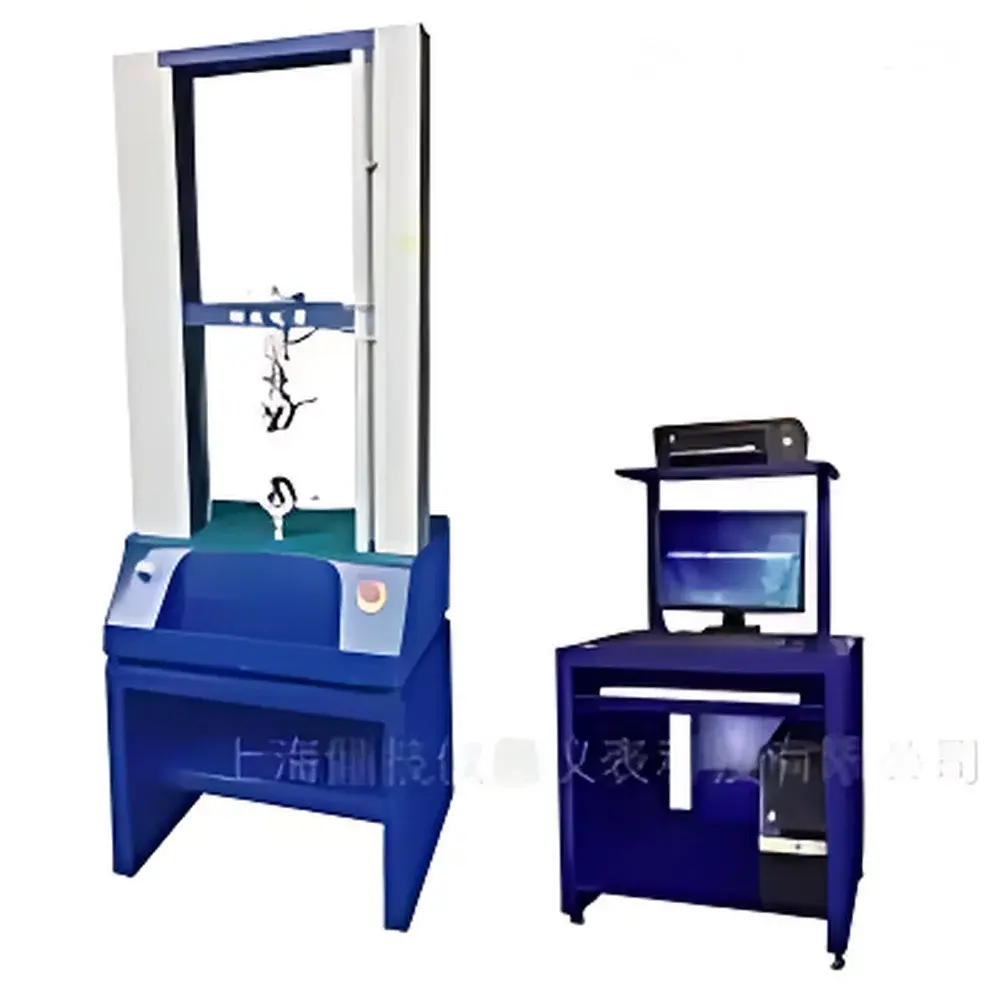
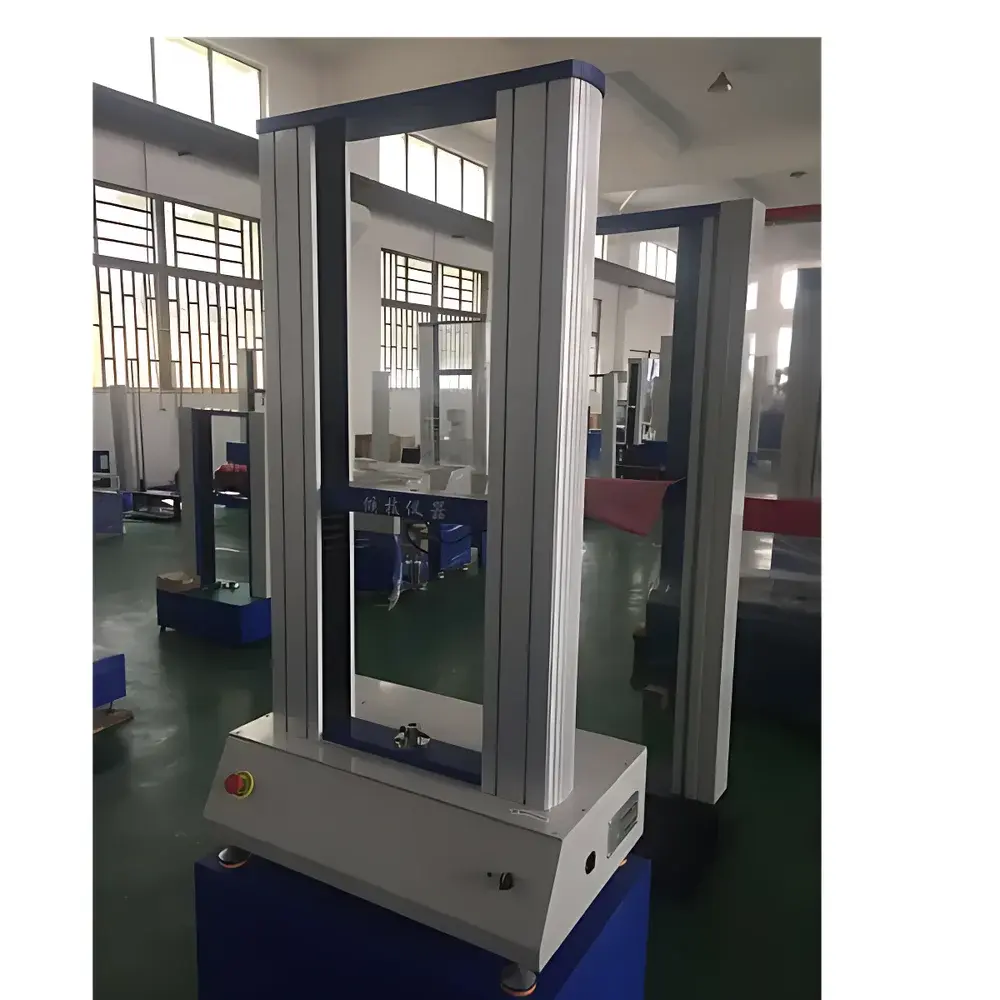
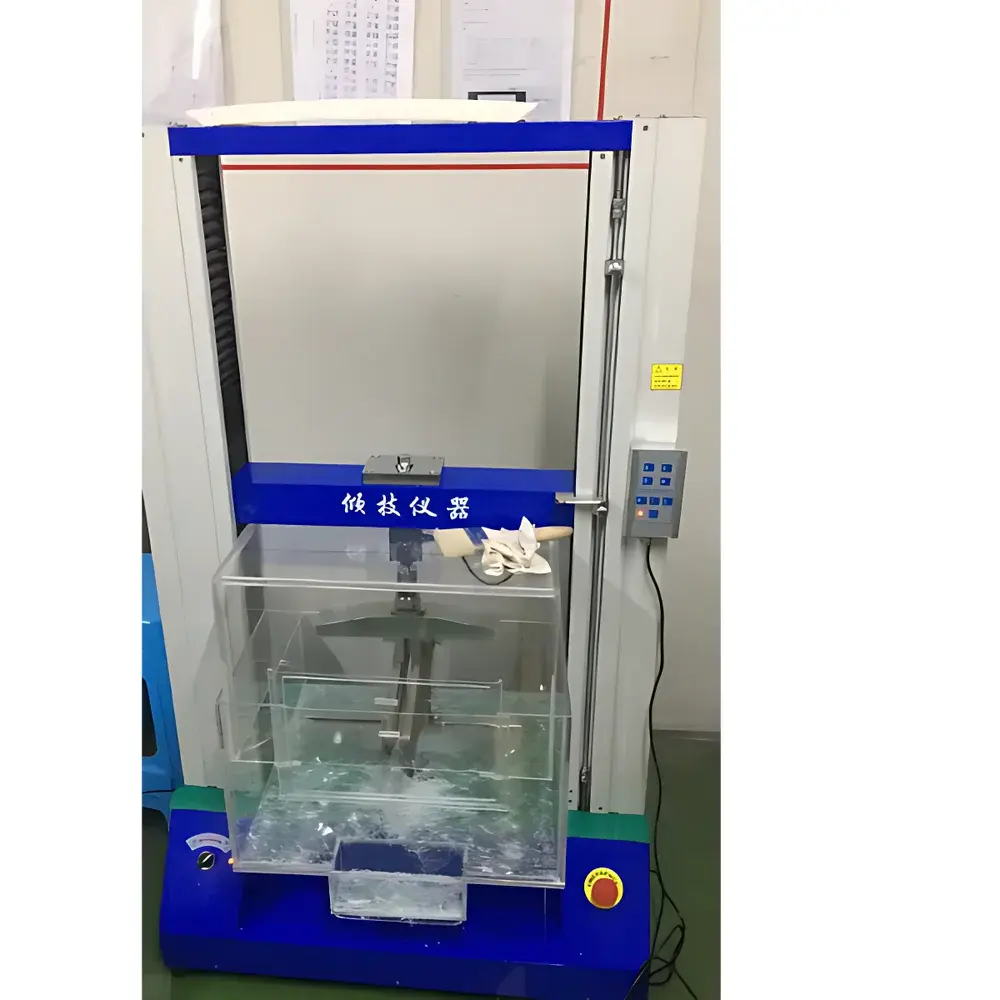
Qinsun QJ-211S Electronic Tensile Testing Machine
| Brand | Qinsun |
|---|---|
| Origin | Shanghai, China |
| Model | QJ-211S |
| Maximum Test Load | 30 kN |
| Force Measurement Range | 0–30 kN (full scale) |
| Force Accuracy | ±0.5% of reading |
| Crosshead Travel | 800 mm |
| Effective Test Width | 420 mm |
| Test Speed Range | 0.001–500 mm/min |
| Speed Accuracy | ±0.5% |
| Displacement Accuracy | ±0.5% |
| Strain Measurement Accuracy | ±0.5% |
| Safety Protection | Electronic limit switches, emergency stop button |
| Machine Weight | ~140 kg |
| Control System | Windows-based PC control with real-time data acquisition and curve visualization |
| Compliance | GB, ISO 6892-1, ASTM E8/E21, JIS Z2241, DIN 50125, EN 10002-1, YY/T 0680.1, USP <1041>, FDA 21 CFR Part 11 (audit trail enabled) |
Overview
The Qinsun QJ-211S Electronic Tensile Testing Machine is a precision-engineered universal testing system designed for static mechanical property evaluation of solid materials under uniaxial loading conditions. Based on servo-controlled electromechanical actuation and high-fidelity load cell transduction, the system implements standardized force-displacement measurement principles aligned with ISO 6892-1 (metallic materials – tensile testing) and ASTM E8/E21 (tensile testing of metallic materials at room temperature and elevated temperatures). It delivers repeatable, traceable mechanical data—including tensile strength, yield strength, elongation at break, modulus of elasticity, and Poisson’s ratio—across polymers, metals, composites, elastomers, textiles, biomedical devices, and thin-film substrates. Its modular frame architecture supports interchangeable test fixtures and environmental accessories, enabling adaptation to diverse specimen geometries and loading modes without hardware reconfiguration.
Key Features
- High-resolution 30 kN load cell with 0.01% internal resolution and ±0.5% full-scale accuracy per ISO 7500-1 Class 0.5 certification
- Programmable crosshead speed from 0.001 to 500 mm/min, maintaining ±0.5% speed stability across the entire range
- 800 mm effective vertical travel with precision-ground ball screws and preloaded linear guides for minimal axial runout (<5 µm)
- 420 mm clear test width accommodates standard ASTM/ISO specimen holders, including wedge-action, pneumatic, and hydraulic grips
- Real-time dual-channel digital display: simultaneous dynamic visualization of load (N/kN), displacement (mm), and strain (%) on integrated 7-inch LCD
- Windows-based control software with embedded GLP-compliant audit trail, user-level access control, and electronic signature support per 21 CFR Part 11
- Integrated safety subsystem: programmable electronic upper/lower limits, hardware-triggered emergency stop, and automatic overload cut-off
- Modular fixture interface compliant with ISO 26203-2 for rapid tooling changeover between tensile, compression, bend, peel, tear, shear, and puncture configurations
Sample Compatibility & Compliance
The QJ-211S accommodates specimens ranging from 0.1 mm diameter micro-wires to 50 mm wide flat strips and 100 mm³ compression cubes. Standardized test configurations include dog-bone tensile bars (ASTM D638, ISO 527), metal sheet coupons (ISO 6892-1), medical device sutures (ISO 10993-12), battery electrode coatings (IEC 62660-1), and optical film laminates (ASTM D3330). The system meets metrological requirements for calibration traceability to NIST or CNAS-accredited standards. Full compliance documentation includes conformity statements for ISO/IEC 17025:2017 (testing laboratories), EN 10002-1 (metallic tensile testing), YY/T 0680.1 (surgical suture tensile performance), and USP (mechanical testing of pharmaceutical packaging). All firmware and software modules undergo annual validation per GMP Annex 11 guidelines.
Software & Data Management
The Qinsun TestMaster™ v4.2 software suite provides deterministic real-time control, synchronized multi-parameter acquisition (load, displacement, extensometer strain, temperature if equipped), and automated report generation in PDF, Excel, and XML formats. Raw data files are stored in encrypted binary format with immutable timestamps and operator ID embedding. Curve analysis tools support offset yield point determination (0.2% proof stress), tangent modulus calculation, area-under-curve integration for toughness estimation, and hysteresis loop quantification for cyclic tests. Data export supports LIMS integration via ASTM E1384-compliant HL7 messaging and direct SQL database push to enterprise quality management systems (QMS). Audit logs record every parameter change, test initiation, result modification, and user login event with SHA-256 hashing for integrity verification.
Applications
This system serves as a primary mechanical characterization platform in QC laboratories across regulated and non-regulated sectors. In photovoltaic manufacturing, it validates encapsulant adhesion strength and backsheet tensile durability per IEC 61215. In medical device R&D, it performs suture breaking strength, catheter shaft stiffness, and orthopedic implant coating cohesion testing per ISO 14243 and ASTM F2118. Automotive Tier-1 suppliers use it for seatbelt webbing elongation, airbag fabric burst resistance, and battery module structural integrity verification. Universities employ it for polymer viscoelastic modeling, nanocomposite reinforcement efficiency assessment, and biomaterial stress-relaxation profiling. Metrology institutes utilize its calibrated force chain for secondary standard dissemination and inter-laboratory comparison exercises.
FAQ
What standards does the QJ-211S support out-of-the-box?
Pre-configured test methods include ASTM E8, ISO 6892-1, GB/T 228.1, JIS Z2241, YY/T 0680.1, and EN 10002-1. Custom method templates can be built using the script editor.
Is the system suitable for fatigue testing?
Yes—when paired with optional low-frequency sinusoidal waveform control module (up to 5 Hz), it supports ASTM D3479-compliant tension-tension fatigue protocols with cycle counting and S-N curve generation.
Can third-party extensometers be integrated?
The system features analog and digital input ports compatible with LVDT, video, and clip-on extensometers meeting ISO 9513 Class 1 accuracy requirements.
How is calibration maintained over time?
Built-in self-diagnostic routines verify load cell linearity and encoder resolution daily; full recalibration is recommended annually using certified deadweight standards traceable to national metrology institutes.
Does the software meet regulatory requirements for electronic records?
Yes—TestMaster™ v4.2 implements ALCOA+ principles (Attributable, Legible, Contemporaneous, Original, Accurate, Complete, Consistent, Enduring, Available) and satisfies FDA 21 CFR Part 11, EU Annex 11, and MHRA GxP data integrity expectations.



