
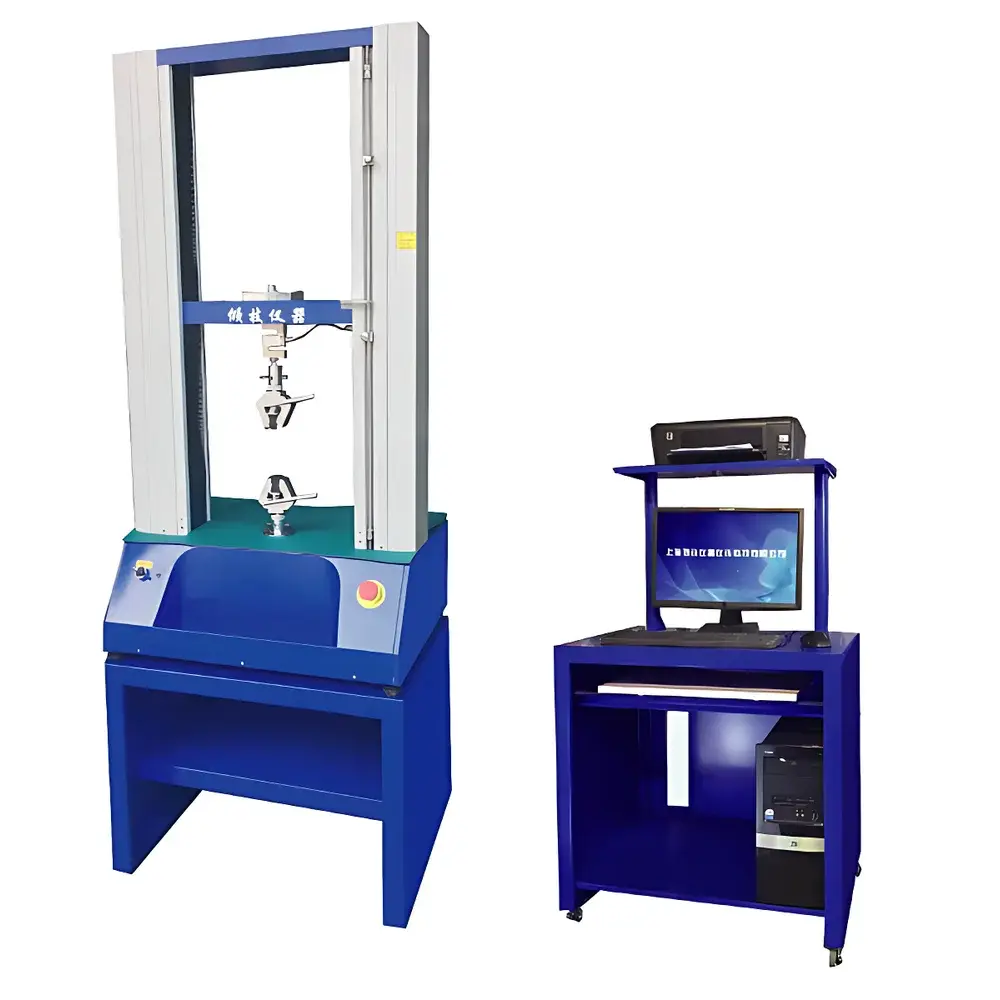
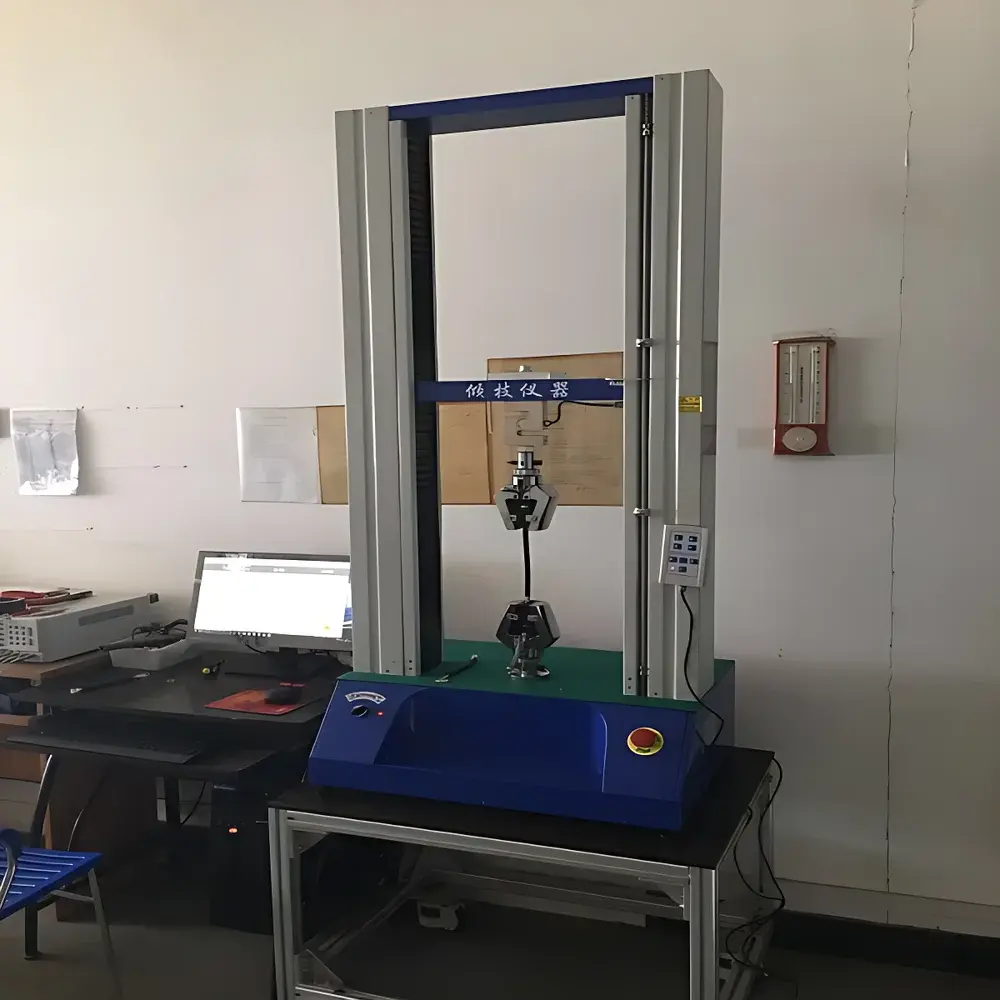
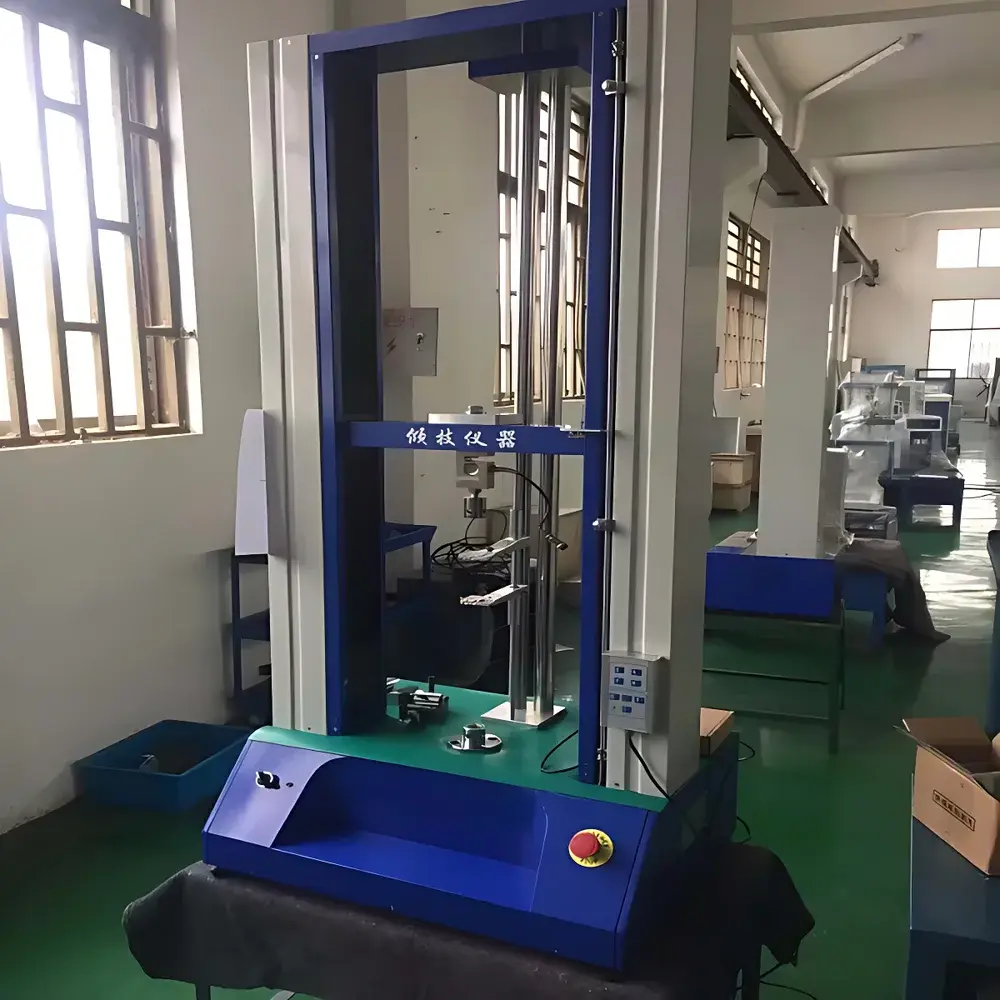
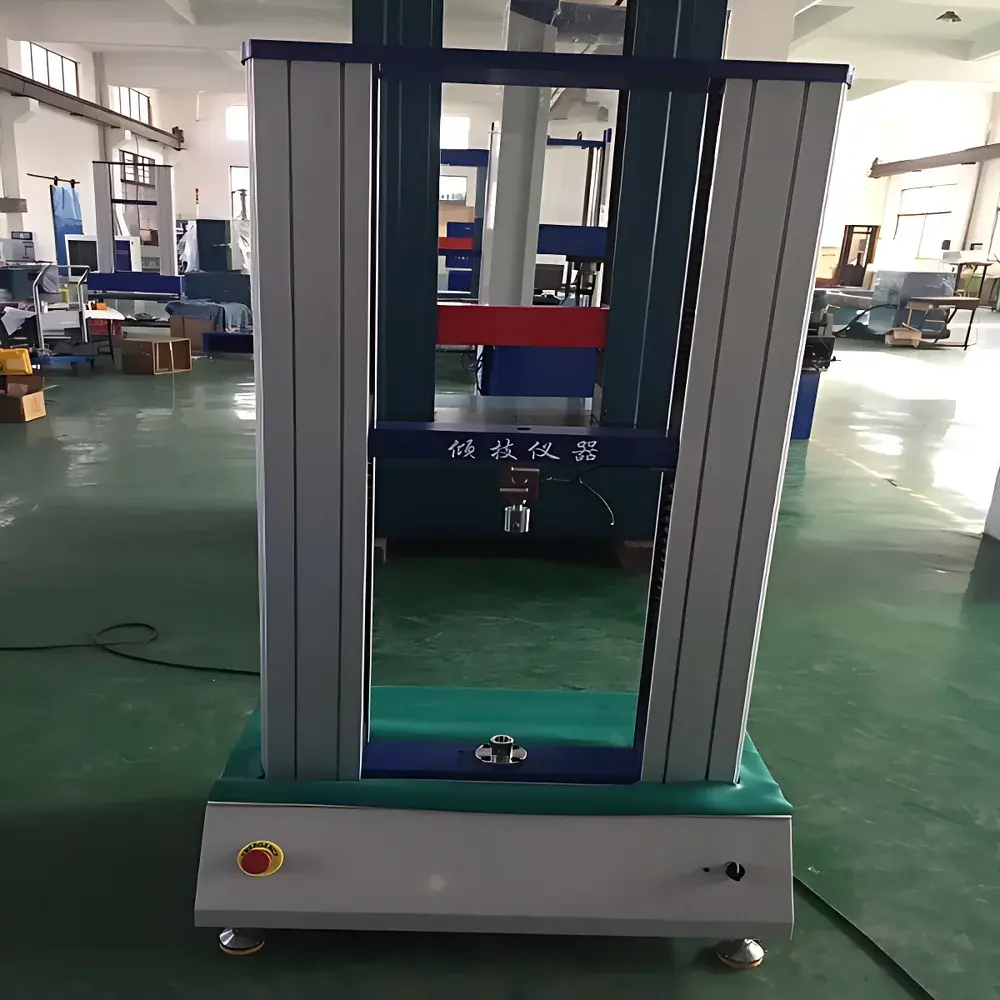
Qinsun QJ211S-20KN Three-Point Bending Tester
| Brand | Qinsun |
|---|---|
| Origin | Shanghai, China |
| Model | QJ211S-20KN |
| Load Capacity | 0–20 kN |
| Load Accuracy | ±0.5% |
| Test Speed Range | 0.001–500 mm/min |
| Speed Accuracy | ±0.5% |
| Displacement Measurement Accuracy | ±0.5% |
| Strain/Deformation Accuracy | ±0.5% |
| Effective Test Width | ~420 mm |
| Effective Vertical Travel | ~800 mm |
| Safety Features | Electronic travel limit protection, emergency stop button |
| Weight | ~140 kg |
Overview
The Qinsun QJ211S-20KN Three-Point Bending Tester is a precision-engineered electromechanical universal testing machine designed for standardized mechanical characterization of rigid and semi-rigid materials under flexural loading conditions. Operating on the classical three-point bending configuration—where a specimen is supported at two symmetric points and loaded centrally—the system delivers controlled force application and high-fidelity displacement measurement in accordance with ASTM D790, ISO 178, GB/T 9341, and other internationally recognized flexure test standards. As an electronic universal testing machine (UTM), it employs a servo-controlled AC motor drive, high-resolution load cell feedback (0.01% full-scale resolution), and closed-loop digital control architecture to ensure repeatable, traceable, and compliant mechanical data acquisition across research laboratories, quality control departments, and materials certification facilities.
Key Features
- Modular mechanical design supporting interchangeable test fixtures for tensile, compression, peel, shear, and three-point/four-point bending configurations
- High-stiffness dual-column frame with precision-ground ball screws and preloaded linear guides for minimal deflection and axial runout
- Integrated 20 kN load cell with ±0.5% full-scale accuracy and real-time digital compensation for thermal drift and nonlinearity
- Wide dynamic speed range (0.001–500 mm/min) with ±0.5% speed fidelity across the entire operating envelope
- Dual-channel synchronized measurement: high-resolution encoder-based displacement (±0.5%) and strain-compatible extensometer input (optional)
- Comprehensive safety architecture including programmable electronic travel limits, hardware-based emergency stop circuitry, and overload cut-off logic
- Windows-based control software with intuitive GUI, customizable test templates, and real-time curve overlay functionality
Sample Compatibility & Compliance
The QJ211S-20KN accommodates a broad spectrum of specimen geometries and material classes, including but not limited to thermoplastics, fiber-reinforced composites, metallic rods and plates, elastomeric sheets, geotextiles, coated fabrics, and structural adhesives. Specimen widths up to 420 mm and vertical clearances up to 800 mm enable testing of standard ISO 178 bars (80 × 10 × 4 mm), ASTM D790 Type I specimens, and custom-profiled components. All mechanical outputs—including flexural modulus, flexural strength, yield point, and stress–strain linearity—are calculated per ISO 178 Annex A (for isotropic materials) or Annex B (for anisotropic composites). The system supports GLP-compliant audit trails when operated with validated software modules and meets essential requirements for ISO/IEC 17025 accredited testing laboratories.
Software & Data Management
Control and analysis are executed via Qinsun’s proprietary Windows-native testing platform, featuring role-based user access control, password-protected method libraries, and timestamped raw data logging in ASCII and binary formats. The software provides automated calculation of key flexural parameters—modulus of elasticity in bending (Ef), maximum flexural stress (σfs), and proportional limit—based on user-defined standard selection. Data export supports CSV, Excel (.xlsx), PDF report generation, and direct integration with LIMS environments via ODBC connectivity. Optional 21 CFR Part 11 compliance package includes electronic signatures, audit trail logging, and data integrity safeguards for regulated pharmaceutical and medical device applications.
Applications
- Determination of flexural properties of polymeric laminates used in aerospace interior panels
- Quality verification of extruded aluminum profiles per ASTM B557M
- Interlaminar shear strength assessment of carbon-fiber prepreg coupons
- Stiffness evaluation of biodegradable polymer scaffolds in tissue engineering R&D
- Mechanical screening of solder joint reliability in printed circuit board assemblies
- Validation of adhesive bond performance in automotive trim components under static bending loads
FAQ
What standards does the QJ211S-20KN support for three-point bending tests?
ASTM D790, ISO 178, GB/T 9341, DIN 53452, and JIS K 7203 — all configurable via software test templates.
Can the system be upgraded to perform four-point bending?
Yes — optional four-point bending fixture kits are available, enabling compliant execution of ASTM D6272 and ISO 14125 protocols.
Is calibration documentation provided with shipment?
Each unit ships with a factory calibration certificate traceable to NIM (National Institute of Metrology, China), including as-found and as-left load cell verification data.
Does the controller support external extensometers?
Yes — the system features analog and digital inputs compatible with clip-on, video, and laser extensometers for high-accuracy strain measurement.
What maintenance intervals are recommended for long-term accuracy?
Biannual verification of load cell linearity and displacement encoder calibration is advised; annual mechanical inspection of drive train components is included in extended service contracts.



