
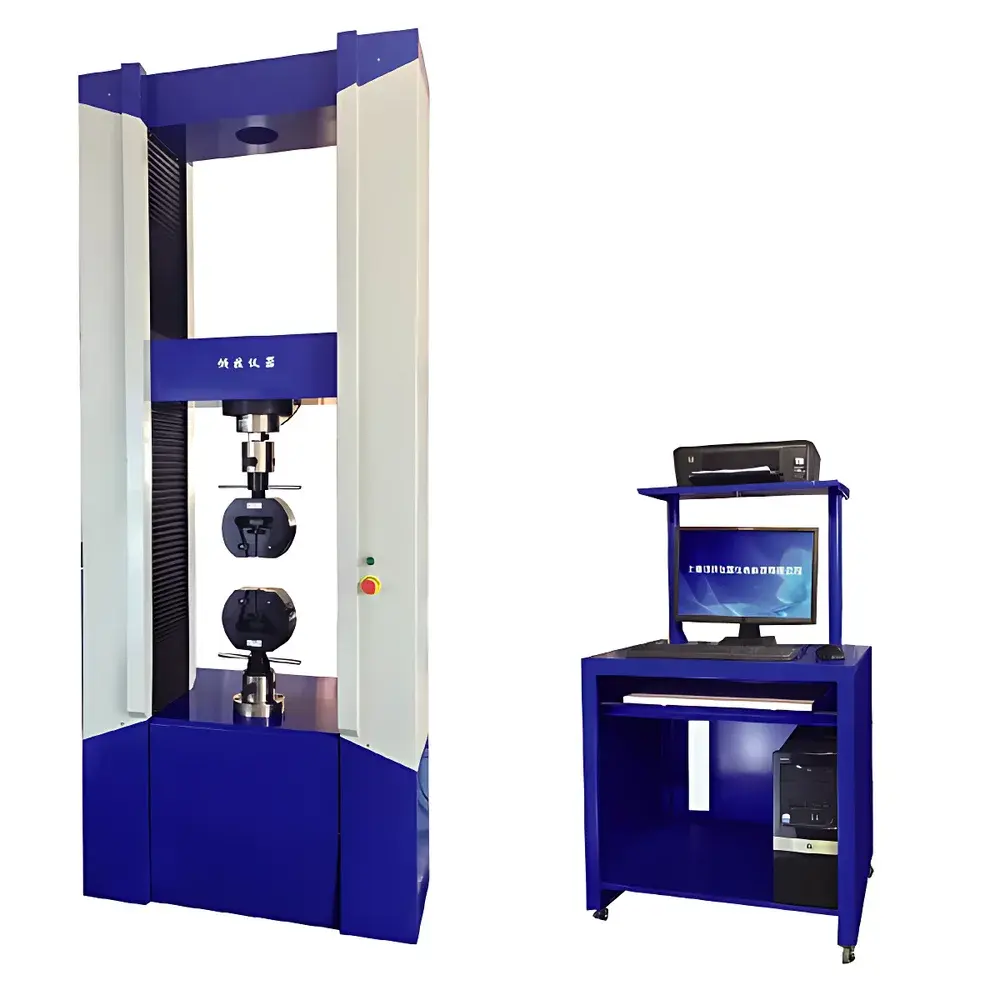
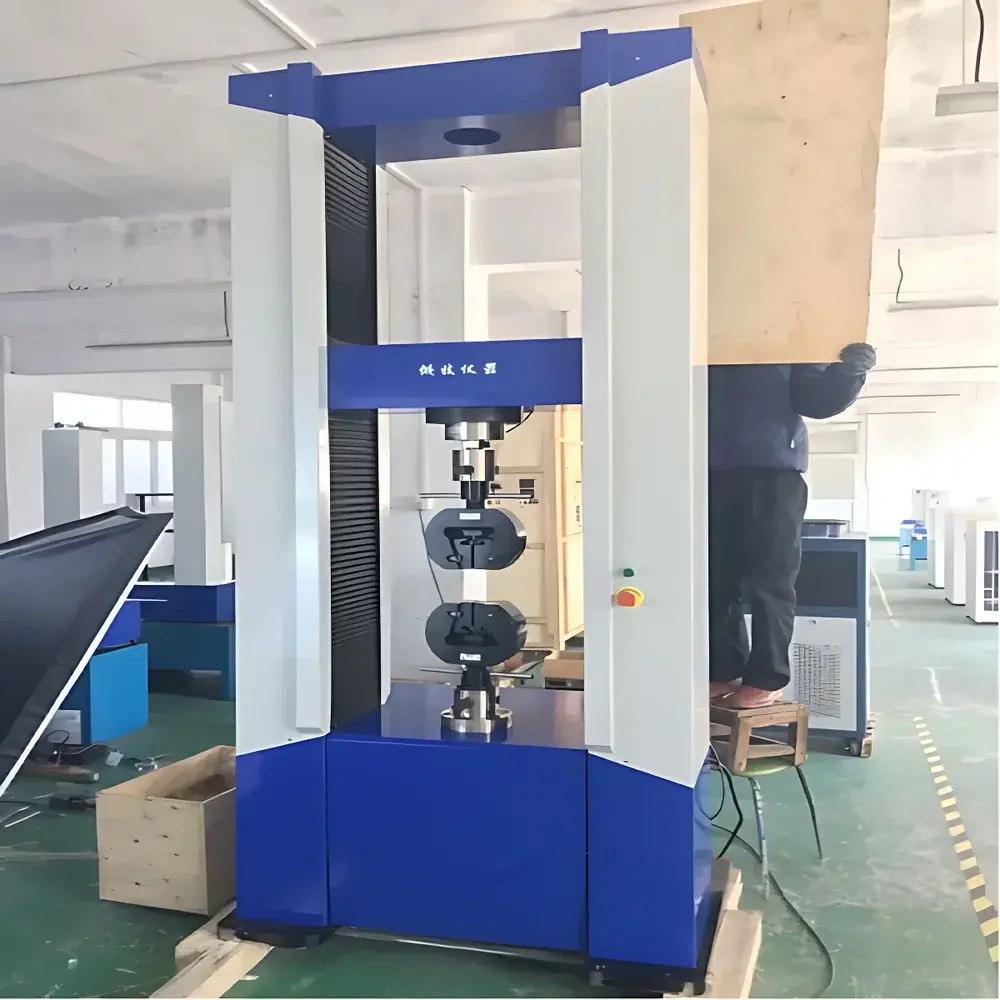
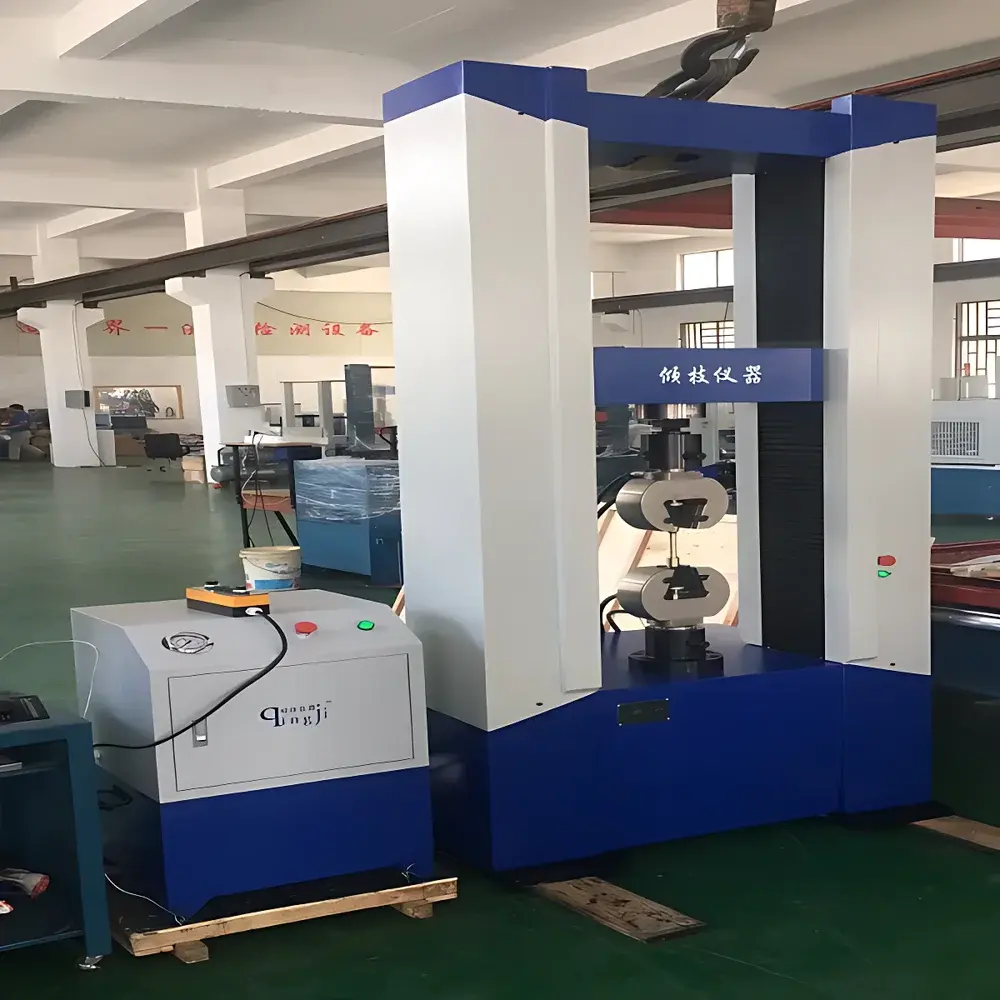
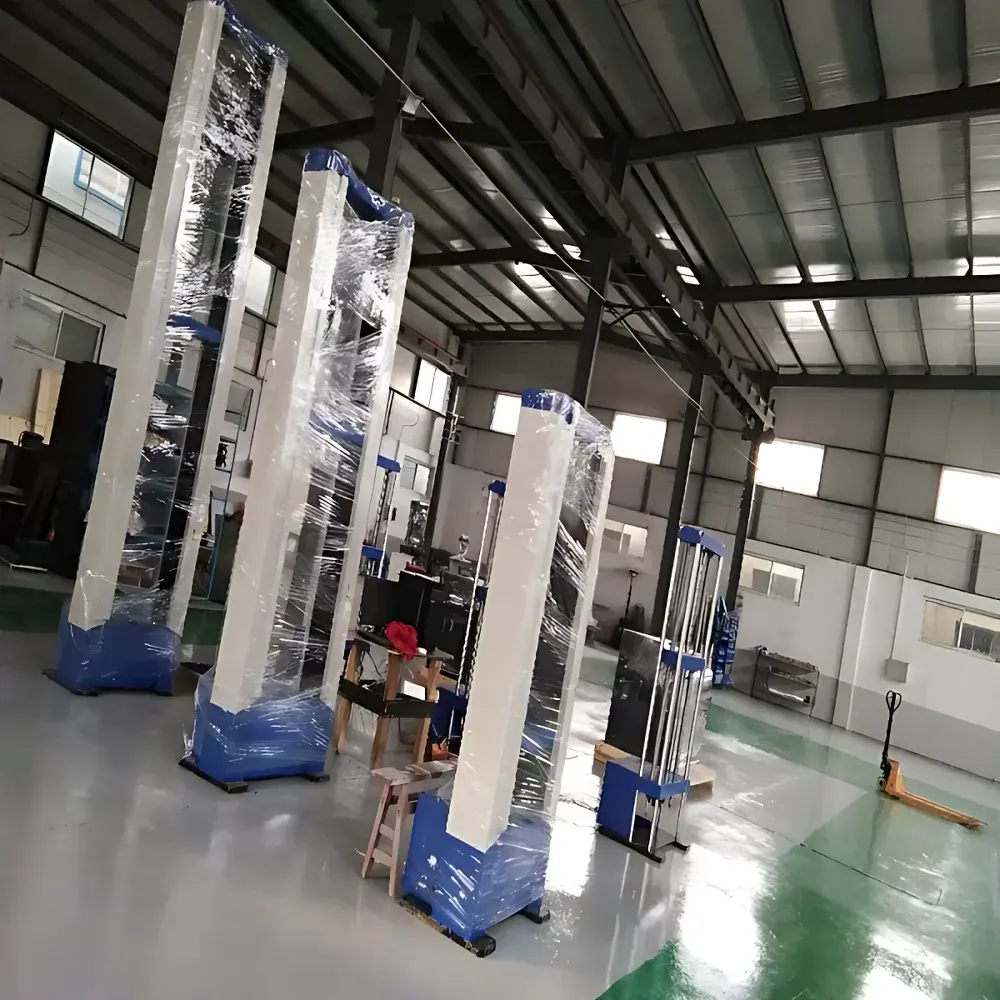
QJ-212C Tensile Testing Machine by Qingji
| Brand | Qingji |
|---|---|
| Origin | Shanghai, China |
| Model | QJ-212C |
| Type | Electromechanical Universal Testing Machine |
| Maximum Test Load | 500 kN |
| Force Measurement Range | 0.02–100% of Full Scale |
| Force Accuracy | ±0.5% of reading |
| Crosshead Travel | 800 mm |
| Displacement Resolution | ±0.5% of indicated value |
| Effective Test Width | 520 mm |
| Test Speed Range | 0.01–1000 mm/min (standard: 300 mm/min) |
| Speed Accuracy | ±0.5% of set value |
| Strain Measurement Accuracy | ±0.5% of reading |
| Load Cell | High-precision U.S.-sourced sensor |
| Controller | Panasonic full-digital AC servo drive |
| Control System | Full-digital closed-loop control supporting constant stress, constant strain, and constant displacement modes |
| Safety Protection | Software-based diagnostics, electronic limit switches, overload protection at 110% of rated load |
| Power Requirement | 2–5 kW |
| Dimensions (W×D×H) | 1000 × 680 × 2450 mm |
| Weight | ~1450 kg |
Overview
The QJ-212C Tensile Testing Machine by Qingji is an electromechanical universal testing system engineered for high-reliability mechanical property characterization of metallic, polymeric, composite, and textile materials. Based on the principle of controlled uniaxial force application and real-time displacement feedback, it complies with standardized test methodologies defined in ASTM E4, ASTM E8/E8M, ISO 6892-1, ISO 7500-1, and GB/T 228.1. The machine delivers precise, repeatable measurements of tensile strength, yield strength, elongation at break, modulus of elasticity, compressive strength, flexural properties, and shear resistance—enabling full compliance with quality assurance protocols across R&D, production QC, and third-party certification laboratories.
Key Features
- Robust dual-column steel frame architecture with reinforced crosshead guidance, ensuring minimal deflection under maximum 500 kN load conditions.
- High-resolution force measurement via calibrated U.S.-sourced load cells, offering 500,000-count internal resolution and consistent accuracy across the entire 0.02–100% FS range—no range switching required.
- Panasonic full-digital AC servo motor and controller provide stable, low-noise actuation with speed control from 0.01 to 1000 mm/min; standard testing speed is 300 mm/min, adjustable per test standard requirements.
- Integrated closed-loop control firmware supports programmable multi-step test profiles—including ramp-to-load, hold-at-strain, and displacement-controlled fracture initiation—with real-time PID parameter tuning.
- Dual-mode positioning: rapid coarse movement (for setup) and fine incremental adjustment (for specimen alignment), both accessible via front-panel controls or software interface.
- Comprehensive hardware safety layer: electronic travel limits, software-driven emergency stop logic, automatic overload cutoff at 110% of nominal capacity, and mechanical crash-stop buffers.
Sample Compatibility & Compliance
The QJ-212C accommodates a broad spectrum of specimen geometries through customizable fixture interfaces—including wedge-action grips for metals, pneumatic clamps for elastomers, bend fixtures for ASTM D790, compression platens per ISO 604, and shear adapters compliant with ASTM D732. Its 520 mm effective test width and 800 mm vertical stroke support specimens up to 750 mm in length and 50 mm in thickness. All calibration and verification procedures align with ISO/IEC 17025 requirements for accredited testing laboratories. Force and displacement verifications are traceable to NIST-equivalent national metrology institutes via factory-certified calibration reports.
Software & Data Management
The system operates with a Windows-based, CE-compliant test management platform supporting GLP/GMP audit trails, user role-based access control, and 21 CFR Part 11–compliant electronic signatures (optional configuration). Raw data streams—including time-stamped force, displacement, and strain—are captured at ≥1 kHz sampling rate and stored in ASCII CSV and proprietary binary formats. Export modules enable direct integration with LIMS environments and statistical analysis tools (e.g., Minitab, JMP). Calibration history, maintenance logs, and test method templates are version-controlled and exportable for regulatory submissions.
Applications
- Materials development labs evaluating polymer melt strength, fiber tenacity, and composite interlaminar shear.
- Automotive Tier-1 suppliers validating brake hose burst pressure, seat belt webbing elongation, and gasket compression set.
- Aerospace component manufacturers verifying titanium alloy fastener tensile ductility per AMS 2300.
- Building materials testing centers conducting rebar yield testing (ASTM A615), concrete prism compression (ASTM C39), and geotextile grab strength (ASTM D4632).
- Medical device QA departments assessing suture tensile integrity (ISO 10555-1) and catheter shaft buckling resistance.
- Academic research groups performing cyclic loading experiments, creep analysis, and stress-relaxation profiling under ambient or environmental chamber coupling.
FAQ
What standards does the QJ-212C support out-of-the-box?
It includes preloaded test methods aligned with ASTM E8, ISO 6892-1, GB/T 228.1, and ISO 7500-1; additional standards can be imported as custom templates.
Is the system compatible with environmental chambers?
Yes—the machine features standardized mounting flanges and signal breakout ports for seamless integration with temperature/humidity chambers (−70°C to +300°C) and vacuum enclosures.
Can test data be exported to ERP or MES platforms?
Yes—via OPC UA or REST API (optional license), enabling bidirectional synchronization with SAP QM, Oracle Quality, or custom manufacturing execution systems.
What is included in the factory calibration certificate?
A traceable report covering force verification at 20%, 40%, 60%, 80%, and 100% of full scale, displacement linearity check over full stroke, and speed accuracy validation at three setpoints.
Does the system support multi-specimen batch testing?
Yes—through automated sequence scripting, allowing unattended execution of up to 99 specimens with auto-grip repositioning and pass/fail decision logic based on configurable acceptance criteria.



