
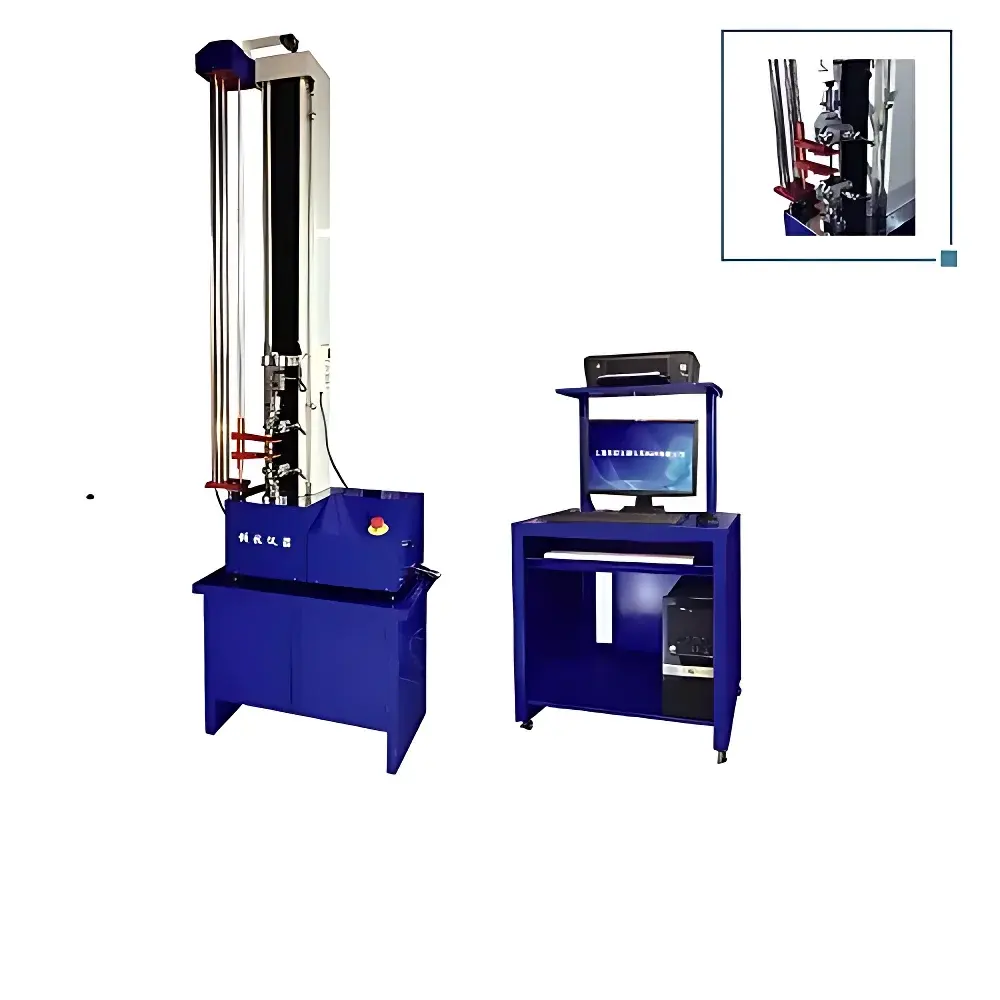
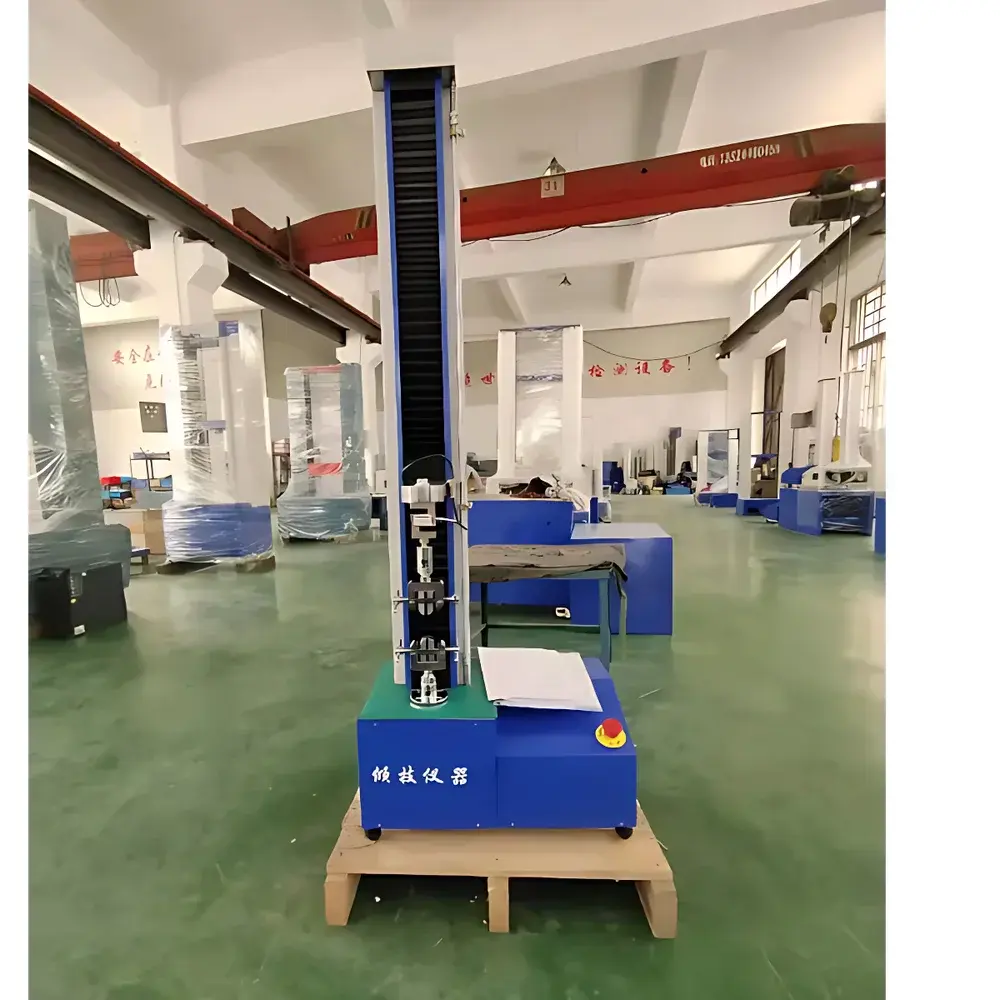
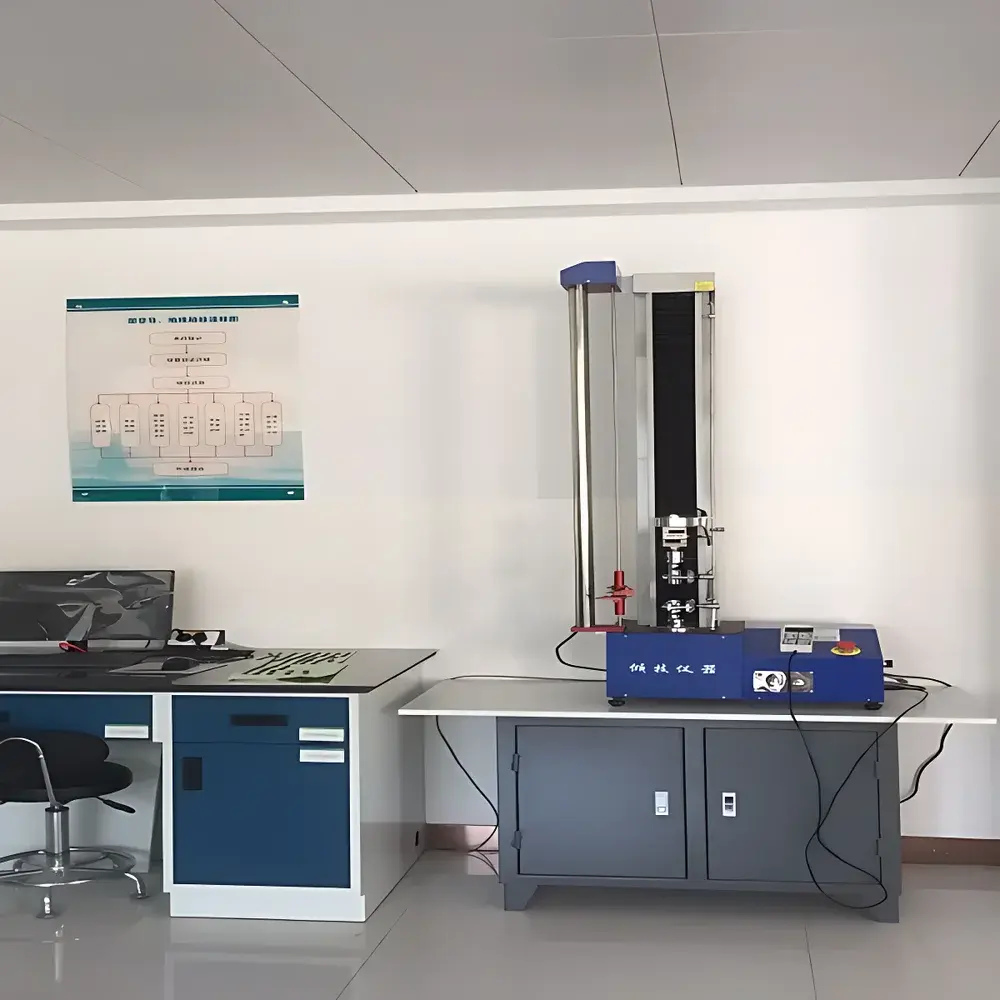
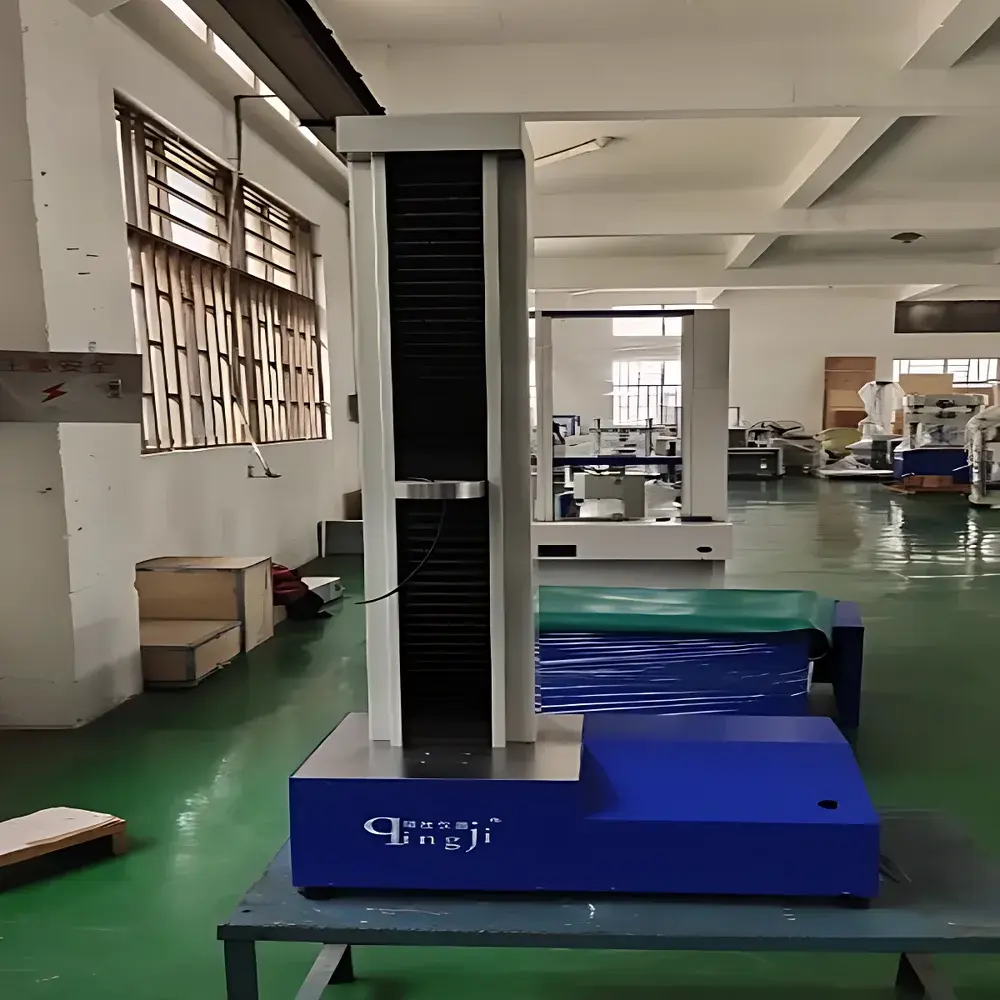
QJ210A Rubber Tensile Strength Testing Machine by Qingji
| Brand | Qingji |
|---|---|
| Model | QJ-210A |
| Type | Electromechanical Universal Tensile Tester |
| Max Load Capacity | 5 kN |
| Load Range | 0–5 kN (Full-Scale) |
| Load Accuracy | ±0.5% FS |
| Stroke | 800 mm |
| Displacement Resolution | ±0.5% FS |
| Test Speed Range | 0.001–500 mm/min |
| Speed Accuracy | ±0.5% |
| Effective Width | 150 mm |
| Safety Features | Electronic Limit Switches, Emergency Stop Button |
| Weight | ~45 kg |
| Origin | Shanghai, China |
Overview
The QJ210A Rubber Tensile Strength Testing Machine is an electromechanical universal testing system engineered for precision mechanical property evaluation of elastomeric and polymeric materials under controlled uniaxial loading conditions. Based on servo-controlled linear actuation and high-stability load cell measurement, the instrument complies with fundamental principles defined in ASTM D412, ISO 37, and GB/T 528—standards governing tensile testing of vulcanized rubber and thermoplastic elastomers. Designed specifically for laboratory-based quality control and R&D environments, the QJ210A delivers repeatable force-displacement data acquisition across tension, compression, bending, peel, and puncture configurations—all within a single compact platform. Its modular architecture supports standardized specimen gripping (e.g., pneumatic or wedge-type grips), while the integrated digital control interface enables real-time visualization of load, displacement, and strain curves without external software dependency.
Key Features
- Servo-motor-driven crosshead with closed-loop position and speed control, supporting test speeds from 0.001 to 500 mm/min with ±0.5% speed accuracy
- High-linearity 5 kN load cell calibrated to ±0.5% full-scale accuracy, traceable to national metrological standards
- 800 mm effective stroke with adjustable height option for extended elongation testing of low-modulus elastomers
- 150 mm effective test width accommodating standard dumbbell-shaped (Type I/II per ISO 37) and ring specimens
- Dual-mode operation: standalone LCD control panel with real-time graphical display of force–displacement curves, or PC-integrated mode via RS232/USB for advanced data logging and report generation
- Comprehensive safety architecture including programmable electronic limit switches, hardware-based emergency stop circuitry, and overload protection logic
- Structural frame fabricated from reinforced aluminum extrusions with electrostatic powder coating—optimized for rigidity, corrosion resistance, and long-term dimensional stability
Sample Compatibility & Compliance
The QJ210A is validated for use with vulcanized natural rubber (NR), styrene-butadiene rubber (SBR), ethylene propylene diene monomer (EPDM), silicone rubber, thermoplastic elastomers (TPEs), and composite rubber sheets. Specimen geometries conforming to ISO 37 (dumbbell, ring, and strip types), ASTM D412 (die-cut Type C and Type D), and GB/T 528 are fully supported. The system meets essential requirements for GLP-compliant laboratories: audit-trail-capable data export, user-access-level configuration locking, and timestamped test records. While not pre-certified for FDA 21 CFR Part 11, its data output format (CSV, PDF, XML) permits integration into validated LIMS or ELN platforms where electronic signatures and change control protocols are externally managed.
Software & Data Management
When operated in PC-connected mode, the QJ210A interfaces with Qingji’s proprietary Windows-based testing software (v3.2+), supporting multi-channel synchronized acquisition of load, displacement, and optional extensometer-derived strain signals. Software features include automatic yield point detection (0.2% offset method), modulus calculation (secant, tangent, chord), elongation-at-break reporting, and customizable pass/fail thresholds against specification limits. All raw data files retain embedded metadata (operator ID, calibration date, environmental temperature/humidity if logged externally), and reports comply with ISO/IEC 17025 documentation requirements—including uncertainty statements derived from system accuracy specifications. Export formats include ISO-standardized PDF test certificates and machine-readable CSV for statistical process control (SPC) analysis.
Applications
- Quality assurance of incoming raw rubber compounds and finished rubber products (e.g., seals, gaskets, hoses, conveyor belts)
- Formulation development for cure optimization—correlating tensile strength, elongation, and modulus with vulcanization time/temperature profiles
- Comparative aging studies: evaluating mechanical degradation after heat aging (ASTM D573), ozone exposure (ASTM D1149), or UV irradiation
- Adhesion strength assessment of rubber-to-metal or rubber-to-fabric bonded assemblies using peel or shear fixtures
- Educational use in polymer science and materials engineering labs for hands-on instruction in stress–strain behavior and constitutive modeling fundamentals
FAQ
Is the QJ210A compliant with international tensile testing standards such as ASTM D412 or ISO 37?
Yes—the mechanical design, load cell linearity, and displacement resolution meet the minimum hardware requirements specified in ASTM D412 Type C/D and ISO 37 for rubber tensile testing. Calibration certificates and validation protocols are provided upon request.
Can the system be upgraded to support video extensometry or environmental chambers?
The QJ210A features auxiliary I/O ports and a standardized communication protocol (Modbus RTU over RS485), enabling third-party integration with digital video extensometers and chamber controllers. Custom mounting brackets and signal conditioning modules are available as optional accessories.
What maintenance is required to sustain measurement accuracy over time?
Annual recalibration of the load cell and displacement encoder is recommended. Routine checks include grip jaw alignment verification, lubrication of lead screws (every 6 months), and validation of emergency stop functionality prior to each shift.
Does the software support automated batch testing and statistical reporting?
Yes—batch test templates allow sequential execution of up to 99 specimens with identical parameters; post-test summary statistics (mean, SD, CV%, min/max) are auto-generated and exportable to Excel-compatible formats.
Is technical support available outside mainland China?
Qingji provides remote diagnostics and English-language documentation. Local service partners are appointed in Southeast Asia, the Middle East, and Latin America; EU-based users may access CE-marking compliance documentation and RoHS certification upon order confirmation.



