
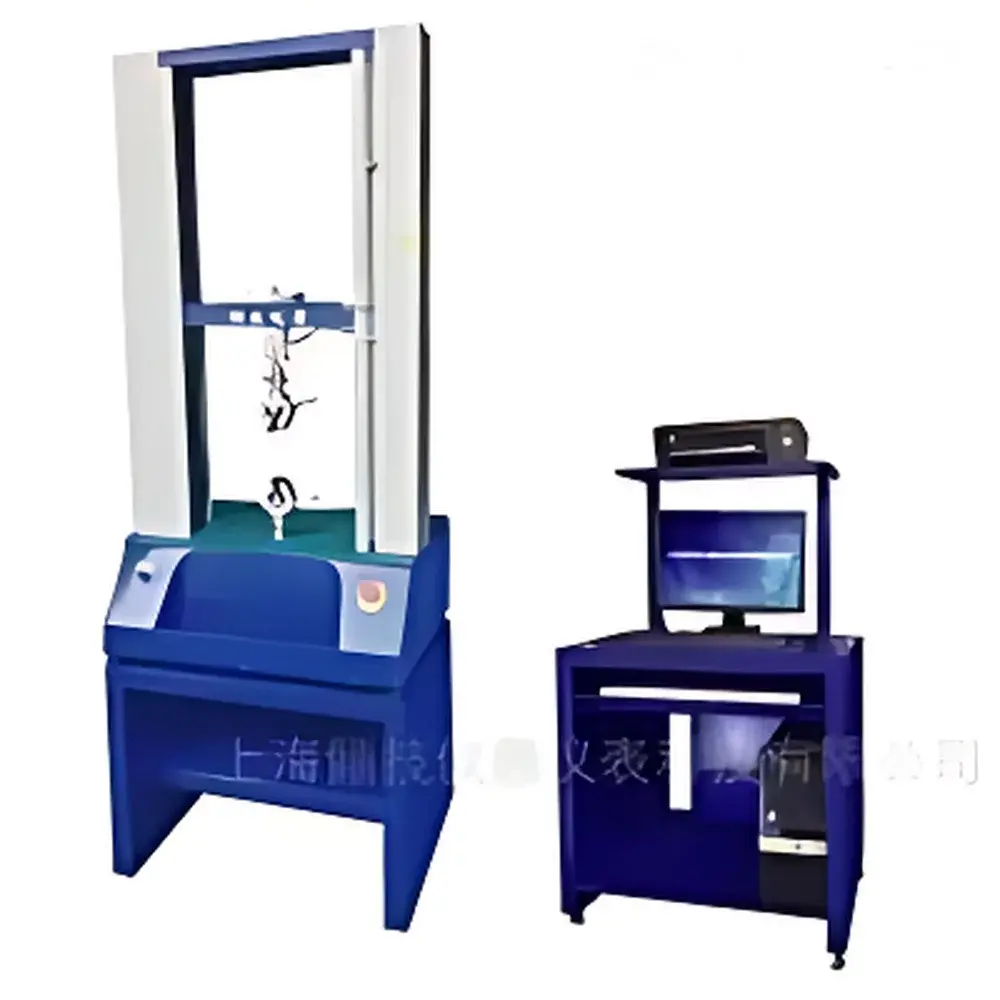
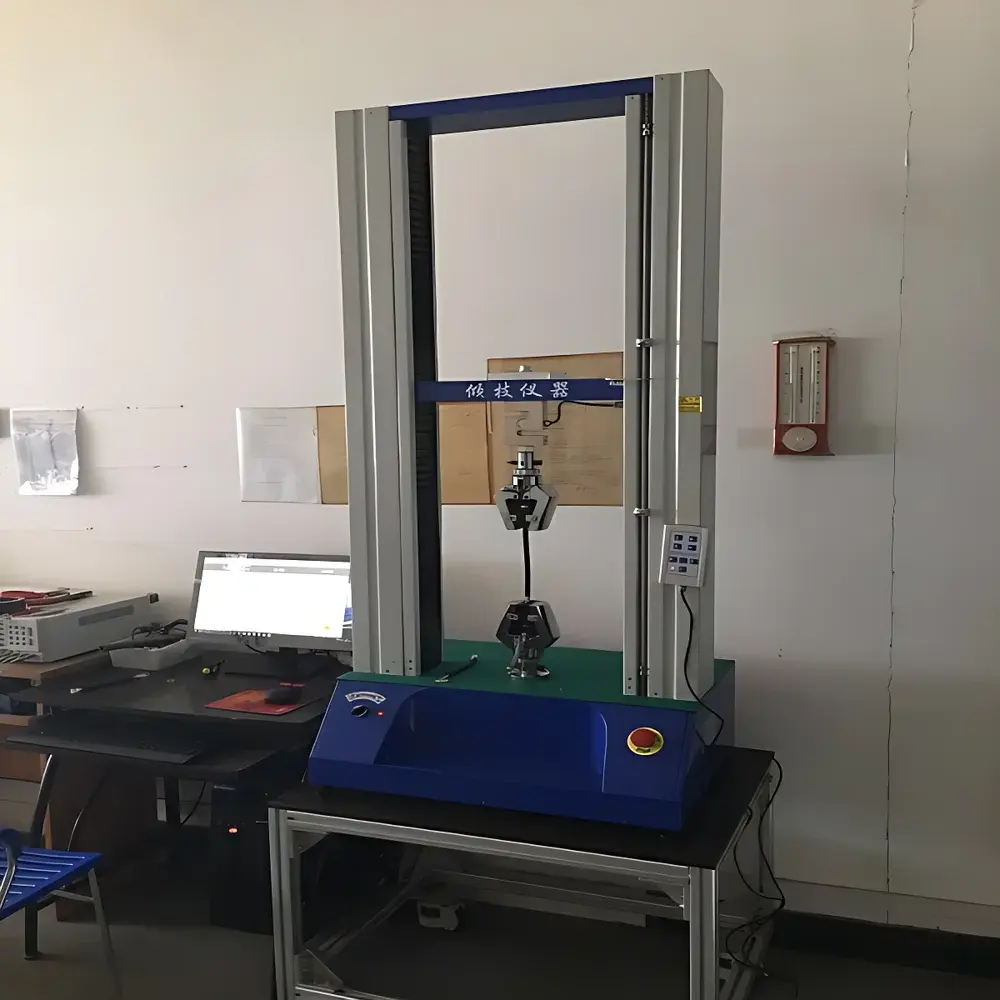
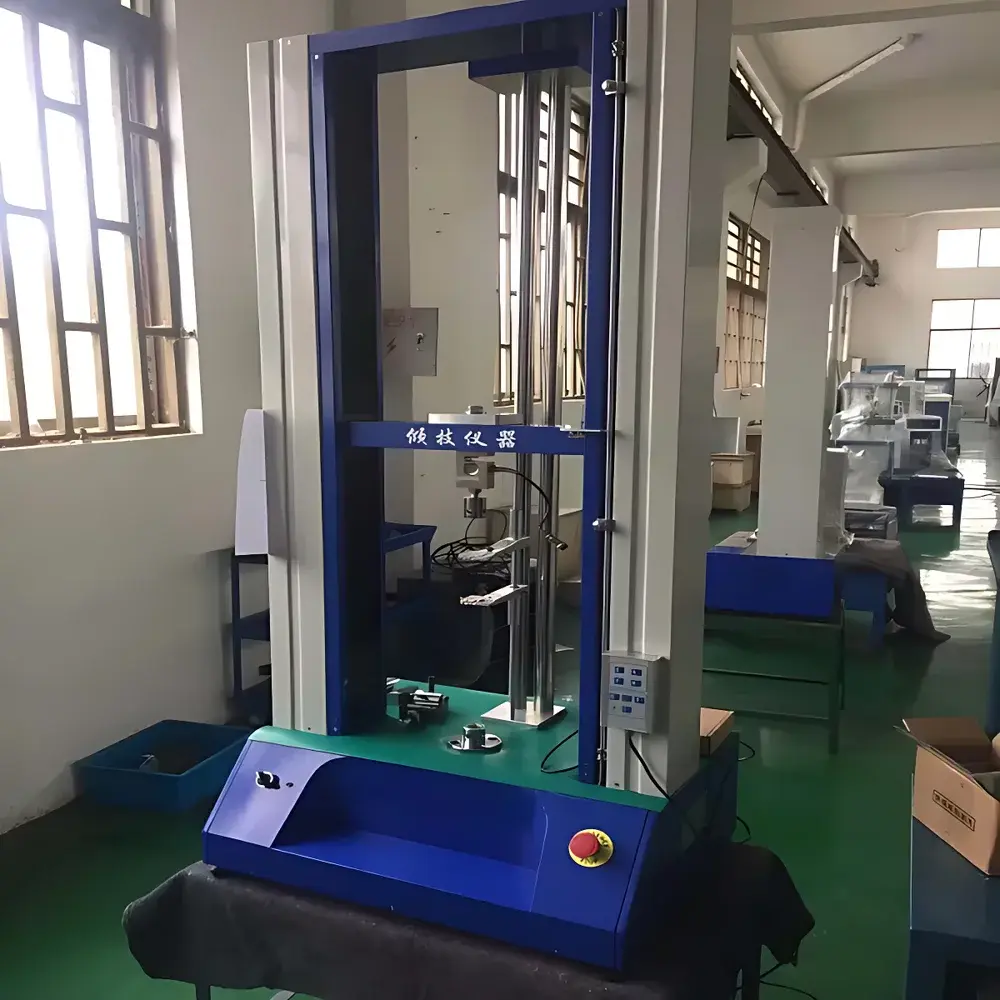
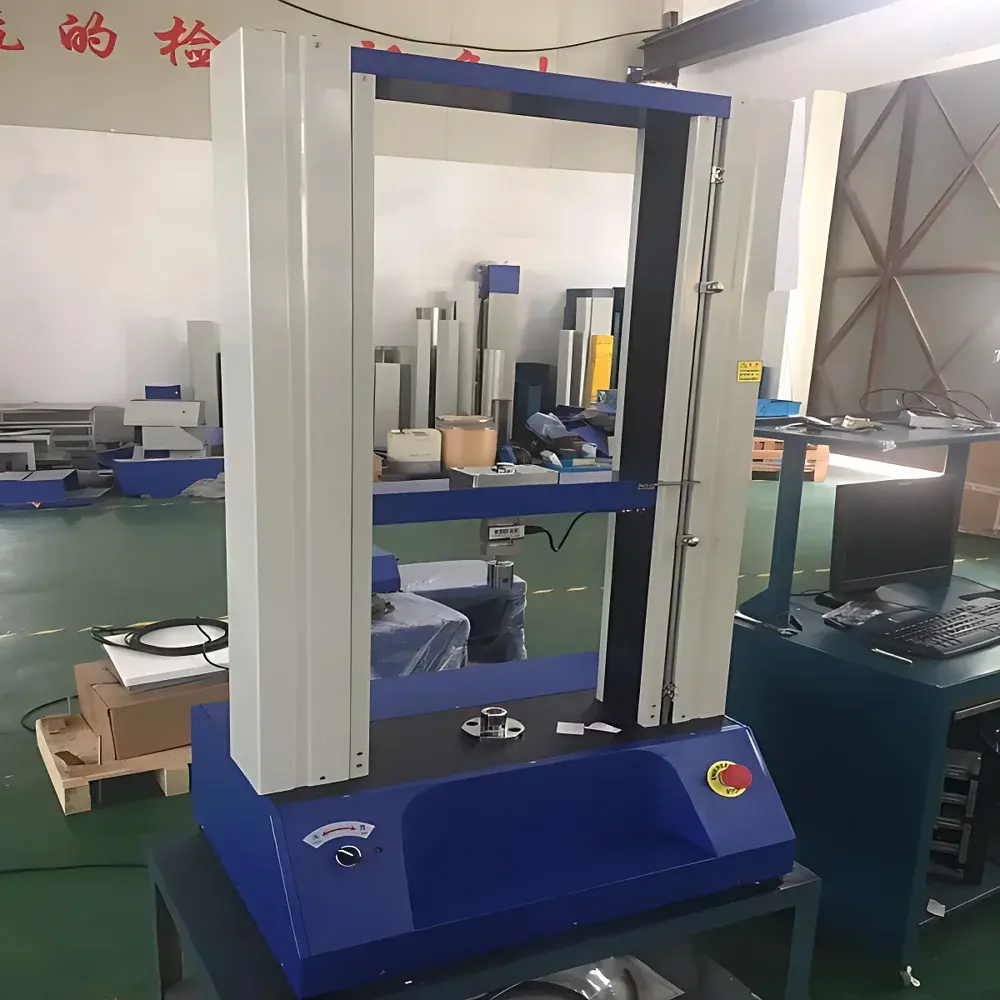
QJ211S2 Universal Testing Machine (UTM) by Qingji
| Brand | Qingji |
|---|---|
| Model | QJ-211S2 |
| Type | Electromechanical Universal Testing Machine |
| Load Capacity | 0.01 N to 30 kN |
| Load Accuracy | ±0.5% of reading |
| Effective Test Width | 420 mm |
| Effective Test Height (excluding fixtures) | 800 mm |
| Crosshead Speed Range | 0.001–500 mm/min |
| Speed Accuracy | ±0.5% of set value |
| Displacement Measurement Accuracy | ±0.5% of reading |
| Strain/Deformation Measurement Accuracy | ±0.5% of reading |
| Resolution | 300,000 counts full-scale, no internal range switching |
| Power | 750 W |
| Dimensions (W×D×H) | 700 × 420 × 1600 mm |
| Weight | 145 kg |
| Compliance | Meets ISO 7500-1 Class 0.5, ASTM E4, ASTM E8/E21, GB/T 228.1–2021 |
Overview
The QJ211S2 Universal Testing Machine (UTM) by Qingji is an electromechanical static testing system engineered for high-reproducibility tensile, compression, bending, shear, and fatigue characterization of metallic materials and structural components. Based on servo-controlled closed-loop force and displacement actuation, the system applies controlled quasi-static loads while synchronously acquiring load, displacement, and strain data in real time. Its architecture conforms to fundamental principles of mechanical metrology defined in ISO 7500-1 (Class 0.5 accuracy), ensuring traceable force measurement across its full 0.01 N–30 kN range. Designed for laboratory-based quality control, R&D validation, and standards-compliant mechanical property evaluation—including ultimate tensile strength (UTS), yield strength (Rp0.2), elongation at break, modulus of elasticity, and proof stress—the QJ211S2 delivers consistent performance under GLP-aligned operational protocols.
Key Features
- High-resolution force transduction with 300,000-count A/D resolution and no internal range switching—maintaining constant sensitivity from 0.01 N up to full 30 kN capacity
- Precision crosshead motion control via AC servo motor (750 W), enabling programmable speed profiles from 0.001 mm/min (creep-sensitive testing) to 500 mm/min (high-speed rupture assessment)
- Dual-mode positioning: manual jog control for fixture alignment and automated return-to-start function post-test
- Integrated electronic limit protection and overload safety cutoff (triggered at 110% of full-scale load) to prevent mechanical damage during operator error or specimen failure
- Robust dual-column steel frame (700 × 420 × 1600 mm; 145 kg) with 420 mm effective test width and 800 mm vertical clearance—accommodating standard ASTM/ISO tensile specimens and custom geometries
- Real-time Windows-based software interface with dynamic curve rendering, multi-curve overlay, zoom/pan navigation, and export-ready data formatting (CSV, XLS, PDF)
Sample Compatibility & Compliance
The QJ211S2 supports standardized metallic test specimens per ASTM E8/E21 (tension), ASTM E9 (compression), ASTM E292 (fracture toughness pre-cracking), and GB/T 228.1–2021 (Chinese national standard for metallic tensile testing). Its modular grip system accepts wedge-action, pneumatic, and hydraulic fixtures—custom designs available upon request for non-standard geometries (e.g., wire, sheet, weldment, or miniature coupons). All force and displacement measurements comply with ISO 7500-1:2018 Class 0.5 verification requirements, and the system is suitable for environments requiring documented calibration traceability to national metrology institutes. While not inherently 21 CFR Part 11 compliant, audit trails, user access logs, and electronic signature capability can be implemented via optional software modules aligned with GMP/GLP documentation workflows.
Software & Data Management
Bundled Windows-native control and analysis software provides synchronized acquisition of load, displacement, and extensometer-derived strain channels at configurable sampling rates. The platform enables real-time curve annotation, post-test data point editing (addition/deletion), and comparative analysis across multiple test runs. Export functions support CSV (for third-party statistical packages), Excel-compatible reports (with embedded graphs), and print-ready PDFs containing test parameters, raw data tables, and stress–strain plots annotated with UTS, yield point, Young’s modulus, and % elongation. Calibration coefficients are digitally stored and password-protected; firmware updates maintain backward compatibility with legacy test method templates.
Applications
- Tensile property determination of aluminum alloys, stainless steels, titanium grades, and high-strength low-alloy (HSLA) steels per ASTM E8 and ISO 6892-1
- Compression testing of cast iron, sintered metals, and metal matrix composites
- Three- and four-point bending evaluation of metallic beams and laminates
- Shear strength assessment of riveted, bolted, or brazed joints
- Low-cycle fatigue pre-screening using displacement- or load-controlled waveforms (sinusoidal, triangular)
- Quality assurance verification for incoming raw materials, in-process heat-treated lots, and final machined components
FAQ
What international standards does the QJ211S2 comply with for force measurement accuracy?
It meets ISO 7500-1:2018 Class 0.5 requirements for static force verification and is suitable for use in procedures referenced by ASTM E4 (load cells), ASTM E8 (tensile testing of metals), and GB/T 228.1–2021.
Can the system accommodate extensometers for true strain measurement?
Yes—both clip-on and non-contact video extensometers can be integrated via analog voltage input or digital encoder interface; strain measurement accuracy is specified at ±0.5% of reading when calibrated.
Is remote diagnostics or preventive maintenance support available?
Qingji provides lifetime technical consultation, annual calibration guidance, and hardware-level troubleshooting via secure remote desktop sessions—subject to customer network policy approval.
Does the machine include factory calibration documentation?
Each unit ships with a traceable calibration certificate covering load cell, displacement encoder, and speed verification against certified reference standards.
What is the warranty coverage and service response timeline?
Standard coverage includes 12 months parts-and-labor warranty; extended service plans and on-site engineer dispatch are available under separate agreement.
Related Products



