
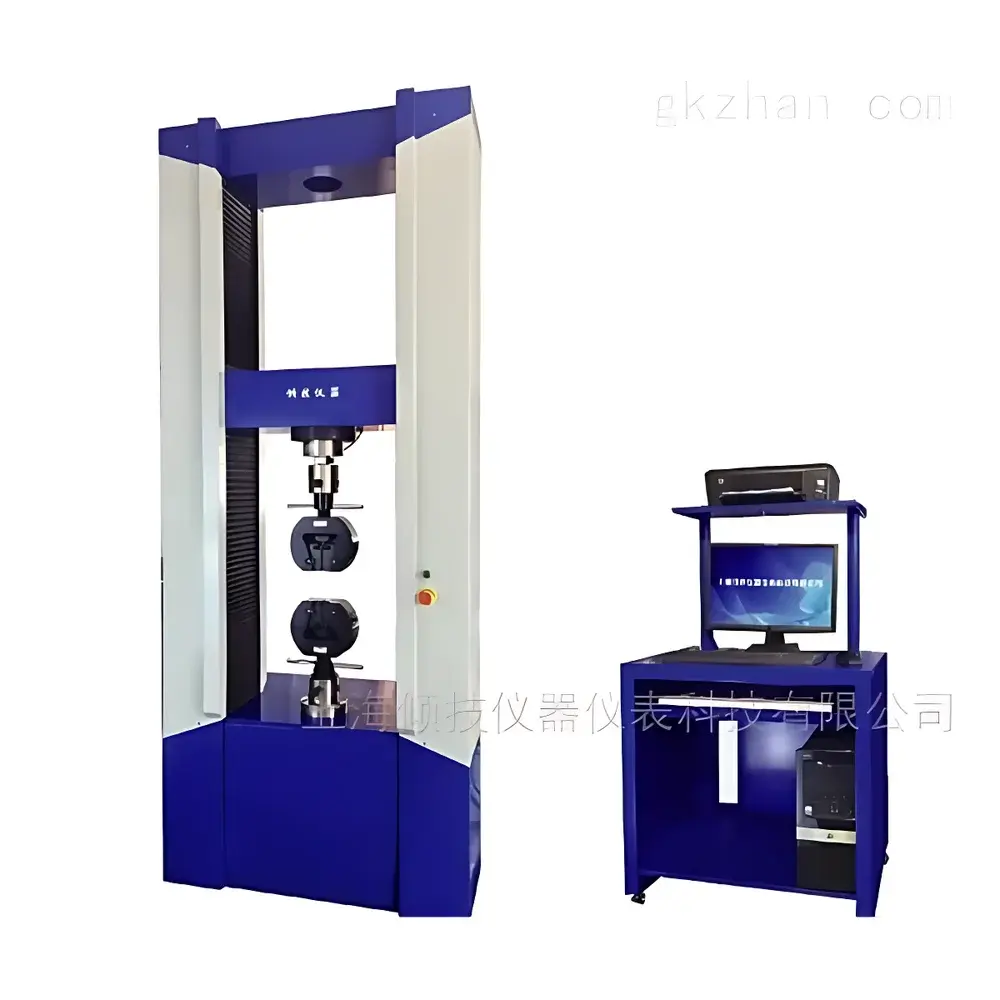
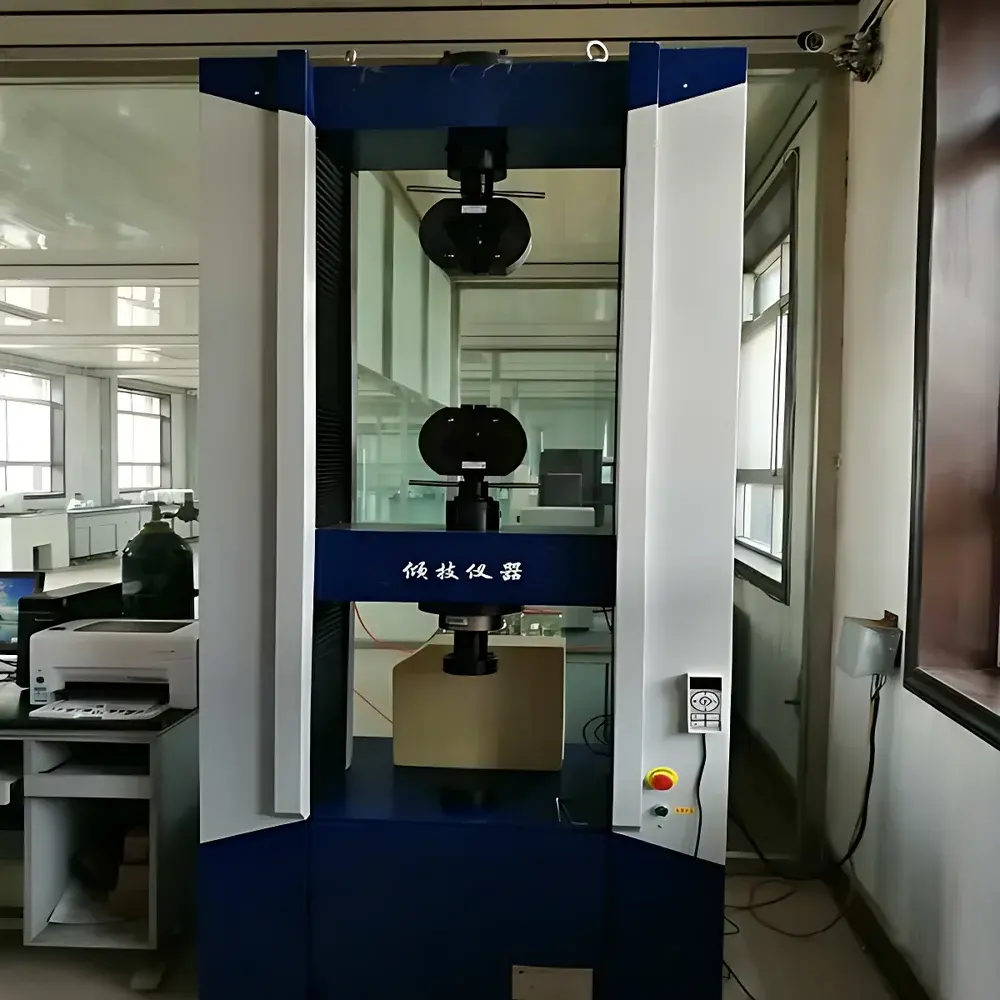
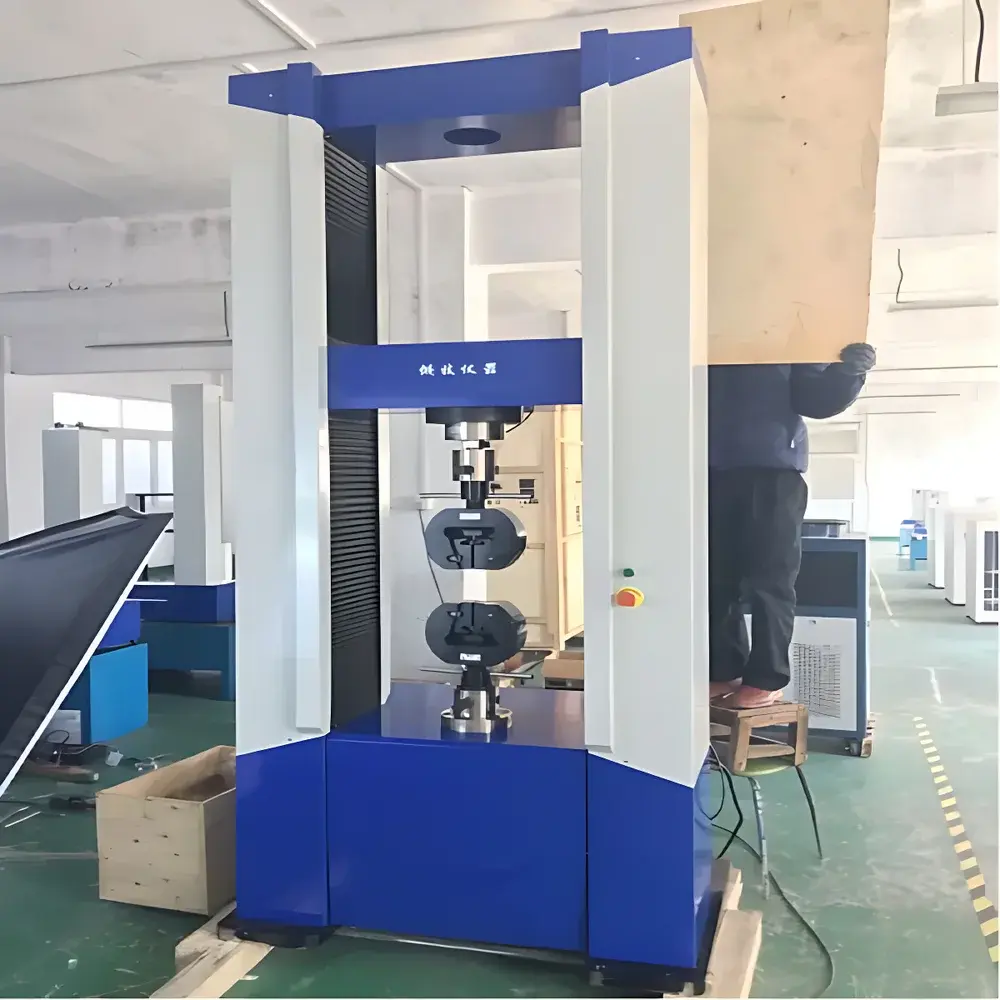
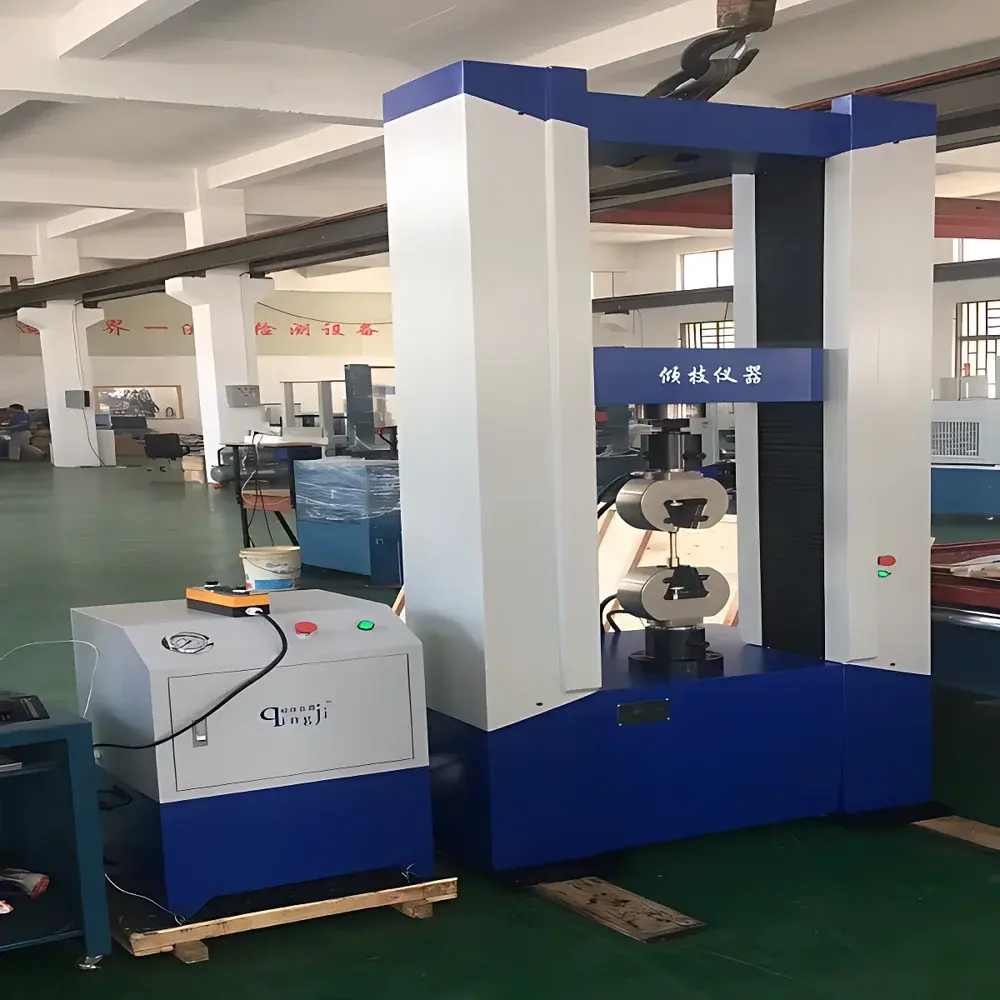
QJ212C QJTECH Electronic Tensile Testing Machine
| Brand | QJTECH |
|---|---|
| Origin | Shanghai, China |
| Model | QJ212C |
| Maximum Test Load | 500 kN |
| Load Range | 0–500 kN (full-scale) |
| Load Accuracy | ±0.5% of reading |
| Crosshead Travel | 800 mm |
| Effective Test Width | 500 mm |
| Stroke Resolution | ±1/250000 full scale (no range switching) |
| Test Speed Range | 0.001–1000 mm/min |
| Speed Accuracy | ±0.5% of set value |
| Displacement Measurement Accuracy | ±0.5% of reading |
| Strain/Deformation Accuracy | ±0.5% of reading |
| Safety Protection | Electronic limit switches, overload protection at 110% of rated load |
| Dimensions (W×D×H) | 1000 × 680 × 2450 mm |
| Weight | 1250 kg |
| Compliance | ISO 6892-1, ASTM E8/E21, JIS Z2241, DIN 50125 |
Overview
The QJ212C is a high-capacity, microprocessor-controlled electronic tensile testing machine engineered for precision mechanical property evaluation of metallic materials and structural components. Based on the principle of servo-controlled electromechanical actuation, it applies uniaxial static loads to specimens while synchronously measuring force, displacement, and optional strain via calibrated transducers and encoders. Designed for laboratory and industrial quality control environments, the system delivers repeatable, traceable data in accordance with internationally recognized metallurgical test standards—including ISO 6892-1 (tensile testing of metallic materials), ASTM E8/E21 (tension testing of metallic materials), JIS Z2241, and DIN 50125. Its rigid C-frame architecture, integrated safety interlocks, and dual-speed crosshead control support both high-force structural testing and fine-resolution low-speed characterization.
Key Features
- Full-scale load capacity of 500 kN with consistent resolution of ±1/250,000 across the entire range—eliminating range-switching artifacts and ensuring linearity from 0.01% to 100% FS.
- Adjustable crosshead speed from 0.001 to 1000 mm/min, calibrated to ±0.5% accuracy per ISO 2041 and ASTM E2309 requirements for rate-controlled testing.
- 800 mm vertical travel with dual-mode (fast/slow) motorized crosshead positioning and programmable return-to-start functionality post-test.
- Electronic limit protection and automatic overload shutdown at 110% of rated load, compliant with EN ISO 12100 machinery safety principles.
- 500 mm effective test width accommodates standard and non-standard metallic coupons, weldments, and rolled sections per ASTM E8 Annex A2.
- Robust cast-iron base and reinforced steel frame minimize deflection under peak load, maintaining geometric stability during high-force compression and bending tests.
- Windows-based control software with real-time dynamic curve plotting (force vs. displacement, stress vs. strain), multi-curve overlay, zoom, annotation, and export to CSV/PDF formats.
Sample Compatibility & Compliance
The QJ212C supports standardized tensile specimens (e.g., ASTM E8 Type I–IV, ISO 6892-1 P1–P6), flat sheet, round bar, wire, and pipe samples up to 50 mm in diameter or 20 mm thickness. Optional fixtures enable compression (flat platens), three-point bending (span adjustable 20–500 mm), shear (double-shear adapters), and ring stiffness (ASTM D2412) configurations. All hardware and software operations align with GLP documentation practices. Audit trails, user access levels, and electronic signature support are available to meet FDA 21 CFR Part 11 readiness when configured with validated software modules. Calibration certificates conform to ISO/IEC 17025 requirements and include as-found/as-left data traceable to NIM (National Institute of Metrology, China) standards.
Software & Data Management
The embedded Windows OS platform hosts a dedicated testing application that complies with ASTM E1318 and ISO 17025 data integrity guidelines. It provides real-time acquisition at ≥1 kHz sampling rate, automatic yield point detection (0.2% offset method), ultimate tensile strength (UTS), elongation at break, modulus of elasticity, and reduction of area calculations. Raw data files are stored with metadata (operator ID, timestamp, environmental conditions, calibration status). Export functions support seamless integration into LIMS environments via ODBC or direct CSV/XML output. Curve manipulation tools include baseline correction, tangent modulus derivation, and hysteresis loop analysis for cyclic preloading routines.
Applications
- Tensile property verification of hot-rolled and cold-drawn steels, aluminum alloys, titanium grades, and nickel-based superalloys per aerospace (AMS, AMS-QQ-A-250), automotive (SAE J429), and construction (EN 10025) specifications.
- Quality assurance of welded joints, including tensile strength assessment of groove welds and fillet weld rupture testing (AWS D1.1).
- Compression testing of cast iron, sintered metals, and powder metallurgy compacts per ASTM E9.
- Bending performance evaluation of structural beams, reinforcing bars (rebar), and rail profiles per ISO 7438 and ASTM A615.
- Ring stiffness determination for metallic conduit and armored cable sheathing per ASTM F894.
- Research-grade mechanical behavior studies involving strain-rate sensitivity, ductile-to-brittle transition, and post-yield plasticity modeling.
FAQ
What international standards does the QJ212C support out-of-the-box?
It natively implements test protocols and reporting templates for ISO 6892-1, ASTM E8/E21, JIS Z2241, and DIN 50125. Custom methods can be defined using the script editor for proprietary or industry-specific procedures.
Is the system suitable for accredited calibration laboratories?
Yes—when paired with certified reference load cells, displacement calibrators, and documented SOPs, the QJ212C meets ISO/IEC 17025 technical requirements for mechanical testing accreditation.
Can third-party extensometers be integrated?
The system features analog and digital input ports compatible with ASTM E83-compliant clip-on and video extensometers (e.g., MTS 634, Zwick Roell XLC series) for high-accuracy strain measurement.
What maintenance intervals are recommended?
Preventive maintenance is advised every 12 months or after 2,000 test cycles, including lubrication of lead screws, verification of encoder alignment, and verification of load cell linearity per ISO 376 Annex B.
Does the software support multi-user role-based access control?
Yes—administrator, operator, and reviewer roles enforce separation of duties, with password-protected method editing, result approval workflows, and immutable audit logs compliant with FDA 21 CFR Part 11 Subpart B.



