
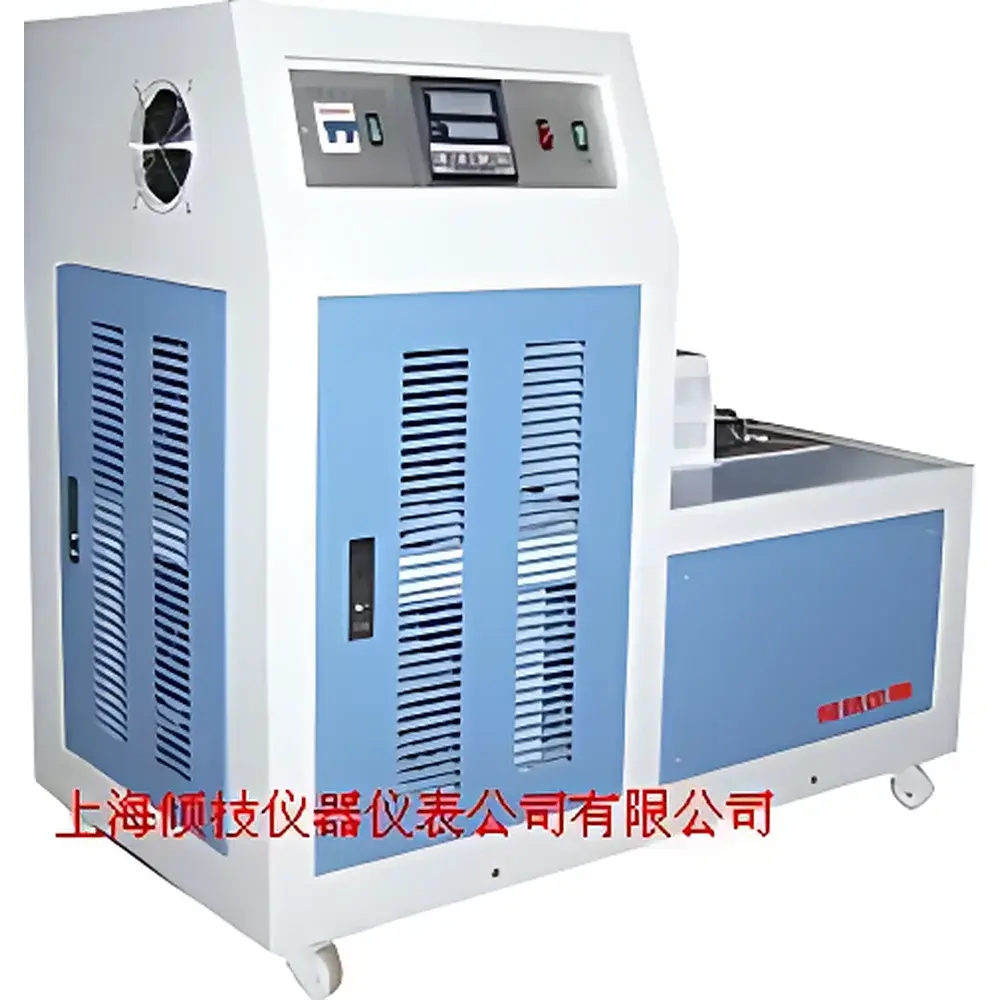
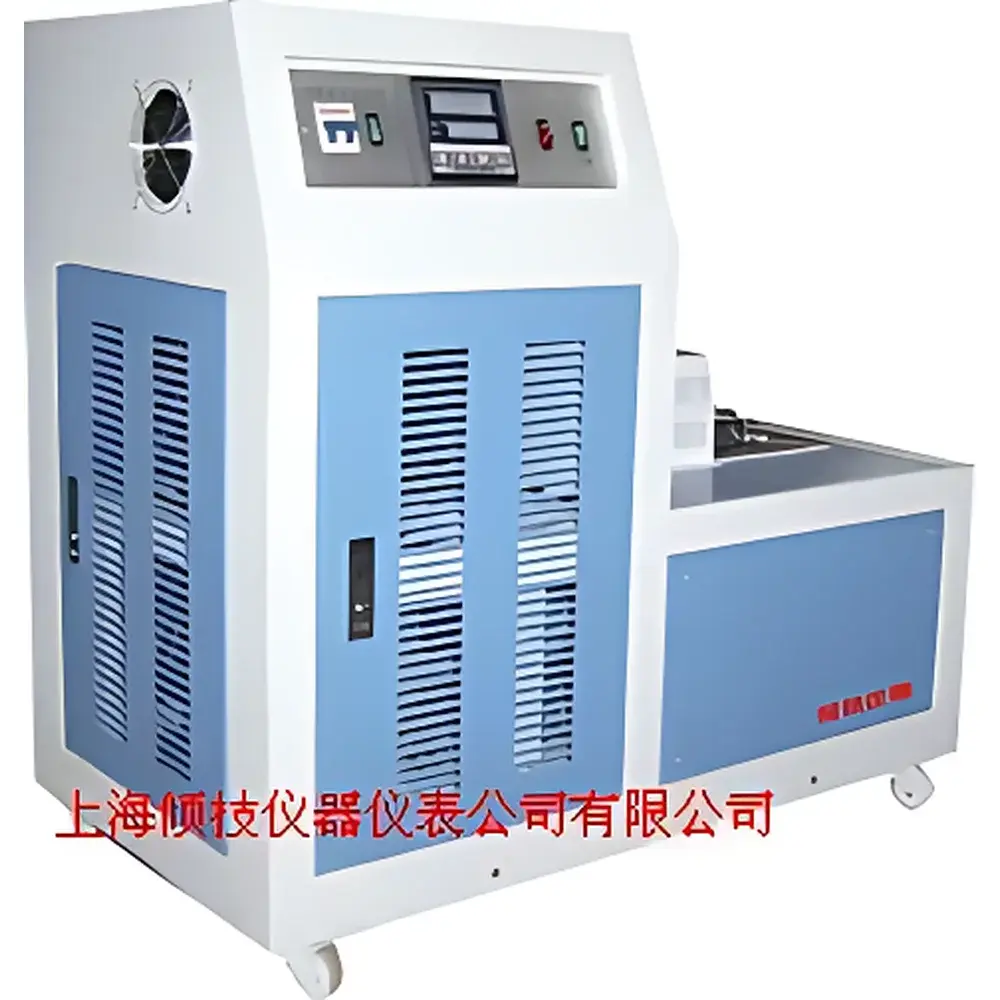
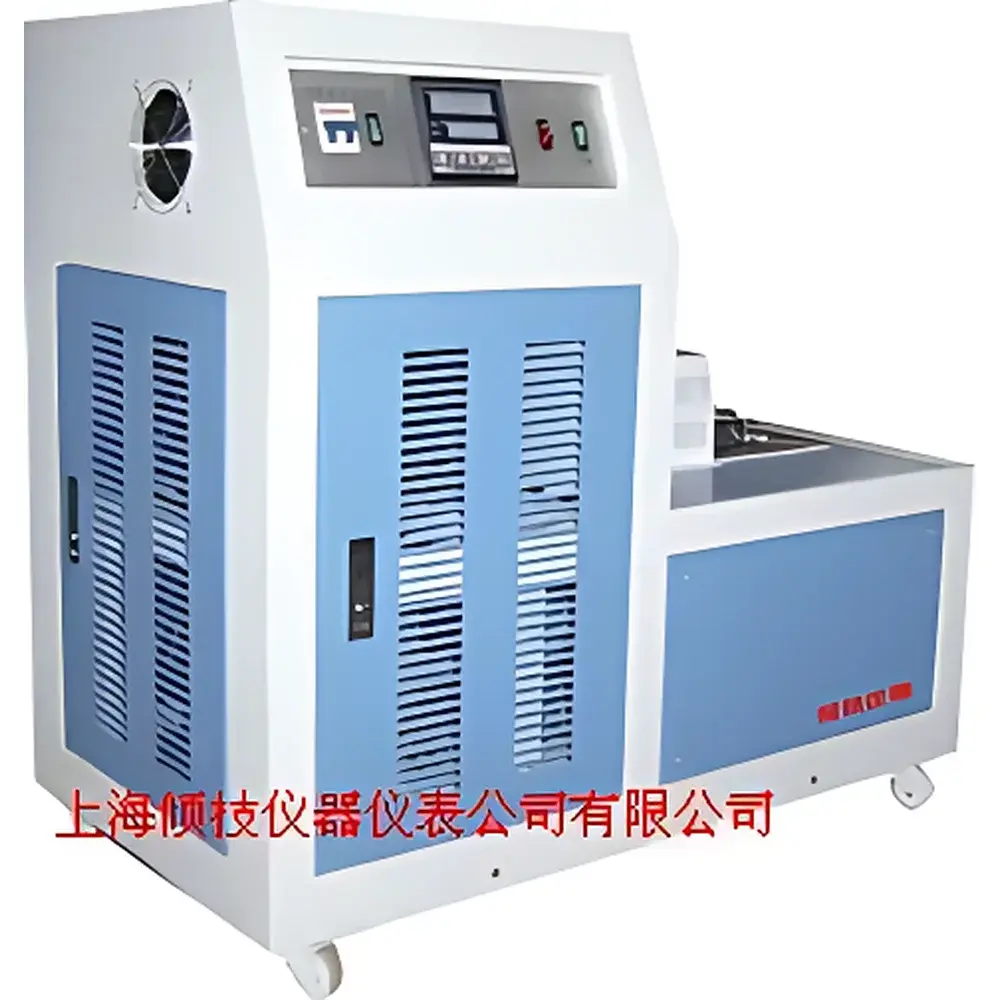
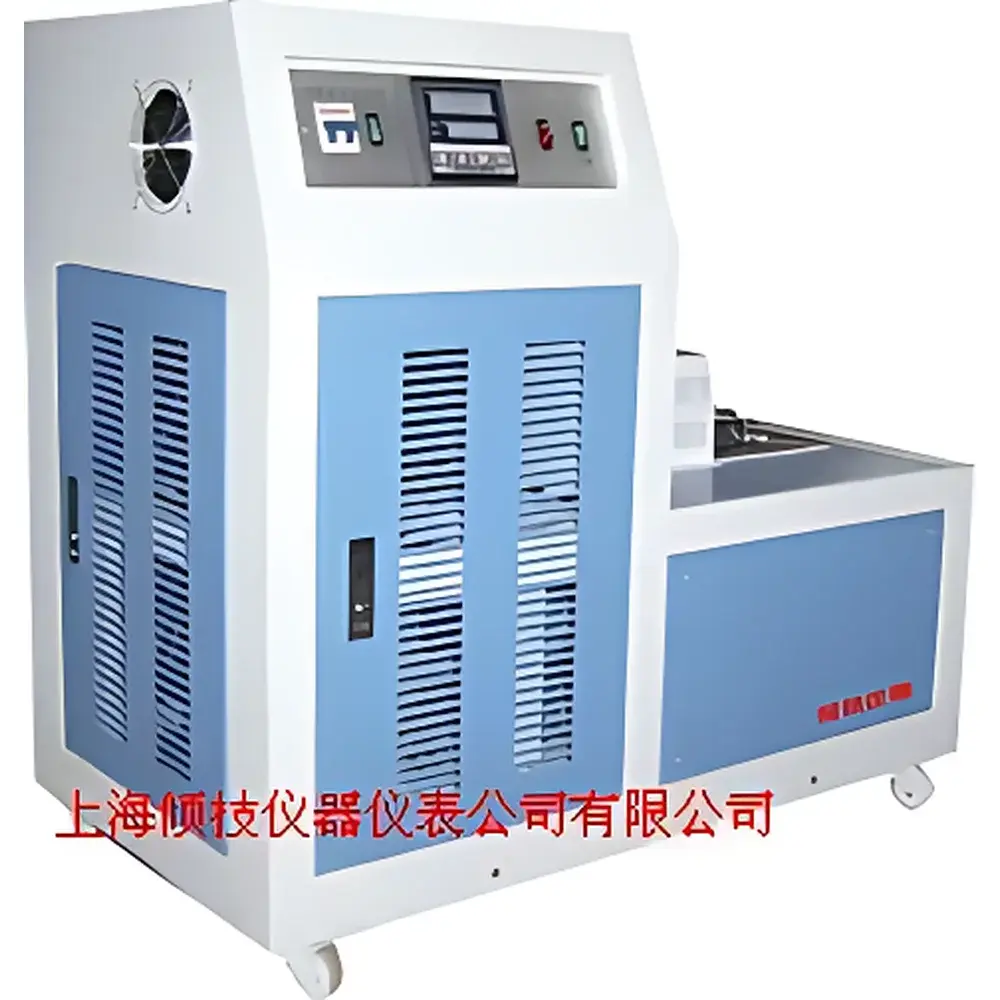
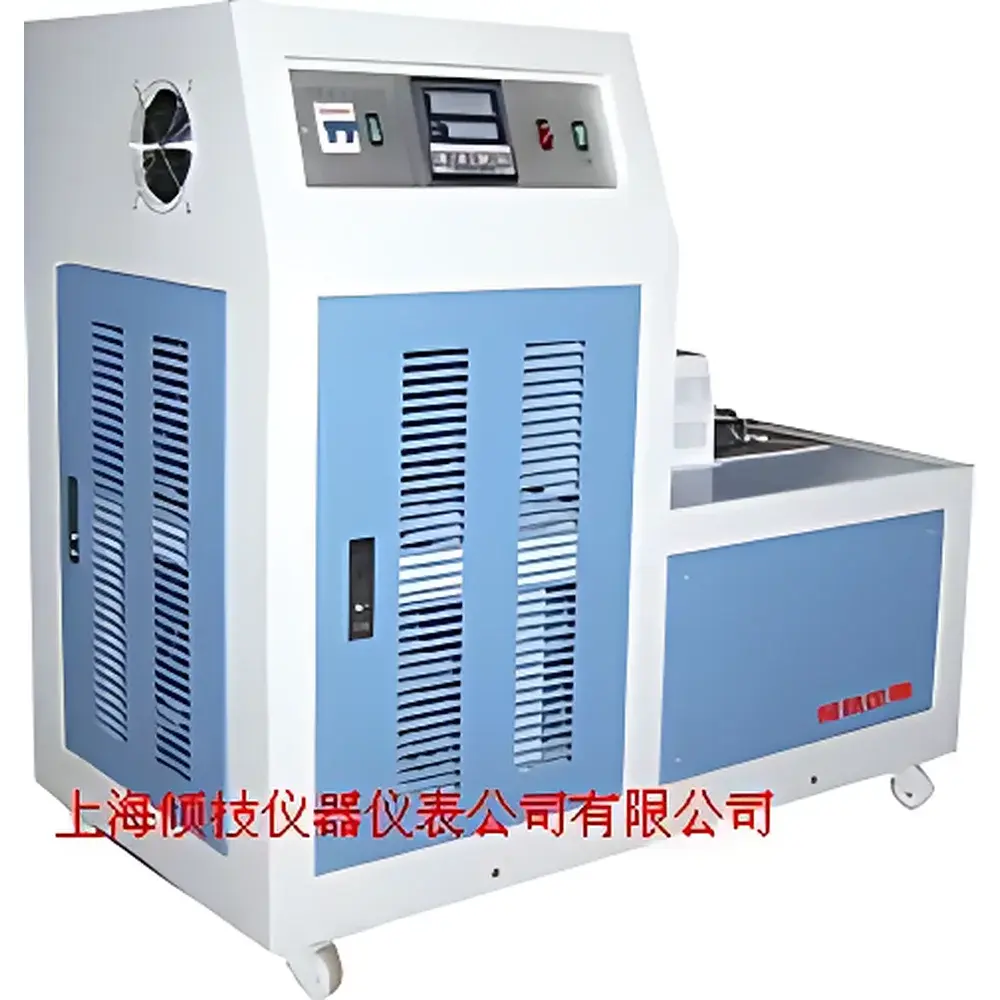
QJCDW-40 Cryogenic Impact Test Cooling Bath – Compressor-Cooled Low-Temperature Specimen Conditioning System for Charpy V-Notch Testing
| Origin | Shanghai, China |
|---|---|
| Manufacturer Type | Authorized Distributor |
| Regional Origin | Domestic (PRC) |
| Model | QJCDW-40 |
| Instrument Type | Electronic Universal Testing System Auxiliary Cryogenic Conditioning Unit |
| Temperature Range | +30 °C to –60 °C |
| Temperature Stability | ±0.5 °C |
| Cooling Rate | 2.0 °C/min (30 → 0 °C), 1.5 °C/min (0 → –20 °C), 1.0 °C/min (–20 → –40 °C), 0.7 °C/min (–40 → –60 °C) |
| Effective Chamber Dimensions | 120 × 120 × 70 mm |
| Sample Capacity | ≥60 × 10 × 10 × 55 mm Charpy specimens |
| Cooling Medium | Ethanol or non-freezing liquid |
| Circulation Motor Power | 16 W |
| Power Supply | 220–240 V AC, 50 Hz, 3 kW |
| Timer Resolution | 1 min (1–99 min range) |
| Compliance | Designed to meet temperature control requirements of GB/T 229–2002 (equivalent to ISO 148-1:2016 and ASTM E23-22 for Charpy impact testing) |
Overview
The QJCDW-40 Cryogenic Impact Test Cooling Bath is a precision-engineered auxiliary thermal conditioning system designed exclusively for standardized Charpy V-notch impact testing of metallic materials in accordance with GB/T 229–2002, which aligns with the metrological and procedural requirements of ISO 148-1:2016 and ASTM E23-22. Unlike general-purpose refrigerated chambers, this unit integrates dual-stage compressor cooling (using imported Tecumseh compressors), active thermal equilibrium management, and forced convection via a low-turbulence circulation motor to deliver uniform, reproducible specimen thermal conditioning across the full operational range from +30 °C to –60 °C. Its primary function is to precondition standardized 10 × 10 × 55 mm Charpy specimens—prior to fracture energy measurement on a pendulum impact tester—ensuring that surface and core temperatures remain within ±0.5 °C of the target setpoint for the duration of the soak period. This level of thermal fidelity is critical for determining ductile-to-brittle transition behavior in structural steels, pressure vessel alloys, pipeline materials, and aerospace-grade titanium and nickel-based superalloys.
Key Features
- Dual-compressor refrigeration architecture delivering stable sub-zero operation down to –60 °C without cryogen dependency or manual refilling
- Thermally balanced chamber design with laminar-flow agitation (16 W motor) ensuring <±0.5 °C spatial uniformity across the 120 × 120 × 70 mm working volume
- Graduated cooling profile optimization: programmable ramp rates (2.0 → 0.7 °C/min) minimize thermal shock to specimens while maintaining compliance with GB/T 229–2002 soak-time requirements
- Digital timer with 1-minute resolution (1–99 minutes), integrated into the front-panel interface for GLP-aligned test documentation
- Three stainless-steel specimen baskets included—designed for rapid insertion/removal and minimal thermal mass interference during transfer to the impact tester
- Compatible with standard non-aqueous coolants (e.g., ethanol, ethylene glycol–ethanol blends) meeting ASTM D1310 flash-point safety thresholds for laboratory use
- Compact footprint (900 × 505 × 850 mm) optimized for integration beside universal testing machines or pendulum impact testers in QC labs and metallurgical testing centers
Sample Compatibility & Compliance
The QJCDW-40 accommodates standard Charpy V-notch specimens per ISO 148-1:2016 (10 × 10 × 55 mm) and subsize variants (e.g., 7.5 × 7.5 × 55 mm, 5 × 5 × 55 mm) when used with optional fixture adapters. It supports both notched and unnotched configurations for comparative toughness analysis. The system is validated for use in laboratories operating under ISO/IEC 17025:2017-accredited quality management systems. While the unit itself does not generate test data, its thermal performance directly impacts the validity of impact energy measurements reported under ASTM E23, EN 10045-1, or GB/T 229. All temperature setpoints and soak durations are traceable to NIST-traceable RTDs calibrated prior to shipment. No software-based audit trail is provided; however, manual logbook entries—including start time, setpoint, actual chamber temperature at transfer, and operator ID—are recommended for FDA 21 CFR Part 11–aligned environments requiring ALCOA+ data integrity principles.
Software & Data Management
This is a microprocessor-controlled standalone hardware system with no embedded operating system, network connectivity, or proprietary software suite. Temperature setpoint, timer activation, and status indicators (cooling active, target reached, alarm) are managed via a dedicated LED-based front panel interface. No drivers, firmware updates, or cloud synchronization are required. All operational parameters—including real-time chamber temperature reading (0.1 °C resolution)—are displayed locally. For laboratories implementing LIMS or ELN platforms, manual entry of conditioning parameters (setpoint, soak duration, actual measured temperature at specimen removal) is supported via standardized CSV templates. Calibration certificates and factory verification reports are supplied with each unit, documenting thermal uniformity mapping and stability validation per ISO/IEC 17025 Clause 6.5.2.
Applications
- Ductile-to-brittle transition temperature (DBTT) determination in carbon and low-alloy steels for ASME Section VIII pressure vessel certification
- Low-temperature toughness screening of weld metal and heat-affected zones (HAZ) in offshore pipeline girth welds (API RP 2X, DNV-OS-F101)
- Quality conformance testing of forged crankshafts, turbine discs, and landing gear components per AMS 2300 and SAE AMS 2249
- Material qualification for cryogenic service (LNG tanks, hydrogen storage vessels) per ISO 21028-1 and EN 13445-2 Annex C
- Research-scale fracture mechanics studies involving temperature-dependent J-integral or crack-tip opening displacement (CTOD) pre-conditioning
- Supplier qualification audits requiring third-party verified low-temperature impact performance per customer-specific PPAP Level 3 documentation
FAQ
Does the QJCDW-40 comply with ASTM E23-22 Section 7.2.1 requirements for specimen cooling apparatus?
Yes—it maintains temperature stability within ±0.5 °C across the full specimen volume for ≥10 minutes at any setpoint between –60 °C and +30 °C, satisfying the thermal uniformity and dwell-time criteria specified in ASTM E23-22.
Can it be used with liquid nitrogen as a coolant?
No. The system is engineered exclusively for closed-loop compressor-based refrigeration using miscible organic coolants (e.g., ethanol). LN₂ is incompatible with the sealed circulation path and thermal sensor calibration.
Is calibration certification included with shipment?
Yes—a factory-issued calibration report is provided, covering thermal uniformity mapping at –20 °C, –40 °C, and –60 °C, along with stability verification over 30-minute dwell periods.
What maintenance intervals are recommended for long-term reliability?
Compressor oil and refrigerant levels should be verified annually by authorized service personnel; air filters require cleaning every 3 months in dust-prone environments; coolant replacement is advised every 18 months or upon visible discoloration/degradation.
Is the unit suitable for continuous 24/7 operation in a production QA lab?
Yes—the robust industrial-grade compressor assembly and reinforced insulation enable uninterrupted operation at rated load, provided ambient room temperature remains ≤25 °C and ventilation clearances (≥150 mm rear/side) are maintained.



