
QL-TS-3 Carbon-Silicon Analyzer by Qilin
| Brand | Qilin |
|---|---|
| Model | TS-3 |
| Origin | Jiangsu, China |
| Measurement Time | 240 s |
| CE Range | 3.2–4.8 wt% (±0.1%) |
| C Range | 2.8–4.2 wt% (±0.05%) |
| Si Range | 0.9–3.0 wt% (±0.08%) |
| Display Height | 50 mm |
| Temperature Compensation | 0–40 °C |
| Cup Types | S, R, B, K |
| Compliance | EN 50081-2, EN 50082-2 |
| Temperature Unit | Selectable (°C/°F) |
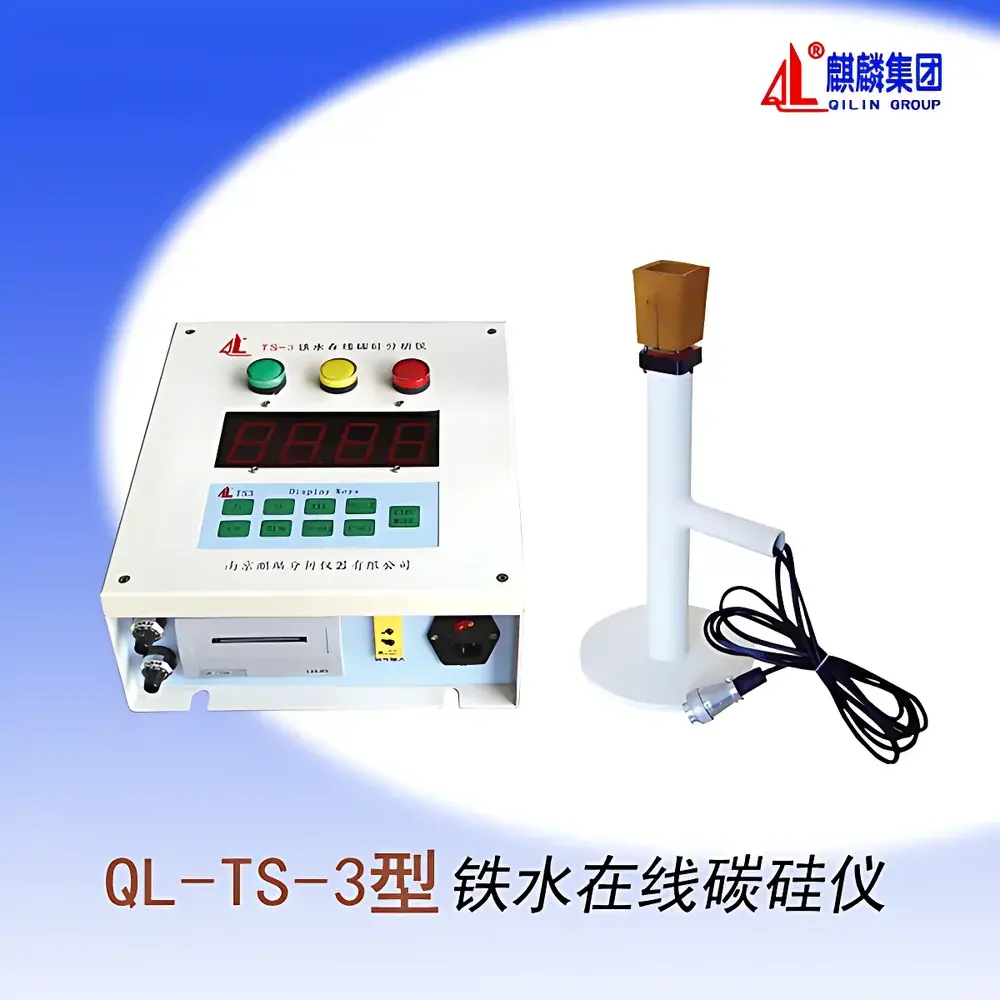
| Status Indicators | Green (Ready), Yellow (Measuring), Red (Complete) |
Overview
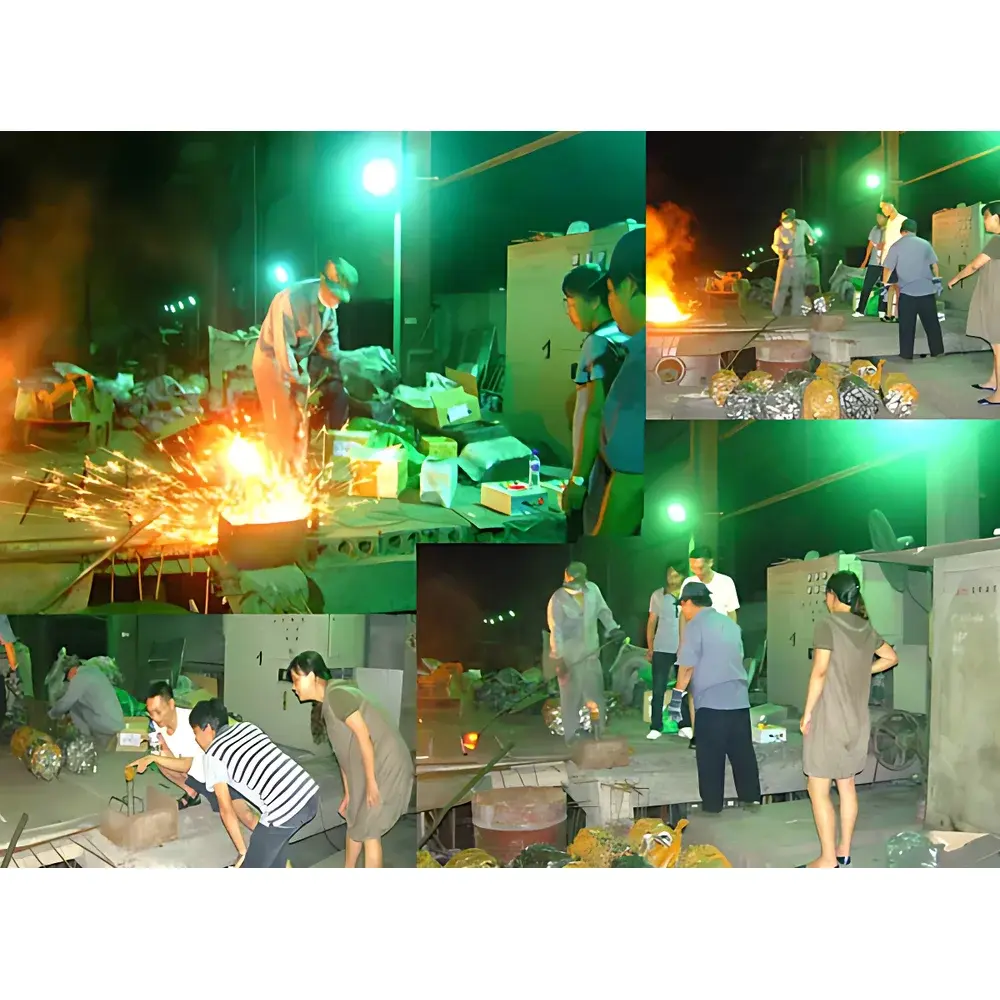
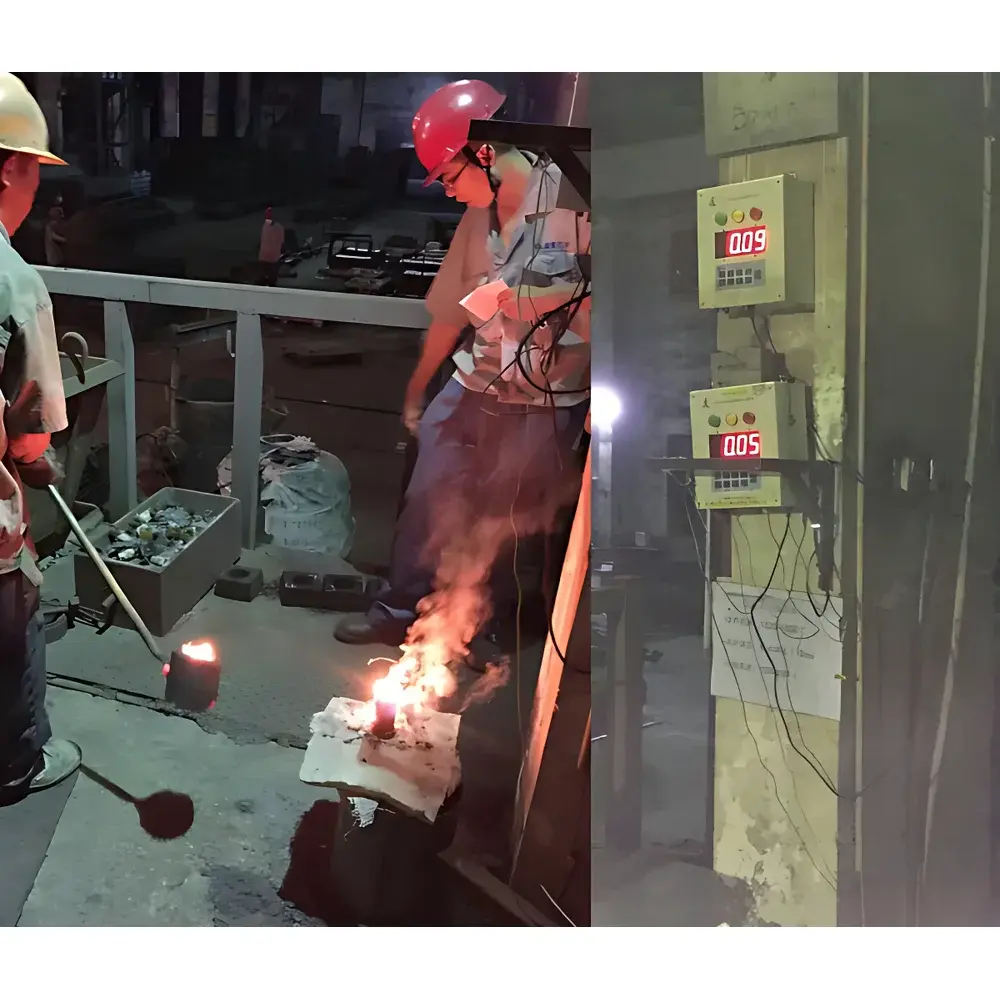
The QL-TS-3 Carbon-Silicon Analyzer is a dedicated thermal analysis instrument engineered for real-time, on-site compositional assessment of molten cast iron during foundry operations. It operates on the principle of solidification thermal analysis (STA), wherein controlled cooling curves of a small iron sample are recorded and interpreted using established phase transformation thermodynamics. As the molten iron solidifies in a standardized cup, characteristic inflection points—such as the liquidus temperature (TL), eutectic temperature (TE), and recalescence peak (ΔT)—are extracted from the cooling curve. These thermal events correlate directly with carbon equivalent (CE), total carbon (C%), silicon (Si%), and solidification behavior parameters including saturation coefficient (SC) and eutectic undercooling (CEL). Unlike wet chemical or spectrometric methods requiring sample transfer and laboratory turnaround, the TS-3 delivers quantitative results within 240 seconds directly at the furnace tap, enabling immediate process feedback and adjustment.
Key Features
- Integrated thermal analysis platform with high-stability thermocouple input (Type K) and precision analog-to-digital conversion for reproducible cooling curve acquisition.
- Dual-unit temperature display (°C/°F), configurable via front-panel menu; large 50 mm LED digits ensure legibility in low-light foundry environments.
- Multi-cup compatibility: supports standardized S-, R-, B-, and K-type sample cups to accommodate varying iron grades (gray iron, ductile iron, malleable iron) and pouring temperatures.
- Automatic temperature compensation across 0–40 °C ambient range, minimizing drift due to workshop thermal fluctuations.
- Three-color status indicator system (green = ready, yellow = active measurement, red = complete) provides unambiguous operational feedback without reliance on software interfaces.
- EMC-compliant design per EN 50081-2 (emission) and EN 50082-2 (immunity), ensuring stable operation near induction furnaces, frequency converters, and arc equipment.
Sample Compatibility & Compliance
The TS-3 is validated for use with standard foundry-grade molten iron, including gray iron (ASTM A48), ductile iron (ASTM A536), and compacted graphite iron (CGI). Sample preparation requires only a 100–150 g pour into a pre-conditioned, expendable refractory cup—no grinding, dissolution, or calibration standards needed. The analyzer’s algorithm applies empirically derived correlations between thermal arrest points and composition, traceable to NIST-traceable reference materials used during factory validation. While not a certified metrology device under ISO/IEC 17025, its performance meets internal quality control requirements aligned with ASTM E1122 (Standard Practice for Use of Thermal Analysis for Determination of Carbon and Silicon in Cast Iron) and supports GLP-aligned foundry documentation practices.
Software & Data Management
The TS-3 operates as a standalone embedded system with no external PC dependency. All calculations—including CE = C% + Si%/3 + P%/3, SC = %C / (%Si + %P), and CEL = TL − TE—are performed onboard using firmware calibrated against historical production data from over 12,000 iron heats. Results are retained in non-volatile memory for up to 500 measurements and can be exported manually via RS-232 serial interface (optional cable required) for integration into MES or ERP systems. Though lacking FDA 21 CFR Part 11-compliant audit trails or electronic signatures, its deterministic output and fixed firmware architecture support repeatable, operator-independent reporting suitable for internal QC records.
Applications
- Rapid verification of melt chemistry prior to ladle transfer or mold filling, reducing scrap from off-spec pours.
- Monitoring silicon burn-off during holding or inoculation to optimize alloy addition timing and dosage.
- Discriminating between white iron and gray iron solidification patterns to detect unintended chilling or excessive carbide formation.
- Correlating ΔT (recalescence magnitude) with nodule count in ductile iron melts, supporting consistent nodularization control.
- Establishing baseline thermal signatures for new charge mixes or scrap blends during process qualification.
FAQ
What sample volume is required for a valid measurement?
A minimum of 100 g of molten iron, poured into a pre-heated, dry refractory cup (S, R, B, or K type), is sufficient for reliable thermal curve capture.
Can the TS-3 analyze alloys other than cast iron?
No—it is specifically calibrated for Fe-C-Si-P systems. Aluminum, copper, or steel melts produce incompatible solidification profiles and yield non-physical outputs.
Is periodic recalibration required?
The unit undergoes factory calibration using certified reference irons. Field recalibration is not supported; however, daily verification using a known master heat is recommended for critical applications.
How does ambient temperature affect accuracy?
The built-in 0–40 °C compensation circuit corrects for thermocouple cold-junction drift, maintaining specified tolerance (±0.05% C, ±0.08% Si) across typical foundry ambient conditions.
Does the analyzer meet international regulatory requirements for quality records?
It complies with electromagnetic compatibility (EMC) directives EN 50081-2 and EN 50082-2. For regulated environments requiring full audit trails, supplemental manual logging or third-party data capture is advised.




