
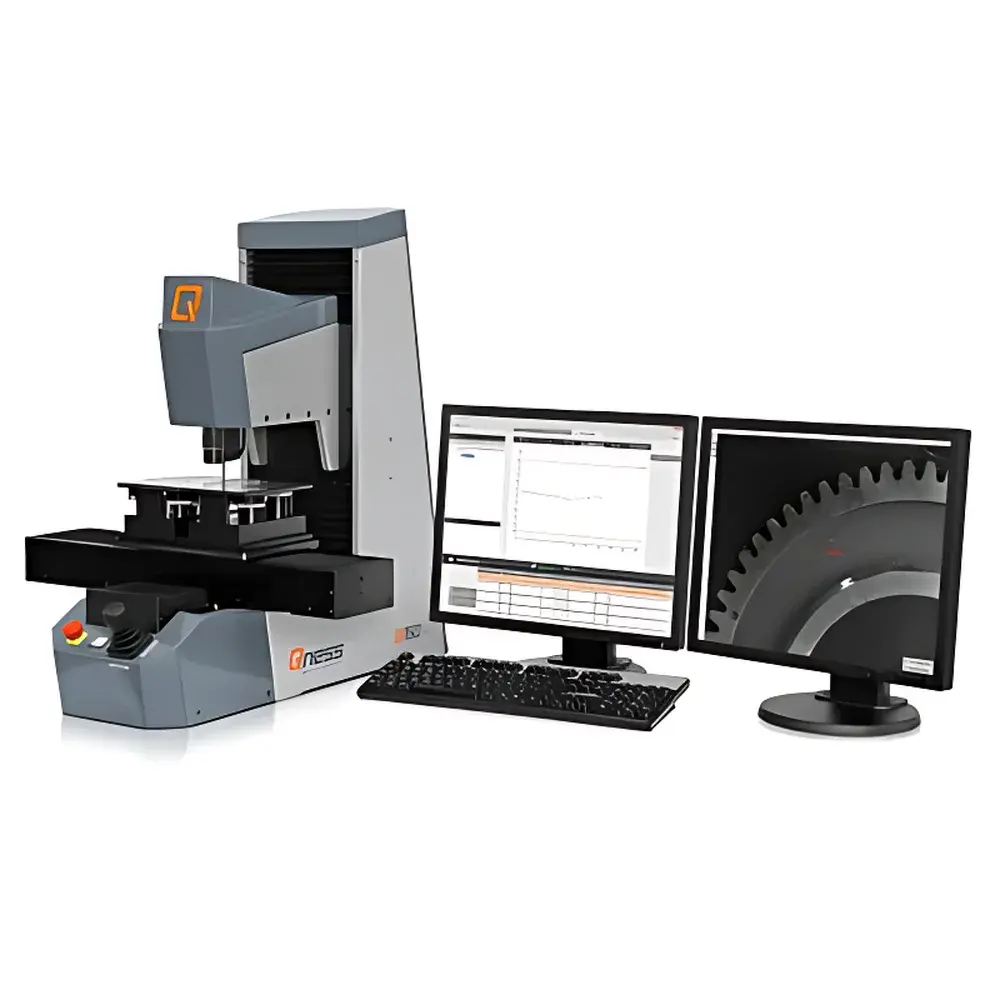
Qness Q150 A Automatic Rockwell, Knoop & Brinell Hardness Tester
| Brand | QATM |
|---|---|
| Origin | Austria |
| Model | Q 150 A |
| Test Methods | Rockwell (A/A+), Knoop, Brinell |
| Load Range | 1–250 kgf (9.81–2450 N) |
| Max Specimen Height/Throat Depth | 187 mm / 180 mm |
| Max Specimen Weight | 50 kg |
| Stage | Motorized X-Y Translation Stage |
| Height Adjustment | Manual Knob-Driven Dynamic Z-Axis with Collision Avoidance |
| Optional Imaging | Panoramic Camera (Q150 A+ only) |
| Illumination | High-Contrast LED Coaxial Lighting |
| Compliance | ASTM E18, ASTM E384, ASTM E10, ISO 6508, ISO 6507, ISO 6506, EN ISO 1463, DIN 50103 |
| Software | Qpix Control v5.x with Audit Trail, User Management & CFR 21 Part 11 Readiness |
Overview
The Qness Q150 A is a fully automated, multi-method hardness testing system engineered for precision metrology in R&D laboratories, quality control departments, and third-party testing facilities. Built upon QATM’s decades of Austrian precision mechanics heritage, the instrument implements standardized indentation-based hardness measurement principles across three core methods: Rockwell (scales A, B, C, and extended A+ configuration), Vickers/Knoop microhardness (via optional high-magnification optics), and Brinell macrohardness. Its modular architecture integrates force-controlled load application, motorized stage positioning, and real-time height sensing to ensure reproducible indentation geometry under defined ISO/ASTM boundary conditions. Unlike legacy manual or semi-automated systems, the Q150 A eliminates operator-induced variability through closed-loop Z-axis control, programmable test sequences, and automatic indenter exchange—enabling traceable, GLP-compliant hardness data generation for materials certification, heat treatment validation, and failure analysis workflows.
Key Features
- Triple-method capability: Simultaneous support for Rockwell (A/A+, B, C, 15N–45N), Knoop (10–1000 gf), and Brinell (1–250 kgf) testing on a single platform.
- Motorized X-Y stage with ±0.5 µm positional repeatability and programmable multi-point grid mapping for case depth profiling (CHD/NHD/RHD) and end-quench analysis per ASTM A255.
- Dynamic height adjustment via ergonomic front-panel knob; integrated collision avoidance system prevents indenter or specimen damage during Z-axis travel.
- Extended test volume: 187 mm maximum specimen height and 180 mm throat depth accommodate large components including railway rails, seamless tubes, and forged crankshafts.
- High-intensity coaxial LED illumination with adjustable brightness ensures optimal contrast for indenter tip alignment and impression evaluation—even on reflective or textured surfaces.
- Modular upgrade path: Base Q150 A supports panoramic camera integration (Q150 A+) for full-field specimen documentation, automated impression recognition, and geometric distortion correction.
Sample Compatibility & Compliance
The Q150 A accommodates specimens up to 50 kg and 300 × 300 mm footprint, making it suitable for castings, weldments, extrusions, and heat-treated forgings. Its open-frame design allows non-standard fixturing for cylindrical, curved, or irregular geometries—including pipe wall thickness testing and rail head profiling. All hardness measurements conform to internationally recognized standards: Rockwell tests comply with ASTM E18 and ISO 6508; Knoop/Vickers follow ASTM E384 and ISO 6507; Brinell testing adheres to ASTM E10 and ISO 6506. The system’s firmware and software are designed for audit readiness under FDA 21 CFR Part 11, supporting electronic signatures, immutable audit trails, and role-based access control—essential for GMP/GLP-regulated environments.
Software & Data Management
Qpix Control v5.x serves as the unified interface for method setup, test execution, image capture, and report generation. It provides intuitive wizard-driven test definition, customizable templates for common applications (e.g., carburized layer analysis, decarburization assessment), and batch processing for serial samples. Measurement data—including load duration, dwell time, indentation coordinates, and calculated hardness values—is stored in encrypted SQLite databases with timestamped metadata. Export options include CSV, PDF (with embedded images), and XML formats compatible with LIMS integration. Full traceability is maintained via user logins, change history tracking, and electronic signature workflows compliant with regulatory requirements for data integrity.
Applications
- Case hardening depth (CHD) profiling of gear teeth, bearing races, and transmission components using sequential Rockwell A+ measurements.
- Non-destructive verification of surface treatments (nitriding, carburizing, induction hardening) via Knoop microhardness gradients.
- Macrohardness screening of aluminum extrusions, stainless steel plates, and titanium alloys per ASTM B647.
- End-quench testing (Jominy) of structural steels with automated multi-location hardness mapping along the bar length.
- Specialized testing of rail heads, pipeline girth welds, and turbine blades using custom fixtures and extended-throat configurations.
FAQ
Does the Q150 A support automated hardness mapping across large-area specimens?
Yes—the motorized X-Y stage enables programmable grid-based hardness mapping with sub-micron positioning accuracy. Users define step size, number of points, and dwell parameters per location.
Can the system validate compliance with ISO/IEC 17025 accredited testing requirements?
Yes—Qpix Control includes calibration certificate management, uncertainty calculation tools, and audit-ready documentation features aligned with ISO/IEC 17025 clause 7.7.
Is remote operation or network integration possible?
The system supports Ethernet connectivity and OPC UA protocol for integration into factory MES or lab automation networks. Remote desktop access is permitted under controlled IT security policies.
What maintenance intervals are recommended for long-term accuracy?
Annual calibration of load cell and Z-axis encoder is advised; daily verification using certified reference blocks per ASTM E74 and ISO 6506-3 is required before routine testing.
Are consumables such as indenters and anvils supplied with traceable calibration certificates?
All standard diamond Rockwell indenters and tungsten carbide Brinell balls are supplied with individual ISO 17025-accredited calibration certificates from QATM’s in-house metrology lab.



