
Qness Q150 R/A/+ Universal Hardness Tester (Rockwell, Brinell, Vickers, Knoop)
| Brand | QATM |
|---|---|
| Country of Origin | Austria |
| Model | Q150 R / Q150 A / Q150 A+ |
| Hardness Scales | Rockwell (R), Brinell (B), Vickers (HV), Knoop (HK) |
| Automation Levels | Manual (R), Semi-Automatic & Fully Automatic (A), Fully Automatic with Integrated Panoramic Imaging (A+) |
| Test Force Range | 1–3000 kgf (A/A+ models) |
| Sample Height Clearance | Up to 280 mm |
| Max. Sample Weight | 50 kg |
| Interface Options | RS232, Ethernet, USB |
| Compliance | CE, ISO 6508 (Rockwell), ISO 6506 (Brinell), ISO 6507 (Vickers), ISO 4545 (Knoop), ASTM E18, E10, E384, E92 |
| Software | Qpix T2R v5.x (GLP-compliant data logging, audit trail, user access levels, report export to PDF/CSV/XLSX) |
Overview
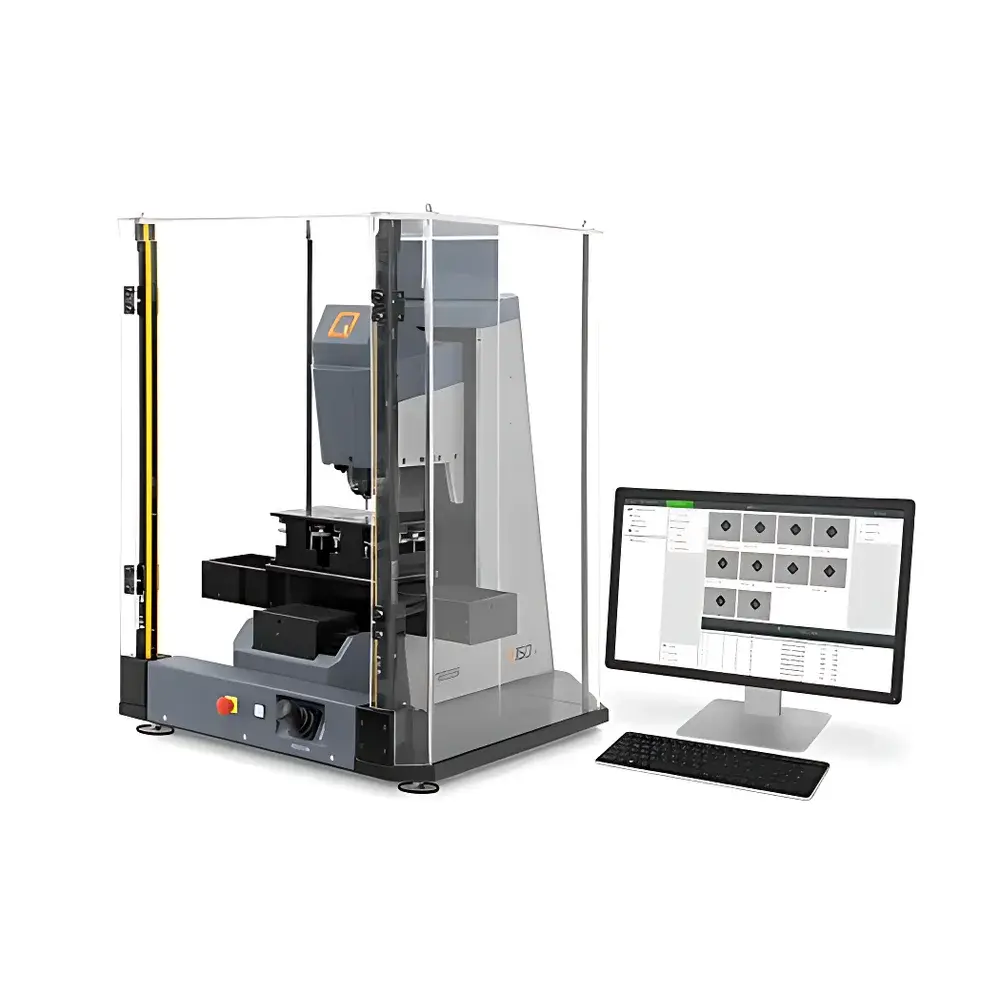
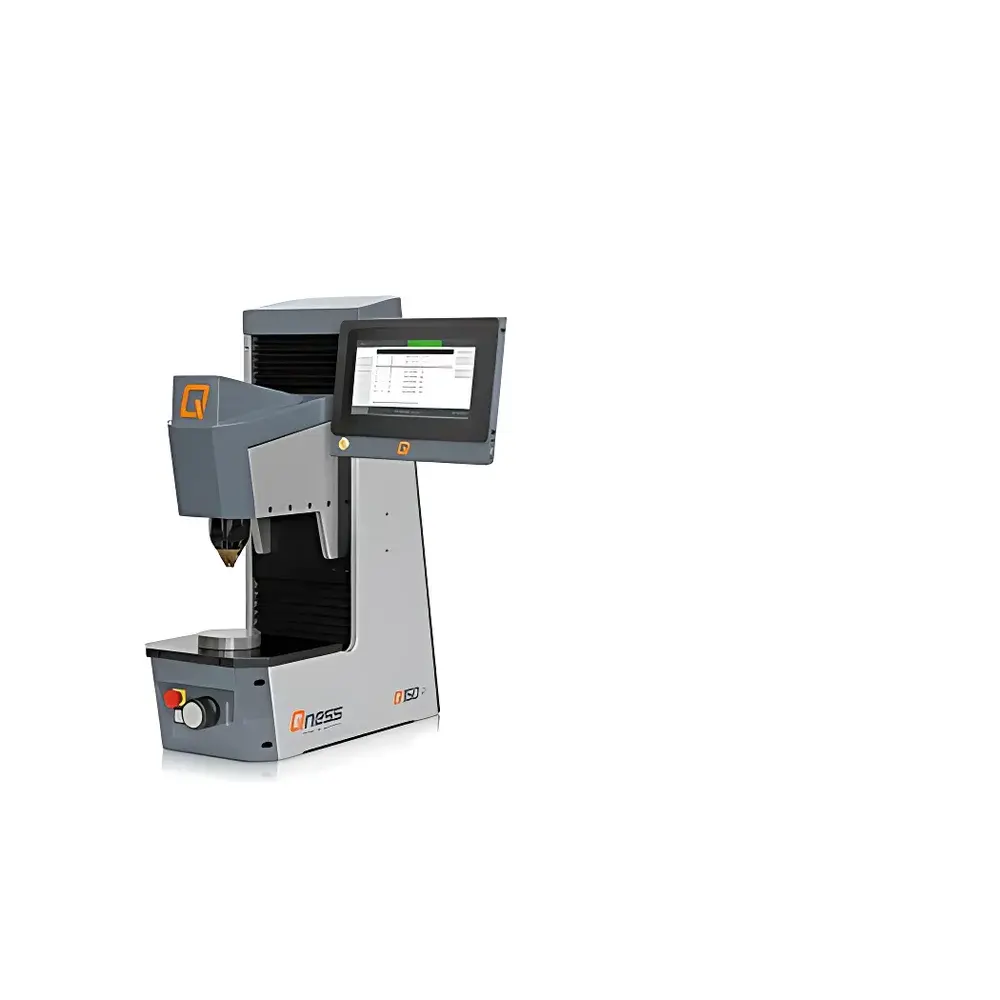
The Qness Q150 R/A/+ is a modular, precision-engineered universal hardness testing system developed by QATM (Austria) for metrology-grade mechanical property evaluation in R&D laboratories, quality control departments, and accredited testing facilities. Based on standardized indentation principles—namely the depth-of-penetration method for Rockwell, the spherical impression diameter measurement for Brinell, and the diagonal-length-based calculation for Vickers and Knoop—the Q150 platform delivers traceable, repeatable hardness values across metallic, ceramic, and composite materials. Its tri-modal architecture allows users to deploy configuration-specific variants: the Q150 R for dedicated Rockwell testing with manual or semi-automated operation; the Q150 A for full automation across Rockwell, Brinell, Vickers, and Knoop scales with motorized XYZ stage and overload-safe clutch; and the Q150 A+, which integrates a calibrated panoramic camera system (50 × 40 mm FOV) enabling rapid surface mapping, automatic feature recognition, and seamless transition between optical and depth-based hardness methods.
Key Features
- Modular design supporting field-upgradable functionality—from Rockwell-only (Q150 R) to multi-scale optical + depth-based hardness (Q150 A+)
- Motorized 3-axis specimen stage (X/Y/Z) with programmable travel limits and dynamic joystick control for intuitive manual positioning
- Overload safety clutch compliant with EN ISO 16809, eliminating requirement for external protective enclosures while maintaining CE conformity
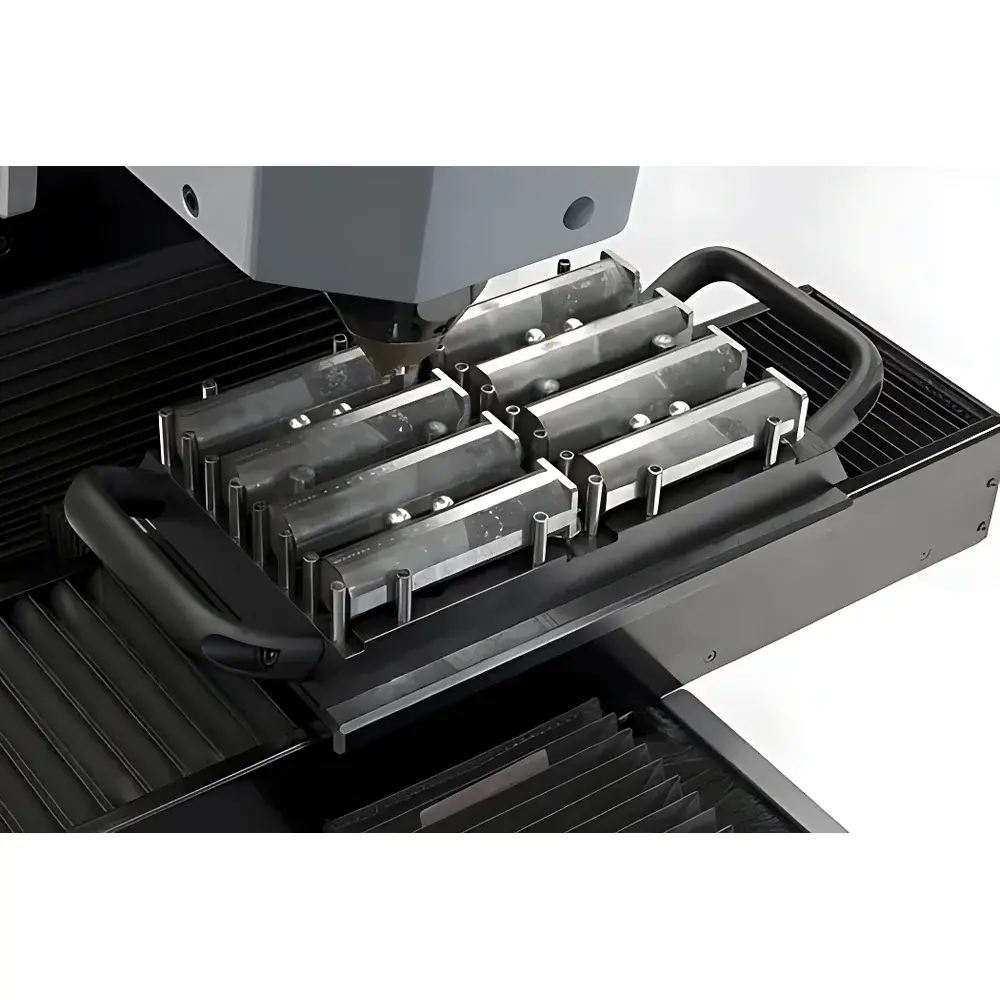
- Multi-specimen capability: up to eight end-quench test bars or dual multi-sample holders for high-throughput batch testing
- Integrated load-cell-based force application ensuring ±0.5% accuracy across full test force range (1–3000 kgf)
- Optical path optimized for 10×–100× magnification with LED coaxial illumination and auto-focus assist for precise indenter alignment
Sample Compatibility & Compliance
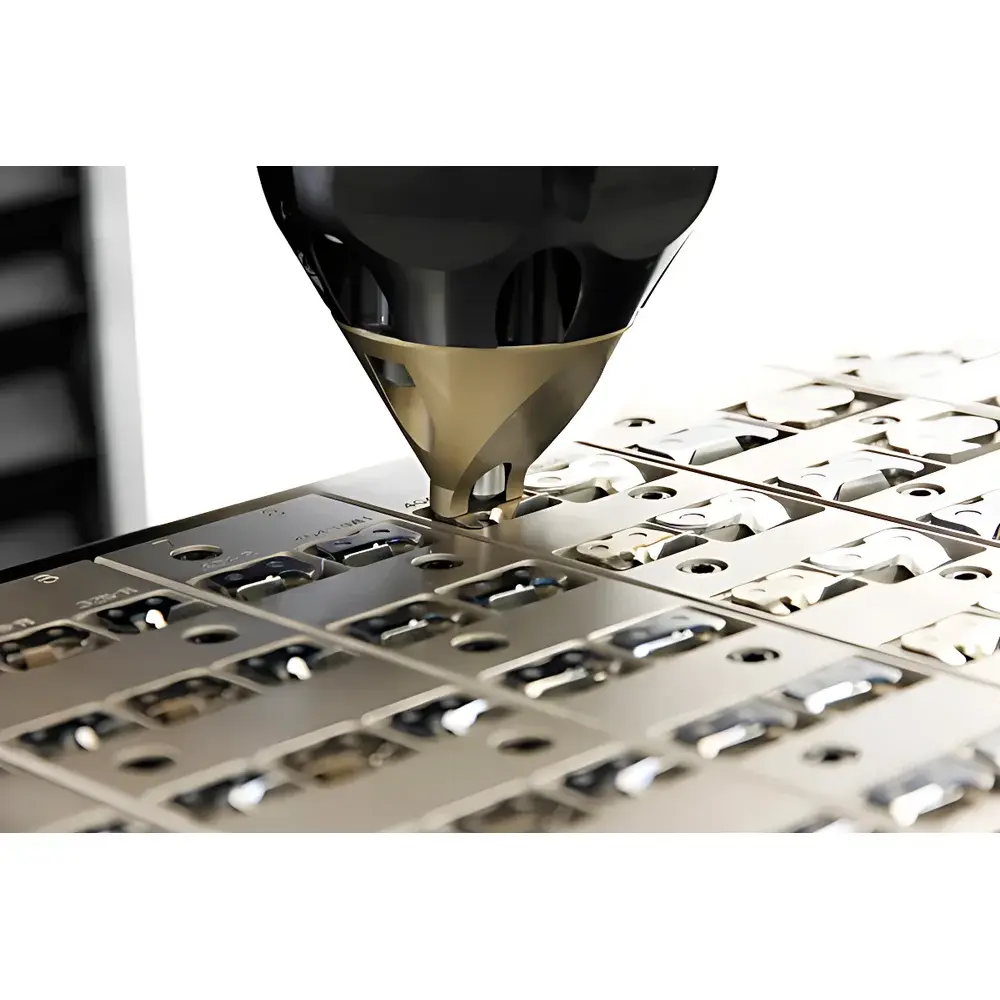
The Q150 series accommodates specimens up to 280 mm in height and 50 kg in mass, including forged components, heat-treated plates, weld joints, and coated substrates. Specimens may be tested unclamped (e.g., large castings) or secured via standard vise, custom fixtures, or magnetic chucks. All models comply with international standards governing hardness measurement methodology and reporting: ISO 6508-1 (Rockwell), ISO 6506-1 (Brinell), ISO 6507-1 (Vickers), ISO 4545-1 (Knoop), and corresponding ASTM equivalents (E18, E10, E384, E92). The Qpix T2R software supports configurable calibration verification routines and generates reports with full metadata—including operator ID, timestamp, environmental conditions (optional sensor input), and uncertainty estimation per ISO/IEC 17025 Annex A.3.
Software & Data Management
Qpix T2R v5.x serves as the central interface for method definition, test execution, image acquisition, and result traceability. It provides role-based user management (administrator, technician, reviewer), electronic signature support, and full 21 CFR Part 11 compliance—including immutable audit trails, password-protected method locking, and encrypted database storage. Data export options include PDF (with embedded calibration certificates), CSV (for SPC integration), and XLSX (with statistical summaries: mean, SD, Cpk, histogram, trend charts). Optional network deployment enables centralized instrument monitoring and remote firmware updates via secure HTTPS protocol.
Applications
- Heat treatment process validation (case depth, core hardness, decarburization assessment)
- Weld quality assurance per AWS D1.1, ISO 15614, and ASME Section IX
- Tool steel and bearing material qualification under DIN 17212 and ASTM A295
- Automotive component certification (crankshafts, gears, brake calipers) per VDA 5 and IATF 16949 requirements
- Failure analysis labs performing cross-scale correlation (e.g., Rockwell C to Vickers HV10 for thin case layers)
- Academic research involving microstructure–hardness relationships in additively manufactured alloys
FAQ
Does the Q150 A+ support automated hardness mapping across irregular surfaces?
Yes—the integrated panoramic camera enables automatic stitching of multiple fields of view and coordinate registration of indent locations relative to macro-features (e.g., grain boundaries, phase regions), facilitating grid-based hardness profiling without manual repositioning.
Can existing Q150 R or A units be upgraded to A+ configuration?
Yes—QATM offers certified field upgrade kits including the panoramic imaging module, second display controller, and software license activation for optical measurement expansion.
Is third-party calibration certificate included with delivery?
Each unit ships with a factory calibration certificate traceable to PTB (Physikalisch-Technische Bundesanstalt) and includes documented uncertainty budgets per ISO/IEC 17025 requirements.
What maintenance intervals are recommended for long-term measurement stability?
Annual verification of force application, indenter geometry, and optical calibration is advised; Qpix T2R includes built-in self-test routines and scheduled reminder alerts.
How is data integrity ensured during power interruption or unexpected shutdown?
All active test sequences and raw image buffers are written to non-volatile memory in real time; unsaved data is automatically recovered upon system restart with full metadata retention.



