
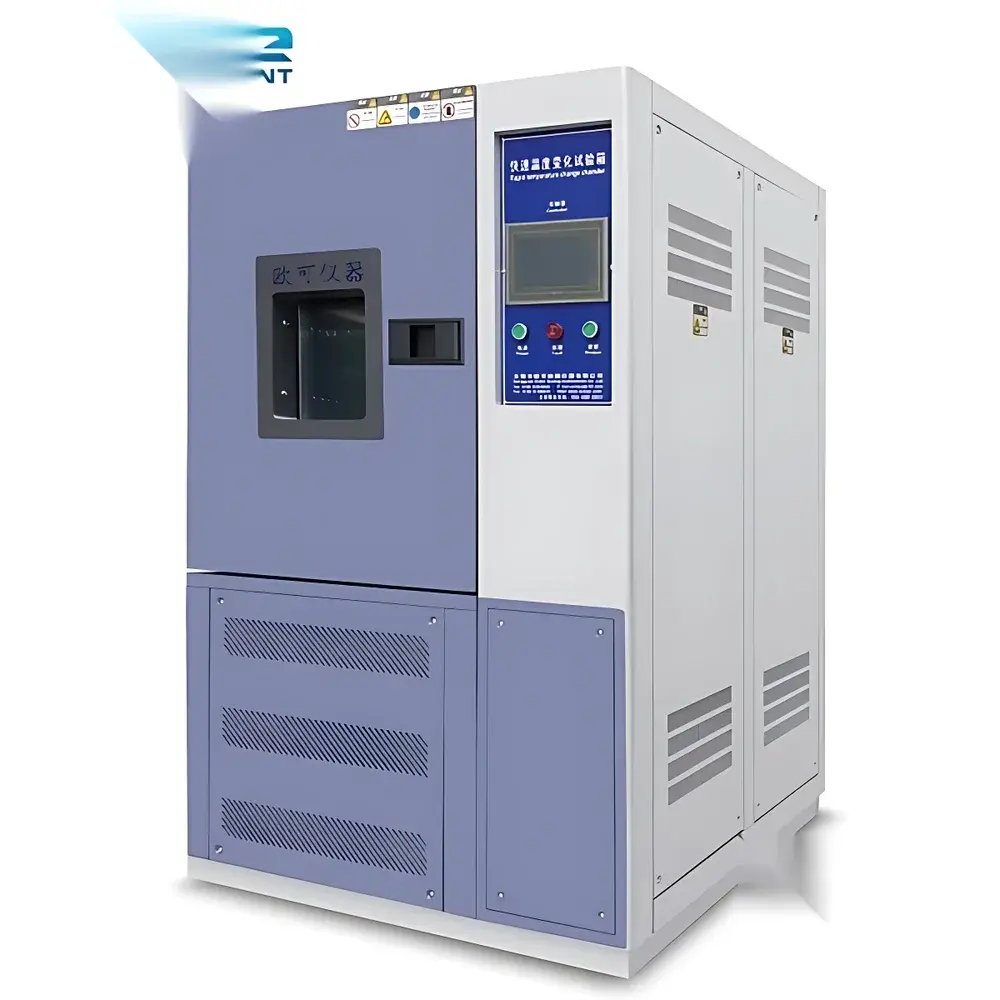
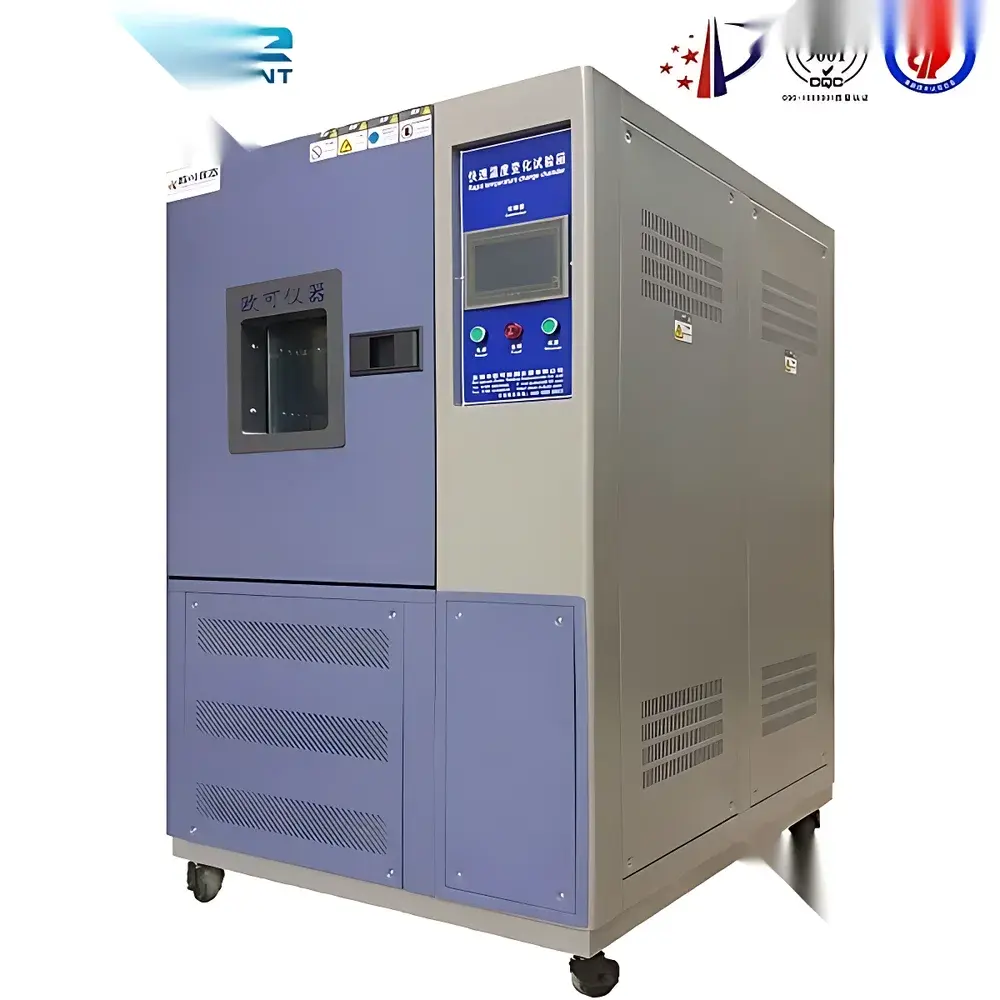
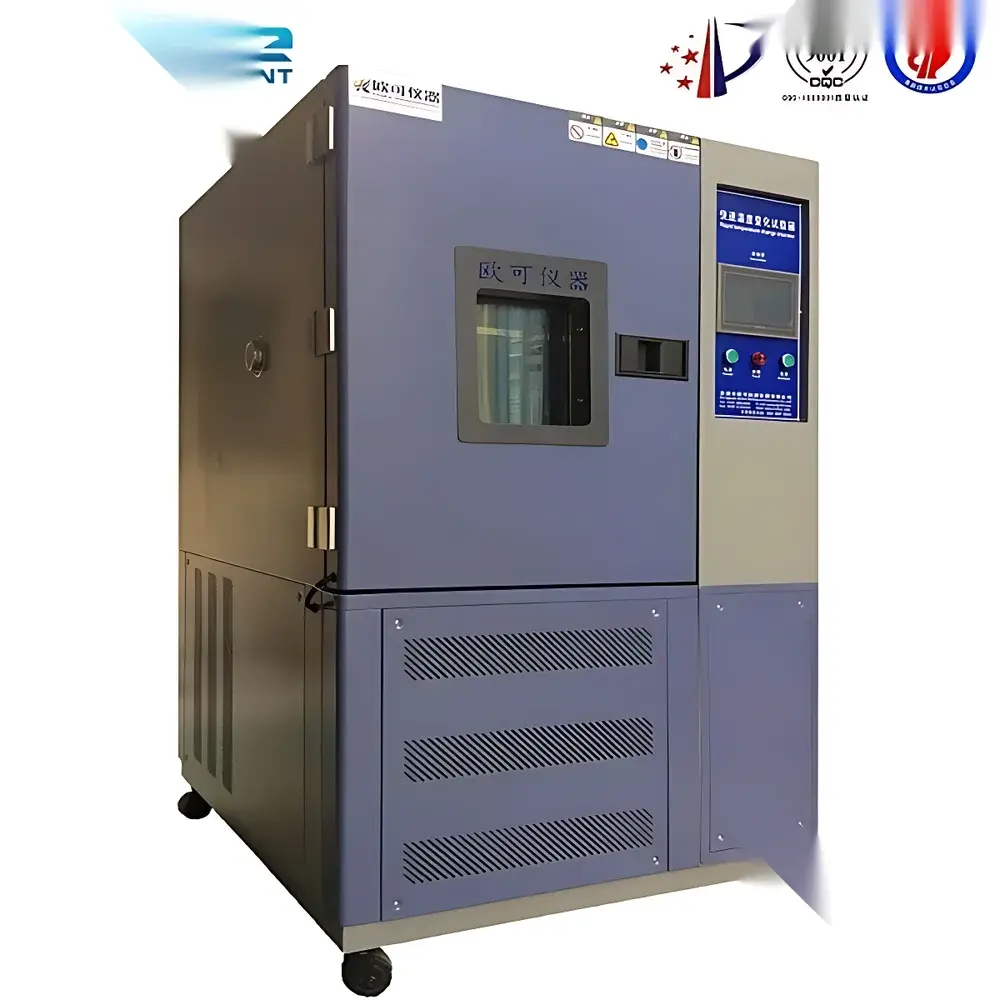
Quick Temperature Change Environmental Test Chamber – OEM Supply Manufacturer
| Brand | Custom OEM / Third-Party Industrial OEM |
|---|---|
| Origin | Imported (Global Sourcing) |
| Supplier Type | Authorized Industrial Distributor |
| Pricing | USD 2,650 (FOB ex-factory, subject to configuration and certification requirements) |
Overview
The Quick Temperature Change Environmental Test Chamber is an engineered climatic simulation system designed for accelerated thermal stress testing of industrial components and finished products. It operates on a forced-air convection principle with dual-stage refrigeration and precision PID-controlled heating, enabling rapid and repeatable transitions between extreme temperature setpoints under controlled ambient pressure conditions. Unlike standard thermal chambers, this system integrates dynamic pressure modulation capability—supporting operation from atmospheric pressure down to 0.5 kPa—to simulate high-altitude or vacuum-assisted thermal cycling environments. Its architecture complies with the fundamental thermodynamic and metrological frameworks defined in IEC 60068-3-5 (Environmental testing — Part 3-5: Supporting documentation and guidance — Temperature change), making it suitable for qualification-level testing in aerospace, automotive electronics, and medical device development workflows.
Key Features
- Multi-range temperature capability: Four standard configurations available — (A) −20 °C to +150 °C, (B) −40 °C to +150 °C, (C) −60 °C to +150 °C, and (D) −70 °C to +150 °C — all validated under no-load, ambient ≤25 °C conditions.
- Thermal performance specifications: Temperature uniformity ±2 °C, temperature fluctuation ±0.5 °C, and temperature deviation ±3 °C (measured per GB/T 5170.2–1996 and IEC 60068-3-10).
- Rapid thermal ramp rates: Programmable heating at 1.0–3.0 °C/min and cooling at 0.7–1.0 °C/min — achieved via optimized refrigerant circuit design and high-efficiency axial airflow distribution.
- Integrated low-pressure functionality: Pressure range extends from ambient (101.3 kPa) down to 0.5 kPa, with pressure control accuracy of ±1.8 kPa (101.3–40 kPa), ±4.5% (40–4 kPa), and ±0.1 kPa (4–0.5 kPa); full depressurization to 0.5 kPa completed in ≤45 minutes.
- OEM-flexible platform: Fully customizable chamber volume, sensor layout, door configuration, and interface protocols (RS485/Modbus, Ethernet/IP) to align with client-specific validation protocols and facility integration requirements.
Sample Compatibility & Compliance
This chamber accommodates test specimens up to 300 kg mass and dimensions compatible with standard ISO 16750-4 (road vehicles — environmental conditions) and MIL-STD-810H (Method 503.5 — Temperature Shock) specimen envelopes. It supports both dry and humidified operation (when equipped with optional steam-humidification module), meeting the operational envelope requirements of GB/T 2423.1–2001 (Cold), GB/T 2423.2–2001 (Dry Heat), GB/T 2423.3–1993 (Damp Heat, Steady State), and GB 11158–2006 (High-Temperature Chambers). All thermal calibration procedures follow traceable NIST-equivalent reference standards, and chamber validation reports include as-found/as-left data per ISO/IEC 17025-accredited methodologies.
Software & Data Management
The embedded controller features a 7-inch TFT touchscreen HMI with multi-language support (English, German, Japanese, Chinese) and real-time graphing of chamber parameters. Optional PC-based software provides full test sequence programming, alarm logging, and audit-trail generation compliant with FDA 21 CFR Part 11 (electronic records and signatures) when configured with user authentication, electronic signature, and change-control modules. Data export formats include CSV, PDF test reports, and XML-compatible structured logs for LIMS integration. Calibration history, maintenance records, and deviation alerts are stored locally with 12-month retention and optional cloud backup.
Applications
Primary use cases include: thermal shock qualification of printed circuit assemblies (per IPC-9701), solder joint reliability assessment under cyclic thermal load, validation of battery thermal management systems (EV traction packs), pre-compliance screening for automotive ECUs (ISO 16750-4), shelf-life acceleration studies for polymer-based medical disposables, and environmental stress screening (ESS) of avionics hardware prior to HALT/HASS. The chamber is routinely deployed in QC labs operating under ISO 9001, IATF 16949, and ISO 13485 quality management systems.
FAQ
What is the standard lead time for OEM-configured units?
Standard delivery is 8–12 weeks from PO confirmation; non-standard pressure or temperature ranges may extend lead time by 3–5 weeks depending on compressor and sensor sourcing.
Can this chamber be integrated into an existing factory MES or SCADA system?
Yes — Modbus RTU/TCP and OPC UA interfaces are available as factory options; custom API wrappers can be developed for Siemens Desigo, Rockwell FactoryTalk, or Schneider EcoStruxure platforms.
Is third-party calibration certification included with shipment?
A factory calibration certificate (traceable to national metrology institutes) is provided with each unit; ISO/IEC 17025-accredited field calibration services are available upon request.
Does the system meet electromagnetic compatibility (EMC) requirements for laboratory use?
All models comply with EN 61326-1:2013 (Laboratory equipment EMC) and EN 61000-6-3:2007 (Emission limits for residential environments), with CE marking affixed.
What maintenance intervals are recommended for sustained performance?
Compressor oil and refrigerant filter replacement every 24 months; annual verification of temperature and pressure sensors against certified references; quarterly inspection of door gasket integrity and airflow baffles.



