
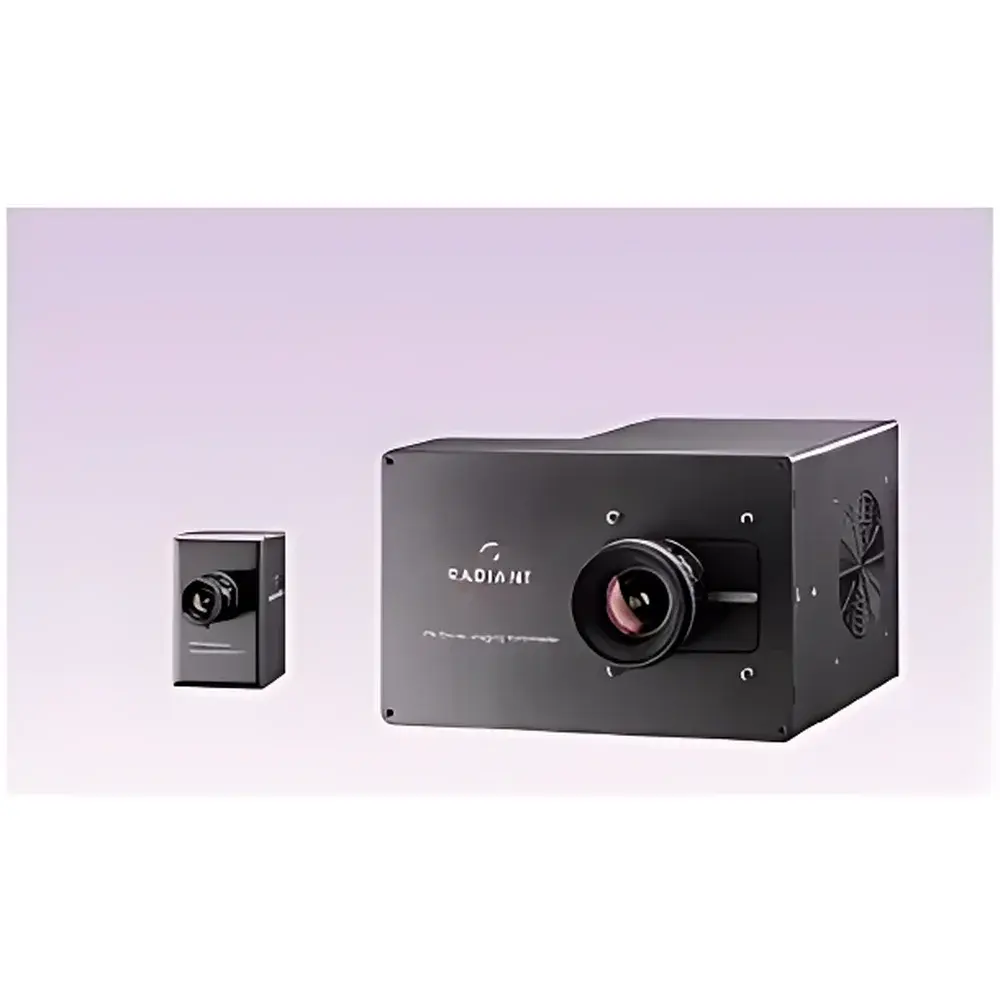
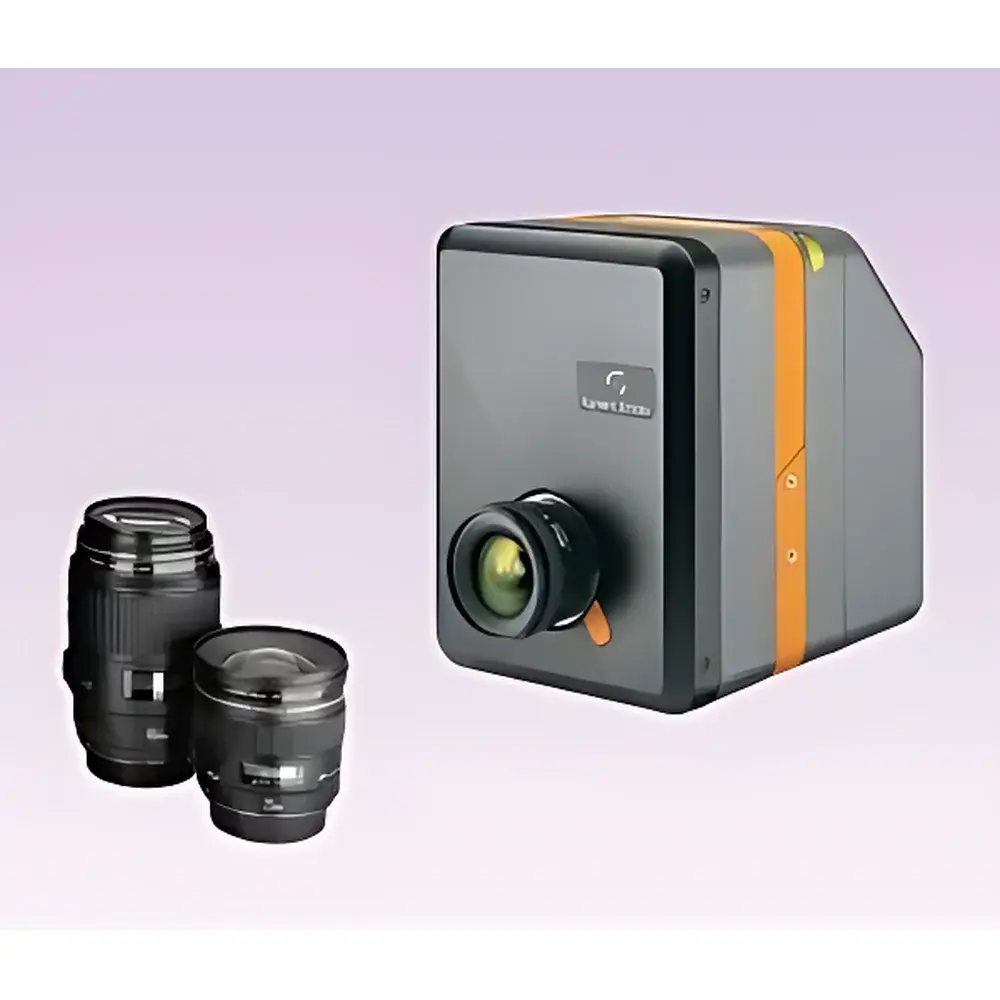
Radiant Zemax ProMetric Imaging Photometer and Colorimeter
| Brand | Radiant Vision Systems (formerly Radiant Zemax) |
|---|---|
| Origin | USA |
| Model Series | ProMetric |
| Sensor Types | 10-bit, 14-bit, and 16-bit scientific-grade cooled CCD/CMOS imagers |
| Dynamic Range | Up to 1,000,000:1 (depending on model and configuration) |
| Spatial Resolution | Up to 29 megapixels (IC-PMIXX) |
| Measurement Capabilities | Luminance, Illuminance, Luminous Intensity, Luminous Flux, Radiance, Irradiance, Radiant Intensity, Radiant Flux, CIE x,y & u',v' Chromaticity, Correlated Color Temperature (CCT) |
| Compliance | NIST-traceable calibration, ISO/CIE-compliant photometric and colorimetric response |
| Software Platform | TrueTest™ and PM-Series™ software with FDA 21 CFR Part 11–compliant audit trail options |
| Interface | GigE Vision, USB3, or Camera Link (model-dependent) |
Overview
The Radiant Zemax ProMetric Imaging Photometer and Colorimeter is a high-precision, scientific-grade imaging system engineered for quantitative photometric and colorimetric characterization of light-emitting and light-scattering surfaces. Built upon calibrated, thermoelectrically cooled CCD or CMOS sensor architectures, the ProMetric series implements CIE-standard photopic (V(λ)) and color-matching functions—realized through precision optical filter stacks aligned to CIE 1931 and CIE 1976 chromaticity standards. Unlike spot-based photometers, ProMetric captures full-field spatial distributions of luminance (cd/m²), chromaticity (x,y, u’,v’), correlated color temperature (CCT), and derived metrics—including uniformity, Mura defect contrast, viewing angle performance, and angular intensity profiles—in a single acquisition. Its measurement architecture supports traceable calibration to NIST standards and conforms to ISO/CIE photometric practice (ISO/CIE 11664, ISO/CIE 11665), making it suitable for R&D validation, production line qualification, and regulatory-compliant quality assurance in display, lighting, and automotive human-machine interface (HMI) development.
Key Features
- Multi-tier sensor platform: Selectable 10-bit (IP-PM10), 14-bit (IC-PMGX), or 16-bit (IC-PM03/PM13) scientific-grade imagers with thermoelectric cooling for thermal stability and repeatability ≤ ±0.5% over 8 hours.
- High dynamic range operation: Configurable exposure control, pixel binning, and auto-gain algorithms enable accurate measurement across luminance ranges from 0.001 cd/m² to >10⁶ cd/m².
- Integrated touchscreen interface (IC-PMGX, IC-PMIXX): On-device preview, focus-assisted alignment, and real-time histogram visualization reduce setup time and operator dependency.
- Optical calibration traceability: Factory-applied, NIST-traceable photometric and colorimetric calibrations delivered with each instrument; user-performed recalibration supported via Radiant’s CalCheck™ verification toolkit.
- Rugged industrial design: Aluminum alloy housing rated IP50; operational temperature range: 15–35°C; humidity tolerance: 20–80% RH non-condensing.
Sample Compatibility & Compliance
ProMetric systems are validated for measurement of emissive and reflective surfaces including TFT-LCD, OLED, microLED, and Mini-LED displays; automotive instrument clusters and HUDs; projection systems (front/rear); LED luminaires and backlight units (BLUs); and diffuse/scattering materials (e.g., diffuser films, textured plastics, coated metals). All models comply with ISO 9241-307 (display optical measurement), IEC 62341-6-3 (OLED testing), and ASTM E308 (color computation). Optional GLP/GMP-ready configurations include electronic signatures, audit trails, and 21 CFR Part 11–compliant data archiving via TrueTest™ software.
Software & Data Management
The ProMetric platform is driven by TrueTest™ software—a Windows-based application providing full instrument control, automated test sequencing, and advanced image analytics. Core capabilities include: real-time image differencing, region-of-interest (ROI) analysis, Mura detection using gradient-based thresholding and FFT filtering, luminance uniformity mapping (min/max/mean deviation), and angular intensity profiling via motorized goniometer integration. Data export supports IES, EULUMDAT, CSV, TIFF, and industry-standard bitmap formats. For enterprise deployment, TrueTest™ supports centralized database logging, role-based access control, and integration with MES/QMS platforms via RESTful API or PmEngine™ SDK (C++, Python, .NET bindings).
Applications
- Display manufacturing: Pixel-level luminance/chromacity uniformity, Mura classification (ASTM E3082), viewing angle cone analysis, and burn-in assessment.
- Automotive HMI: Instrument cluster backlight homogeneity, touch-button emissivity consistency, and HUD virtual image quality (VIQ) evaluation per SAE J1757-2.
- LED lighting: Spatial CCT variation mapping, beam pattern analysis, and lumen maintenance tracking over thermal cycling.
- AR/VR optics: Microdisplay modulation transfer function (MTF), black level leakage quantification, and chromatic aberration assessment.
- Material science: Bidirectional reflectance distribution function (BRDF) sampling, surface haze correlation, and gloss mapping per ISO 2813.
FAQ
What calibration standards does the ProMetric series follow?
ProMetric instruments are calibrated against NIST-traceable reference sources and conform to CIE 1931 photopic luminosity function and CIE 1964 10° observer color-matching functions. Calibration reports include uncertainty budgets compliant with ISO/IEC 17025 requirements.
Can ProMetric measure both luminance and radiance simultaneously?
Yes—via spectral filter wheel or dual-path optical design (model-dependent), ProMetric acquires photometric and radiometric data in synchronized acquisitions, enabling direct luminous efficacy (lm/W) calculation.
Is remote operation supported for factory-floor integration?
All ProMetric models support GigE Vision and GenICam protocols; OEM integration is enabled via PmEngine™ SDK, supporting deterministic trigger timing (<100 µs jitter) and sub-frame ROI readout for high-throughput inline inspection.
How is measurement repeatability ensured across environmental fluctuations?
Thermoelectric cooling maintains sensor temperature within ±0.1°C; internal reference LEDs monitor optical path drift; automated dark-frame subtraction and flat-field correction are applied in real time.
Does TrueTest™ support statistical process control (SPC) reporting?
Yes—TrueTest™ includes built-in SPC charting (X-bar/R, Cp/Cpk), automated pass/fail flagging per user-defined limits, and export to JMP, Minitab, or custom SQL databases.



