
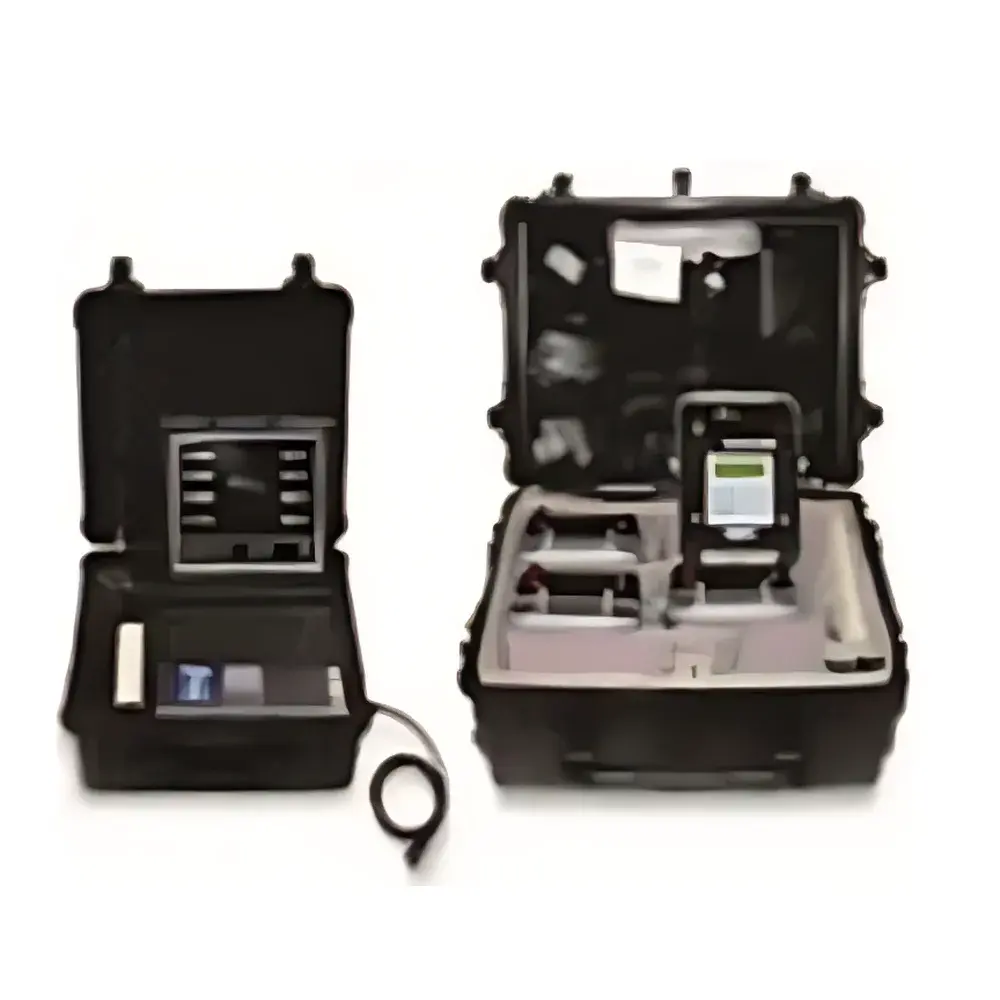
RAE Systems RDK Rapid Deployment Kit for Multi-Gas Emergency Response Monitoring
| Brand | RAE Systems Inc. |
|---|---|
| Origin | USA |
| Manufacturer Type | Authorized Distributor |
| Product Origin | Imported |
| Model | RDK (Rapid Deployment Kit) |
| Pricing | Available Upon Request |
Overview
The RAE Systems RDK (Rapid Deployment Kit) is a field-deployable, wireless multi-gas monitoring system engineered for real-time situational awareness during chemical emergencies, hazardous material (HazMat) incidents, and industrial safety response operations. Built upon the AreaRAE platform—a ruggedized, intrinsically safe, portable area monitor—the RDK leverages proven electrochemical, catalytic bead, photoionization (PID), and metal oxide semiconductor (MOS) sensor technologies to detect and quantify volatile organic compounds (VOCs), combustible gases (LEL), oxygen (O₂), carbon monoxide (CO), hydrogen sulfide (H₂S), and other toxic industrial chemicals (TICs). The system operates on a peer-to-peer mesh network architecture, enabling up to 32 AreaRAE units to transmit synchronized, timestamped concentration data wirelessly to a central command laptop or tablet within a 5 km operational radius—without reliance on cellular infrastructure or pre-installed network nodes. This architecture ensures immediate deployment in unprepared environments, including disaster zones with compromised communications, confined spaces, offshore platforms, and urban public venues.
Key Features
- Military-grade transit case: IP67-rated, shock-absorbing, corrosion-resistant aluminum enclosure with custom foam inserts for secure transport of all components—including up to 32 AreaRAE monitors, charging docks, antennas, GPS modules, and control software.
- Wireless real-time telemetry: IEEE 802.15.4-based mesh networking with automatic node discovery, self-healing topology, and encrypted data transmission (AES-128) compliant with NIST SP 800-53 security controls.
- Multi-sensor flexibility: Each AreaRAE unit supports configurable 4–6 gas detection configurations; interchangeable sensor cartridges enable rapid reconfiguration for site-specific threat profiles (e.g., refinery vs. wastewater treatment vs. chemical warehouse).
- Extended operational autonomy: Rechargeable lithium-ion batteries provide ≥24 hours of continuous operation; hot-swappable battery design allows uninterrupted monitoring during extended incident response.
- Command-center visualization: Integrated RAEView™ software delivers georeferenced, color-coded plume mapping, trend analysis, alarm escalation workflows, and automated report generation in PDF/CSV formats.
Sample Compatibility & Compliance
The RDK system is validated for use across diverse environmental matrices—including ambient air, industrial process headspaces, marine boundary layers, and confined-space atmospheres—without sample conditioning or dilution. All AreaRAE sensors meet IEC 61508 SIL 2 functional safety requirements for gas detection. The system complies with OSHA 29 CFR 1910.120 (HAZWOPER), NFPA 70E, ATEX Directive 2014/34/EU (II 2G Ex ib IIB T4 Gb), and IECEx certification (Ex ib IIB T4 Gb). Data integrity adheres to FDA 21 CFR Part 11 principles via electronic audit trails, user authentication, and immutable data logging—supporting GLP/GMP-aligned incident documentation for regulatory reporting.
Software & Data Management
RAEView™ v5.x serves as the unified command interface, supporting Windows OS and compatible with VMware virtual environments for integration into enterprise EHS platforms. Software features include dynamic contour mapping using triangulated interpolation algorithms, customizable alarm thresholds (ppm, %LEL, %O₂), historical data replay with playback speed control, and export of raw sensor logs with metadata (GPS coordinates, UTC timestamps, battery voltage, sensor status flags). All data files are digitally signed and SHA-256 hashed to ensure forensic traceability—critical for post-incident root cause analysis and legal defensibility.
Applications
- HazMat incident response: Rapid perimeter establishment, plume tracking, and evacuation zone validation during chemical spills, rail derailments, or tanker ruptures.
- Offshore & onshore energy: Continuous monitoring across multiple deck levels, flare stacks, and pipeline right-of-ways on oil rigs and LNG terminals.
- Public safety operations: Temporary deployment at stadiums, concert venues, mass transit hubs, and political gatherings for covert or overt threat surveillance.
- Industrial facility protection: Mobile leak detection patrols in refineries, petrochemical plants, pulp & paper mills, and power generation facilities.
- Environmental emergency response: Real-time VOC and H₂S dispersion modeling following landfill leachate breaches, agricultural chemical drift, or wastewater treatment failures.
- Confined space entry verification: Pre-entry atmospheric assessment and continuous monitoring during maintenance, tank cleaning, or sewer rehabilitation.
FAQ
What is the maximum number of AreaRAE units supported by a single RDK command station?
Up to 32 AreaRAE monitors can be simultaneously managed and visualized in real time.
Does the RDK require external cellular or Wi-Fi infrastructure to operate?
No—the system uses a proprietary, license-free 900 MHz mesh radio network and operates independently of third-party communication networks.
Can sensor configurations be changed in the field without returning units to a service center?
Yes—modular sensor cartridges are user-replaceable in under 90 seconds using standard tools; calibration is performed via built-in span gas ports.
Is RAEView software validated for regulated industries requiring audit-ready data?
Yes—RAEView includes full 21 CFR Part 11 compliance features: role-based access control, electronic signatures, and tamper-evident audit logs.
What environmental certifications does the RDK carry for international deployment?
ATEX, IECEx, UL/cUL Class I Division 1, and CSA Group certifications cover global operational use in explosive atmospheres.
Related Products







