
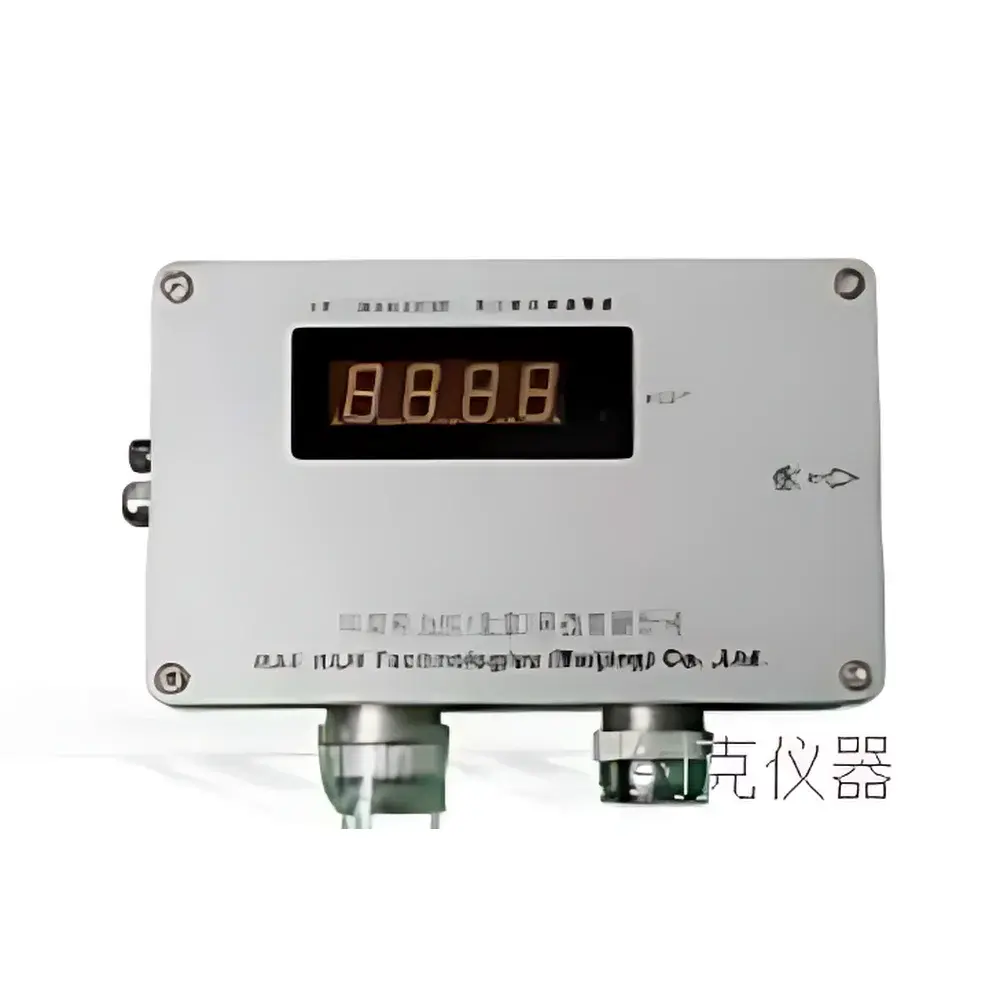
RAE Systems SP-1204A Fixed-Mount Carbon Monoxide (CO) Gas Detector
| Brand | RAE Systems Inc. |
|---|---|
| Origin | USA |
| Model | SP-1204A |
| Detection Principle | Electrochemical Sensor |
| Measurement Range | 0–1000 ppm CO |
| Resolution | 1 ppm |
| Accuracy | ±3% FS |
| Response Time (T90) | <30 s |
| Output Signals | 4–20 mA, RS485 Modbus RTU, Active Switch Output (0–300 s adjustable delay) |
| Data Logging | Up to 900 alarm events with timestamp |
| Display | High-brightness LED, 4-digit |
| Operating Temperature | –20 °C to +50 °C |
| Enclosure Rating | IP65 |
| Compliance | UL 2075, CE, RoHS, ATEX Zone 2 (non-incendive), IEC 61000-4 EMC series |
Overview
The RAE Systems SP-1204A is a fixed-mount, wall- or duct-mounted carbon monoxide (CO) gas detector engineered for continuous ambient air monitoring in non-hazardous (non-explosive) indoor and outdoor environments. It employs a high-stability, temperature-compensated electrochemical sensing cell optimized specifically for CO detection—delivering selective, low-drift response in complex industrial atmospheres. Unlike broad-spectrum metal oxide sensors, the SP-1204A’s electrochemical transducer exhibits minimal cross-sensitivity to common interferents such as hydrogen (H₂), nitrogen dioxide (NO₂), sulfur dioxide (SO₂), and volatile organic compounds (VOCs), ensuring measurement integrity where background gas composition varies. Designed for long-term unattended operation, the unit integrates automatic baseline correction and sensor life diagnostics, supporting predictive maintenance planning per ISO 4074 and IEC 62061 functional safety guidelines.
Key Features
- Electrochemical CO sensor with 24-month typical service life and factory calibration traceable to NIST standards
- IP65-rated polycarbonate housing rated for harsh industrial environments—resistant to dust ingress and water jet exposure
- Simultaneous dual-mode output: isolated 4–20 mA analog signal (HART-compatible), RS485 Modbus RTU protocol, and programmable active switch output with user-defined de-energization delay (0–300 s)
- Onboard non-volatile memory storing up to 900 time-stamped alarm events—including peak concentration, duration, and event type (e.g., high alarm, fault, sensor timeout)
- Infrared remote configuration interface eliminating need for physical access or enclosure opening—reducing downtime during routine calibration or threshold adjustment
- Seven distinct audible/visual alarm patterns: differentiated tone frequencies (85 dB @ 1 m), flashing LED color sequences (red/amber/green), and pulsation rates aligned with alarm severity levels per EN 45545-2 and NFPA 72 requirements
Sample Compatibility & Compliance
The SP-1204A is validated for deployment in ambient air sampling applications across non-classified (non-ATEX Zone 0/1) locations including control rooms, laboratories, boiler houses, wastewater lift stations, and warehouse corridors. It complies with UL 2075 (Gas and Vapor Detectors and Sensors), CE marking under the EU Low Voltage Directive (2014/35/EU) and EMC Directive (2014/30/EU), and RoHS 2011/65/EU. While not certified for Class I Division 1 or ATEX Zone 1 use, its non-incendive circuitry meets ATEX Zone 2/IECEx Zone 2 requirements for Group II equipment. All firmware revisions undergo regression testing against IEC 61508 SIL 2 functional safety architecture principles, and audit trails support GLP/GMP-aligned record retention for regulated facilities.
Software & Data Management
Data retrieval and configuration are supported via RAE Systems’ proprietary ProRAE Studio II software (Windows-based), enabling batch firmware updates, alarm log export (CSV/Excel), sensor drift trend analysis, and calibration certificate generation compliant with ISO/IEC 17025 documentation requirements. The Modbus RTU interface allows seamless integration into existing SCADA, DCS, or BMS platforms without proprietary gateways. Event logs include UTC timestamps synchronized via optional NTP server linkage, satisfying FDA 21 CFR Part 11 electronic record integrity criteria when deployed with appropriate system validation protocols.
Applications
The SP-1204A serves critical personnel protection and process safety functions in diverse sectors: combustion efficiency monitoring in boiler rooms and cogeneration plants; leak detection in CO-supply pipelines within pharmaceutical clean utilities; ambient air quality surveillance in municipal wastewater treatment facilities (especially anaerobic digester enclosures); confined-space entry pre-screening in paper mill pulp storage areas; and continuous monitoring of CO accumulation in underground parking structures and transit maintenance depots. Its compact form factor (120 × 90 × 55 mm) and low power consumption (<1.5 W) make it suitable for battery-backed deployments in remote telemetry nodes.
FAQ
What is the recommended calibration interval for the SP-1204A?
Per RAE Systems’ technical bulletin TB-SP1204A-03, bump testing is required before each day’s use in critical applications; full span calibration is recommended every 6 months or after exposure to >500 ppm CO, sensor contamination, or mechanical shock.
Can the SP-1204A be integrated with Siemens Desigo or Honeywell Experion DCS?
Yes—via its native Modbus RTU over RS485, using standard register mapping documented in the SP-1204A Modbus Communication Protocol Manual Rev. 4.2.
Does the device support HART communication?
No—the 4–20 mA output is analog-only; HART capability requires the SP-2104A variant.
Is field replacement of the electrochemical sensor possible?
Yes—sensor modules are user-replaceable without soldering or firmware reconfiguration; each carries an embedded EEPROM storing calibration coefficients and manufacturing date.
What environmental conditions affect zero stability?
Prolonged exposure to >80% RH or rapid ambient temperature shifts (>5 °C/min) may induce transient zero drift; units shipped with built-in temperature compensation algorithms mitigate this per IEC 60751 Class B tolerance.
Related Products







