
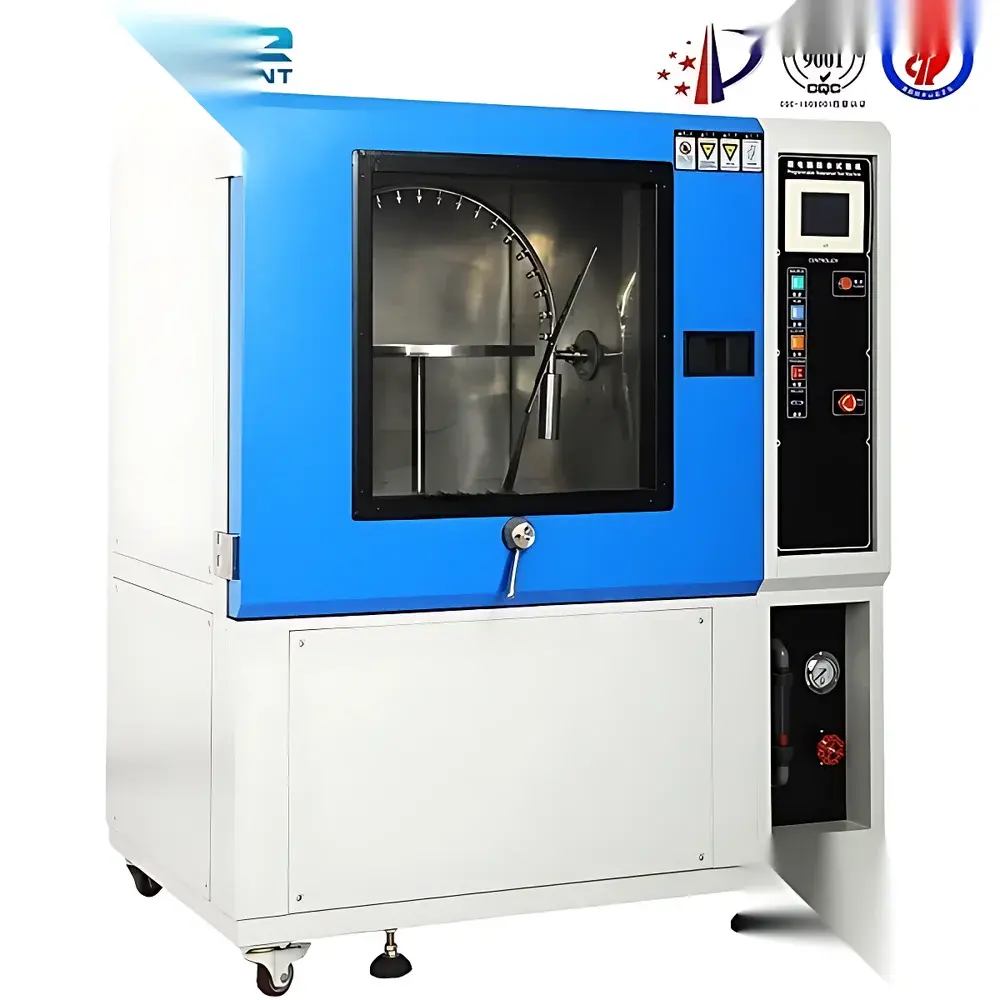
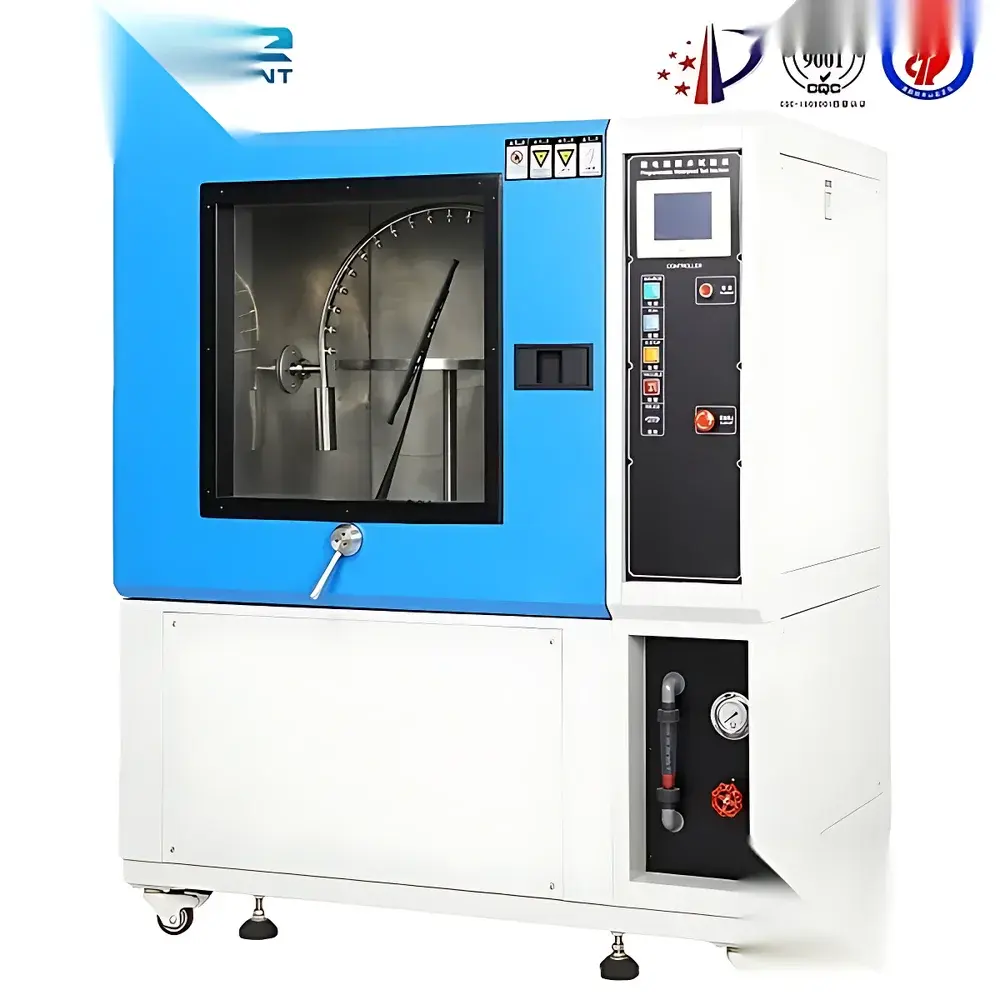
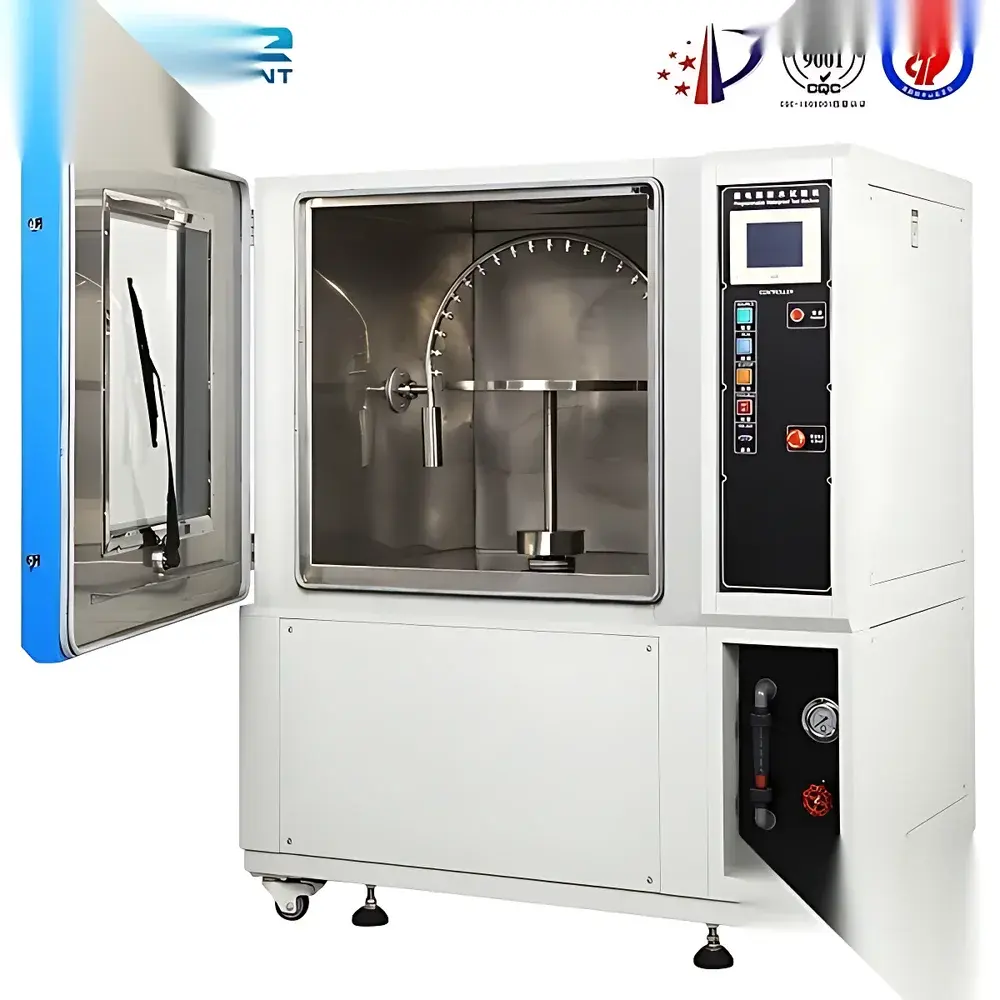
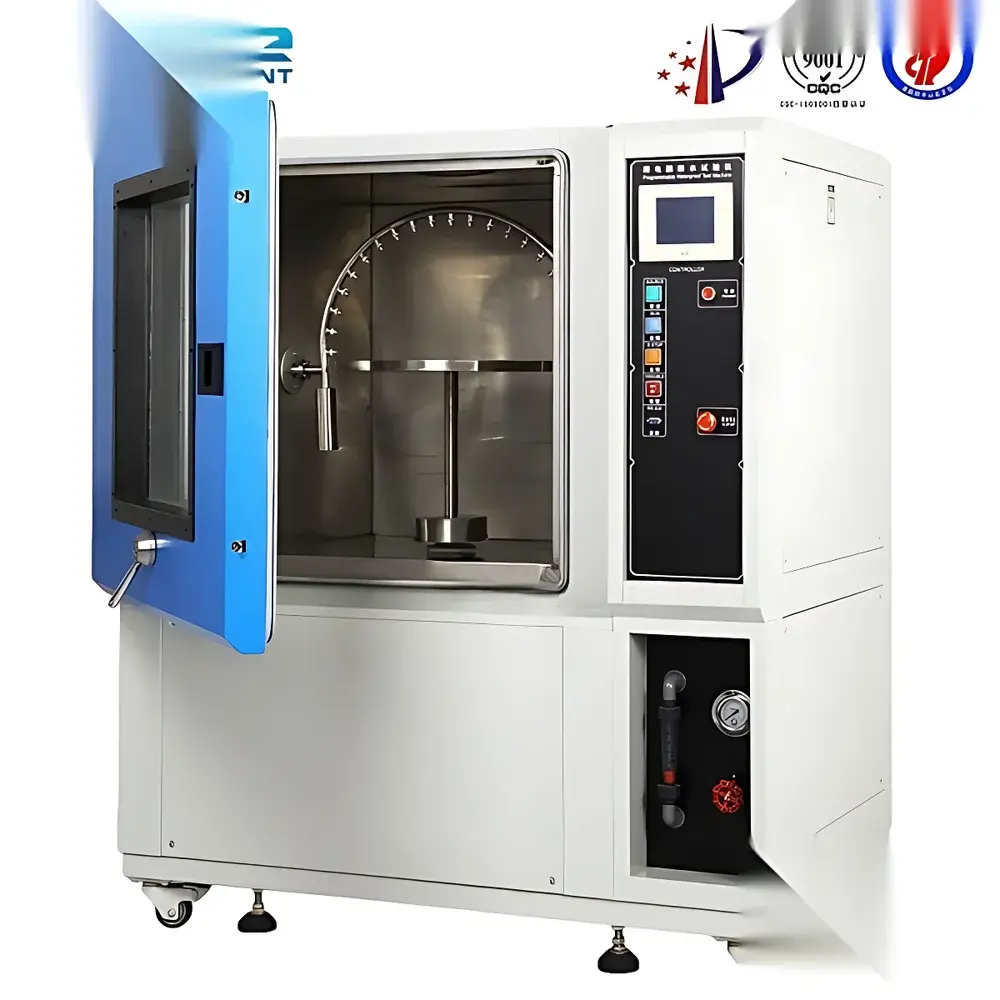
Rain Test Chamber – IPX3/IPX4 Ingress Protection Water Spray Testing System
| Brand | OEM / Custom Brand |
|---|---|
| Origin | Imported |
| Manufacturer Type | Authorized Distributor |
| Price | USD 3,500 (FOB) |
| Compliance | IPX3, IPX4 per IEC 60529, ISO 20653, GB/T 4208, MIL-STD-810G Method 506.6, GJB 150.8, GB/T 2423.38 |
Overview
The Rain Test Chamber is an engineered environmental test system designed to evaluate the ingress protection (IP) rating of enclosures—particularly for automotive lighting assemblies, outdoor electronic housings, industrial control panels, and consumer electronics—against water exposure under controlled, repeatable conditions. It operates on the principle of calibrated water spray simulation, replicating realistic rain, dripping, and splashing environments encountered during transportation, storage, or field operation. Unlike general-purpose humidity chambers, this system delivers precise volumetric flow rates, defined spray angles, regulated water temperature (ambient to 35°C), and programmable exposure durations—all in strict accordance with internationally recognized IPX3 and IPX4 test protocols. Its robust mechanical architecture ensures long-term stability in high-cycle testing environments typical of QC labs, R&D facilities, and third-party certification laboratories.
Key Features
- Structural integrity: Outer enclosure fabricated from 1.2 mm cold-rolled A3 steel, CNC-machined and electrostatically powder-coated for corrosion resistance and aesthetic durability.
- Corrosion-resistant interior: Stainless steel SUS304 inner chamber with seamless welding, eliminating crevices that could retain moisture or promote microbial growth.
- Thermal efficiency: Dual-layer insulation comprising rigid polyurethane foam (≥30 mm thickness) and glass fiber matting, minimizing thermal bridging and reducing energy consumption during extended test cycles.
- Rotating test platform: PVC-hardboard turntable (chemical resistant, non-conductive, dimensionally stable) with adjustable rotational speed (0–10 rpm) and ±0.5° positioning accuracy for uniform angular exposure.
- Fluid-contact components: All wetted parts—including nozzles, manifolds, piping, and drip trays—constructed from stainless steel (AISI 304/316) or oxygen-free copper to prevent scaling, leaching, or galvanic corrosion.
- Control flexibility: Optional selection between a basic programmable logic controller (PLC) interface with LED display or an advanced 7-inch full-color TFT touchscreen HMI developed in-house, supporting multi-step test sequences, real-time parameter monitoring, and event logging.
- Acoustic optimization: Low-noise pump assembly (<62 dB(A) at 1 m), vibration-damped mounting, and insulated water reservoir design ensure compliance with ISO 140-4 acoustic measurement requirements for laboratory environments.
Sample Compatibility & Compliance
This chamber accommodates samples up to 1,200 mm × 1,200 mm × 1,200 mm (W×D×H), with customizable turntable diameter and nozzle array configuration to match product geometry. It supports both upright and tilted mounting orientations per IEC 60529 Annex B and ISO 20653 Clause 6.2. The system is fully compliant with the following standards:
- IEC 60529:2013 (IPX3: oscillating tube; IPX4: splashing water from any direction)
- ISO 20653:2021 (Road vehicles — Degrees of protection against water ingress)
- GB/T 4208–2017 (Chinese national equivalent of IEC 60529)
- GJB 150.8A–2009 (Military standard: Rain test method)
- GB/T 2423.38–2008 (Environmental testing — Part 2: Tests — Test R: Water)
- MIL-STD-810G Method 506.6 (Rain test procedure for equipment qualification)
- UL 746C (Polymeric materials — Use in electrical equipment evaluations)
All test parameters—including water flow rate (10 ± 0.5 L/min for IPX3; 10 ± 0.5 L/min per nozzle for IPX4), nozzle orifice diameter (0.4 mm), spray pressure (80–100 kPa), and exposure duration (minimum 5 min per orientation)—are traceably adjustable and verifiable via integrated calibration ports and external flow meters.
Software & Data Management
The optional touch-based control system includes embedded data logging with timestamped records of spray duration, flow rate, chamber ambient temperature, and test stage progression. Export formats include CSV and PDF reports compatible with internal quality management systems (QMS). Audit trail functionality meets GLP and ISO/IEC 17025 documentation requirements, including user authentication, change history, and electronic signature support. For integration into enterprise lab networks, RS-485 Modbus RTU and Ethernet TCP/IP interfaces are available as factory options, enabling remote supervision via SCADA or LIMS platforms without compromising test integrity.
Applications
- Validation of IP ratings for automotive headlamps, taillights, and ADAS sensor housings prior to type approval (UN ECE R112, SAE J575).
- Pre-compliance screening of industrial IoT gateways, solar inverters, and telecom base station cabinets against NEMA 3R/4X equivalency.
- Reliability assessment of medical device enclosures (e.g., portable ultrasound units, infusion pumps) per IEC 60601-1 Clause 11.6.
- Design verification of consumer electronics (smart speakers, outdoor security cameras) targeting IPX4 certification for retail labeling.
- Accelerated environmental stress screening (ESS) in manufacturing process validation, aligned with AEC-Q200 stress test profiles for passive components.
FAQ
What is the maximum sample weight supported by the rotating platform?
Standard configuration supports up to 50 kg; heavy-duty variants (up to 150 kg) are available upon request with reinforced drive mechanism and dynamic balancing.
Can the chamber be configured for IPX5 or IPX6 testing?
Yes—optional high-pressure nozzle modules (50–100 kPa) and flow control upgrades enable full IPX5/IPX6 capability per IEC 60529, subject to structural reinforcement and calibration verification.
Is water filtration included in the standard configuration?
A 5 µm inline particulate filter is standard; optional deionized water recirculation with UV sterilization and conductivity monitoring is available for semiconductor-grade applications.
Does the system support automated pass/fail evaluation?
The HMI software allows user-defined pass criteria (e.g., leakage detection threshold, post-test insulation resistance minimum), but final judgment requires visual or electrical continuity inspection per standard clauses.
What maintenance intervals are recommended for long-term reliability?
Nozzle inspection every 200 operating hours; pump oil change every 2,000 hours; full calibration verification annually or after 500 test cycles—documented per ISO/IEC 17025 Clause 7.7.



