
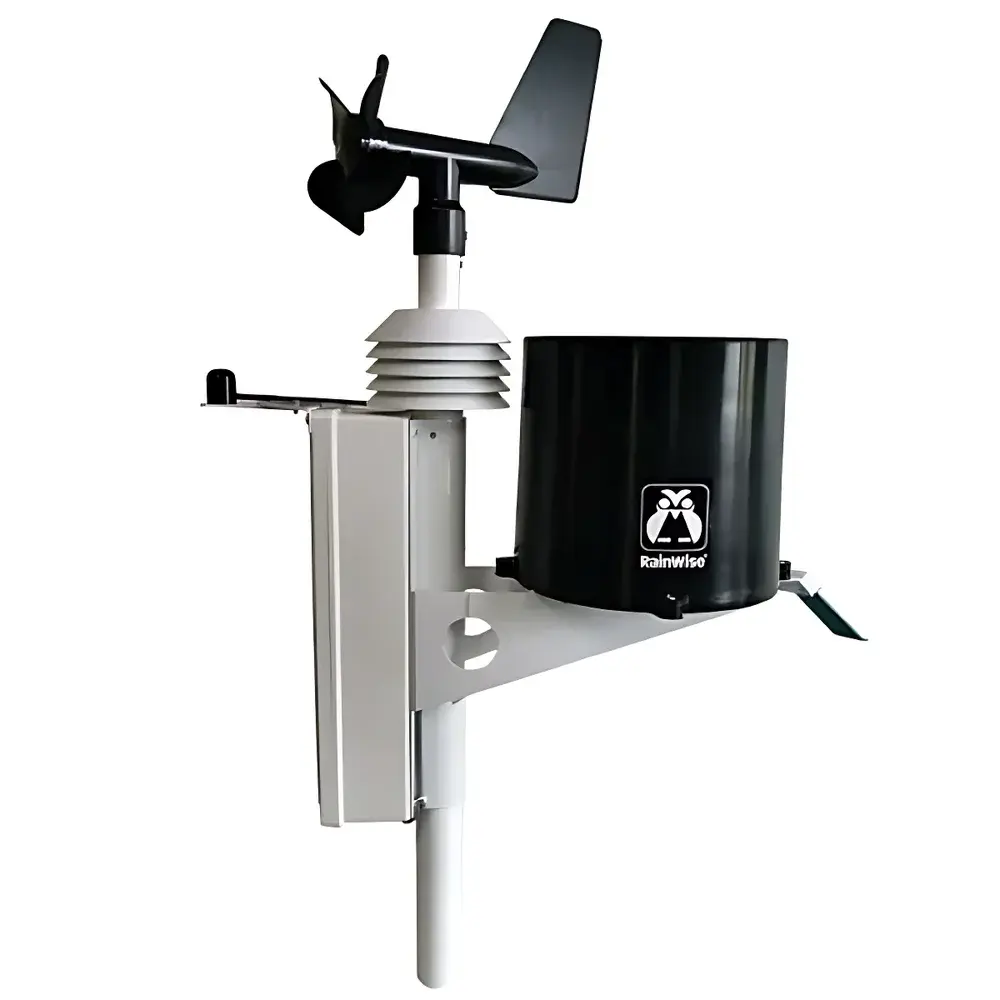
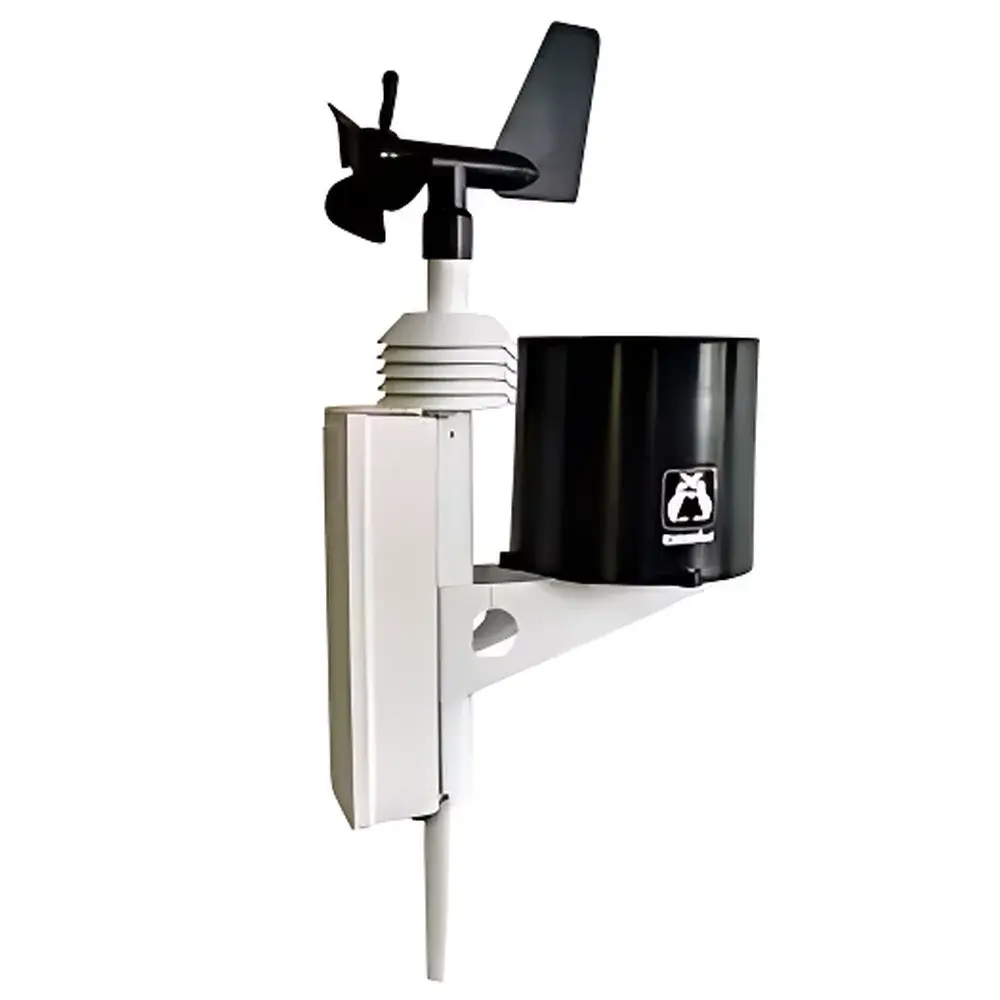
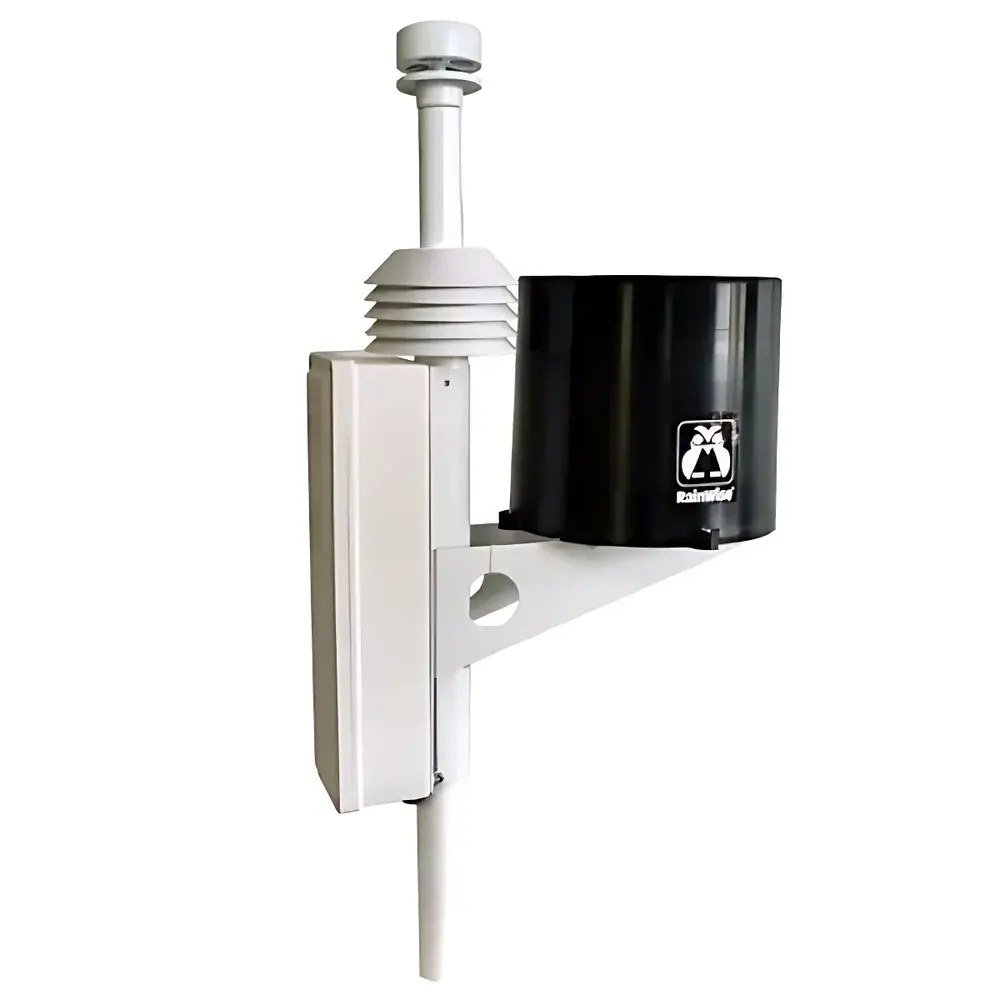
RainWise MK-III-RTI-MB Modbus Weather Station
| Brand | RainWise |
|---|---|
| Origin | USA |
| Model | MK-III-RTI-MB |
| Instrument Type | Portable Weather Station |
| Communication Protocol | Modbus RTU over RS-485 |
| Certifications | NIST-traceable sensor options available |
| Power Options | DC input (12–24 VDC), optional solar-powered variant (MK-III-RTI-MBS) |
| Enclosure Material | UV-stabilized polymer housing with stainless steel mounting hardware |
| Operating Temperature Range | –40 °C to +60 °C |
| IP Rating | IP66 |
| Warranty | 1 year standard, extendable to 2 years |
Overview
The RainWise MK-III-RTI-MB is a fully integrated, industrial-grade portable weather station engineered for reliable environmental data acquisition in demanding operational environments. Built upon the proven MK-III sensor platform, this model features native Modbus RTU communication over RS-485—enabling deterministic, noise-immune serial integration into programmable logic controllers (PLCs), remote terminal units (RTUs), distributed control systems (DCS), building management systems (BMS), and SCADA infrastructure. Unlike wireless or proprietary protocol-based stations, the MK-III-RTI-MB eliminates latency and packet loss concerns by delivering time-synchronized, register-mapped meteorological measurements via a deterministic master-slave architecture. Its core measurement suite includes wind speed and direction (cup-and-vane), ambient temperature, relative humidity, barometric pressure, and tipping-bucket rainfall accumulation—each sensor calibrated traceably to NIST standards upon factory assembly. The station operates across an extended thermal range (–40 °C to +60 °C) and maintains structural integrity under high-wind and UV-exposed conditions through its UV-stabilized polymer enclosure and stainless steel mounting components.
Key Features
- Native Modbus RTU (RS-485) interface with configurable baud rates (9.6 kbps to 115.2 kbps) and parity settings for seamless interoperability with industrial automation platforms
- Pre-assembled, factory-calibrated sensor array with documented calibration certificates; no field commissioning required
- Compact, low-profile mechanical design optimized for rooftop, mast, or pole mounting in space-constrained installations
- Wide operating temperature range (–40 °C to +60 °C) and IP66-rated ingress protection for outdoor deployment in harsh climates
- Modular architecture supporting optional sensor expansions: solar radiation (pyranometer), UV index (UV-A/B), leaf wetness, soil temperature & moisture, and heated rain gauge (120/240 VAC)
- Dual power compatibility: standard 12–24 VDC input; optional solar-ready configuration (MK-III-RTI-MBS) with charge controller and battery management
- Robust mechanical construction using corrosion-resistant stainless steel fasteners and UV-stabilized polymer housings
Sample Compatibility & Compliance
The MK-III-RTI-MB is designed for continuous, unattended operation in regulatory-compliant environmental monitoring applications. Sensor outputs meet ASTM E779 (relative humidity), ASTM D5096 (temperature), and IEC 61000-4-3 (EMC immunity) requirements. Optional NIST-traceable calibration documentation supports GLP and ISO/IEC 17025-aligned quality assurance programs. While not certified for safety-critical aviation or nuclear applications, the station satisfies typical Class I, Division 2 hazardous location allowances when installed per NEC Article 501. Data integrity is preserved through CRC-16 error checking on all Modbus frames and non-volatile memory storage of configuration parameters. For facilities subject to FDA 21 CFR Part 11 or EU Annex 11, third-party validation packages—including IQ/OQ documentation templates and audit trail configuration guidance—are available upon request.
Software & Data Management
The MK-III-RTI-MB operates as a passive Modbus slave device—requiring no embedded firmware updates or local software execution. All data registers are mapped according to standard Modbus function codes (03h Read Holding Registers, 06h Write Single Register). Integration with vendor-agnostic SCADA platforms (e.g., Ignition, Siemens Desigo, Schneider EcoStruxure) is achieved using pre-defined register maps covering real-time values, status flags, and diagnostic counters. For cloud connectivity, third-party Ethernet-to-Modbus gateways (e.g., Moxa EDS-G205, Red Lion DA Series) enable transparent bridging to MQTT or HTTP APIs. RainWise’s optional rainwise.net portal provides remote firmware diagnostics, historical data visualization, and export to CSV/JSON—but does not host raw Modbus register logs. Audit-ready logging requires external historian integration (e.g., OSIsoft PI System, Canary Labs) configured to capture timestamped register reads at user-defined intervals.
Applications
- Building automation: HVAC optimization, demand-controlled ventilation, and energy load forecasting based on real-time ambient conditions
- Transportation infrastructure: Road surface condition modeling, airport crosswind alerts, bridge icing prediction, and rail corridor microclimate monitoring
- Agricultural decision support: Irrigation scheduling, frost warning triggers, pesticide application windows, and greenhouse climate control feedback loops
- Renewable energy: Solar irradiance correlation for PV output forecasting and wind resource assessment for turbine performance benchmarking
- Environmental compliance: Ambient air quality network supplementation, landfill gas monitoring site meteorology, and stormwater runoff modeling inputs
- Industrial risk mitigation: Crane and scaffold wind-speed interlocks, open-pit mining dust dispersion modeling, and chemical storage area ventilation control
FAQ
What Modbus function codes does the MK-III-RTI-MB support?
It implements Modbus Function Code 03 (Read Holding Registers) and Function Code 06 (Write Single Register) for configuration changes such as sampling interval or unit selection.
Can the station be powered solely by solar energy?
Yes—the MK-III-RTI-MBS variant includes a charge controller, deep-cycle battery interface, and low-power sleep mode for off-grid deployments.
Is NIST traceability provided with every unit?
NIST-traceable calibration is optional at time of order; standard units include factory calibration with documented uncertainty budgets.
Does the device support Modbus TCP natively?
No—native communication is Modbus RTU over RS-485. Modbus TCP requires an external protocol gateway.
What is the maximum recommended cable length for RS-485 communication?
Up to 1,200 meters at 9.6 kbps; length decreases inversely with baud rate per TIA/EIA-485-A specifications.
Are firmware updates field-installable?
Firmware is fixed at time of manufacture; functional upgrades are implemented via hardware revision or sensor module replacement.
Related Products







