
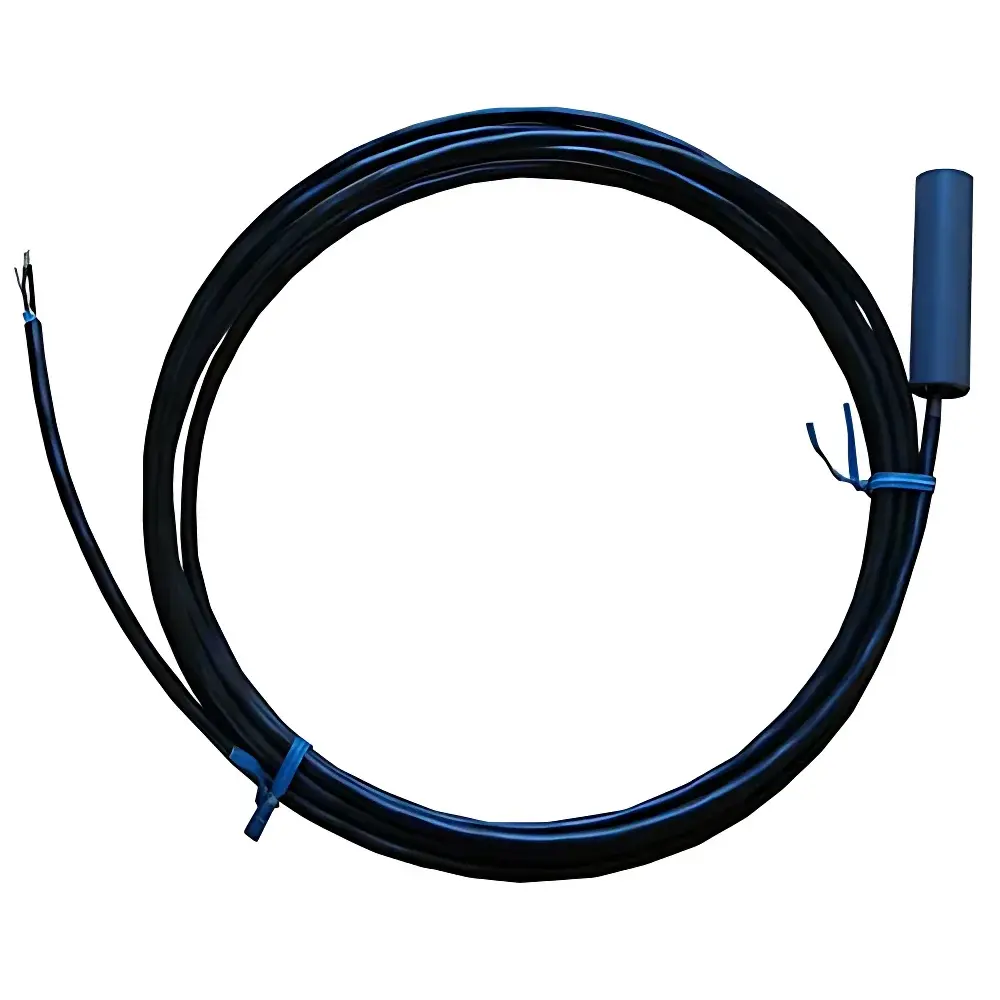
RainWise ST-TH2O Soil Temperature Sensor
| Brand | RainWise |
|---|---|
| Origin | USA |
| Manufacturer Type | Authorized Distributor |
| Origin Category | Imported |
| Model | ST-TH2O |
| Instrument Type | Soil Temperature Sensor |
| Measurement Range | -40°C to +65°C |
| Accuracy | ±0.3°C |
| Resolution | 0.1°C |
| Cable Length | 7.5 m (burial-rated, direct-burial compatible) |
Overview
The RainWise ST-TH2O Soil Temperature Sensor is an industrial-grade, precision thermistor-based probe engineered for long-term, in-situ monitoring of soil and water temperature in environmental, agricultural, hydrological, and ecological research applications. Utilizing a calibrated NTC (Negative Temperature Coefficient) thermistor encapsulated in a corrosion-resistant stainless steel housing, the ST-TH2O delivers stable, repeatable thermal measurements across extreme ambient and subsurface conditions. Its design adheres to widely accepted field sensor standards for soil physics instrumentation—including ASTM D5338 (Standard Test Method for Determining Aerobic Biodegradation of Plastic Materials in Soil) and ISO 22089:2014 (Soil quality — Guidance on soil temperature measurement)—ensuring compatibility with regulatory monitoring protocols and long-term climate observation networks. The sensor operates passively, requiring no internal power source, and interfaces seamlessly with common data loggers (e.g., Campbell Scientific CR series, Onset HOBO, or RainWise’s own MetStation platforms) via standard analog voltage or resistance output.
Key Features
- High-stability NTC thermistor with factory calibration traceable to NIST standards
- Rugged 316 stainless steel probe body rated for continuous burial in saturated soils, clay, loam, and aquatic sediments
- 7.5-meter polyurethane-jacketed, direct-burial-rated cable with UV- and moisture-resistant insulation (IEC 60529 IP68 compliant when installed)
- Operating range of –40°C to +65°C supports deployment in arctic permafrost studies and tropical wetland monitoring alike
- Measurement accuracy of ±0.3°C at 25°C (typical), with linearity deviation < ±0.15°C over full range
- Resolution of 0.1°C enables detection of subtle diurnal and seasonal thermal gradients critical for root-zone phenology and microbial activity modeling
- No internal electronics or batteries—minimizes drift risk and extends functional service life beyond 10 years under proper installation
Sample Compatibility & Compliance
The ST-TH2O is optimized for direct contact with mineral soils, organic soils, peat, gravel, and freshwater environments. It is not intended for use in highly saline groundwater (>20 dS/m) or chemically aggressive industrial effluents without protective conduit. The sensor meets RoHS Directive 2011/65/EU requirements and carries CE marking for electromagnetic compatibility (EMC Directive 2014/30/EU). Its mechanical construction conforms to IEC 60068-2 environmental testing standards for shock, vibration, and thermal cycling. For GLP-compliant deployments, calibration certificates—including uncertainty budgets and as-found/as-left data—are available upon request and support audit-ready documentation for USDA ARS, EPA Region-specific monitoring programs, and ISO/IEC 17025-accredited laboratories.
Software & Data Management
As a passive analog sensor, the ST-TH2O outputs a resistance signal (typically 10 kΩ nominal at 25°C) that is converted to temperature using the Steinhart-Hart equation or manufacturer-provided look-up tables. RainWise provides free configuration utilities compatible with Windows and macOS for integrating ST-TH2O readings into custom Python, LabVIEW, or MATLAB acquisition workflows. When deployed with RainWise MetStation or third-party loggers supporting SDI-12 or 4–20 mA conversion modules, time-stamped data can be automatically ingested into cloud platforms such as AWS IoT Core or Microsoft Azure IoT Hub. All raw resistance values are retained alongside computed temperatures to preserve traceability—a requirement under FDA 21 CFR Part 11 for validated environmental monitoring systems used in controlled agricultural trials or pharmaceutical crop studies.
Applications
- Long-term soil thermal regime mapping for permafrost degradation assessment and climate model validation
- Root-zone temperature profiling in precision irrigation and controlled-environment agriculture (CEA)
- Sediment temperature monitoring in stream restoration projects and wetland hydrology studies
- Calibration reference for distributed temperature sensing (DTS) fiber-optic systems
- Baseline thermal characterization in ASTM-compliant biodegradation and compost stability testing
- Water temperature profiling in shallow aquifers, retention ponds, and constructed treatment wetlands
FAQ
Is the ST-TH2O suitable for permanent burial in clay soils?
Yes—the probe’s stainless steel housing and polyurethane cable are specifically rated for indefinite direct burial in cohesive, high-moisture soils including clay, silt, and peat.
Can it be used in flowing water or submerged aquatic environments?
Yes, provided the cable entry point is sealed and the probe remains fully immersed; it is rated IP68 at depths up to 10 meters for continuous operation.
Does RainWise provide NIST-traceable calibration documentation?
Yes—individual calibration reports with uncertainty analysis, serial-number-matched coefficients, and compliance statements are available at time of order or as a post-purchase service.
What data logger compatibility should I verify before deployment?
Confirm your logger supports either 2-wire or 4-wire resistance measurement (RTD mode) or includes a dedicated thermistor input channel with programmable Steinhart-Hart coefficient entry.
How often does the sensor require recalibration?
Under normal field conditions, recalibration is recommended every 2–3 years; however, baseline verification against a reference thermometer prior to critical measurement campaigns is strongly advised.



