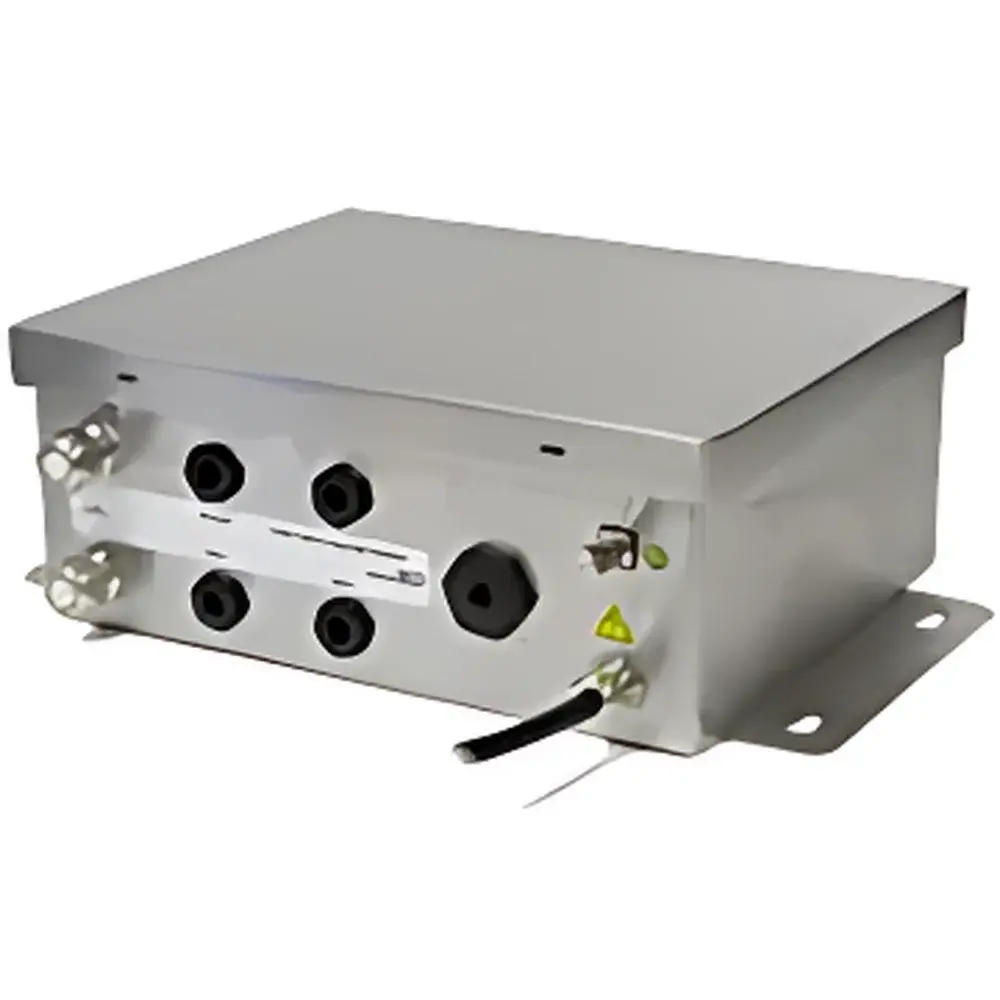
Rayscience PL Mapping System for Epitaxial Wafer Photoluminescence Imaging and Spectroscopy
| Brand | Rayscience |
|---|---|
| Origin | South Korea |
| Model | PL Mapping |
| Optical Range | 350–2200 nm (UV-VIS-NIR) |
| Spatial Resolution | 10 µm (1 µm optional) |
| XY Stage | Motorized, 1 µm step resolution, max speed 30 mm/s |
| Spectrometers | EPP2000-VIS (350–1150 nm, 2048-pixel CCD, 1.6 nm res.) & IG512-NIR (900–1700 nm, 512-pixel InGaAs array, 14-bit ADC, 2.5 MHz digitizer) |
| Excitation Flexibility | Interchangeable laser sources (355/405/450/532/635/785 nm typical) |
| Sample Compatibility | 2″ & 4″ epitaxial wafers |
| Film Thickness Measurement | Via white-light reflectance spectroscopy |
| Software | Windows-based acquisition & offline analysis suite with statistical mapping, outlier removal, edge masking, cross-section profiling, and spectral parameter extraction (integrated intensity, peak wavelength, dominant wavelength, FWHM, spectral centroid) |
Overview
The Rayscience PL Mapping System is a purpose-engineered photoluminescence (PL) and photoluminescence excitation (PLE) imaging platform designed for quantitative, non-contact characterization of compound semiconductor epitaxial wafers—primarily GaN-, AlGaN-, InGaN-, and GaAs-based LED and laser diode structures. Operating on the principle of steady-state PL spectroscopy combined with high-precision raster scanning, the system captures spatially resolved spectral data across full wafers or localized regions. Each measurement yields a complete emission spectrum per pixel, enabling extraction of critical process metrics including integrated PL intensity (proxy for quantum well quality and carrier recombination efficiency), peak wavelength (λpeak), dominant wavelength (λdom), full width at half maximum (FWHM), and spectral centroid. Complementing PL, the integrated white-light reflectance module enables in situ thin-film thickness determination with sub-nanometer sensitivity on transparent or semi-transparent layers—essential for monitoring buffer layer growth, MQW periodicity, and capping layer uniformity.
Key Features
- Multi-spectral detection architecture: Dual spectrometer configuration—EPP2000-VIS (350–1150 nm, 2048-pixel back-illuminated CCD) and IG512-NIR (900–1700 nm, thermoelectrically cooled InGaAs array)—ensures seamless coverage from deep UV through short-wave infrared without spectral gaps or detector switching artifacts.
- Sub-10 µm spatial resolution: Precision motorized XY stage (1 µm step resolution, repeatability ±0.5 µm) coupled with 10× color-corrected M-Plan objective (WD = 30.5 mm, FL = 20 mm) enables high-fidelity mapping of micro-LED arrays, defect clusters, and compositional gradients.
- Configurable excitation: Modular laser interface supports interchangeable CW diode and DPSS lasers (355, 405, 450, 532, 635, 785 nm), each equipped with motorized iris and variable ND filter (2–99% transmission) for precise photon flux control—critical for avoiding band-filling effects and thermal quenching in wide-bandgap materials.
- Automated spectral calibration: Integrated reference light source and NIST-traceable wavelength calibration routine ensure long-term spectral fidelity; real-time dark-current subtraction and pixel-wise gain correction minimize noise floor (<0.5 e−/pixel/s typical).
- Integrated reflectance metrology: Broadband white-light interferometry module (350–1100 nm) provides rapid, non-destructive film thickness and refractive index profiling with <±0.3 nm repeatability on single- and multi-layer stacks.
Sample Compatibility & Compliance
The system accommodates standard 2-inch and 4-inch epitaxial wafers on vacuum-chuck sample holders with kinematic alignment. It supports both as-grown and post-etch wafers, including those with patterned sapphire substrates (PSS), SiC, or silicon templates. All optical and mechanical components comply with IEC 61000-6-3 (EMC emissions) and IEC 61000-6-2 (immunity). Data acquisition workflows are structured to support GLP/GMP-aligned documentation: audit trails record operator ID, timestamp, instrument configuration, calibration status, and raw spectral files (HDF5 format). Optional FDA 21 CFR Part 11 compliance package includes electronic signatures, role-based access control, and immutable metadata logging.
Software & Data Management
Acquisition and analysis are executed via Rayscience’s proprietary Windows-native software suite, built on Qt and Python-based scientific libraries (NumPy, SciPy, Matplotlib). The interface features synchronized live spectral preview, real-time parameter mapping (e.g., λpeak heatmaps), and interactive cross-section extraction along arbitrary lines. Offline processing includes advanced statistical tools: Gaussian deconvolution of multi-peak spectra, local outlier suppression (3σ iterative filtering), edge masking based on intensity gradient thresholds, and batch-mode reporting compliant with ASTM F2613-22 (Standard Guide for Photoluminescence Characterization of LED Epitaxial Wafers). Raw data exports support HDF5, CSV, and industry-standard JCAMP-DX formats for third-party integration with MES or SPC platforms.
Applications
- Process development: Correlating MOCVD/MBE growth parameters (V/III ratio, temperature ramp, TMGa flow) with spatial uniformity of PL intensity and wavelength shift across wafer radius.
- In-line QC: High-throughput screening of wafer-level yield for blue/green micro-LEDs, identifying dead zones, dislocation clusters, and composition segregation prior to lithography.
- Failure analysis: Localizing non-radiative recombination centers (e.g., threading dislocations, V-pits) via FWHM broadening and intensity quenching maps.
- Thin-film metrology: Measuring AlGaN barrier thickness in UV LEDs or InGaN QW thickness in green emitters using reflectance fringe analysis.
- R&D validation: Benchmarking novel substrate engineering (e.g., nano-patterned Si, GaN-on-diamond) against conventional templates using quantitative spectral homogeneity metrics (CV < 1.2% for λpeak over 4″ wafer).
FAQ
What excitation wavelengths are supported out-of-the-box?
Standard configurations include 405 nm and 532 nm diode lasers; additional wavelengths (355, 450, 635, 785 nm) are available as factory-installed options or field-upgradable modules.
Can the system measure PL lifetime or time-resolved spectra?
No—this is a steady-state PL mapping platform. Time-resolved PL (TRPL) capability requires pulsed excitation and TCSPC detection, which are not integrated. However, the spectral architecture is compatible with external picosecond laser systems via fiber-coupled input.
Is vacuum or inert atmosphere operation supported?
The base model operates in ambient air. A sealed, nitrogen-purged sample chamber with quartz viewport is available as an option for oxygen-sensitive materials (e.g., perovskite precursors or freshly cleaved GaAs surfaces).
How is calibration traceability maintained?
Wavelength calibration uses internal Hg/Ar lamp references with annual NIST-traceable verification; intensity calibration employs calibrated Si and InGaAs photodiodes traceable to PTB standards. Calibration certificates are generated per session and embedded in HDF5 metadata.
Does the software support automated pass/fail binning per die or macro-region?
Yes—users define spatial ROI masks and parametric thresholds (e.g., “λpeak ∈ [450.0, 455.0] nm AND FWHM ≤ 18 nm”) to generate binary yield maps and export Excel-compatible bin reports with wafer coordinate indexing.