
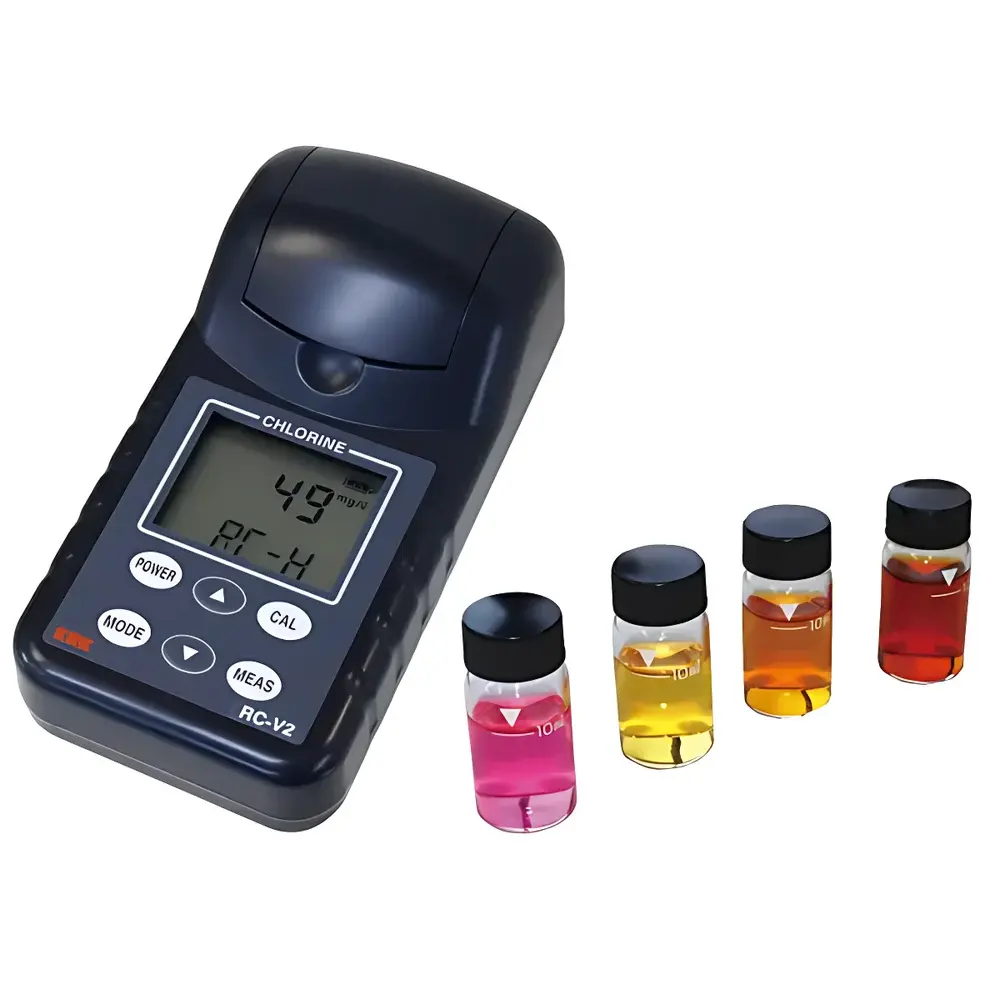
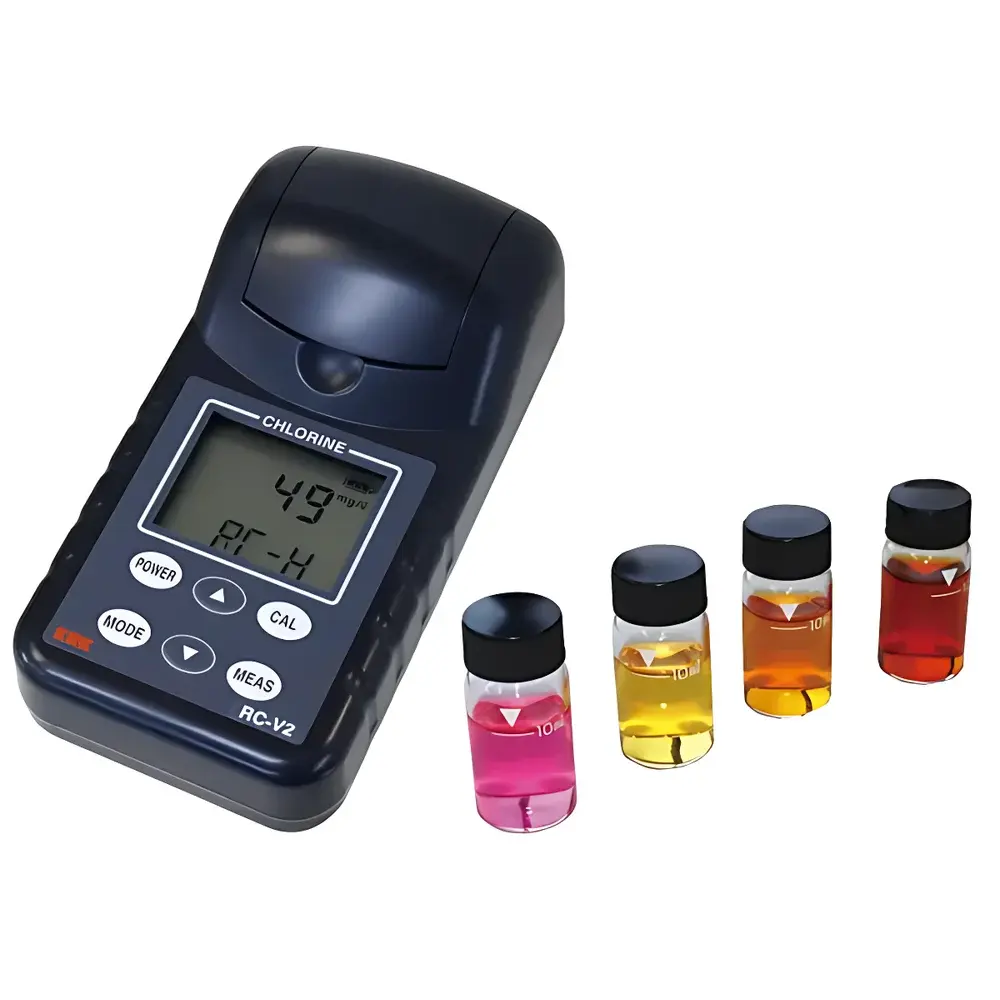
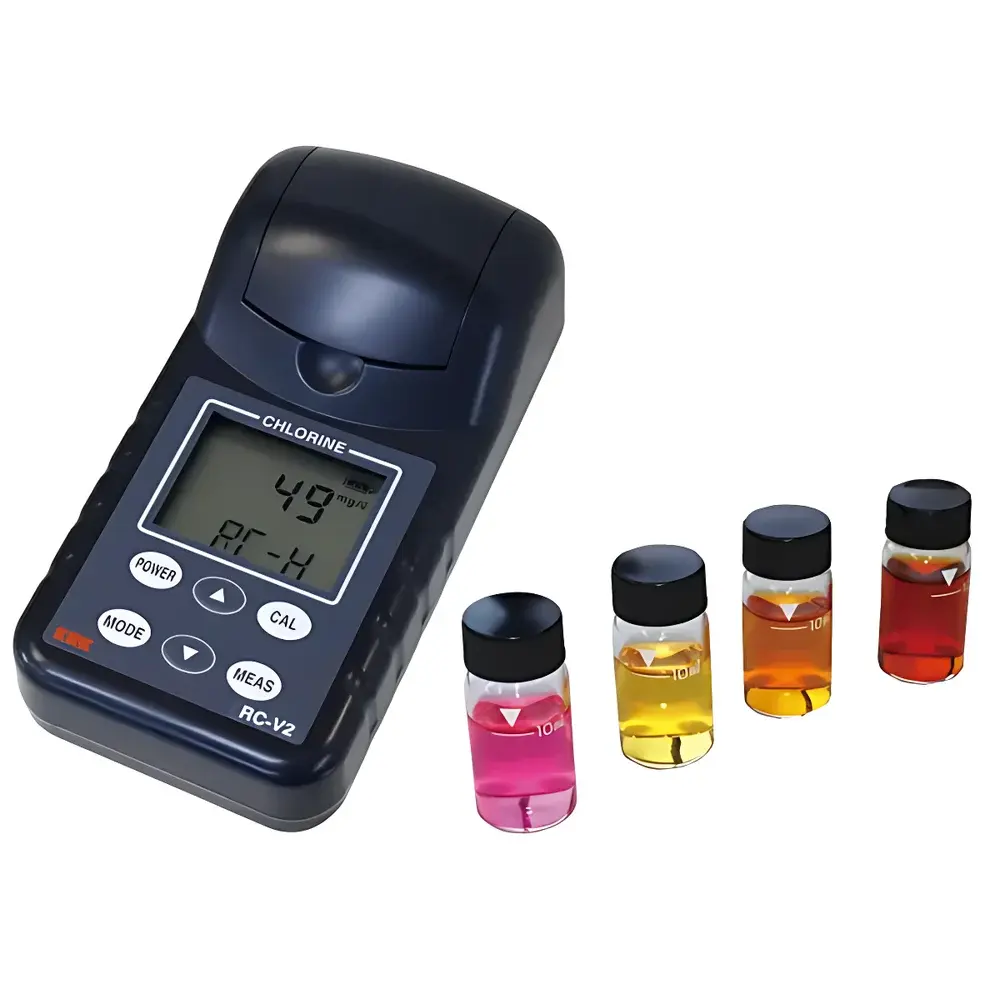
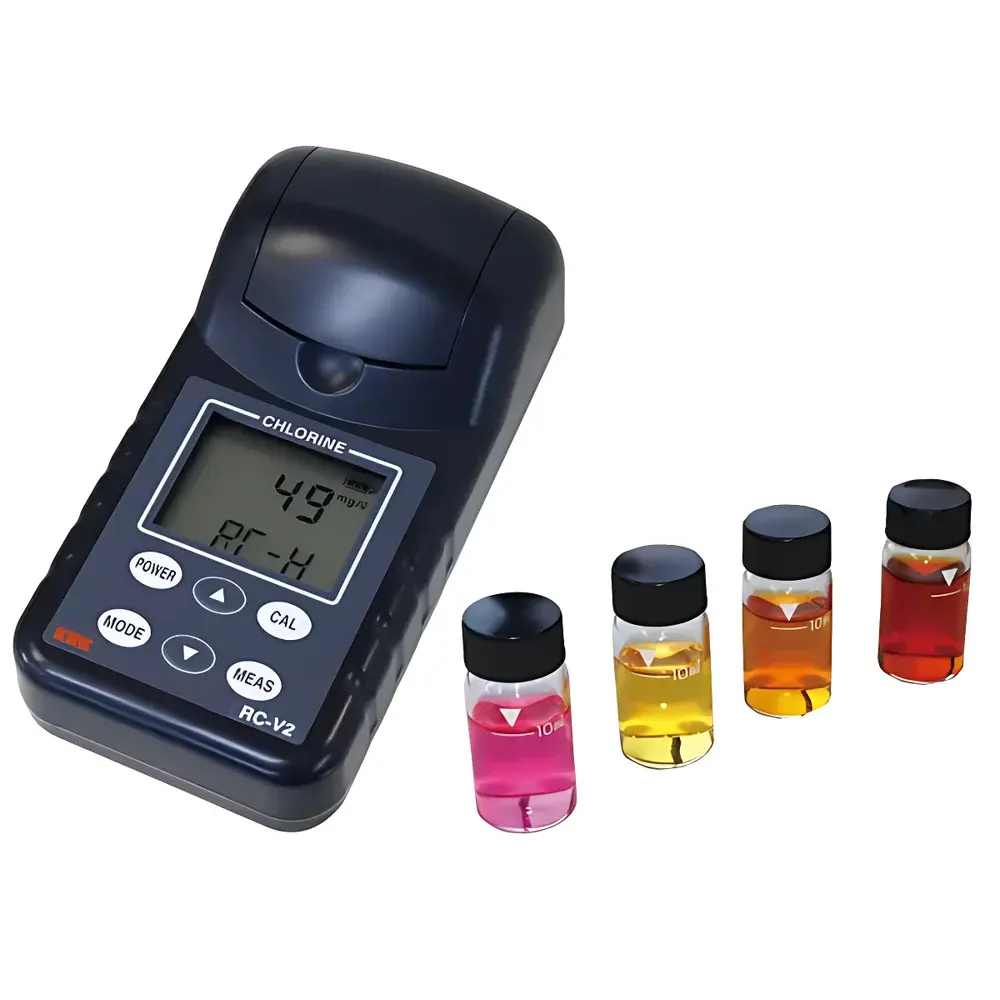
RC-V2 Ultra-High Concentration Free Chlorine Analyzer
| Brand | — |
|---|---|
| Origin | Beijing, China |
| Manufacturer Type | Authorized Distributor |
| Country of Origin | China |
| Model | RC-V2 |
| Pricing | Upon Request |
Overview
The RC-V2 Ultra-High Concentration Free Chlorine Analyzer is a robust, electrochemical-based online water quality monitoring instrument engineered for continuous, real-time measurement of free available chlorine (FAC) in demanding industrial and municipal water treatment applications. Unlike optical (DPD-colorimetric) or amperometric sensors limited to low-range residual chlorine detection (typically 0–5 mg/L), the RC-V2 employs a three-electrode potentiostatic configuration—comprising a working electrode (noble metal catalyst), counter electrode, and reference electrode—to enable stable, selective quantification of FAC across an extended range up to 200 mg/L. This architecture is specifically optimized for high-chlorine environments such as chlorination contact tanks, seawater disinfection systems, industrial cooling water loops, and wastewater effluent polishing stages where conventional sensors suffer from passivation, fouling, or signal saturation. The analyzer operates on the principle of controlled-potential amperometry: a precise bias voltage is applied to the working electrode to drive the electrochemical reduction of hypochlorous acid (HOCl) and hypochlorite ion (OCl⁻), generating a diffusion-controlled current linearly proportional to FAC concentration. Its design eliminates moving mechanical parts—relying instead on integrated electrochemical regeneration and bead-assisted mechanical cleaning—to ensure long-term operational integrity with minimal maintenance.
Key Features
- Extended measurement range: 0.0–200 mg/L free chlorine, with selectable sub-ranges (e.g., 0.00–2.00 mg/L for low-level monitoring and 5–200 mg/L for high-concentration process control)
- Triple-electrode electrochemical sensor: Pt-based working electrode, Ag/AgCl reference electrode, and stainless steel counter electrode for stable potential control and high selectivity against interfering oxidants (e.g., ozone, hydrogen peroxide)
- Integrated dual-mode cleaning system: Electrochemical polarization pulses remove oxide films and adsorbed organics; polycarbonate cleaning beads provide gentle mechanical abrasion of the electrode surface without wear or calibration drift
- No moving actuators or pumps: Solid-state architecture enhances reliability and reduces failure modes common in solenoid-driven or motorized cleaners
- Temperature-compensated output: Built-in Pt1000 RTD ensures accurate compensation across 0–50 °C operating range
- 4–20 mA analog output with HART® 7 protocol support, plus Modbus RTU over RS-485 for integration into SCADA and DCS platforms
- IP66-rated enclosure with chemical-resistant housing suitable for outdoor or wet-location installation
Sample Compatibility & Compliance
The RC-V2 is validated for use in raw seawater, brackish water, chlorinated wastewater effluents, and high-dose industrial process water—media where organic loading, suspended solids, and elevated salinity typically compromise sensor performance. It maintains accuracy in turbidities up to 100 NTU and total dissolved solids (TDS) up to 45,000 mg/L. While not certified to ISO 9001 or ISO/IEC 17025 by the distributor, the instrument’s measurement methodology aligns with principles referenced in ASTM D1253 (Standard Test Method for Total Chlorine in Water) and EPA Method 334.0 (Amperometric Titration for Residual Chlorine). Its analog and digital outputs support audit-ready data logging when paired with compliant SCADA systems meeting FDA 21 CFR Part 11 requirements for electronic records and signatures. Routine verification follows GLP-compliant procedures using NIST-traceable sodium hypochlorite standards.
Software & Data Management
The RC-V2 operates autonomously but supports remote configuration and diagnostics via its embedded web interface (accessible via Ethernet or optional Wi-Fi module). Firmware updates are performed over-the-air (OTA) using signed binary packages to preserve system integrity. All sensor readings—including raw current, temperature, cleaning cycle timestamps, and diagnostic flags—are timestamped and stored locally (16 MB non-volatile memory, retaining ≥30 days of 1-minute interval data). Export formats include CSV and JSON via USB or HTTP GET requests. When integrated into enterprise-level water management platforms (e.g., OSIsoft PI System or Siemens Desigo CC), the device contributes to trend analysis, predictive maintenance scheduling, and regulatory reporting workflows. Audit trails record all parameter changes, cleaning events, and calibration actions with user ID and timestamp—supporting GMP-aligned operational review.
Applications
- Seawater desalination pre-chlorination and post-disinfection monitoring
- High-capacity municipal drinking water treatment plants performing breakpoint chlorination
- Pharmaceutical facility purified water (PW) and water-for-injection (WFI) loop sanitization validation
- Food & beverage processing lines requiring rapid chlorine decay verification after CIP cycles
- Industrial cooling tower systems subject to biofilm mitigation with intermittent high-dose chlorine shock treatment
- Sludge dewatering and anaerobic digester effluent disinfection control
FAQ
What is the maximum recommended chloride ion concentration for reliable RC-V2 operation?
The sensor demonstrates stable performance up to 45,000 mg/L Cl⁻; beyond this, increased background current may require periodic zero-point verification using dechlorinated blank water.
Does the RC-V2 measure total chlorine or only free chlorine?
It measures free available chlorine (HOCl + OCl⁻) selectively; combined chlorine (chloramines) is not detected under standard operating conditions due to kinetic limitations of the electrode surface reaction.
How often does the bead-cleaning cycle activate?
Cleaning frequency is programmable (default: every 2 hours); it can be triggered manually or synchronized with pump cycles via dry-contact input.
Is field calibration possible without removing the sensor from the pipe?
Yes—zero calibration is performed in situ using sodium thiosulfate solution; span calibration requires a certified FAC standard solution introduced via a dedicated calibration port.
Can the RC-V2 be installed in pressurized pipelines?
It is rated for insertion-type mounting in pipes up to 10 bar (145 psi); flow velocity must remain between 0.3–3.0 m/s to ensure representative sampling and prevent bead ejection.
Related Products







