
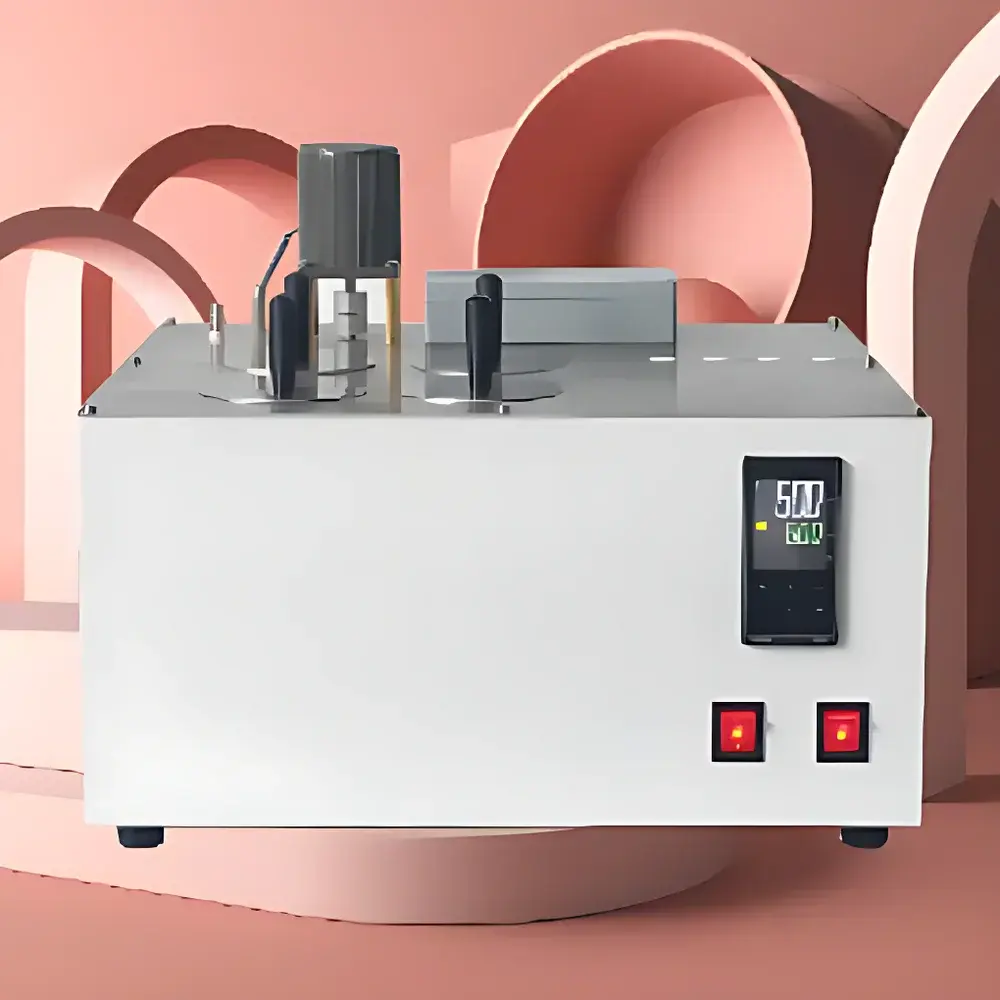
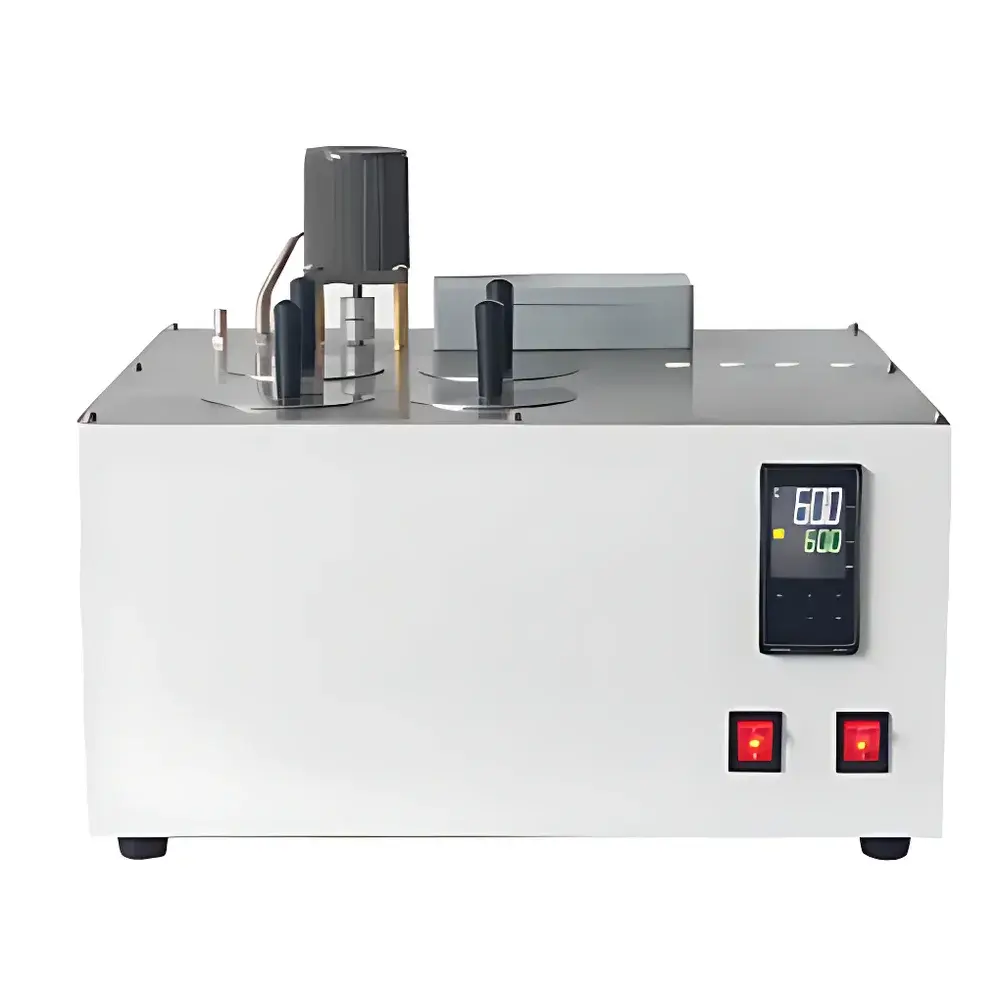
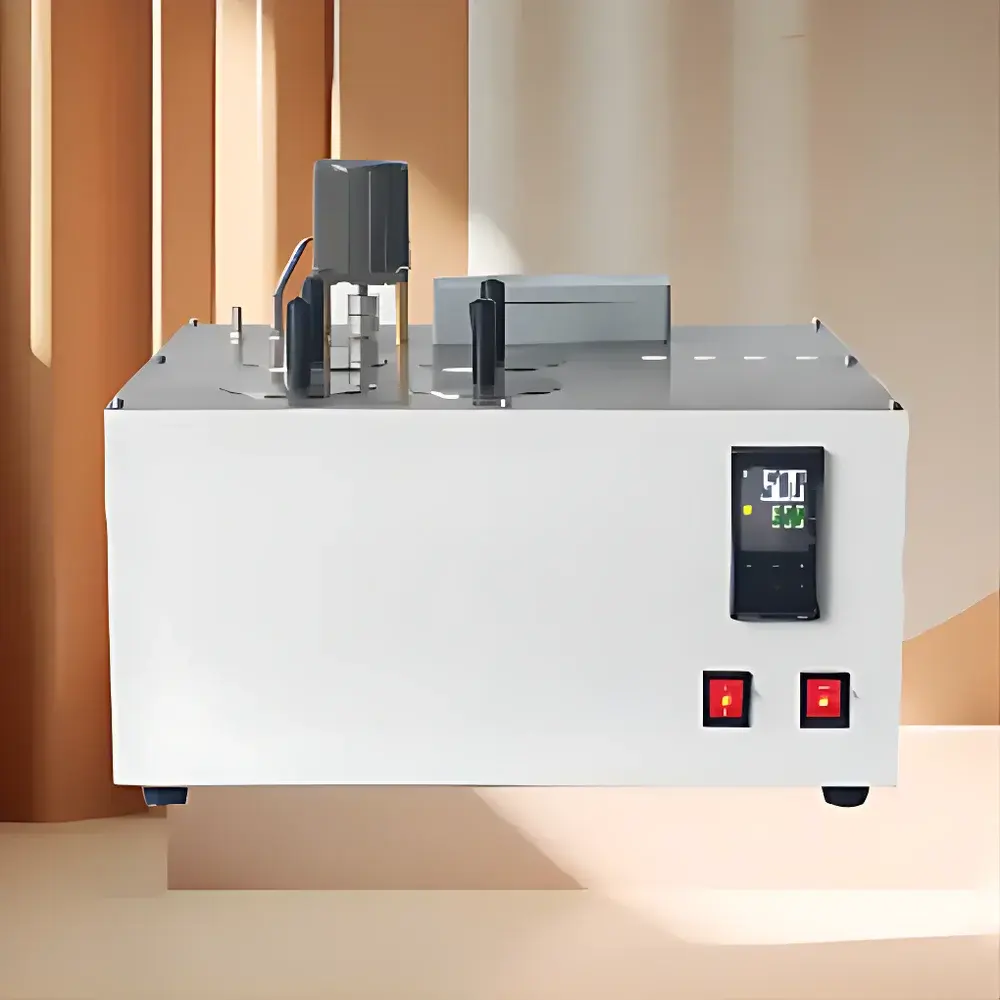
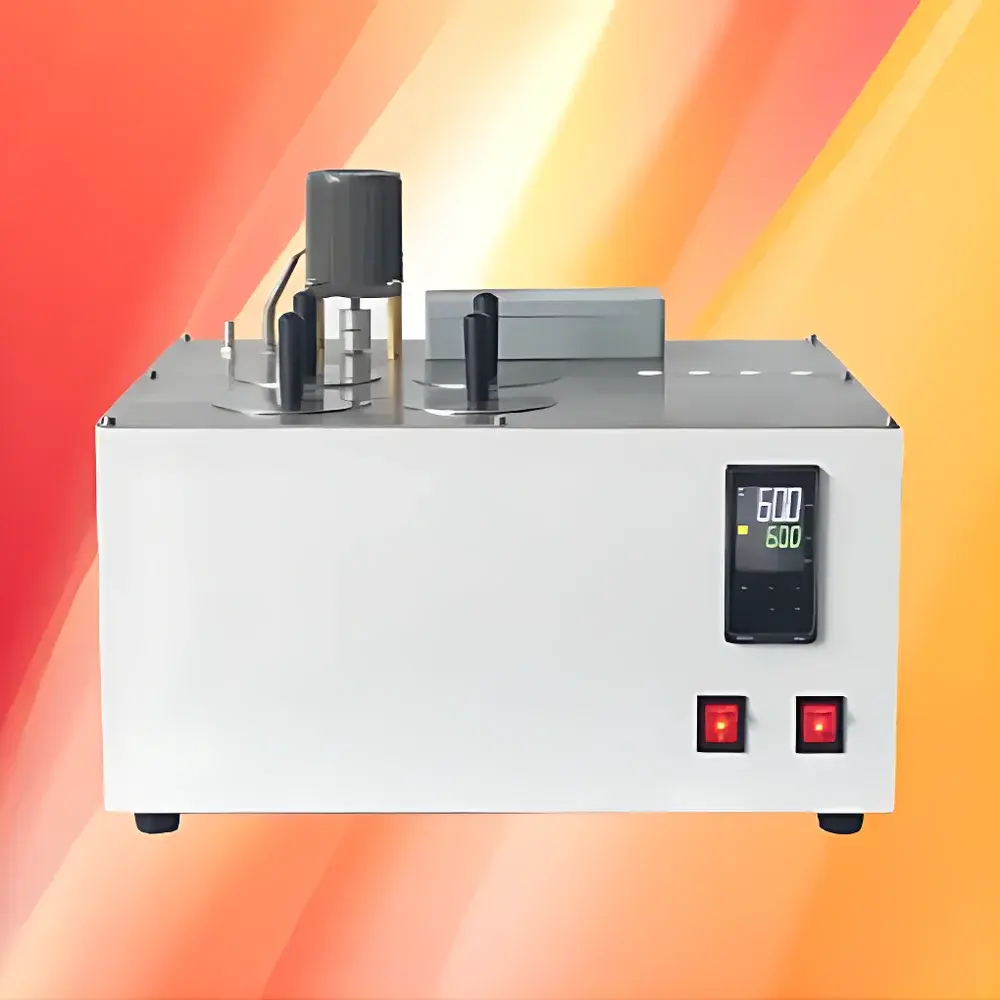
Red Sun Instrument HR-280 Automated Copper Strip Corrosion Tester
| Brand | Red Sun Instrument |
|---|---|
| Model | HR-280 |
| Power Supply | AC 220 V ±10%, 50 Hz |
| Temperature Control Range | Ambient to 300.0 °C (independently adjustable per bath) |
| Temperature Accuracy | ±0.1 °C (per bath) |
| Temperature Sensor | Imported Pt100 Platinum Resistance Thermometer |
| Heating Power | 1.5 kW (rated) |
| Bath Configuration | 4 independent metal heating baths |
| Stirring Speed | 1400 rpm |
| Timing Range | 0.01 s to 99 h 59 min |
| Display | 7-inch capacitive touch LCD with Chinese menu interface |
| Data Storage | Onboard non-volatile memory |
| Compliance | GB/T 7326–2016 (Petroleum Products — Determination of Copper Strip Corrosion) |
Overview
The Red Sun Instrument HR-280 Automated Copper Strip Corrosion Tester is an engineered solution for quantitative assessment of copper strip corrosion in petroleum products, lubricants, and hydrocarbon-based fuels—per the standardized test method defined in GB/T 7326–2016. This instrument implements a precisely regulated thermal immersion protocol wherein polished copper strips are exposed to conditioned samples within independently controlled metal baths. The system relies on high-fidelity temperature regulation (±0.1 °C), consistent mechanical agitation (1400 rpm), and programmable exposure duration to replicate ASTM D130–22 and ISO 2160 equivalent test conditions under laboratory-controlled environments. Its architecture integrates industrial-grade thermal management, real-time digital PID control, and traceable sensor calibration—ensuring repeatability across batches and compliance with quality assurance frameworks used in refinery QC labs, lubricant formulation centers, and third-party testing facilities.
Key Features
- Four independent metal-bath heating zones, each fully programmable for temperature setpoints from ambient to 300.0 °C—enabling parallel testing of multiple samples under distinct thermal profiles.
- High-stability temperature control using imported Pt100 sensors coupled with 24-bit high-resolution ADCs and proprietary linearization algorithms, delivering ±0.1 °C accuracy at steady state.
- Capacitive 7-inch touchscreen interface with intuitive Chinese-language menu navigation—designed for glove-compatible operation, dust/water resistance (IP65-rated front panel), and long-term reliability without mechanical wear.
- Dual-stage heating architecture: primary precision control (600 W) supplemented by auxiliary rapid-heating mode (1000 W), enabling fast ramp-up while maintaining tight thermal equilibrium during extended tests.
- Onboard data logging with non-volatile memory storage; timestamped records include bath temperature history, elapsed time, alarm events, and user-initiated manual overrides.
- Rear-panel USB port supporting firmware updates, configuration backup/restore, and optional mouse input for enhanced operational flexibility in shared lab environments.
Sample Compatibility & Compliance
The HR-280 accommodates standard ASTM D130 copper strips (12.5 mm × 75 mm × 1.5 mm) and supports sample volumes up to 30 mL per bath. It is validated for use with gasoline, diesel, jet fuel, lubricating oils, biodiesel blends, and solvent-naphtha fractions. All thermal and timing parameters align with GB/T 7326–2016 requirements—including mandatory 3-hr or 16-hr exposure durations at specified temperatures (e.g., 50 °C, 100 °C, or 150 °C). The system’s hardware-level temperature traceability, combined with its audit-ready event log, facilitates adherence to GLP documentation practices and supports internal validation protocols required for ISO/IEC 17025-accredited laboratories.
Software & Data Management
While the HR-280 operates as a standalone embedded instrument, its onboard firmware provides full test lifecycle management: parameter setup, real-time monitoring, automatic timeout triggering, audible/visual alerts upon completion, and persistent local storage of session metadata. All logged entries include UTC timestamps, operator ID fields (configurable via touchscreen), and bath-specific thermal deviation metrics. Export functionality is accessible via USB mass-storage mode, allowing raw CSV-formatted logs to be ingested into LIMS platforms or statistical process control (SPC) software. The system does not require external PC dependency for routine operation but maintains compatibility with common laboratory informatics infrastructure through standardized file I/O conventions.
Applications
- Refinery quality control: verification of sulfur compound content and active corrosion inhibitors in finished fuels prior to dispatch.
- Lubricant R&D: evaluation of additive package stability under elevated thermal stress and oxidative conditions.
- Biodiesel certification: detection of organic acids, residual catalysts, or oxidation byproducts contributing to copper corrosion.
- Contract testing laboratories: execution of GB/T 7326-compliant reports for regulatory submissions, technical specifications, and supplier qualification audits.
- Educational institutions: hands-on instruction in petroleum product specification testing, corrosion science fundamentals, and metrology principles.
FAQ
Does the HR-280 comply with international standards beyond GB/T 7326?
Yes—the thermal control performance, sample geometry, and exposure methodology are functionally equivalent to ASTM D130 and ISO 2160. While formal certification to those standards requires third-party verification, the instrument’s design basis and operational envelope meet their core technical requirements.
Can test parameters be modified outside the pre-programmed GB/T 7326 presets?
Yes. The touchscreen interface allows manual entry of custom temperature setpoints (ambient to 300.0 °C) and timing intervals (0.01 s to 99 h 59 min), supporting method development and non-standard investigations.
Is remote monitoring or network connectivity supported?
No native Ethernet or Wi-Fi capability is integrated; however, USB-based data export enables periodic synchronization with networked lab systems. Future firmware releases may introduce optional RS-485 or Modbus RTU support for SCADA integration.
What maintenance is required for long-term thermal accuracy?
Annual verification of Pt100 sensor calibration against NIST-traceable reference standards is recommended. No consumables or routine part replacement is required under normal operating conditions.
How is operator error minimized during strip insertion and removal?
Each bath includes tactile alignment guides and thermal shielding to prevent accidental contact with hot surfaces. The system also enforces a mandatory cooldown lockout if ambient temperature exceeds 35 °C or if bath temperature remains above 60 °C after test completion.
Related Products





