
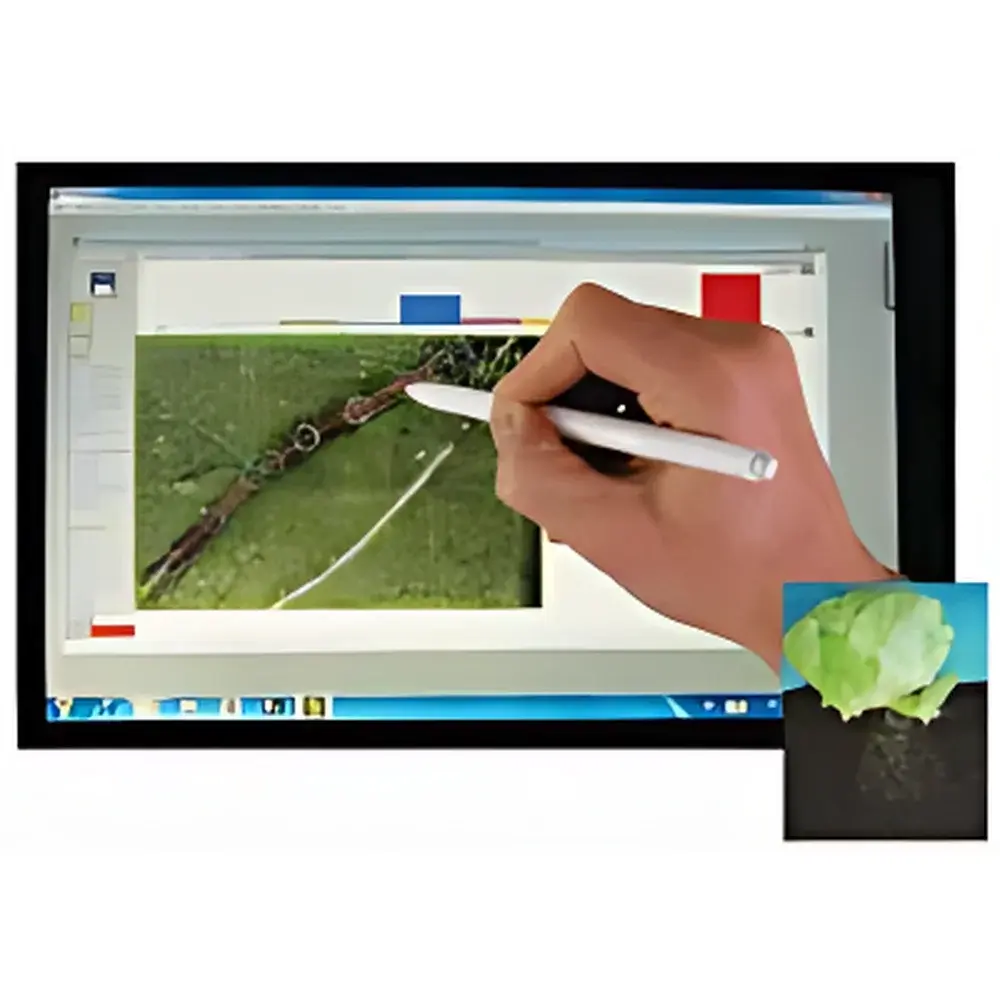
Regent WinRHIZO Tron In Situ Root System Analysis Software
| Brand | Regent |
|---|---|
| Origin | Canada |
| Model | WinRHIZO Tron |
| Version Options | Basic, Reg, MF (Multi-Frame) |
| Software Type | Image-Based Root Morphometric Analysis Platform |
| Compatibility | Grayscale & Low-Contrast Root Images from Minirhizotron Systems, Flatbed Scanners, or Digital Cameras |
| Data Output Format | CSV, Excel-compatible (.xls/.xlsx via XLRhizo), XML |
| Operating System | Windows 10/11 (64-bit) |
| License | Perpetual node-locked license with optional annual maintenance support |
Overview
Regent WinRHIZO Tron is a specialized, image-based root morphometric analysis software engineered for quantitative in situ and ex situ root system characterization. Unlike generic image analysis tools, WinRHIZO Tron implements calibrated pixel-to-metric conversion and adaptive thresholding algorithms optimized for low-contrast root imagery—particularly those acquired from minirhizotron tubes, transparent soil mesocosms, or high-resolution flatbed scans where root-background differentiation is suboptimal. The software operates on the principle of binary segmentation followed by skeletonization and topological tracing, enabling precise measurement of root architecture parameters without requiring manual tracing for every segment. Its core analytical framework adheres to established root phenotyping conventions defined in FAO and ICARDA root trait ontologies, ensuring compatibility with plant phenomics databases and longitudinal growth studies.
Key Features
- Three-tiered licensing architecture: WinRHIZO Tron Basic (single-image batch processing), WinRHIZO Tron Reg (frame-by-frame sequential analysis with full metadata logging), and WinRHIZO Tron MF (multi-frame time-series analysis with inter-frame root tracking and growth vector calculation)
- True diameter distribution profiling: Computes root diameter at every pixel along the skeletonized centerline—not averaged across segments—enabling accurate classification into biologically meaningful diameter classes (e.g., <0.2 mm for absorptive fine roots, 0.2–0.5 mm for transport roots)
- Configurable visualization layer: Overlay histograms of length, surface area, volume, and tip count as functions of root diameter directly above the analyzed image; color mapping aligns with user-defined root class categories (e.g., primary, lateral, adventitious)
- Granular morphometric output: Generates per-root, per-segment, and whole-system metrics—including total length, projected surface area, convex hull area, network topology indices (branching order, link density), and spatial distribution statistics (depth profile, horizontal spread)
- Customizable reporting interface: Users define which parameters appear in the main display window, including font size, color coding, transparency, and coordinate grid overlays; command panel layout is fully reconfigurable to prioritize workflow-specific metrics
Sample Compatibility & Compliance
WinRHIZO Tron supports grayscale and 8-bit RGB images acquired from minirhizotron imaging systems (e.g., Bartz Technology, CI-600 In-Situ Root Imager), transparent rhizobox setups, gel-based root imaging, and high-DPI flatbed scanning (≥600 dpi recommended). It accommodates variable illumination conditions and partial occlusion typical of field-deployed minirhizotron sequences. While not certified under ISO/IEC 17025, the software’s algorithmic traceability—documented in its technical white paper (Regent Document #RZ-TN-2023-04)—supports GLP-compliant data generation when deployed within validated laboratory workflows. All measurement logs include embedded timestamps, operator ID fields, and image hash verification for audit trail integrity.
Software & Data Management
Raw outputs are exported in UTF-8 encoded CSV format with header metadata describing acquisition settings, calibration parameters, and version-controlled algorithm flags. The bundled XLRhizo add-in enables direct import into Microsoft Excel for statistical modeling, ANOVA, or PCA without manual formatting. XLRhizo preserves hierarchical root relationships (parent-child branching) and supports pivot-table aggregation across treatment groups, time points, or genotype cohorts. Data files retain full provenance: original file path, modification history, and software build number. Optional annual maintenance includes access to Regent’s Root Phenotyping Support Portal, which hosts SOP templates aligned with Crop Ontology (CO) standards and provides version-matched calibration guides for new imaging hardware integrations.
Applications
- Long-term minirhizotron time-series analysis of root turnover, mortality, and seasonal dynamics in agroecosystems and natural grasslands
- Genotype × environment interaction studies quantifying root architectural plasticity under drought, nutrient limitation, or elevated CO₂
- Validation of root growth models (e.g., CRootBox, OpenSimRoot) using empirically derived branching angles, diameter taper rates, and elongation velocities
- Soil–root interface research in transparent soil analogs or X-ray CT-derived 2D projections
- Regulatory phenotyping for crop registration trials requiring standardized root trait reporting per OECD Test Guideline 208 (Terrestrial Plant Testing)
FAQ
Does WinRHIZO Tron support automatic root tracking across time-lapse sequences?
Yes—only in the MF (Multi-Frame) version. It uses optical flow-assisted correspondence matching combined with topological consistency checks to maintain root identity across frames, even with partial occlusion or minor tube displacement.
Can I integrate WinRHIZO Tron outputs with R or Python-based analysis pipelines?
Absolutely. CSV exports are schema-stable and include column headers compliant with the Plant Phenomics Data Exchange Standard (PPDES v1.2); example parsers are available in the Regent GitHub repository (public access upon license registration).
Is hardware calibration required before each analysis session?
A one-time spatial calibration (pixels per mm) is mandatory for absolute metric accuracy. Calibration can be performed using an included digital micrometer overlay template or user-supplied scale bar embedded in the image.
How does WinRHIZO Tron handle overlapping or crossing roots?
It applies hysteresis-based watershed segmentation and iterative skeleton pruning to resolve bifurcations and crossings. Manual correction tools allow operator intervention at ambiguous nodes, with full undo/redo history preserved in the project file.
Are software updates included with the perpetual license?
Minor version updates (e.g., 5.2.x → 5.2.y) are free; major version upgrades (e.g., 5.x → 6.0) require a nominal upgrade fee unless covered under active maintenance subscription.






