
RELION MICRODRILL SYSTEM – Micro-Sampling Instrument for In Situ Micromilling and Vacuum-Based Solid Sample Collection
| Brand | RELION |
|---|---|
| Origin | USA |
| Manufacturer Type | Authorized Distributor |
| Import Status | Imported |
| Model | MICRODRILL SYSTEM |
| Price Range | USD 42,000 – 70,000 |
Overview
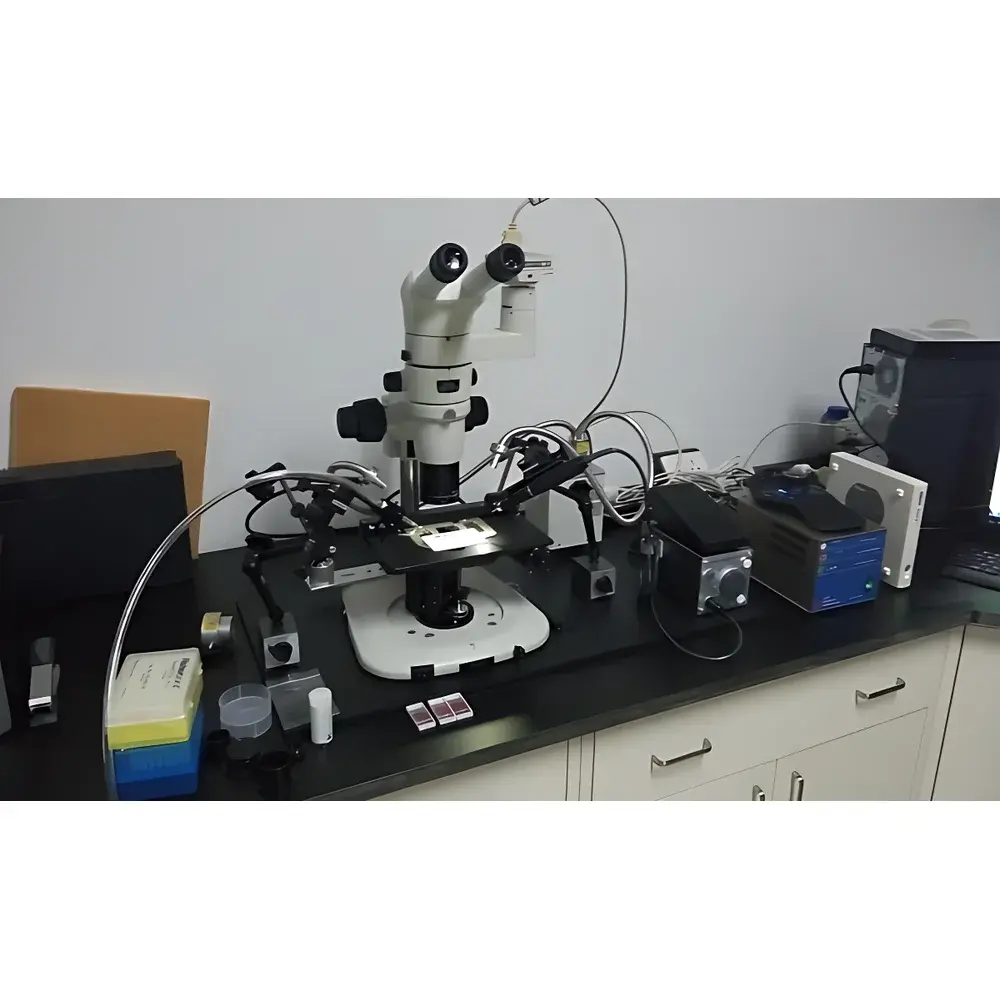
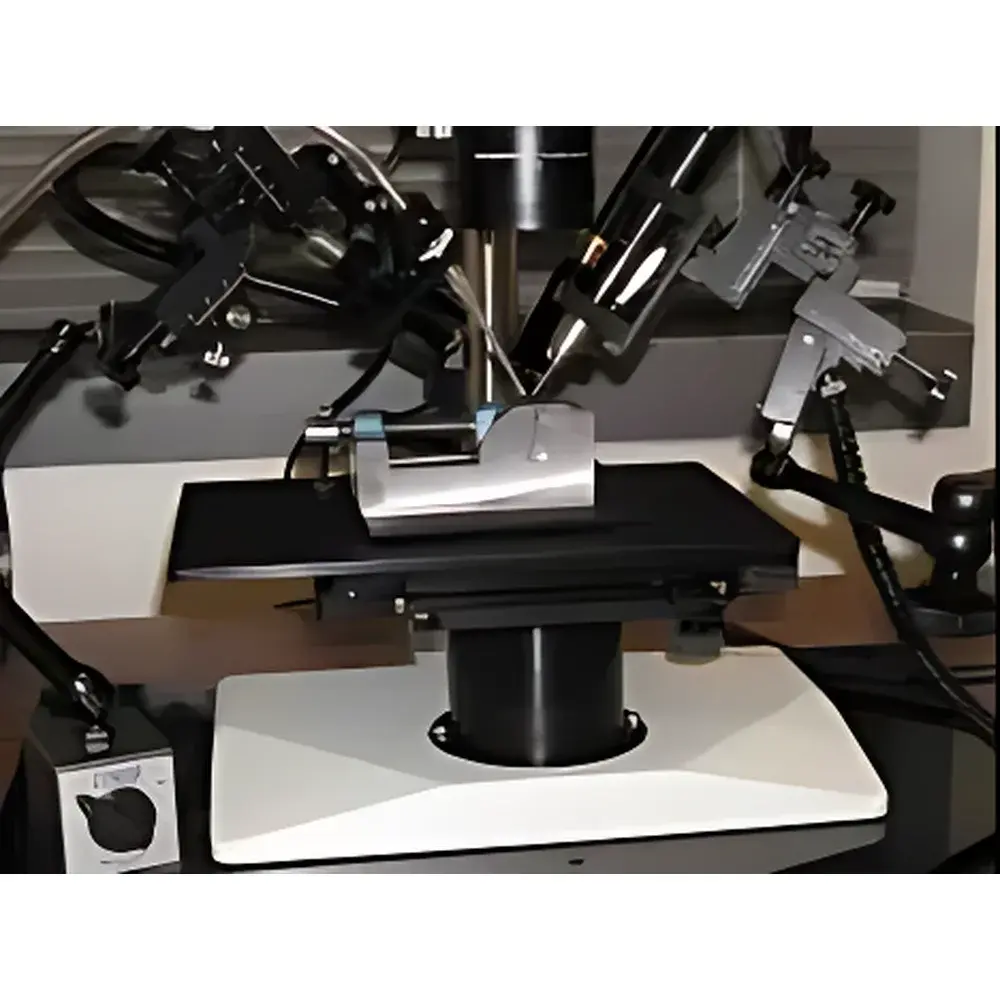
The RELION MICRODRILL SYSTEM is a high-precision micro-sampling instrument engineered for in situ micromilling and targeted solid-phase material extraction under optical guidance. It operates on the principle of controlled mechanical ablation—using a rotating micro-drill bit guided by motorized XYZ positioning—to isolate sub-milligram quantities of geologically or biologically relevant solids (e.g., carbonate minerals, quartz, zircon-hosted hydrocarbon inclusions, speleothem laminae, mollusk shells) without bulk matrix contamination. Integrated with stereo microscopy, real-time CCD imaging, and vacuum-assisted collection, the system enables spatially resolved sampling at micron-scale resolution—critical for downstream isotopic ratio mass spectrometry (IRMS), trace element mapping, and clumped-isotope analysis. Designed for laboratory-based geochemical preparation workflows, it bridges the gap between optical petrography and high-sensitivity analytical instrumentation.
Key Features
- Motorized XYZ micromanipulator with sub-micron repeatability, enabling precise drill tip positioning relative to sample surface topography
- Electromechanical sample stage with 100 × 120 mm travel range, programmable via software for automated raster scanning or multi-point targeting
- Optical path integrated with a 6.3–80× zoom stereomicroscope and high-resolution CCD imaging system for live monitoring and digital documentation
- Vacuum collection subsystem featuring stainless-steel pipette holder, disposable polymeric pipette tips, and in-line cellulose filter to prevent particulate ingress into vacuum pump
- Software-controlled drilling protocol: supports quantitative XYZ displacement, curved-path trajectory generation, panoramic mosaic stitching, and time-stamped image/video capture
- Drill bit compatibility with standard 0.1–0.5 mm shank diameters; operational bore diameter range: 12–200 µm (theoretical minimum: 8 µm under ideal calibration conditions)
Sample Compatibility & Compliance
The MICRODRILL SYSTEM accommodates brittle, semi-brittle, and polycrystalline solid specimens—including polished thin sections, epoxy-mounted rock chips, fossilized biominerals, ceramic cross-sections, and synthetic reference materials. Sample thickness up to 10 mm is supported with adjustable focus and Z-axis clearance. All hardware components comply with CE electromagnetic compatibility (EMC) directives and RoHS material restrictions. The vacuum filtration architecture meets ISO 8573-1 Class 4 purity requirements for particulate-limited gas streams. Data acquisition and instrument control logs are timestamped and exportable in CSV/JSON formats—supporting GLP-compliant record retention and audit readiness per ISO/IEC 17025:2017 Annex A.4.
Software & Data Management
The proprietary RELION DrillControl™ software provides a deterministic, scriptable interface for defining sampling coordinates, depth profiles, and sequential drilling sequences. It includes measurement tools calibrated against NIST-traceable stage encoders, enabling pixel-to-micron scaling validation. Image metadata (exposure, gain, lens magnification, stage position) is embedded in TIFF and MP4 files. Exported datasets include positional logs (.csv), annotated images (.tiff), and video clips (.mp4) with synchronized event markers. Audit trail functionality records user login, parameter changes, and execution timestamps—facilitating compliance with FDA 21 CFR Part 11 when deployed in regulated environmental or forensic laboratories.
Applications
- High-resolution δ13C, δ18O, and Δ47 analysis of individual growth bands in speleothems and bivalve shells
- Isolation of single zircon domains for U–Pb geochronology and Hf isotopic microsampling
- Targeted extraction of fluid inclusions from quartz veins for noble gas or hydrocarbon composition studies
- Micro-milling of archaeological ceramics and pigments for provenance fingerprinting via LA-ICP-MS
- Preparation of reference material powders with known grain-size distribution for inter-laboratory calibration
- Sectioning of mineral aggregates for subsequent FIB-SEM or synchrotron XRD analysis
FAQ
What is the smallest achievable drill hole diameter under routine operating conditions?
The system achieves consistent 12 µm nominal bore diameters using optimized drill bits and feed rates; 8 µm is attainable only under highly controlled calibration conditions with specialized tooling.
Can the system be integrated with an external mass spectrometer or laser ablation system?
Yes—the MICRODRILL SYSTEM outputs standardized coordinate data and timing triggers compatible with third-party automation interfaces (TTL/RS-232); direct coupling requires custom mounting and synchronization firmware.
Is the vacuum filtration system compatible with acid-washed or organic solvent–treated samples?
Disposable pipette tips are chemically inert polypropylene; filters are cellulose-based and rated for aqueous and low-concentration organic solvents—but not strong oxidizers or HF solutions.
Does the software support batch processing of multiple samples across different slide positions?
Yes—DrillControl™ allows template-based macro scripting, including stage repositioning, autofocus cycles, and conditional logic for variable-depth milling across heterogeneous samples.
What maintenance intervals are recommended for the motorized stage and vacuum pump?
Stage linear guides require lubrication every 1,000 hours of operation; vacuum pump oil replacement is recommended every 500 hours or per manufacturer specifications—log entries are auto-generated in the software maintenance dashboard.




