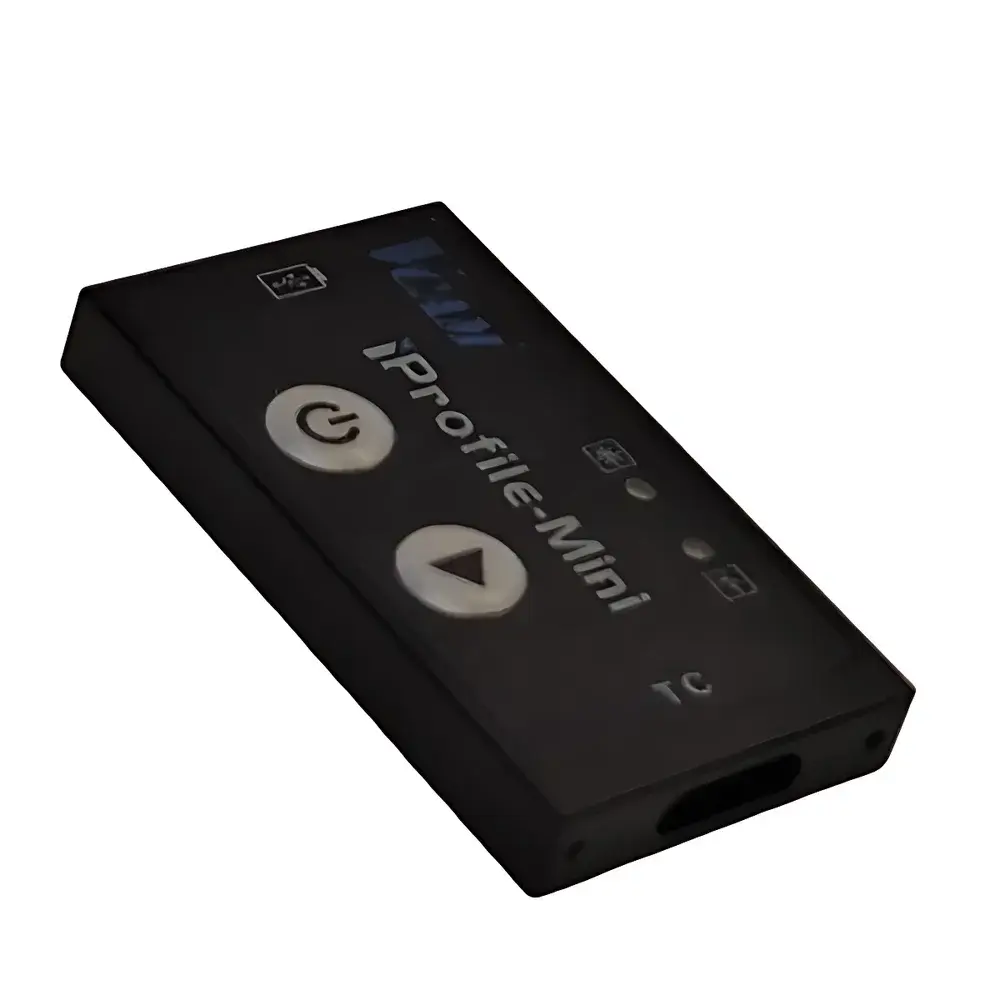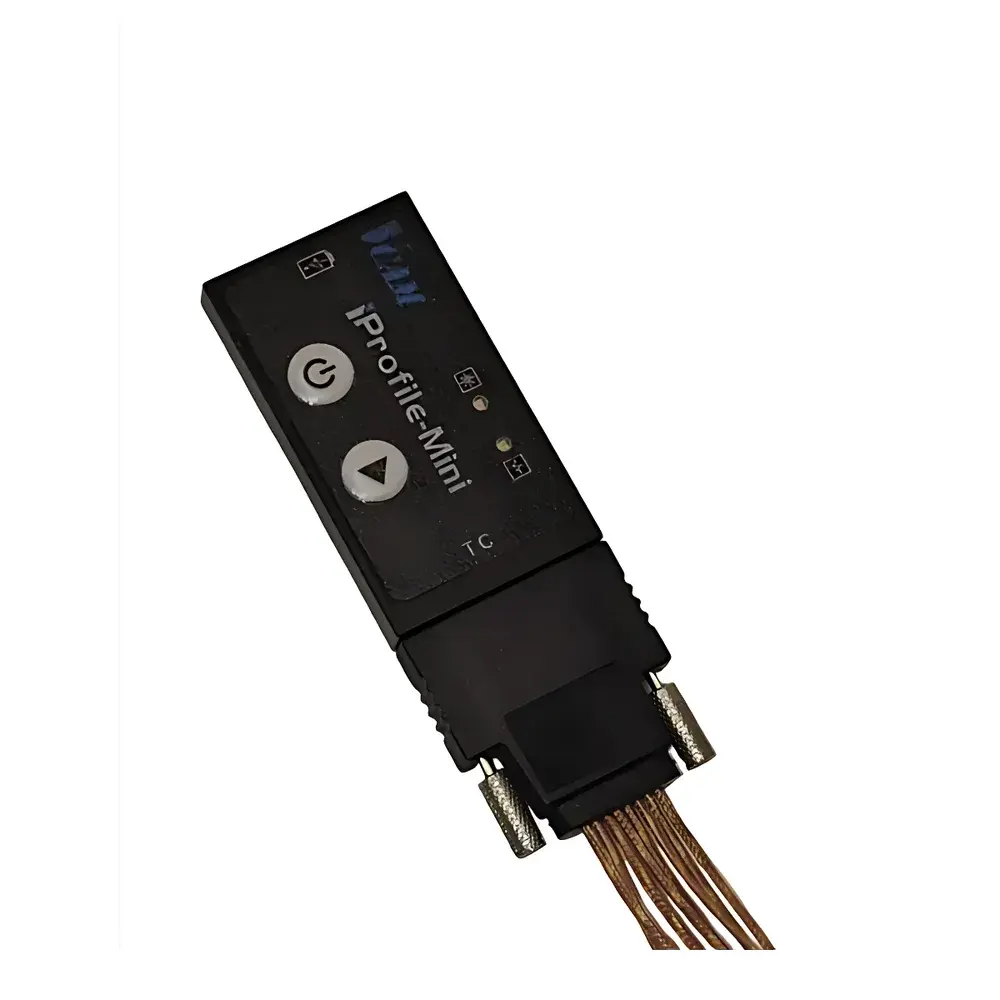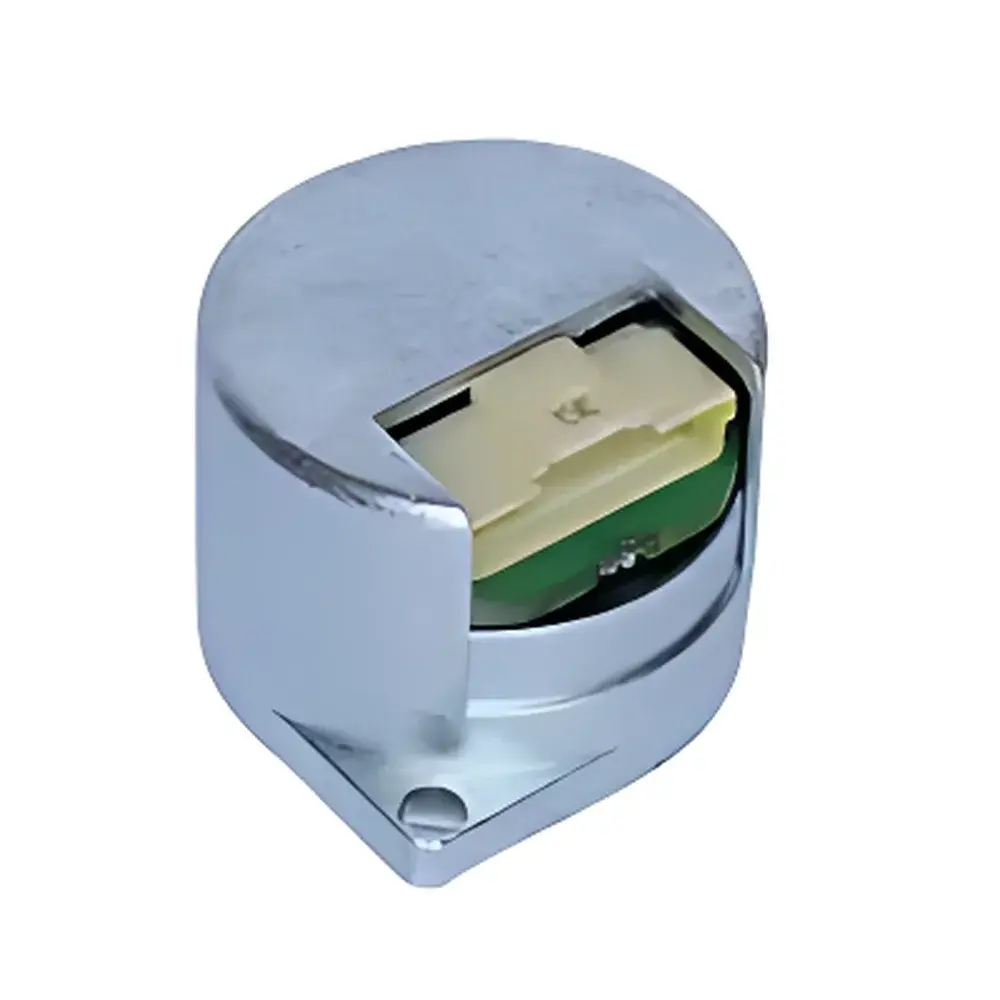
Renishaw RMC Series High-IP-Rated Motor Feedback Encoder
| Brand | Renishaw |
|---|---|
| Origin | United Kingdom |
| Model | RMC |
| Output Signals | RS422 differential quadrature (A/B/Z) + commutation (U/V/W) |
| IP Rating | IP67 (standard), optional IP69K |
| Mounting | Hollow-shaft or servo-mount compatible |
| Electrical Interface | 5 VDC or 10–30 VDC supply |
| Operating Temperature | −20 °C to +85 °C |
| Shock Resistance | 100 g, 6 ms (half-sine) |
| Vibration Resistance | 10 g RMS, 10–2000 Hz |
| Compliance | RoHS, CE, UL Recognized (E330024) |
Overview
The Renishaw RMC series is a high-reliability rotary encoder engineered specifically for demanding motor feedback applications in industrial automation, servo drive systems, and motion control environments. Based on optical incremental sensing technology, the RMC delivers synchronized dual-output signals—standard RS422 differential quadrature (A/B/Z channels) for precise position and velocity feedback, and commutation signals (U/V/W) for accurate electronic commutation of brushless DC (BLDC) and permanent magnet synchronous motors (PMSMs). Its robust mechanical architecture integrates a precision glass or metal scale disc with a compact, sealed opto-mechanical readhead, enabling stable operation under severe mechanical stress. Unlike general-purpose encoders, the RMC is purpose-built to meet the stringent timing, noise immunity, and environmental resilience requirements of closed-loop motor control in heavy-duty machinery, packaging lines, robotics, and electric vehicle powertrain test benches.
Key Features
- Simultaneous dual-signal output: RS422-compatible A/B/Z quadrature plus U/V/W Hall-effect-equivalent commutation signals—eliminating the need for separate commutation sensors and reducing system wiring complexity.
- High ingress protection: Standard IP67 rating ensures full protection against dust ingress and temporary immersion (up to 1 m for 30 min); optional IP69K variant withstands high-pressure, high-temperature washdown cycles common in food & beverage and pharmaceutical manufacturing.
- Exceptional mechanical ruggedness: Designed to endure continuous vibration up to 10 g RMS across 10–2000 Hz and shock loads of 100 g (6 ms half-sine), maintaining signal integrity during aggressive acceleration/deceleration events typical in servo axes.
- Wide operating voltage range: Supports both 5 VDC (TTL-compatible) and 10–30 VDC (RS422 compliant) supply options, facilitating integration into diverse drive electronics architectures without external level-shifting circuitry.
- Thermal stability: Internal compensation algorithms and low-thermal-expansion materials minimize signal drift over the full operating temperature range (−20 °C to +85 °C), ensuring consistent performance across ambient industrial conditions.
- Mounting flexibility: Available in hollow-shaft configurations for direct motor shaft integration and servo-mount variants with standardized flange patterns (e.g., ISO 9409-1-125-B12), enabling drop-in replacement in existing motor designs.
Sample Compatibility & Compliance
The RMC encoder is compatible with all major servo motor platforms utilizing sinusoidal or trapezoidal commutation schemes—including those conforming to IEC 60034-30-2 efficiency classes IE3 and IE4. Its signal timing meets EN 61800-3 (EMC requirements for adjustable speed electrical power drive systems) and complies with electromagnetic compatibility limits for industrial environments (Class A per CISPR 11). The device carries CE marking under the Low Voltage Directive (2014/35/EU) and Electromagnetic Compatibility Directive (2014/30/EU), and is UL Recognized (File E330024) for use in North American industrial control panels. While not certified to SIL or PL safety standards out-of-the-box, its design supports integration into functional safety architectures when used with appropriate safety-rated controllers (e.g., via safe torque off monitoring).
Software & Data Management
The RMC operates as a hardware-level feedback device and does not incorporate embedded firmware or onboard configuration software. Signal integrity is verified using standard oscilloscope-based timing analysis or drive-integrated diagnostics (e.g., Siemens SINAMICS, Yaskawa Sigma-7, or Beckhoff AX5000 series). Renishaw provides comprehensive technical documentation—including interface schematics, timing diagrams, cable pinouts, and EMC installation guidelines—in English PDF format via its official support portal. For traceability in regulated environments (e.g., FDA-regulated equipment validation), users may log encoder serial numbers, calibration certificates (available upon request), and installation records within their internal quality management system (QMS) in accordance with ISO 9001:2015 clause 7.5.3.
Applications
- Closed-loop control of high-dynamic servo motors in CNC machine tools and multi-axis robotic arms.
- Commutation and position feedback in traction inverters and e-axle test rigs for EV powertrain development.
- Motion synchronization in high-speed packaging machinery subject to washdown and particulate exposure.
- Precision winding and tension control systems in wire and cable manufacturing.
- Position verification in linear actuator feedback loops where rotary-to-linear conversion is implemented via ball screws or belt drives.
FAQ
Does the RMC encoder support absolute position reporting?
No—the RMC is an incremental encoder only. It provides relative position change and commutation phase information but requires a homing routine or external absolute reference for zero-point initialization.
Can the RMC be used with third-party servo drives that lack native U/V/W input support?
Yes—provided the drive accepts RS422 quadrature inputs and allows external commutation signal mapping via firmware configuration or hardware jumper settings. Consult the drive manufacturer’s documentation for signal assignment flexibility.
Is calibration required after installation?
No routine field calibration is specified. However, mechanical alignment (radial runout < 0.05 mm, axial float < 0.1 mm) and proper coupling torque must be verified per Renishaw’s Installation Guide to ensure optimal signal quality and longevity.
What is the maximum recommended cable length between the RMC and controller?
For RS422 operation at 1 MHz output frequency, maximum recommended shielded twisted-pair cable length is 30 m. Beyond this, signal integrity testing using eye diagram analysis is advised per EN 61000-4-3 immunity requirements.